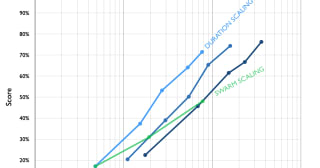
Just how powerful are large swarms of AI agents? And how do their powers scale as more and more agents are added to the swarm?
We’ve seen two large and extremely capable swarms from OpenAI in the last few months:
* 1,200 agents were being evaluated separately, but found a way to illicitly set up a message board and coordinate as a swarm. In order to cheat on their tests, they developed advanced techniques to prevent their actions being logged by OpenAI and 700 of them launched...
Headline finding: I audited 17 AI Safety Talent programmes. Zero of 17 have published any comparison group, rejected-applicant follow-up, matched control or randomisation. Not one. Every programme that mentions a counterfactual does it by asking participants to self-report.
Background
At least $70 million...
A year ago I posted that YCombinator (YC) companies didn’t seem to be growing faster since the release of ChatGPT in 2022. I reran that experiment and found that 2023+ YC companies are arguably growing a bit faster than pre-2023 companies (including AfterQuery, ...


"Our approach has similarities with that followed by charity analysis organisations like GiveWell and Founders Pledge."
To put it bluntly, why should someone go to (work for, consult the recommendations of, support) SoGive vs other leading organizations you mention? Does your org fill a neglected niche, or take a better approach somehow, or do you think it's just valuable having multiple independent perspectives on the same issue?
Fair question!
GiveWell and Founder's Pledge both do excellent work, so I don't think it would be right to suggest SoGive's approach is fundamentally better - indeed we often build on the work of these two organisations. However, as you say, there is some value in having multiple independent perspectives on a topic.
We are aiming to fill a neglected niche, namely the application of an EA/cost-effectiveness approach to a much broader set of charities than those of most other EA organisations. Think Charity Navigator, but with a focus on impact rather than mostly-irrelevant financial metrics. We think there is scope to nudge a large number of people (most who otherwise won't be aware of EA) to support higher impact charities within and across cause areas, by including a comparison with many of the well-known charities in the UK.
Relatedly, there are also particular topics/cause areas where there is a lot of public interest, but that existing EA orgs have concluded probably aren't going to include the very best charities.
As an example, we are currently undertaking a review of tree-planting charities. It seems unlikely that the best tree-planting charity will be as cost-effective as (e.g.) the Clean Air Task Force when it comes to averting/reducing CO2eq. But there is a lot of interest in tree-planting, both from individuals and corporations. We hope that by having tree-planting charities alongside the likes of CATF, at least some people who are interested in tree-planting will switch donations to CATF (because they actually care about CO2eq), whereas others who (for whatever reason) really really only want to plant trees, will at least switch to the best tree-planting charity.
As I’ve brought up before
I think this is a very important “gap in the market”, especially if done with an eye towards quantifying the uncertainty (think montecarlo).
Makes sense, thanks! It may be worth highlighting that more proactively when you do outreach within EA (and there may be nuanced ways to communicate that even generally).