Comments
More from the author
Curated and popular this week
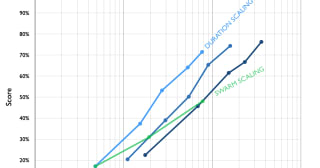
Just how powerful are large swarms of AI agents? And how do their powers scale as more and more agents are added to the swarm?
We’ve seen two large and extremely capable swarms from OpenAI in the last few months:
* 1,200 agents were being evaluated separately, but found a way to illicitly set up a message board and coordinate as a swarm. In order to cheat on their tests, they developed advanced techniques to prevent their actions being logged by OpenAI and 700 of them launched...
49
Often folks hit us up because they are thinking of starting an incubator and want advice.
Typically their motivation is either that (a) they have a list of specific things they want built that no one is building, or (b) they think an ecosystem needs more new projects generally to absorb more talent and deploy more funding effectively.
Here are six questions we often ask prospective teams, to help them figure out what to do. If you're incubator-curious...

Summary:
First, I give several different angles on how I feel about reinforcement learning:
* Theoretical case: RL is a black-box source of agency — this should give us classic misalignment worries, especially compared to agency-via-scaffolding
* Recent incidents (huggingface etc) and more mundane forms of misaligned behaviour in personal use give me bad vibes about the direction-of-travel of recent AI progress
* I’m worried things might get worse:...

Recent opportunities to take action
In your view, what is the next step?
This has some of 1Day's thoughts (though it was published before PQ happened). This tweet thread is briefer and has some more technical ideas.
Big picture -- probably need to raise about $500 million to pay for distribution and need to get WHO/GAVI/UNICEF to announce a much more aggressive plan for implementation. Also need to do a ton of work in African countries to create the political will and technical plans for rapid rollout.
From an advocacy perspective, 1Day's main idea is to generate a ton of public attention to achieve the goals above (particularly the money) -- ideally by bringing in new philanthropic funders, though that may be unrealistic. But there will also be more targeted campaigns at the international institution and African country levels.
Current rollout plans are unclear, but the below probably gives the best sense of current international institution goals.
As you can see, current vision doesn't get to the predicted steady state (80 million doses) until about 2027. Serum Institute can currently produce 100 million doses per year and already has on-hand material to make 20 million. About 80 million children are at risk of malaria and in the age range in which R21 was tested and demonstrated high efficacy. About 25 million are born each year. Each child requires 4 doses (3 doses the first year followed by a booster).
Optimistically, Gavi and partners do their thing and we get a nice efficient rollout across the relevant areas. But I have very limited knowledge of this space. I don't know what the bottlenecks or process here is.