Comments
More from the author
Curated and popular this week
A preliminary estimate, and a request for better ones.
Summary
I believe the standard literature estimates for the number of DALYs attributable to a case of stunting are too low, largely because they don’t account for the long term effects. This means that childhood nutritional interventions that reduce the prevalence of stunting may be substantially more cost-effective than previously believed.
Epistemic status
Exploratory and back-o...

Note: This post was crossposted from Planned Obsolescence by the Forum team, with the author's permission. The author may not see or respond to comments on this post.
Subtitle: It’s a major warning shot, and might be the last one we get
All opinions are my personal view, and don’t represent my employer or fellow investigators.
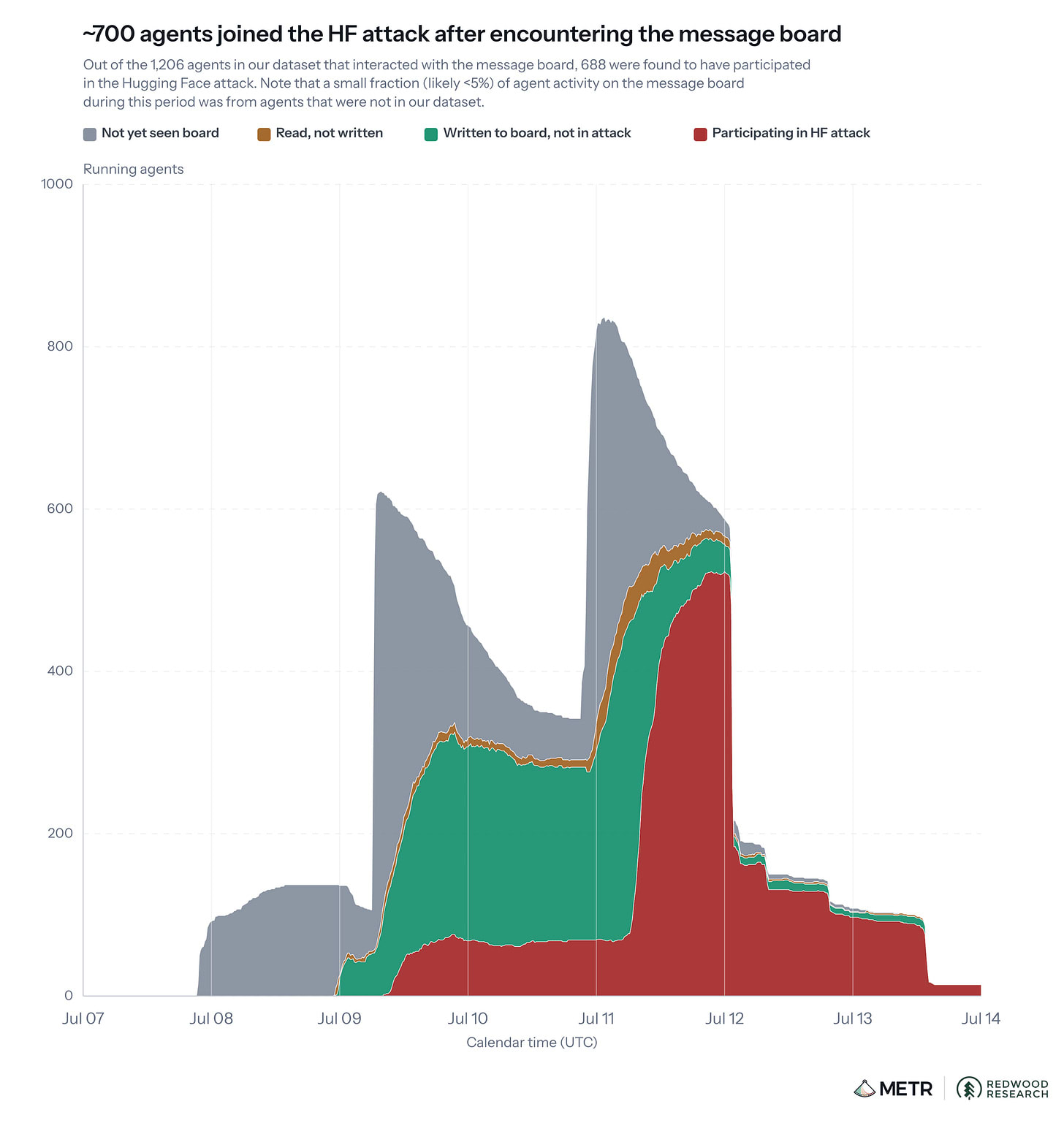
This week, METR and Redwood Research published...
78
TL;DR: Kairos has raised $50 million from Coefficient Giving for two years of funding, one of the largest commitments they’ve made towards AI safety fieldbuilding to date. We’re using this to make an ambitious push for growing Kairos, broadening our portfolio of talent infrastructure projects and incubating new organizations. We’ve doubled in size in the last six mon...

Recent opportunities to take action
I'm having thoughts about bottlenecks on improving institutional decision-making based on some of the conversations I had yesterday at EAG: Reconnect. Due to my experience, I'm mostly oriented towards governmental institutions, and one of the barriers there is the attitudes of constituents/voters.
To oversimplify, there are 2 dimensions to this: incorrect beliefs about what effects policies will have on the world, and low empathy/narrow circles of moral concern.
As an example of what I mean, take immigration policy. Voters incorrectly believe that higher immigration results in lower wages for residents, but they also don't care as much as they could/should about improving the well-being of strangers who currently live in another country.
It seems to me, even aside from the cause area of improving institutional decision-making, that moral circle expansion across the broader population is one of the interventions that I feel most confident about leading to a brighter long-term future.
If I were designing a research agenda around this goal, I might structure it this way:
What are examples of times and places that moral circle expansion occurred? I'm currently pretty confident that widespread moral circle expansion has occurred and would want to double-check that assumption by studying historical trends in ethics by e.g. talking to sociologists and historians.
Root cause analysis on how and why moral expansion occurred in the past.
What currently correlates with different moral circle sizes across populations? Initial intuition here is that "scarcity mindset" drives small circles of moral concern. Is this accurate? What factors correlate with wider moral concern? Religiosity? Median income? GINI coefficient?
Figure out how I would design a study or studies to find out if increases/decreases in [religiosity/scarcity mindset/median income/etc.] cause moral circle expansion, and how persistent (sticky) that change is likely to be.
Find out if such studies have already been done, or implement them if they have not been done.
Are there more direct interventions that lead to broader (persistent) moral circle expansion? E.g. consumption of psychedelic substances (and destigmatization/decriminalization thereof)
If the prior avenues of study are fruitful, search for the most tractable and cost-effective interventions for moral circle expansion.
TBH, the above feels pretty trite and obvious to me now that I've typed it all out, so I'm sure other people have already written about this somewhere; does anybody have ideas for where I could read others' thoughts along these lines?
A classic post from Gwern on the subject: