YouGov recently reported the results of a survey (n=1000) suggesting that about “one in five (22%) Americans are familiar with effective altruism.”
We think these results are exceptionally unlikely to be true. Their 22% figure is very similar to the proportion of Americans we previously found claim to have heard of effective altruism (19%) in our earlier survey (n=6130). But, after conducting appropriate checks, we estimated that much lower percentages are likely to have genuinely heard of EA (2.6% after the most stringent checks, which we speculate is still likely to be somewhat inflated).
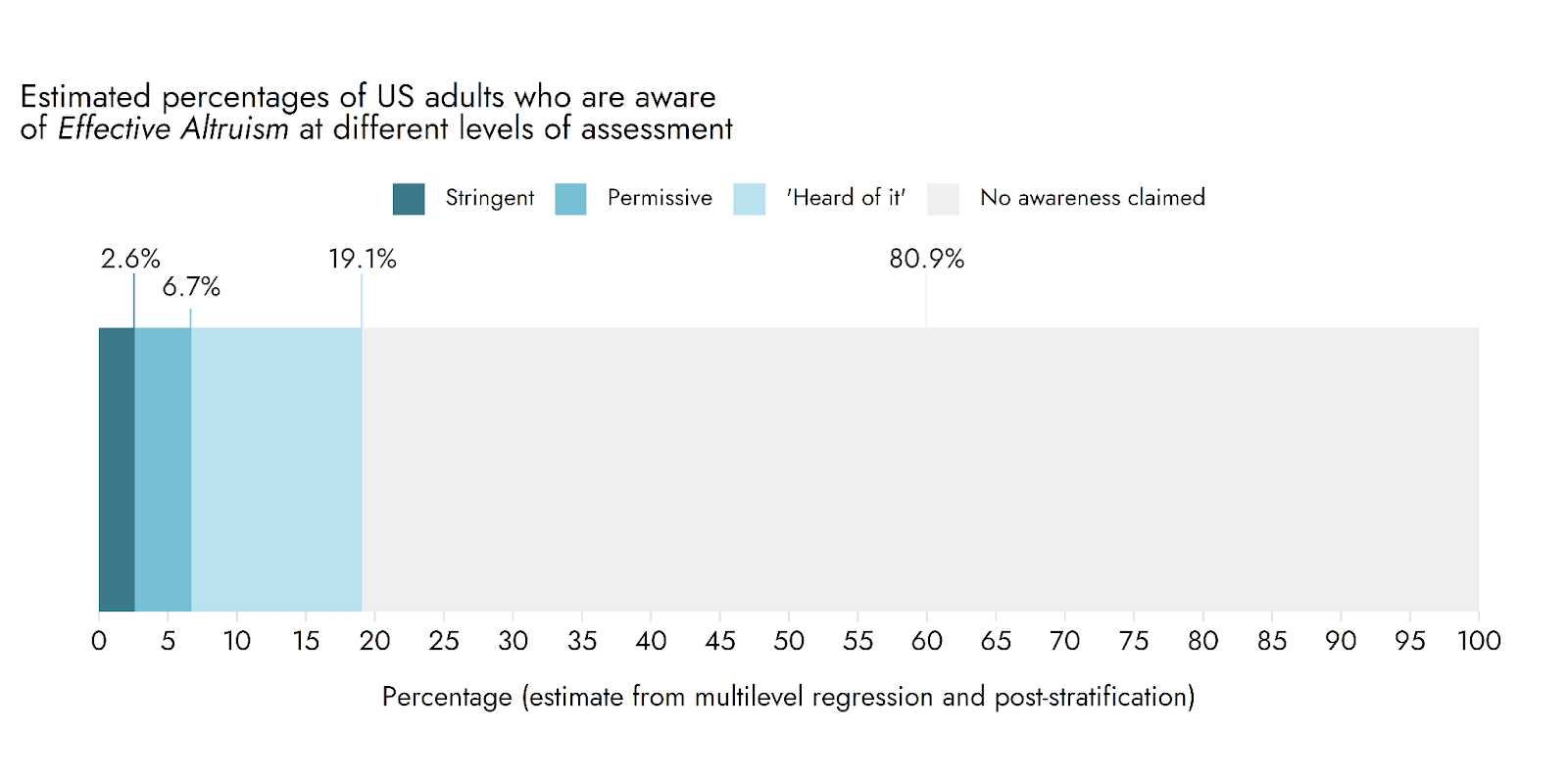
Is it possible that these numbers have simply dramatically increased following the FTX scandal?
Fortunately, we have tested this with multiple followup surveys explicitly designed with this possibility in mind.
In our most recent survey (conducted October 6th), we estimated that approximately 16% (13.0%-20.4%) of US adults would claim to have heard of EA. Yet, when we add in additional checks to assess whether people appear to have really heard of the term, or have a basic understanding of what it means, this estimate drops to 3% (1.7% to 4.4%), and even to approximately 1% with a more stringent level of assessment.
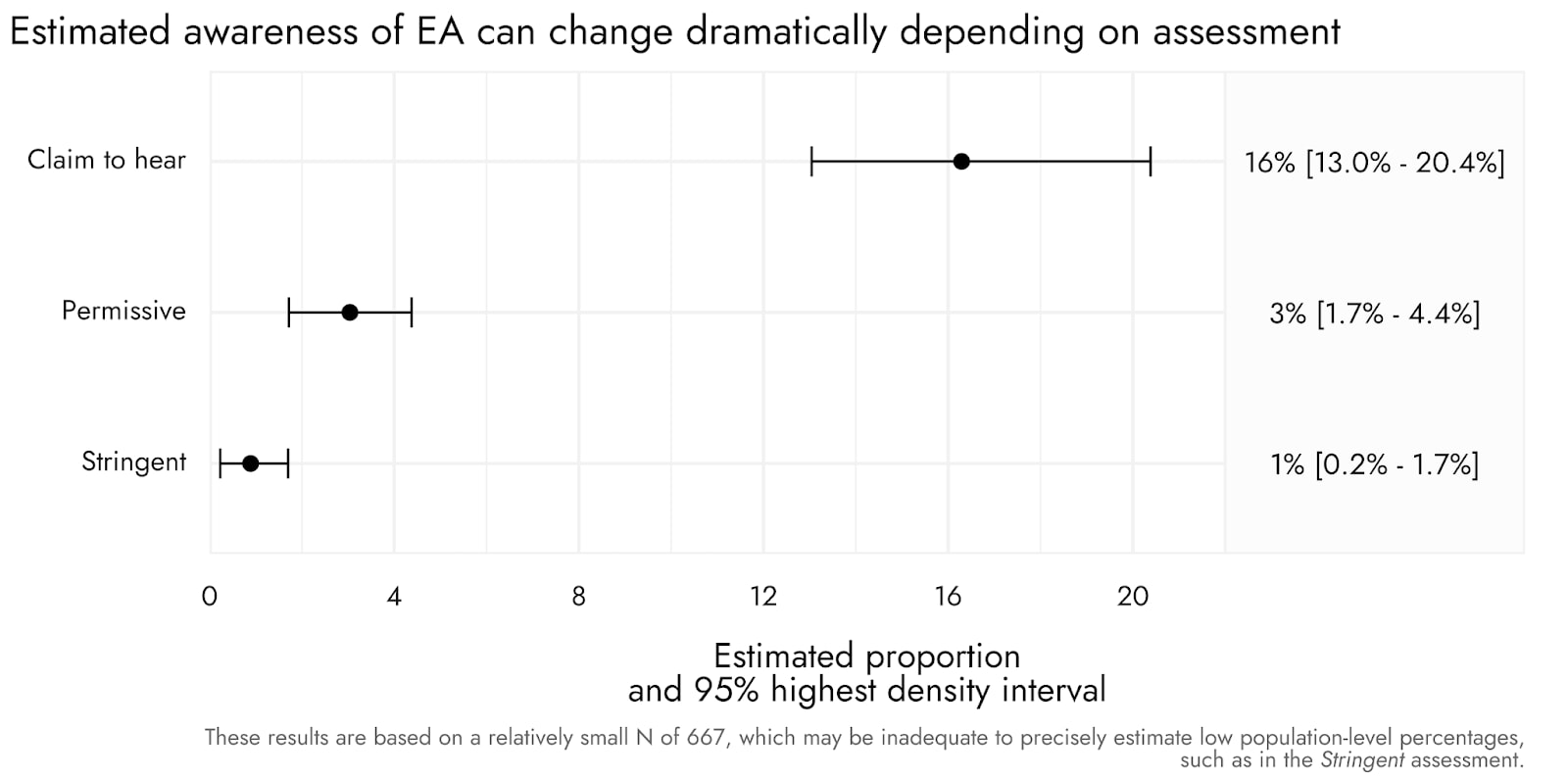
These results are roughly in line with our earlier polling in May 2022, as well as additional polling we conducted between May 2022 and October 2023, and do not suggest any dramatic increase in awareness of effective altruism, although assessing small changes when base rates are already low is challenging.
We plan to continue to conduct additional surveys, which will allow us to assess possible changes from just before the trial of Sam Bankman-Fried to after the trial.
Attitudes towards EA
YouGov also report that respondents are, even post-FTX, overwhelmingly positive towards EA, with 81% of those who (claim to) have heard of EA approving or strongly approving of EA.
Fortunately, this positive view is broadly in line with our own findings- across different ways of breaking down who has heard of EA and different levels of stringency- which we aim to report on separately at a later date. However, our earlier work did find that awareness of FTX was associated with more negative attitudes towards EA.
Conclusions
The point of this post is not to criticise YouGov in particular. However, we do think it’s worth highlighting that even highly reputable polling organizations should not be assumed to be employing all the additional checks that may be required to understand a particular question. This may apply especially in relation to niche topics like effective altruism, or more technical topics like AI, where additional nuance and checks may be required to assess understanding.


Strongly agree. Given the question design ("Are you familiar with effective altruism?"), there's clear risk of acquiescence bias - on top of the fundamental social desirability bias of wanting to not appear ignorant to your interviewer.
For sure, and just misunderstanding error could account for a lot of positive responses too - people thinking they know it when they don't.
Agreed. As we note in footnote 2:
I think this is one reason why "effective altruism" gets higher levels of claimed awareness than other fake or low incidence terms (which people would be very unlikely to have encountered).