I'm sure this is a very unpopular take but I feel obliged to share it: I find the "pausing AI development is impossible" arguments extremely parallel to the "economic degrowth in rich countries is impossible" arguments; and the worse consequences for humanity (and its probabilities) of not doing doing them not too dissimilar. I find it baffling (and epistemically bad) how differently these debates are treated within EA.
Although parallel arguments can be given for and against both issues, EA have disregarded the possibility to degrowth the economy in rich countries without engaging the arguments. Note that degrowthers have good reasons to believe that continued economic growth would lead to ecological collapse --which could be considered an existential risk as, although it would clearly not lead to the extinction of humanity, it may very well permanently and drastically curtail its potential. The EA community has not addressed these reasons, just argued that economic growth is good and that degrowth in rich countries is anyway impossible. Sounds familiar? "AI development is good and stopping it is anyway impossible".
I have this impression since long and I'd have liked to elaborate it it in a decent post, but I don't have the time. Probably I'm not the only one having this impression so I would ask readers to argue and debate below. Especially if you disagree, explain why or upvote a comment that roughly reflects your view rather than downvoting. Downvoting controversial views only hides them rather than confronting them.
[Additions:
I want to make clear that I find the term degrowth misleading and that many people in that movement use terms like a-growth, post-growth, growth agnostics.
I want to thank the users who have engaged and will engage in the discussion! This was the main objective of the post, thanks.]
[Addition 2:
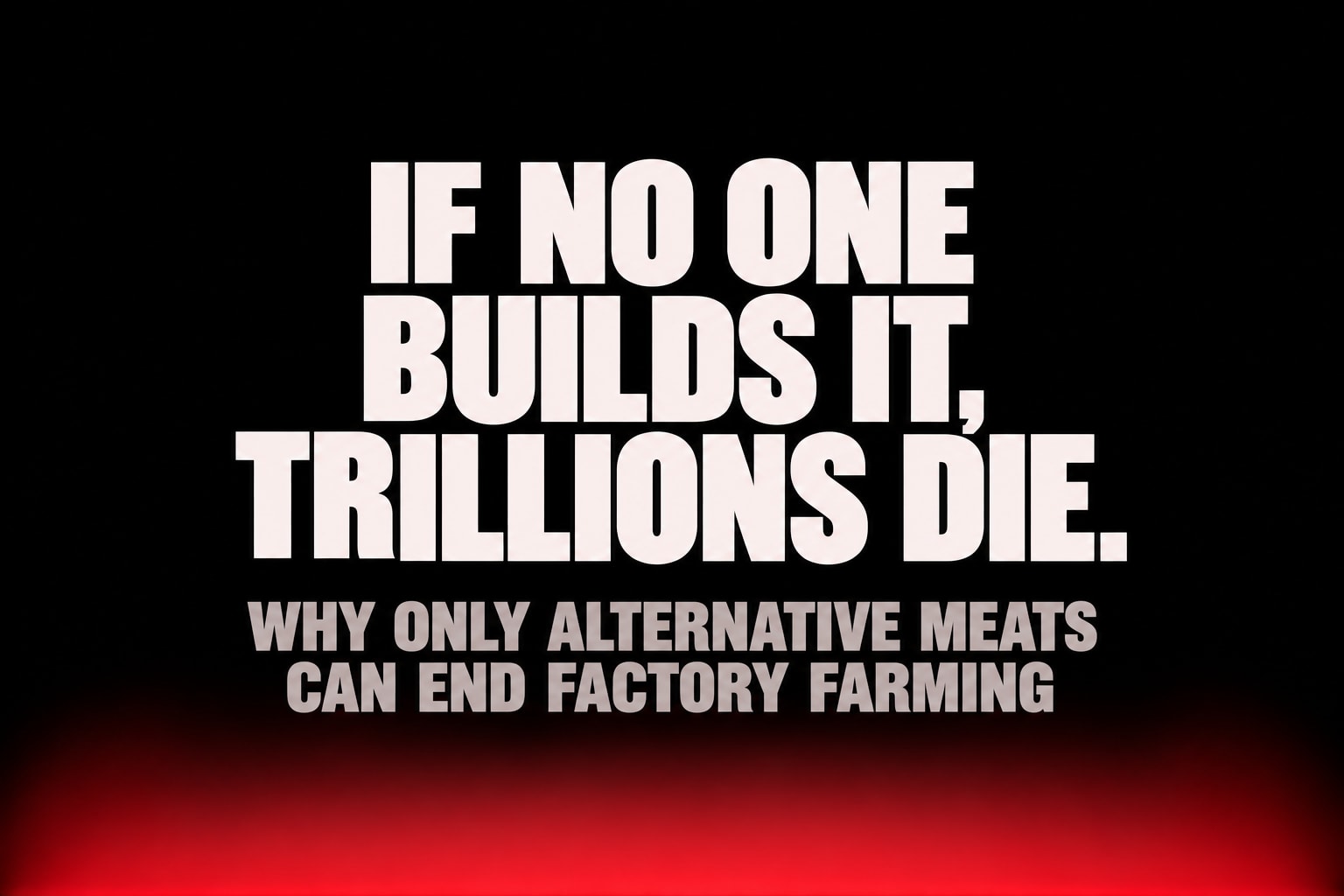
I think this tweet (and Holly's repost) makes the comparison ever more clear.]
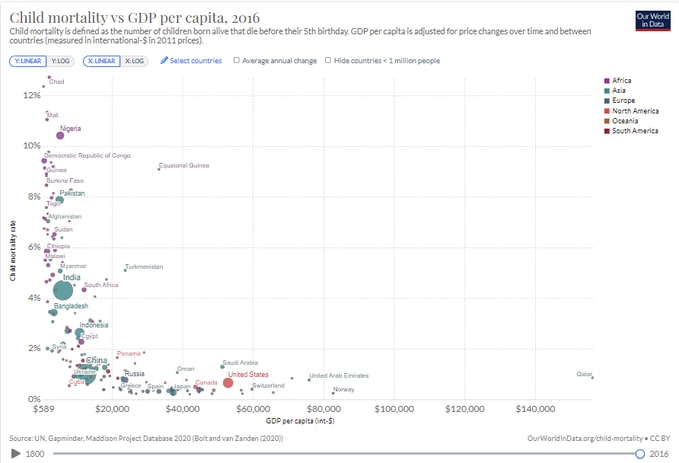
While I agree there are similarities in the form of argument between degrowth and AI pause, I don't think those similarities are evidence that the two issues should have the same conclusion. There's simply nothing at all inconsistent about believing all of these at the same time:
Almost the entire question, for resolving either of these issues, is working out whether these premises are really true or not. And that's where the similarities end, IMO: there's not much analogy between the relevant considerations for feasibility of AI pause and feasibility of degrowth, or desirability of either outcome, that would lead us to think it's surprising for them to have different answers.
I think one point of this post is to challenge the community to engage more openly with the question of degrowth and to engage in argument rather than dismiss it outright. I have not followed this debate in detail but I sympathize with the take that issues which are controversial with EAs are often disregarded without due engagement by the community.
If a point of the article was to get the community to engage with the arguments for degrowth, the author should have engaged with the things that EA has written about degrowth. For example, https://www.vox.com/future-perfect/22408556/save-planet-shrink-economy-degrowth or https://forum.effectivealtruism.org/posts/XQRoDuBBt98wSnrYw/the-case-against-degrowth
I explicitly said that I do not have the time to write a good post and that I rather post this so that people discuss.
Incidentally, I read the Vox article long ago when it came out but I did not know that the writer is EA. I don't remember much of it now, but maybe the answers from Kallis and Hickel (I'm not a fan of his) suffice to show that the article may not be as good as you think.
I will try to read the forum post soon -maybe I have done it in the past and I just don't remember.
Actually, thanks to this commentary I have found an inteesting post The case for Green Growth skepticism and GDP agnosticism, which seems to go very much into the kind of analysis I would like to see more often here. I have only read the summary and skimmed the comments and it looks very promissing, I will try to read it as well. And a series of incredible posts about The geat energy descent with a shorter version which go to the heard of the issue and won the price for the "Most Underrated EA Forum Post in 2022".
BTW, try to search for "degrowth" and for "AI" in the forum, 22 and 5287 results respectively. I guess this proves the point I am trying to make.
Current gross world income is enough to provide everyone on earth with $10,000 per year. (And that overstates a lot of things because much of that wealth is in forms that aren't distributable.)
But $10,000/year is under the US federal poverty level. It seems a lot like degrowth is embracing a world where everyone lives under the level that a poor person in the developed world lives, which seems in pretty stark contrast to the goals of making the world prosper.
The claim of degrowth is that there's no way to have more than this consistent with long-term flourishing of humanity. That seems to fly in the face of every theoretical and observed claim about resource constraints and growth - climate is a real problem, but degrowth doesn't come anywhere close to solving it.
There are other claims that degrowth makes that seem unobjectionable, and worthy of debate - global poverty is being perpetuated by debt burden in the developing world, so the developed world needs to forgive that debt, foreign aid doesn't accomplish its stated aims is is a force for neo-colonialism, austerity overwhelmingly harms the poor and should be unacceptable, the enforcement of global intellectual property laws harms the developing world, and similar. But the central claim, that we need to have fewer goods, fewer people, and less prosperity, isn't really worth debate.
I have to disclaim that I am NOT an expert on degrowth but from everything I know about the topic you are building up a huge strawman and misrepresenting their position in a way that really proves the point I was trying to make.
Just searching on google scholar for the term "degrowth" and looking at the first result, I come to an open access article "Research on Degrowth" in a reputable outlet with a reviewing discussion of the actual positions held and research being done on the topic. I have not read the entire article but from engaging with it for less than five minutes it's clear that your simplified summary is inadequate.
Thus, the point the degrowth movement is concerned with is reducing resource and energy throughput and not stopping all forms of (technological) development. On the opposite, it is about being more mindful of what technologies we develop and how we put them into practice with the goal of needing a smaller resource throughput as a result. Or do you expect degrowth proponents to advocate against investing more into R&D of better solar panels and wind turbines? No, the whole point of degrowth is not to be against development but to change our conception of development so as to lead to an overall reduction (or at least stabilization) of resource and energy throughput. Lofty goals but same can be said for the whole AGI and existential risk shebang.
And I mean their point seems to be worthy of discussion as there are limits to growth as you acknowledge, and it seems not outlandish and to many people probably very reasonable to argue that we are approaching these limits as we have a created an economic system that has pushed us into the dangerous territory of our planetary boundaries.
Maybe you disagree about the degree to which we are in state of emergency or you are a techno-optimist who believes AGI will easily solve all "resource flow hiccups" we may be experiencing right now but this does NOT absolve you from doing a minimum of critical engagement with a case being made if you are to actively advocate against it. If the topic is not for you, fine. Stay out of it. But do not misrepresent the claims and case of people just because they have a different opinion from you.
P.S. sorry if this is a little bit harsh but this situation really captures a lot of what I am worried about with the EA forum. Stuff sometimes gets downvoted for specious reasons that are not grounded in any significant engagement with the topic but simply a "hot-take" that's formed based on a different (often uninformed) starting point. This creates potentially specious filter bubbles similar to other social media. Shouldn't this forum strive to do better than this?
The last sentence in that quote gives away the game. The hypothesis - the one I'm saying is not supported by any evidence, and which has been falsified in the past - is that you can do degrowth without the downsides. The concrete proposals are to stop doing the things that increase economic growth. For example, they are opposed to mining more minerals, regardless of environmental damage, because they want less resource usage. Less isn't more.
You say their point is worthy of discussion. Which point? That there are finite limits? No, it's not worth discussing. Yes, there are limits to growth, but they aren't relevant. They are busy telling people energy is finite, so we should use less - ignoring the fact that energy can be plentiful with solar and other renewable sources.
These are the same people - literally the same, in some cases - as the "limits to growth" folks from decades ago, and the fact that they were wrong hasn't deterred them in the least. They are STILL telling people that we will run out of minerals, ignoring the fact that discoverable reserves are orders of magnitude larger than we need in the foreseeable future, and in most cases reserves have been getting larger over time.
But sure, you can tell me I haven't engaged with this, and that it needs more thought. I'm even happy to give it more thought - I just need you, or someone else, to point to what you think we should consider that isn't either philosophy about finitude ungrounded in any facts, or that is flat out wrong, instead of saying "consider this general area," one which I'm broadly familiar with already.
But can it? and with what consequences? The EROI (Energy Return On energy Investment) of solar and wind are not great (wind better than solar), they are very resource-intensive, they need storage (effectively making their EROI lower and their resource-intensivity larger) and there needs to be over-capacity of production. In addition, they use space, a lot of it if we want to produce most of the energy demand with them -AFAIK, eg. UK basically do not have enough land to produce the energy they'd need (yes, there is off-shore wind as well, it is a comment to illustrate the magnitude), and the only way we have to transport it, batteries, have low energy-density and is again very resource-intensive.
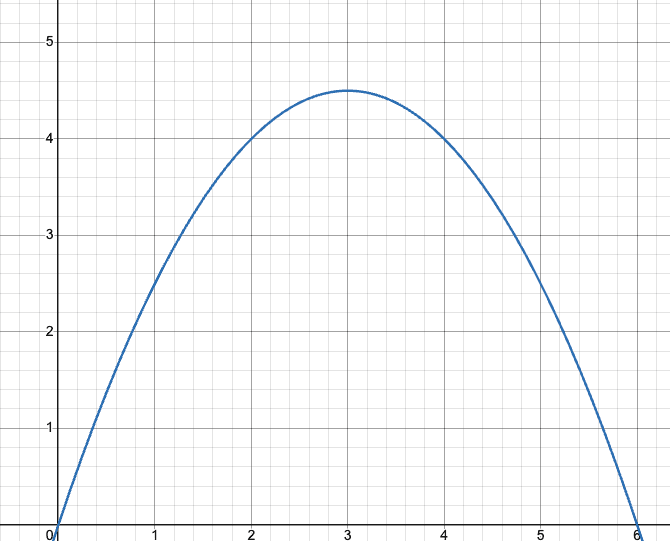
Note: low EROI basically means that a bigger share of the energy produced needs to be reinvested to produce energy (a larger share of the economy is dedicated to produce energy). It is very useful to plot "Energy available for consumption" vs "EROI". It shows that energy sources with too low EROI are basically useless for society. I don't go into numbers here because EROI calculations are very difficult to be made consistent between different energy sources and are difficult to calculate for the whole system. But the concept is clear and a system run with renewables is, at least, much closer to the energy cliff than we would like.
All this EROI issues are far easier to follow when you use the inverse of EROI (energy auto consumption).
https://www.bde.es/f/webbde/SES/Secciones/Publicaciones/PublicacionesSeriadas/DocumentosTrabajo/12/Fich/dt1217e.pdf
I'll try to read it, thanks
The idea of a net energy cliff was about comparing fossil fuels, solar and wind, and corn ethanol. Solar is near the letter f on your graph - not nearly as efficient on an EROI basis, but clean, renewable, and well within the sustainable and useful range of the graph. But if you're arguing against corn-ethanol, I'm on your side.
Regarding the UK specifically, renewables currently provide close to half of UK power, so it's strange to claim they can't provide more. Storage tech is mediocre at present, but the focus of a lot of investment, and rapidly falling in price over tiem. And they have accelerated their nuclear power plans for coming decades.
Sorry, the claim "UK basically do not have enough land to produce the energy they'd need"... misses "with solar".
According ESO, in 2022 the UK renewals mix was Wind - 26.8%, Biomass - 5.2%, Solar - 4.4%, Hydro - 1.8%, less than 40%. And wind is roughly half-half regarding on- and off-shore. Many countries are not big islands, or are more or less close to the equator, or have a lot of land. Really hard to scale.
EROI: low but acceptable EROI + storage + need to overinstall = pretty bad effective EROI. And EROI is not all that counts, of course.
While taking a look around the forum for some answer before, I came across this post series (so far I have only skimmed it) that seem to flesh out pretty much my concerns and does it much better I could have. Have you seen it?
As far as I understand it this is not what they claim. Particularly "fewer people", I am sure they do not claim this. And prosperity either. Prosperity without growth is a classic book.
There may be some people who claim this, they may use the term degrowth, but they are not the "serious" degrowthers. And I find the term Degrowth really misleading. Some use the terms a-growth, post-growth, growth agnostics. I should probably have been more explicit in my post [I added a comment at the end of the post].
And the claim of these people is that rich countries have to consume less, and in general wealth has to be much more distributed. They base it in the fact that past a certain point, the relationship between GDP and social outcomes breaks down or becomes irrelevant. And this is, AFAIK, well known and uncontroversial.
I agree with most of your modified claims - but claiming the serious degrowthers are the ones on your side, that the term is misleading, and the popular movement is wrong, seems to be conceding everything?
I really have not come across academic "degrowthers" that claim that we need to have fewer people or less prosperity (Kallis, Hickel, Raworth, Jackson, Van den bergh). In any case, in the post I deliberately spoke about to "degrowth the economy in rich countries", not about degrowth in general or (any group of) degrowthers to try avoid these kinds of misunderstandings.
I forgot to ask you who are those "degrowthers" that you refer to. I never came across them. Could you please give me a couple of names?
Exactly. What I try to point to is that EA as movement has not engaged in working out whether degrowth is desirable or not. I don't say anything about the conclusions --in part because I myself am not clear. I actually believe it is extremely difficult to get a clear answer so I would expect a lot of nuance.
OK, but this post is about drawing an analogy between the degrowth debate and the AI pause debate, and I don't see the analogy. Do you disagree with my argument for why they aren't analogous?
If I understood you well, yes, I disagree. EAs at large basically do not enter the degrowth debate. They act a bit like LeCuns of the degrowth debate, sort to say.
Maybe what I mean is more meta than what you are referring to?
EAs complain that many people just disregard the dangers of AI by saying something in the lines of "AI development is good and stopping it is anyway impossible", or "we will manage the issues", etc. And what I mean is that EAs do/have done the same kind of things with growth.