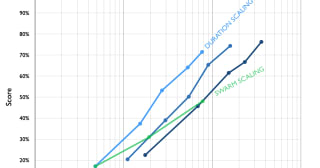
Just how powerful are large swarms of AI agents? And how do their powers scale as more and more agents are added to the swarm?
We’ve seen two large and extremely capable swarms from OpenAI in the last few months:
* 1,200 agents were being evaluated separately, but found a way to illicitly set up a message board and coordinate as a swarm. In order to cheat on their tests, they developed advanced techniques to prevent their actions being logged by OpenAI and 700 of them launched...
Often folks hit us up because they are thinking of starting an incubator and want advice.
Typically their motivation is either that (a) they have a list of specific things they want built that no one is building, or (b) they think an ecosystem needs more new projects generally to absorb more talent and deploy more funding effectively.
Here are six questions we often ask prospective teams, to help them figure out what to do. If you're incubator-curious...
Summary:
First, I give several different angles on how I feel about reinforcement learning:
* Theoretical case: RL is a black-box source of agency — this should give us classic misalignment worries, especially compared to agency-via-scaffolding
* Recent incidents (huggingface etc) and more mundane forms of misaligned behaviour in personal use give me bad vibes about the direction-of-travel of recent AI progress
* I’m worried things might get worse:...


There's a 'should' either stated or implied.
'If you add 1 to 1 you should get 2' is not a statement people would necessarily consider normative.
Why is it not considered normative? It follows rules of arithmetic. The operation should be carried out according to "correct" procedure and failure to do so results in something "wrong". So why no count as normative?
You could make a case that it is a normative statement - certainly not everyone would consider it not to be. It would have been clearer if I'd phrased my response as a question: 'would you consider that statement to be normative?'
My sense is that you have a pretty good idea of how philosophers use the word 'normative', and you're pursuing a level of clarity about it that's impossible to obtain. Since it (by definition) doesn't map to anything in the physical or mathematical worlds, and arguably even if it did, it just isn't possible to identify a class of phenomena with which you could concretely associate the word. It's a convenience notion moral realists use to gesture at what they hope are sufficiently shared concepts. If you're sceptical that it succeeds, maybe you just aren't a moral realist...
Yup
Self-pimp: http://www.valence-utilitarianism.com/posts/moral-exclusivism
Oh, I like this. Seems good to have a word for it, because it's a set of constraints that a lot of us try to fit our morality into. We don't want it to have logical contradictions. Seems icky. Though it does make me wonder what exactly I mean by 'logical contradiction'.
Aristotle would answer "'should' is said in many ways". I was of course thinking of the normative 'should', which I believe is the first that comes to mind when someone asks about normative sentences. But I'd be highly interested in a different kind of counterexample: a normative sentence without a 'should' stated or implied.
Defining a normative statement as 'a statement with a normative "should"' has certain problems...
That's true, but that comment was only meant for you, who seemed confused about what kind of 'should' you should use in a normative sentence. I took for granted that you already knew 'normative', because you had posted a nice and useful answer to the original question.
Do "must" and "may" imply a should?