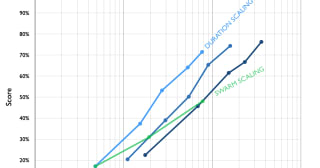
Just how powerful are large swarms of AI agents? And how do their powers scale as more and more agents are added to the swarm?
We’ve seen two large and extremely capable swarms from OpenAI in the last few months:
* 1,200 agents were being evaluated separately, but found a way to illicitly set up a message board and coordinate as a swarm. In order to cheat on their tests, they developed advanced techniques to prevent their actions being logged by OpenAI and 700 of them launched...
Often folks hit us up because they are thinking of starting an incubator and want advice.
Typically their motivation is either that (a) they have a list of specific things they want built that no one is building, or (b) they think an ecosystem needs more new projects generally to absorb more talent and deploy more funding effectively.
Here are six questions we often ask prospective teams, to help them figure out what to do. If you're incubator-curious...
Summary:
First, I give several different angles on how I feel about reinforcement learning:
* Theoretical case: RL is a black-box source of agency — this should give us classic misalignment worries, especially compared to agency-via-scaffolding
* Recent incidents (huggingface etc) and more mundane forms of misaligned behaviour in personal use give me bad vibes about the direction-of-travel of recent AI progress
* I’m worried things might get worse:...



Hey Michelle, did you release the cohort data I suggested donors might require to evaluate GWWC?
As far as I know, not all of that data you were asking about has been released, but some of it has and is in the impact assessment (notably 1.7% is a figure which is something like an average annual rate for members leaving, and 4.7% the equivalent for members losing touch with GWWC).
Thanks Owen.
My understanding was GWWC said that 1.7% was the average annual rate for members who admitted they were leaving, with an additional 4.7% of members not responding for two years. Unfortunately, these are not quite the numbers we want, and are likely to be too optimistic for a few reasons:
Aside from this optimistic bias, there are a few other reasons to want cohort data
Agree that the cohort data looks helpful for the reasons you mention (presuming a careful look at any privacy issues with releasing it checked out). I'll respond to a couple of the points:
I don't think so, and guess this is probably the right move despite the costs of lacking verification (aside from the obvious costs of data gathering, I'm worried about the subtle costs of making giving for the pledge feel more like an obligation than an opportunity, and this turning people off and leading to fewer donations, and fewer people encouraging others to join).
I think what's going on here is that the 65-70% figures were mostly response rates on a survey of members. More recently GWWC has gone to rather more trouble to follow up with members who don't initially answer the survey, in order to get better data (as it was unclear how many of the 30-35% non-respondents were still donating).
I see the sense in which it feels long. On the other hand, as the frequency of asking for responses from members is annual, this amounts to "missed two cycles". Counting it as dropping out with one missed cycle seems like it might catch too many people. This one seems pretty thorny to me, since more frequent data would be quite useful for analytics, but on the other hand impose rather larger burdens on both GWWC staff and members. And to the extent that what we care about is long-term donation behaviour, we may just need to wait for data.
Disclaimers: I work for the Global Priorities Project, part of the same umbrella organisation (CEA) as GWWC, and I was acting director of research at GWWC during 2014. I don't know all the operational details, though.
Thanks for your interest, Dale, and Owen for responding so thoroughly. I overall agree that there is a lot of information it would be nice to get at, although the numbers are somewhat small if we're trying to work out the difference between, say, the 2009 cohort and the others (since there were only around 30 members in 2009). Now that I can spend less time on fundraising, I'll try to put together a post about this. Just to add a couple of points to what Owen has said: On the question of students to earning - that was definitely a time we were worried people would drop out. The data doesn't seem to suggest that's the case though - so far it seems that people do tend to actually start giving 10% when they start earning. On the verifying donations - we have in the past compared AMF's data on donors with member self-reporting. While the self-reporting was far from perfect, people were at least as often under-reporting as over-reporting. (And most often discrepancies simply turned out to be mistakes about when the person had donated.) For the reasons Owen mentions, we did this once (to get a sense of whether reporting was approx accurate) but we aren't planning to do it again.
On the 2009 cohort -- would it make sense to bucket this with the 2010 cohort? (So treating the first 14 months of GWWC as one cohort, and in years thereafter)