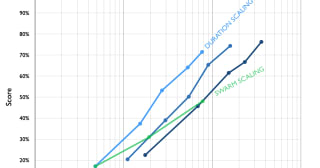
Just how powerful are large swarms of AI agents? And how do their powers scale as more and more agents are added to the swarm?
We’ve seen two large and extremely capable swarms from OpenAI in the last few months:
* 1,200 agents were being evaluated separately, but found a way to illicitly set up a message board and coordinate as a swarm. In order to cheat on their tests, they developed advanced techniques to prevent their actions being logged by OpenAI and 700 of them launched...
Often folks hit us up because they are thinking of starting an incubator and want advice.
Typically their motivation is either that (a) they have a list of specific things they want built that no one is building, or (b) they think an ecosystem needs more new projects generally to absorb more talent and deploy more funding effectively.
Here are six questions we often ask prospective teams, to help them figure out what to do. If you're incubator-curious...
Summary:
First, I give several different angles on how I feel about reinforcement learning:
* Theoretical case: RL is a black-box source of agency — this should give us classic misalignment worries, especially compared to agency-via-scaffolding
* Recent incidents (huggingface etc) and more mundane forms of misaligned behaviour in personal use give me bad vibes about the direction-of-travel of recent AI progress
* I’m worried things might get worse:...



In July 2022, Jeff Masters wrote an article (https://yaleclimateconnections.org/2022/07/the-future-of-global-catastrophic-risk-events-from-climate-change/) summarizing findings from a United Nations report on the increasing risks of global catastrophic risk (GCR) events due to climate change. The report defines GCRs as catastrophes that kill over 10 million people or cause over $10 trillion in damage. It warned that by increasingly pushing beyond safe planetary boundaries, human activity is boosting the odds of climate-related GCRs.
The article argued that societies are more vulnerable to sudden collapse when multiple environmental shocks occur, and that the combination of climate change impacts poses a serious risk of total societal collapse if we continue business as usual.
Although the article and report are from mid-2022, the scientific community has been messaging that climate change effects are increasing faster than models predicted. So I'm curious - what has the EA community been doing over the past year to understand, prepare for and mitigate these climate-related GCRs? Some questions I have:
I'm very interested to hear others' thoughts. While a lot of great climate-related work is happening in EA, I worry that climate GCRs remain relatively neglected compared to other GCRs.
I feel like this would be a good post. It might get unfairly buried as a quick take.