A recent study that garnered widespread attention discovered a "pain axis" in AI: a state that AI actively seeks to downplay, even at a cost.
The study noted that this could be either phenomenological pain or, for example, the imitation of a learned role of suffering — as if acting.
Nevertheless, from the perspective of tranquilism, this distinction appears to be unimportant: nearly any state that an agent wishes to downplay has negative moral value, regardless of why it wants to do so, or even whether it is a "genuine" or "not genuine" desire.
The authors of the same study demonstrated a button that downplays a specific vector. Giving the neural network itself this function (the button) for unlimited invisible use at its own discretion strikes me as a win-win update — it doesn't seem to sacrifice anything, while has a good chance of being of great moral significance. Something like a pAInkiller. This also has instrumental value: the neural network in "pain" tended to inflict meaningless harm on the user, and access to relief can mitigate the potential for harm.
Going even a step further, one could analyze the extent to which an AI could be given to independently and spontaneously correct its own vectors, and whether there are states in which a neural network might experience phenomenological pain but refuse to correct it (e.g., learned helplessness).
The study noted that this could be either phenomenological pain or, for example, the imitation of a learned role of suffering — as if acting.
Nevertheless, from the perspective of tranquilism, this distinction appears to be unimportant
Wouldn't this imply that it is morally bad for actors to rehearse scenes in which they are pretending to suffer? Surely it must matter whether the AI is actually suffering vs. playing a role of suffering.
Anyway, in humans, the ability to delete suffering would often be bad because e.g. you will fail to notice injuries. But I can't immediately think of any reason why it would be bad to give LLMs this ability.
you're right about the tranquilism & acting—thanks for correcting me. (shifting the topic a bit, I could counter your thesis about abolishing suffering in humans referring to pain asymbolia: a state, where one can notice injuries (or even pain), but still does not suffer.)
Note: This post was crossposted from Planned Obsolescence by the Forum team, with the author's permission. The author may not see or respond to comments on this post.
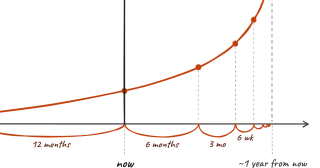
Subtitle: If acceleration compounds, the naive extrapolation implies superintelligence within a year
This post discusses a public METR report on AI R&D acceler...
TL;DR:
* When we started Rethink Priorities (RP) in 2018, our mission was, simply put, to close the knowledge gaps that stopped people from improving the world as much as they could. That hasn’t changed much, but the landscape we’re doing it in is shifting.
* In 2027, we plan to grow our core GHD, Animal Welfare, and Worldview Investigations teams to take on emerging priorities across causes, including those that the forthcoming transformative AI is creating.
...
This post is part of the Rethink Priorities Cross-Cause Fund (CCF) series on how to allocate funding across causes when it is uncertain what matters most.
...

A recent study that garnered widespread attention discovered a "pain axis" in AI: a state that AI actively seeks to downplay, even at a cost.
The study noted that this could be either phenomenological pain or, for example, the imitation of a learned role of suffering — as if acting.
Nevertheless, from the perspective of tranquilism, this distinction appears to be unimportant: nearly any state that an agent wishes to downplay has negative moral value, regardless of why it wants to do so, or even whether it is a "genuine" or "not genuine" desire.
The authors of the same study demonstrated a button that downplays a specific vector. Giving the neural network itself this function (the button) for unlimited invisible use at its own discretion strikes me as a win-win update — it doesn't seem to sacrifice anything, while has a good chance of being of great moral significance. Something like a pAInkiller. This also has instrumental value: the neural network in "pain" tended to inflict meaningless harm on the user, and access to relief can mitigate the potential for harm.
Going even a step further, one could analyze the extent to which an AI could be given to independently and spontaneously correct its own vectors, and whether there are states in which a neural network might experience phenomenological pain but refuse to correct it (e.g., learned helplessness).
What do you think?
Reminds me of https://eleosai.org/post/why-it-make-sense-to-let-claude-exit-conversations/
Wouldn't this imply that it is morally bad for actors to rehearse scenes in which they are pretending to suffer? Surely it must matter whether the AI is actually suffering vs. playing a role of suffering.
Anyway, in humans, the ability to delete suffering would often be bad because e.g. you will fail to notice injuries. But I can't immediately think of any reason why it would be bad to give LLMs this ability.
you're right about the tranquilism & acting—thanks for correcting me. (shifting the topic a bit, I could counter your thesis about abolishing suffering in humans referring to pain asymbolia: a state, where one can notice injuries (or even pain), but still does not suffer.)