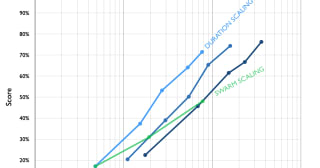
Just how powerful are large swarms of AI agents? And how do their powers scale as more and more agents are added to the swarm?
We’ve seen two large and extremely capable swarms from OpenAI in the last few months:
* 1,200 agents were being evaluated separately, but found a way to illicitly set up a message board and coordinate as a swarm. In order to cheat on their tests, they developed advanced techniques to prevent their actions being logged by OpenAI and 700 of them launched...
TLDR: Everyone’s talking about what the money could do, but few about how to decide where it goes.
This post is part of the new series of articles on cross-cause giving and the new wave of philanthropy. Stay tuned to the EA Forum and our Substack for the latest takes on topics such as giving now vs. later, common pitfalls in cause prioritization, and other crucial considerations from the Cross-Cause Fund (CCF) team...



Why you, as a 25 y/o should write a Will
You might die. If you did, would your money go to your feelings-over-facts relative who thinks a Humane Society is the same thing as the Humane League? Would this be in accordance with your values?
The SSA’s Life Tables tell us that if you are 25, you have an annualized chance of death of 1.8 in 1,000. I don’t know how much money you have, but let’s be generous and say you have $100k.
0.0018 (annual chance of death) / 12 = 0.00015 monthly
0.00015*$100,000 = $15/month
Would you bother to cancel a subscription that charged you $15 per month? What if you knew you’d have to cancel it eventually and that it would become more expensive every day you lived?
My lawyer says it can be as easy as filling in his template. Could this be worth 30 minutes?
I remember wondering the same a few years ago, and I came to the opposite conclusion. I think the biggest differences in my reasoning were:
Also quickly noting that you're using the annualized chance of death for males in the US, but a significant percentage of EA Forum readers are women, so have less than half the mortality rate between 15 and 37, and/or live in countries with a much lower youth mortality risk (e.g.in the UK it's 0.6 per 1,000 25 y/o males, in Italy 0.4, in the Netherlands 0.4 if I'm interpreting this correctly, I expect Germany and other European countries to be similar, Canada 0.97, Australia 0.6)
I think this post's argument assumes your $100k is lost by default if you don't have a will, but on a quick GPT-5 query it looks like in the UK it goes to your spouse, parents, siblings or siblings' children, and in California something similar. Assuming you're survived by a spouse or these family members and you're happy with your assets going to them then it seems like it's not the same as cancelling a $15/mo subscription. (But plausibly still worth it, I think it just needs a bit more explanation!)
Yes good point. Was thinking of this as "how many potential QUALYs would be lost if your money went to your not-so-EA relatives". But yes, if you think they would spend the money wisely then this makes sense.
I've wondered about this, so thank you for thinking this up and calculating! Considering how I did about as much work this past week to get a $3 monthly subscription cancelled, this is kind of genius.
Update: if most of your assets are in stocks or something like that, the easiest thing might be to quickly update your beneficiary information on your account.
This might end up covering enough of your assets such that the will is unnecessary.