Detailed Write-up: 1 hour read (separate page, for reference)
I. SNAPSHOT
A projects platform called EA Impact CoLabs has just been released as a 1.0 beta version. We are looking for EAs with projects and EA volunteers to add to or join the growing database - visit our website to join now!
A projects platform such as EA Impact CoLabs is a website where people with free time to devote to non-career-related projects can find interesting projects to volunteer for, or they can express a general interest in volunteering and be connected by our coordinators with projects that match their skills and interests. A project's platform also allows people with existing projects or a project idea to post said projects on the platform to attract potential collaborators/volunteers.
We believe a successful EA-aligned (but maybe not EA-branded) projects platform could lead to significantly more good being done via direct and indirect means. Many current project leaders cannot find volunteers or collaborators easily and even if only a small fraction of projects are highly impactful or evolve into non-profits, those few could justify the effort required to build and maintain a platform.
An improved 2.0 website that builds off of an existing platform (HelpWithCovid) will be our next phase of development and we are looking for feedback on the concept in general and our plans in particular, as well as volunteers to join us and help build our current and future solutions - fill out this form or email us at [email protected] to join our group!
II. OUTLINE
THE IMPORTANT PART
A group of volunteers has been working on developing a projects platform for EA, currently titled EA Impact CoLabs, and we would like to announce the release of our 1.0 beta version and request that the EA community begin to join as volunteers and/or post projects in need of assistance. Go to www.impactcolabs.com and join today!
We would love feedback on this current version, including general thoughts or reporting of any bugs/issues. We welcome feedback in the comments below and at our email: [email protected].
We also have plans for a 2.0 version, which we intend to build off an existing open-source solution (HelpWithCovid, which apparently originated from a discussion “between Dustin Moskovitz & Sam Altman”) and need more volunteers ourselves. We anticipate this new version will have significantly more functionality (see below under “Strategies..”), an improved user experience and, ultimately, a higher chance of long-term success. Although we have some particular needs (e.g. Ruby developers) we welcome anyone that is willing to help. If you are interested, please fill out this form or email us, ideally but not necessarily with a brief summary of your skillset, or other background info, at: [email protected].
Finally, if you have any questions not addressed in this post or if you disagree with the concept of a projects platform in principle, please see the Detailed Write-up. It contains a more nuanced and longform exploration of how a projects platform would fit within and benefit the EA community as a whole, an analysis of non-EA solutions that currently are trying to solve this problem in the market, and an in-depth review of each failure mode or challenge plus the potential mitigating strategies.
Below you will find an outline that provides a summarized justification of the platform, an explanation on how we plan to achieve our objectives (including identified risks and challenges) and a final reiteration of our suggested next steps. As mentioned, if you have questions or concerns we suggest reviewing the more detailed write-up, but overall we certainly welcome any and all feedback in the comments below.
JUSTIFICATION OF EA IMPACT COLABS (“Impact CoLabs”)
Significant Problems to be Addressed by Impact CoLabs
There are currently significant inefficiencies within the EA community with the following:
How project leaders and existing organizations find and attract potential volunteers (see IV.2. and IV.10)
How project leaders find and collaborate with others working on the same problem, or find how similar projects have failed (the “coordination problem”) (see IV.2. and IV.10.)
How project leaders provide updates on their project to the wider community (see IV.9.)
There are the following challenges:
The EA community cannot easily oversee or stay up-to-speed on which projects are being founded and run and by who (see IV.9.)
EA leadership cannot screen or vet projects that have significant potential downsides (see IV.9.)
Potential project founders cannot easily find a centralized list of tractable problems that need solving or a list of ideas for potential projects (see IV.9.)
Project leaders are not being supported with guidance and resources to maximize their chance of success (see IV.11)
There is an existing demand for a project platform that has been expressed multiple times on the EA forum. (see IV.10.)
The current solutions within and outside the EA community are fantastic initiatives but they each have some drawbacks when considering the community as a whole:
EA Work Club is not very active and focused on job opportunities
Effective Altruism Volunteer Facebook group it not widely publicized/used and past opportunities are not easily visible
Animal Advocacy Careers skilled volunteering section is focused on one cause area and on skilled volunteers.
The 22+ non-EA project/volunteer matchmaking websites are not optimized for doing good (see Section V: Non-EA Solutions)
Potential Positive Impacts of Impact CoLabs
Impact CoLabs could increase the number of projects being founded (see Figure 1 below) and increase the success rate of those projects, which would in turn lead to:
More successful projects, which do more direct good in the world (see IV.1.)
More projects that become incorporated nonprofit startups that do direct good in the world (see IV.1. IV.4) (see Figure 3 below)
More skill-building by those involved, which can be applied to other projects or jobs that do direct good in the world. (see IV.5)
More risk-taking and entrepreneurship in the EA community as a whole that can have an indirect impact on good being done in the world (see IV.6.)
More EAs collaborating more, which increases engagement and retention within EA (see IV.6.)(see Figure 2 below)
More successful projects, which demonstrate the value of the EA movement/philosophy to enact good in the world, thus increasing its reputation and potential impact (see IV.1.) (see Figure 2 below)
Impact CoLabs could allow more volunteers to find projects, which would:
Increase the success rate of projects, which do more direct good in the world (see IV.I)
Increase engagement in an EA-aligned activity by people that are primarily looking to do good by donating their non-work time, increasing top-of-the-funnel EA growth (see IV.7.)
Impact CoLabs could decrease the likelihood of potentially hazardous projects being founded, or good project being run by the wrong leaders, through vetting, which would in turn lead to:
Fewer direct negative effects from EA Projects (see IV.9.)
Reduced likelihood of reputational harm to EA due to harmful EA Projects (see IV.9.)
Impact CoLabs could eventually increase the quality of any non-EA projects posted on the platform due to better guidance and required sections or constraints within the platform (see IV.1.)
Impact CoLabs could eventually enable projects and funders to find each other and communicate more efficiently (see IV.8.)
HOW TO ACHIEVE THE OBJECTIVES OF A PROJECTS PLATFORM
Primary, Quantitative, High Level Objectives
Increase the total number of successful matches between project leaders and volunteers
Increase the number of (EA) projects founded (see Figure 1 below)
Increase the quality of (EA and non-EA) projects founded
Increase the success rate of (EA) projects
Decrease the number of harmful (EA and non-EA) projects
Decrease the wasted effort of different people unknowingly working on the same problem/project
Increase the success rate and decrease the effort of project leaders or organizations finding volunteers.
Increase the success rate for and decrease the effort of volunteers finding projects or organizations that need volunteers.
Decrease the effort of EA leadership in tracking and vetoing harmful or reputationally-harmful projects
Increase the success rate of project volunteers getting hired by and contributing to EA organizations compared to comparable candidates/employees that did not work on projects found through Impact CoLabs.
Strategies for Achieving Objectives (in order of probable priority)
Provide project founders with:
A project page as a place to explain/justify their project, specify what help is needed, recruit volunteers and provide updates
Include questions helping to analyze the impact of the project such as impact analysis, tractability/neglectedness/importance, counterfactual analysis, etc.
A page listing specific, tractable problems that need solving or a list of ideas by others who do not have the bandwidth, inclination or skill to execute on those ideas
A resources page for project founders to learn how to lead projects, attract volunteers, find the right expertise/counseling and perhaps find funding or established partners willing to collaborate
A searchable, filterable database of other ongoing and failed projects to ensure they are not duplicating or wasting effort and to learn from the failed projects.
Provide volunteers with:
An easily searchable, filterable database to find projects that fit their cause area interest, their skillset, their desired time investment and/or seem like a good skill-building opportunity
A profile that can be always active allowing project leaders to find and reach out to them if they have the in-demand skillset
Screen/Vet potentially harmful projects and highlight/promote potentially high-impact projects (see tentative Project Vetting Guidelines)
Either do not brand or associate Impact CoLabs with EA to mitigate reputational risks to EA and to potentially help attract non-EA volunteers in the future **OR** brand with EA so that EAs trust and invest their time in this platform and to help promote EA and its principles (currently assuming the latter but this might change when we launch our 2.0 version)
Build a community by:
Hosting “matching events” or speed-dating type meetups at EAGs or online.
Help organize volunteer rings around certain skill-sets, cause areas, geographies or timezones.
Collecting, synthesizing and sharing lessons learned, project ideas, past failed projects, and tractable problems that need solving
Hosting a slack/discord server for EA project leaders and volunteers
Hosting regular hack-a-thons, competitions and/or challenges around specific problem areas
Partner with external organization to help with or provide:
Vetting and screening of projects (e.g. EA organizations)
Cost-benefit analyses on projects (e.g. charity evaluators)
Guidance or training on how to successfully run projects (e.g. experienced non profit entrepreneurs or project leaders, foundries or incubators)
Free services or resources for projects (e.g. legal firms, marketing firms, AWS, Google Ads)
Funding sources or opportunities (foundations or funds)
A steady stream of volunteers or project ideas (i.e. coding bootcamps, top universities, nonprofit foundries or incubators)
Risks and Challenges
More projects might not lead to more good in the world (see VI.1.)
Projects and volunteer effort result in a net-negative impact, either because most projects have a negative impact, or due to the creation of extremely harmful projects that sink an otherwise net-positive impact (see VI.1)
EA projects and volunteer effort result in net positive impact but the increase and/or distraction of non-EA projects and volunteers drag the overall impact into the negative (see VI.1. and VI.12)
Even though the effort expended might have resulted in a net positive outcome, the time spent might have been better spent on other activities (i.e. opportunity cost is too high) (see VI.1. and VI.7.)
Projects might not lead to incorporated nonprofit startups, which is the scenario with the highest upside potential of Impact CoLabs (see VI.3. VI.4)
There won’t be enough projects or volunteers to sustain a platform on a continual basis (see VI.2.)
Developing good project ideas is hard and becomes the bottleneck (see VI.3)
Volunteering opportunities do not scale to meet the supply of volunteers (see VI.2. VI.6.)
Increasing the ease with which an individual can post and gain traction on a harmful idea or project outweighs any positive impacts (i.e. unilateralist’s curse). (see VI.1. VI.8)
Might increase the risk of information hazards (see VI.9.)
Failure might cause reputation harm
Failed projects (or a failed projects platform) might cause reputational harm to the project leaders, the volunteers, to Impact CoLabs, to the concept of a projects platform and/or to EA. (see VI.10.)
Failed projects might turn off volunteers, project leaders and EAs on working on projects or in participating in EA initiatives (see VI.5.)
It might be impossible or too resource intensive to screen/vet projects (see VI.11.)
Impact CoLabs might cause value drift in the community, either by promoting risk-taking with small, low-stakes projects, or by attracting new EAs that bring different values (see VI.13. VI.14.)
Any of the above negative effects could become permanent or long-term, causing them to become locked-in negative effects. (see VI.15.)
NEXT STEPS (+ the ‘ask’)
Currently our Beta version is live for testing and we are asking people to join so we can begin collecting and matching projects and volunteers, and to test the current functionality
We are asking the EA community to provide feedback and/or suggestions on the concept of a projects platform in principle (see detailed write-up) and our current approach in particular.
We are planning a new, more capable 2.0 platform building off the open-source solution HelpWithCovid. Please visit our detailed Project Plan for more information. If you are interested in volunteering to help build this platform:
EA Impact CoLabs consists of a dedicated team who have developed the project to date (I mainly just wrote it up) and were instrumental in the development of this post, including (alphabetically) Edo Arad, Yonatan Cale, Tomer Eldor, Charles Escalante, Gidon Kadosh, Jatin Kansal, Naomi Nederlof, and Sam Nolan. In addition, many others have provided critical input on the project and/or on this post including Catherine Low, Aaron Gertler, Vaidehi Agarwalla, Victor Yunenko, Aman Patel, Tinnei Pang, Radu Spineanu, and Harry K Ng.
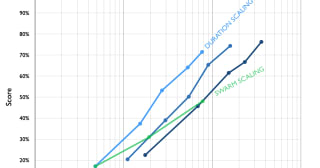
Just how powerful are large swarms of AI agents? And how do their powers scale as more and more agents are added to the swarm?
We’ve seen two large and extremely capable swarms from OpenAI in the last few months:
* 1,200 agents were being evaluated separately, but found a way to illicitly set up a message board and coordinate as a swarm. In order to cheat on their tests, they developed advanced techniques to prevent their actions being logged by OpenAI and 700 of them launched...
TLDR: Everyone’s talking about what the money could do, but few about how to decide where it goes.
This post is part of the new series of articles on cross-cause giving and the new wave of philanthropy. Stay tuned to the EA Forum and our Substack for the latest takes on topics such as giving now vs. later, common pitfalls in cause prioritization, and other crucial considerations from the Cross-Cause Fund (CCF) team...
Summary:
First, I give several different angles on how I feel about reinforcement learning:
* Theoretical case: RL is a black-box source of agency — this should give us classic misalignment worries, especially compared to agency-via-scaffolding
* Recent incidents (huggingface etc) and more mundane forms of misaligned behaviour in personal use give me bad vibes about the direction-of-travel of recent AI progress
* I’m worried things might get worse:...
It's good to see a new enthusiastic team working on this! My impression, based on working on the problem ~2 years ago is this has good chances to provide value in global health a poverty, animal suffering, or parts of meta- cause areas; in case of x-risk focused projects, something like a 'project platform' seems almost purely bottlenecked by vetting. In the current proposal this seems to mostly depend on "Evaluation Commission"-> as a result, the most important part for x-risk projects seems judgement of members of this commission and/or it's ability to seek external vetting
Thanks Jan! Yes, we even reference your post in our detailed write-up and agree that vetting will be critical and a bottle-neck to maximum positive impact, particularly related to x-risk. Currently we have implemented a plan that we believe is manageable exclusively by a small group of volunteers, and have included a step in the process that involves CEA's Community Health team. Having said that, we don't think that is an ideal stopping point, we hope to expand into other forms of vetting pending general interest in the project, vetting volunteer interest and the building of other functionality or establishment of partnership with outside orgs. You can read more in sections IV.9 and VI.11 of the write-up about our thinking on these topics. Lastly, given your fantastic analysis in the past, if you would like to help out we would welcome any new team members that are interested in or familiar with this metaproject -- you can email [email protected] anytime!
We decided to close the project in 2022 for two main reasons:
We looked at engagement metrics and calculated how much throughput of volunteers and projects we would need to achieve a take-off trajectory on this metaproject and concluded it would take much active effort, partnerships and acceptance of the wider EA community. Given that this was a volunteer project we thought the odds of this happening were low.
CEA also communicated with us that they were considering including something similar in the forum. They ended up decided against it at the time (focusing on individual profiles more so founders could find each other), but in the meantime our volunteers became demotivated.
We also found many difficulties around project vetting, volunteer management and upkeep that made it a hard initiative to continue. Many of us still strongly believe more entrepreneurship within the EA community would be beneficial and that something like this metaproject would be very helpful. I am eager to discuss new metaprojects like this with anyone that wants to try to launch one and to communicate further leassons learned.
This failure mode seemed similar in nature to this listed mistake on the CEA website. Specifically:
We think we should have taken on fewer new projects, set clearer expectations for them, and ended unsuccessful projects earlier.
Running this wide array of projects has sometimes resulted in a lack of organizational focus, poor execution, and a lack of follow-through. It also meant that we were staking a claim on projects that might otherwise have been taken on by other individuals or groups that could have done a better job than we were doing (for example, by funding good projects that we were slow to fund).
OTOH, it may not have caused harm in this case if 1) or others were sufficient reasons to close the project without 2), or if this wasn't a project that could have been done better than CEA.
I'd like to discuss a similar "metaproject" I have in the works. Currently my goal for a "minimum viable product" is just the list, with volunteer matching added later if it works, but also including smaller "quick win" projects and immediate contributions that could be made. Would you be willing to share further and discuss lessons learned on this one?
Feedback on this post: I did not understand what CoLabs was after reading the 1-minute snapshot; I had to read aways into the outline and click through to the site to understand what the product is. I think you assume your target audience knows what a “projects platform” is without needing it defined, but it took me a while to understand what that meant.
Thank you for the feedback! You found a blindspot that most of us at Impact CoLabs and those we asked to review this post had, namely that we all had a concept in our mind for what a project platform was. I have adjusted the snapshot to hopefully aid in explaining the concept in general, but please let me know if this still doesn't address your issue.
I’ve been thinking about helping to set up some sort of EA incubator ecosystem. My contribution could be to collect, organize, prioritize, and roadmap all the project ideas that are floating around. I’d apply some sort of process along the lines of that of Charity Entrepreneurship but with a much more longtermist focus. I’ve been envisioning this in the form of a wiki with a lot of stub articles for project ideas that didn’t pass the shallow review phase and a few comprehensive articles that compile (1) detailed thinking on robustness, importance, tractability, etc.; (2) notes from interviews with domain experts; (3) a roadmap for how the project might be realized; (4) descriptions of the sorts of skills and resources it will require; (4) talent, funding, and other buy-in that is maybe already interested; (5) a comment section for discussions. (Jan’s process could be part of this too.) Since this would take the format of a wiki, I could easily add other editors to contribute to it too. I wouldn’t make it fully publicly editable though. Ideally, there’d also be a forum post for each top project that is automatically updated when the wiki changes and whose comments are displayed on the wiki page too.
My main worry is that the final product will just collect dust until it is hopelessly outdated.
So I’ve been wondering whether there are maybe synergies here, e.g., along the lines where I do the above, and your platform can in the end reduce the risk that nothing ever comes of the top project ideas?
I’ve only spot-checked a few of your current projects, but it seems to me that they typically have project owners whereas my projects would typically start out with no one doing them and at max. vague buy-in of the sort “People X and Y are tentatively interested in funding such a project, and person Z has considered starting this project but is now working on something else because they couldn’t find a cofounder.” Do you think that would be a critical problem?
Hi Denis, thank you for your message and your offer to contribute, it is welcome. Since we are just starting out we still haven't built all the capabilities we have envisioned. For example, and as mentioned above, we were planning a list of tractable problems and project ideas to guide potential project leaders, as well as a list of past/failed projects or lessons learned from projects to ensure the community as a whole is not just spinning its wheels (e.g. this metaproject has had similar iterations in the past..). But your idea for a wiki that not only provides problem areas and project ideas but also provides thought-through analyses, roadmaps, required skills lists, available resources and community input is a huge improvement over our current plan. So I don't think the issue of not having project leaders identified upfront would be a critical problem, as long as you're OK with your wiki being separate from the project database. Ideally entrepreneurial EAs will find your project write-ups on Impact CoLabs and then create a project from it (or people that are screened from the platform due to low-impact ideas can be directed to those pre-vetted ideas).
We definitely want the ultimate version of Impact CoLabs to be the central node for project creation, and we want the resources we provide to reflect that. The goal is to be a more high-volume/low-touch, top-of-the-funnel solution than the incubators/accelerators like Charity Entrepreneurship or other upcoming startup factories. But even if we are not going to shepherd projects personally and diligently, it doesn't mean we can't try to provide as detailed and well-researched guidance as possible.
My only slight hesitation for your approach is the effort involved in development and upkeep, we would rather offer a lower-value solution (just a list of ideas) that we can guarantee can be maintained than a higher-value solution (detailed wiki with required fields for each project idea) that has a large chance of being abandoned after a while. So it all depends on volunteer interest in contributing and/or how we set it up. Would love to chat about this more. If you want to take this offline we would recommend filling out our new team member form so we can get you more background info on the project, or alternatively you can just email [email protected].
Meanwhile I’ve set up my wiki, started thinking about the structure of the template I’d like to use for the project pages, and have started reading up on your Google Docs. It’s impressive how thoroughly you’ve already evaluated your project concept!
My “idea foundry” project itself will have its own page in its wiki with more information on my future plans. That’ll make it easier to reflect on whether the whole thing is sustainable. I haven’t thought about it sufficiently myself. I’ll only publish individual pages once I have proofread them for possible info hazards and have gotten feedback from some trusted friends too.
… as well as a list of past/failed projects or lessons learned from projects
Yeah, and there are also a lot of ostensibly brilliant project ideas in various lists that I think are subtly deleterious. No one has attempted to realize them yet (at least the ones I vaguely recall and to my knowledge) but a project database with just a bit more detailed thinking may help to keep it that way. (Or else may inspire someone to come up with a way to realize the project in a way that avoids the subtly deleterious bits.)
… as long as you're OK with your wiki being separate from the project database
Totally. It feels like so far I’ve been wholly unconvinced by some 95+% of project ideas I’ve read about, so those should not end up on your platform. It would just be valuable – or essential – to be able to promote the top of the shortlist to potential founders.
My only slight hesitation for your approach is the effort involved in development and upkeep, we would rather offer a lower-value solution (just a list of ideas) that we can guarantee can be maintained than a higher-value solution (detailed wiki with required fields for each project idea) that has a large chance of being abandoned after a while.
I’m worried about that too. I’d be willing to risk it, pending further thinking. An alleviating factor is that the detailed reviews would be reserved for a small shortlist of projects. Most of them would just get a quick stub summary and the reason why I didn’t prioritize them.
I’ve read that you’re perfectly open to (for-profit) social enterprises and of course early-stage project in need of cofounders. But I see the term “volunteer” a lot in the materials. It has these particular associations with low commitment, low responsibility, no salary, nonprofits, etc. Is it the best synonym for the job? None of the alternatives I can think of is quite broad enough either – cofounder, collaborator, partner, talent, … – but I imagine that such word choices can influence what the platform will end up being used for. A platform for “cofounder matching” may end up being used for more high-value work than one for “volunteer matching,” maybe some sort of “Task Y” notwithstanding. But I’ve also heard that someone had the impression that cofounder matching is not a current bottleneck, which I found surprising.
I’ll get in touch through one of the channels you recommended.
Thank you for the kind words and the great feedback! You make a great point about 'volunteering', we will discuss that internally. I'm generally in agreement with your comments but would love to explore some of the nuance! Look forward to hearing form you, if you reach out and don't hear back, please message me here to make sure we are being responsive.




It's good to see a new enthusiastic team working on this! My impression, based on working on the problem ~2 years ago is this has good chances to provide value in global health a poverty, animal suffering, or parts of meta- cause areas; in case of x-risk focused projects, something like a 'project platform' seems almost purely bottlenecked by vetting. In the current proposal this seems to mostly depend on "Evaluation Commission"-> as a result, the most important part for x-risk projects seems judgement of members of this commission and/or it's ability to seek external vetting
Thanks Jan! Yes, we even reference your post in our detailed write-up and agree that vetting will be critical and a bottle-neck to maximum positive impact, particularly related to x-risk. Currently we have implemented a plan that we believe is manageable exclusively by a small group of volunteers, and have included a step in the process that involves CEA's Community Health team. Having said that, we don't think that is an ideal stopping point, we hope to expand into other forms of vetting pending general interest in the project, vetting volunteer interest and the building of other functionality or establishment of partnership with outside orgs. You can read more in sections IV.9 and VI.11 of the write-up about our thinking on these topics. Lastly, given your fantastic analysis in the past, if you would like to help out we would welcome any new team members that are interested in or familiar with this metaproject -- you can email [email protected] anytime!