Comments
I couldn't find a video or recording of the actual talk from the Conference on the Ethics of Giving. If you happen to know of one, please share it in the comments!
She gave a closely related talk at EAG London 2017.
I couldn't find a video or recording of the actual talk from the Conference on the Ethics of Giving. If you happen to know of one, please share it in the comments!
She gave a closely related talk at EAG London 2017.
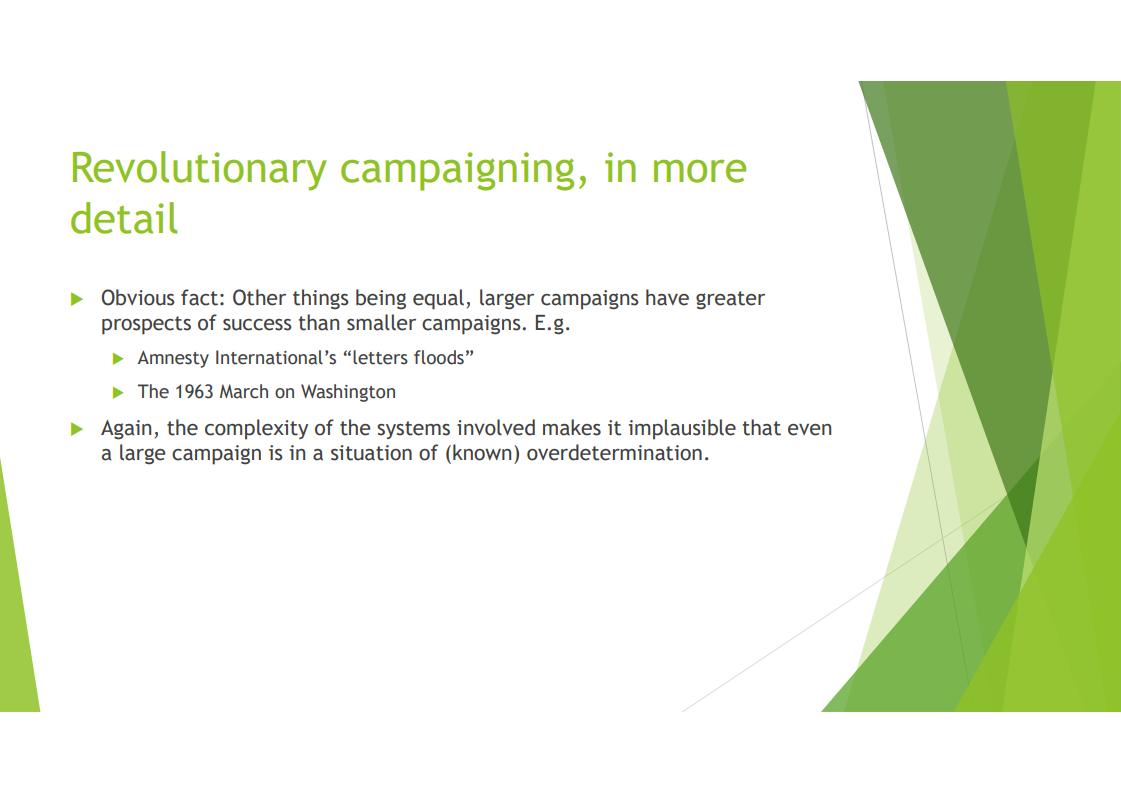
I agree that there are relatively few people in EA looking at anything I'd consider "the impact of collective action," but I also think this makes sense given the reality of EA's size and influence. We are a few thousand people (perhaps 10,000) spread across multiple continents. Working on advice for individuals (or even your nearest government) seems much more likely to bear fruit than figuring out which actions are most promising for large groups of people to take together.
I would be interested to see more work on questions like "what are the best predictors of a viral Change.org petition?", where there's a chance of leveraging large groups who aren't connected to EA at all.
The work that a few EA-aligned people are doing to attempt to influence a parliamentary vote (using a relatively novel approach) may be of some interest to you, as well as this successful ballot initiative which involved some degree of public advocacy.
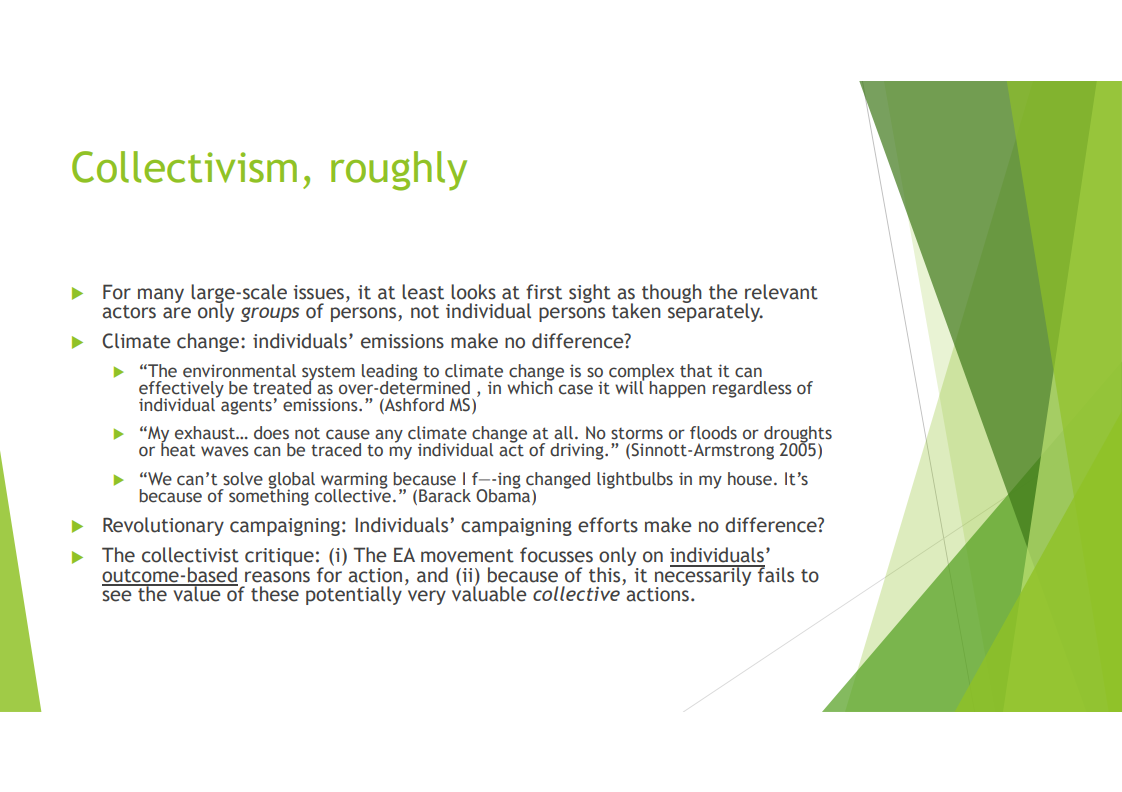
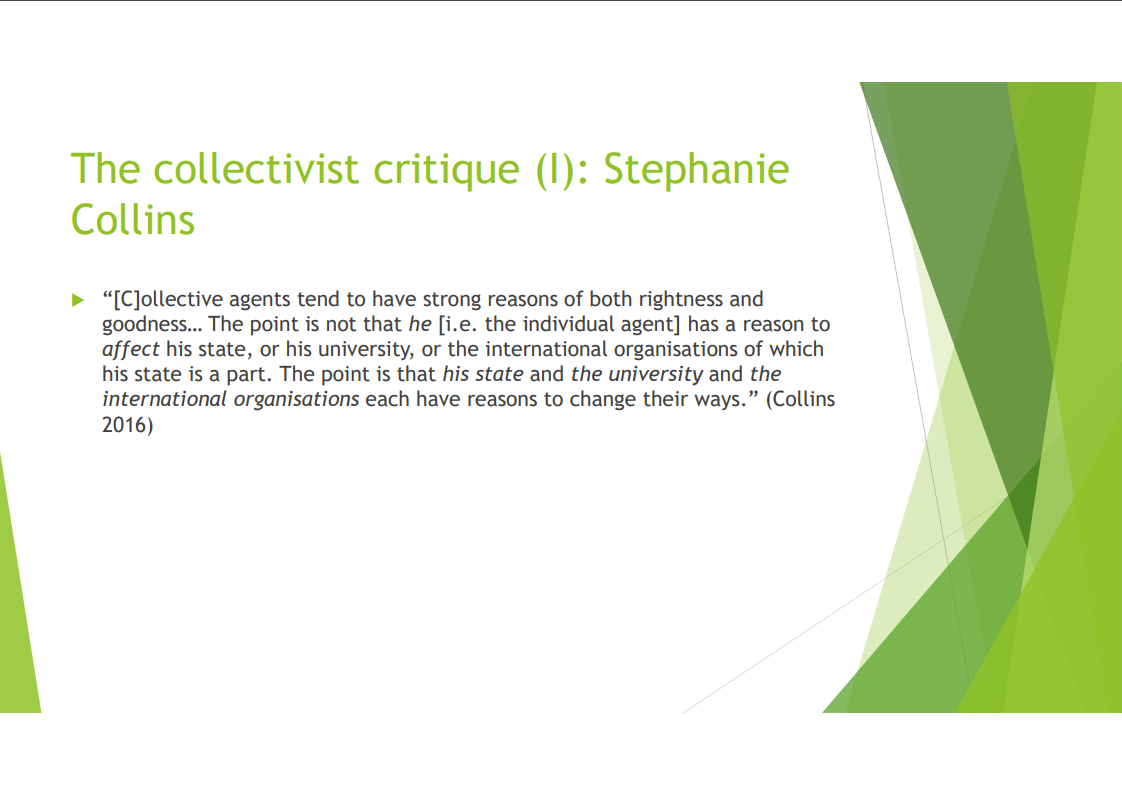
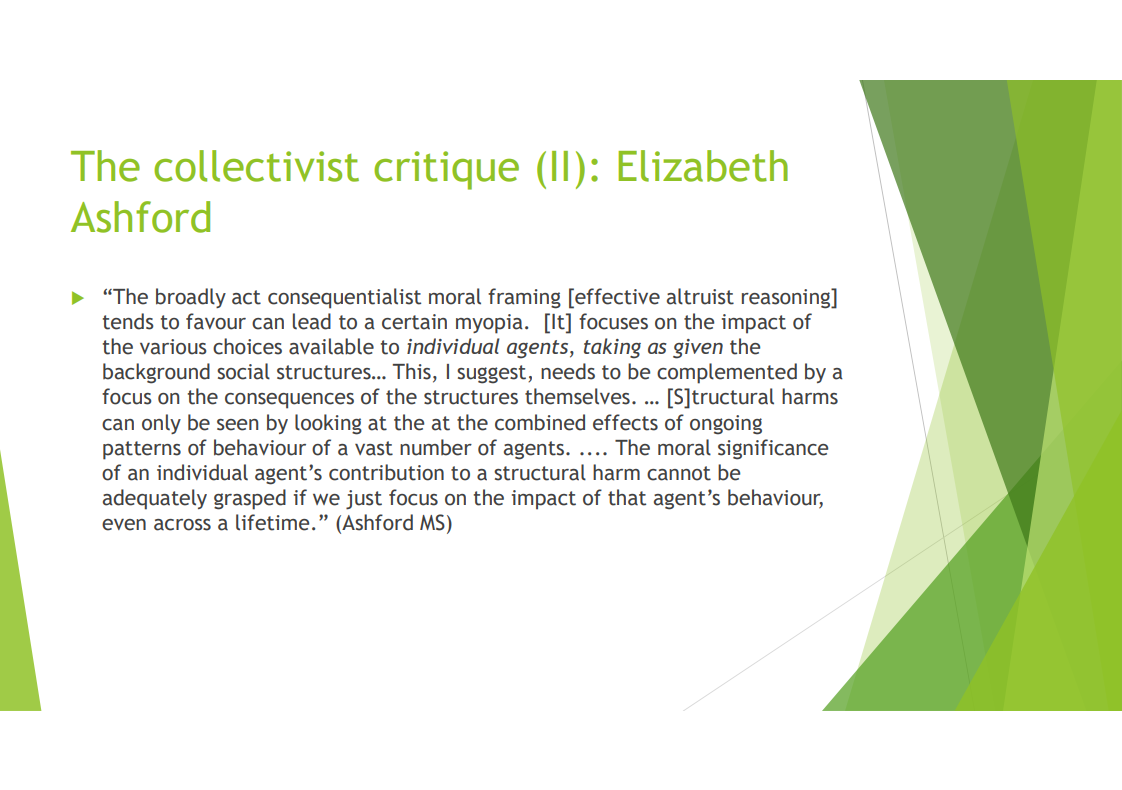
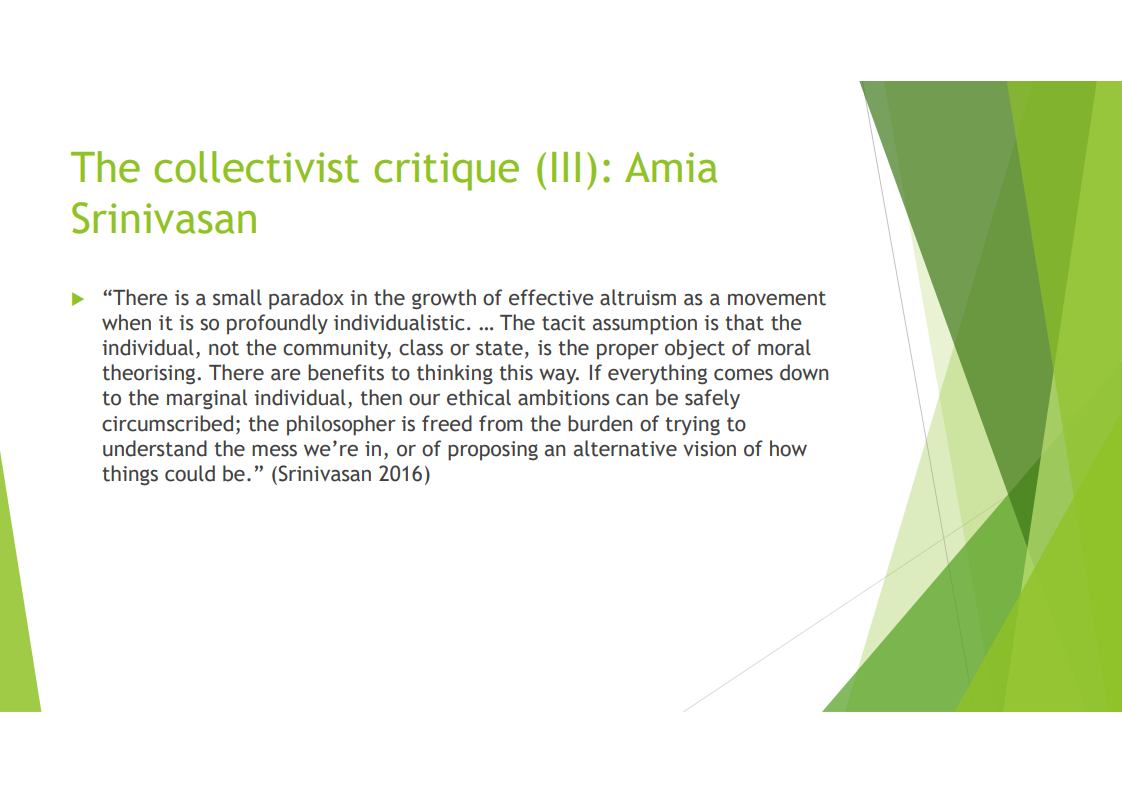
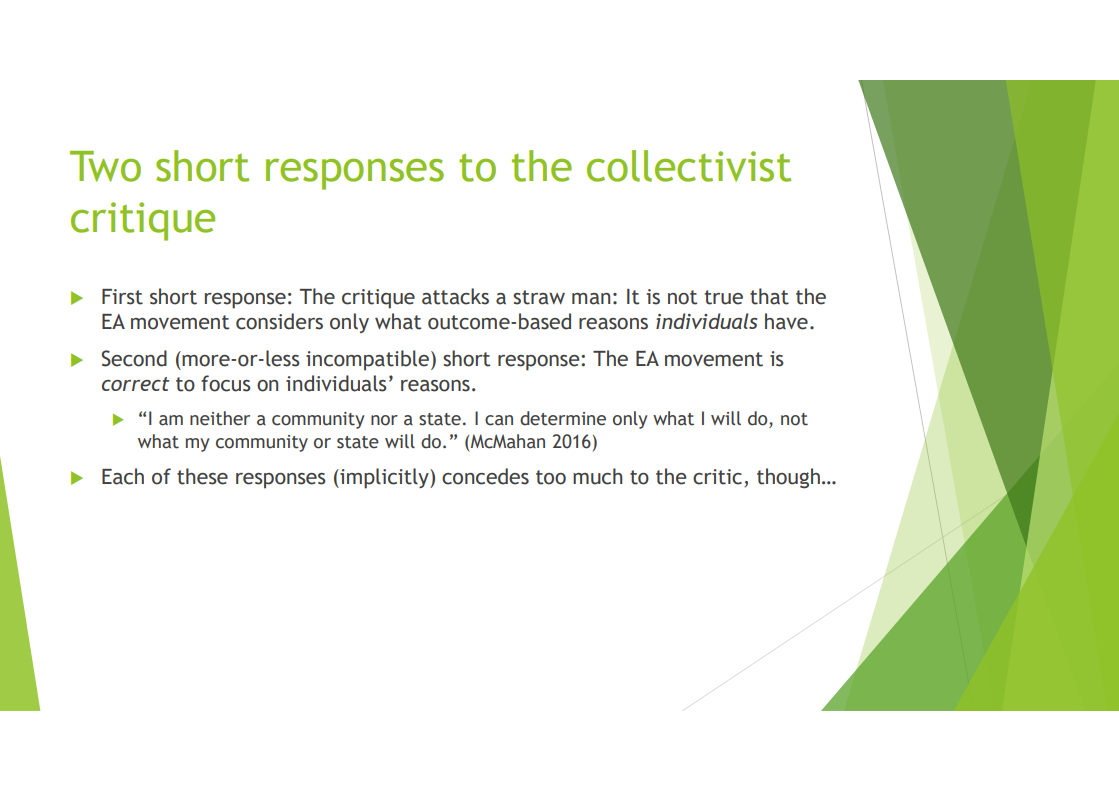
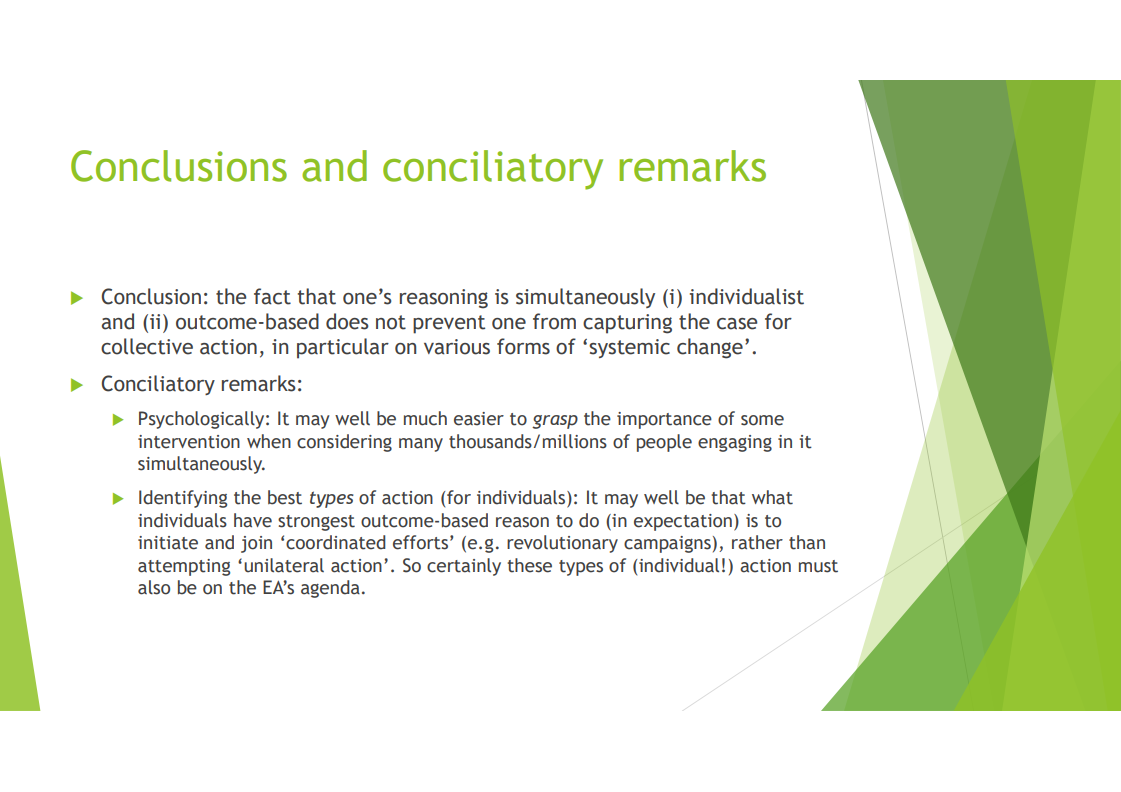
I think so. As I understand the critique (and maybe I'm bringing my own baggage to it) EA brings with it a certain perspective that centers individual action and may have a tendency to overlook collective action and create certain blindspots around collective/political action.
That EA principles are not philosophically inconsistent with collective action is not, I believe, actually a very effective counter-argument to that point at all.

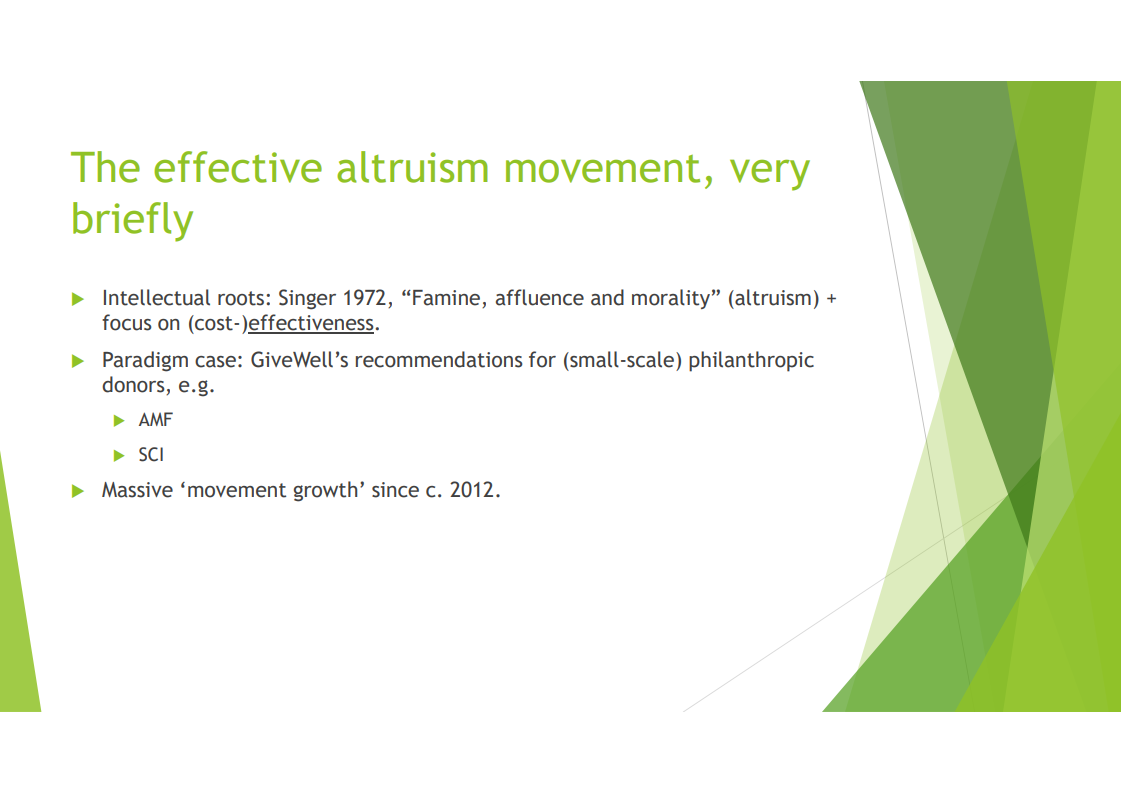
I discovered this recently and enjoyed the brevity and clarity of the presentation, so I'm sharing it on the Forum.
I couldn't find a video or recording of the actual talk from the Conference on the Ethics of Giving. If you happen to know of one, please share it in the comments!
Written in haste. All inaccuracies are mine.

Thanks for the post, Aaron. It's a good lecture and a very interesting subject.
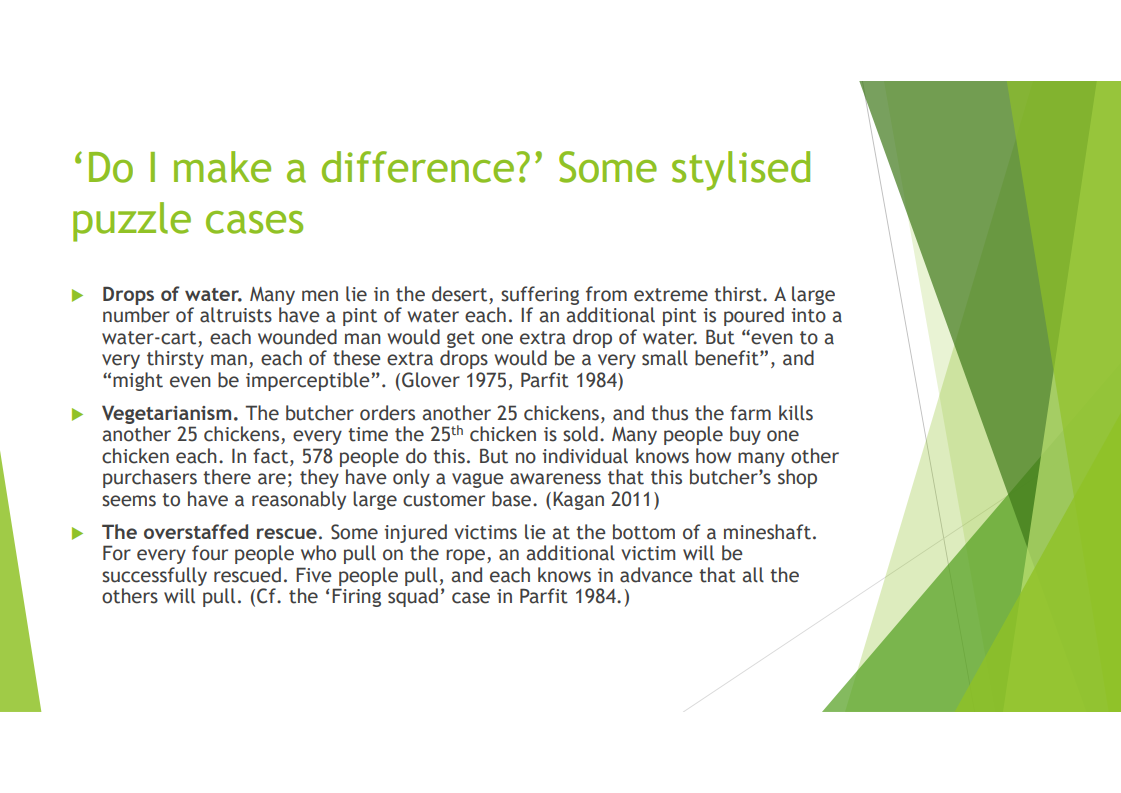
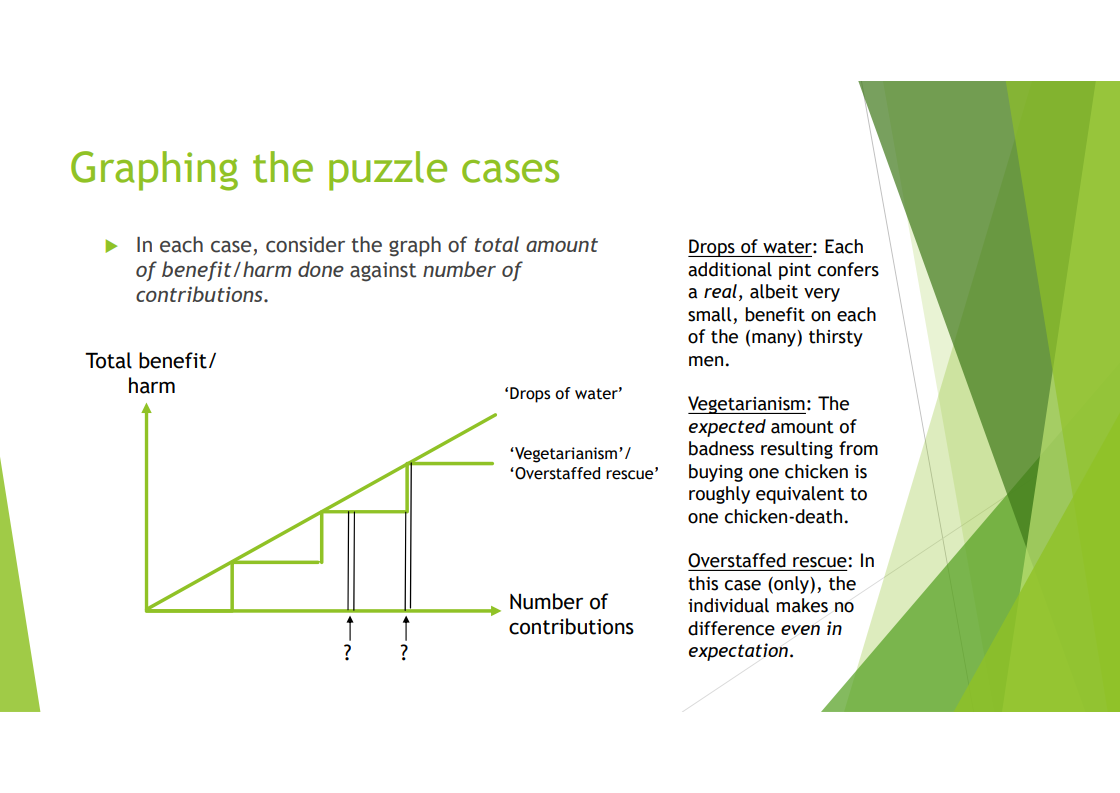
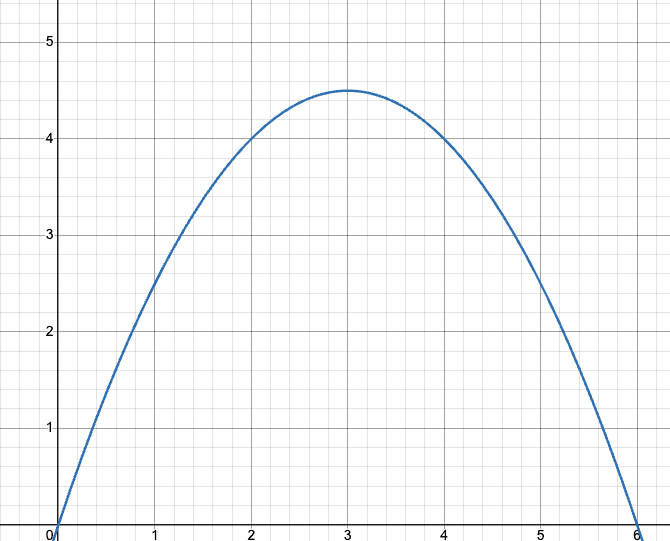
I wonder if there’s a more general problem of “tipping points” here. And though I think there’s no real necessary conflict between individual & collective action for EAs, there’s a relevant issue when it comes to analyzing how neglected a cause area is – i.e., deciding if an additional contribution increases the probability of effective change.
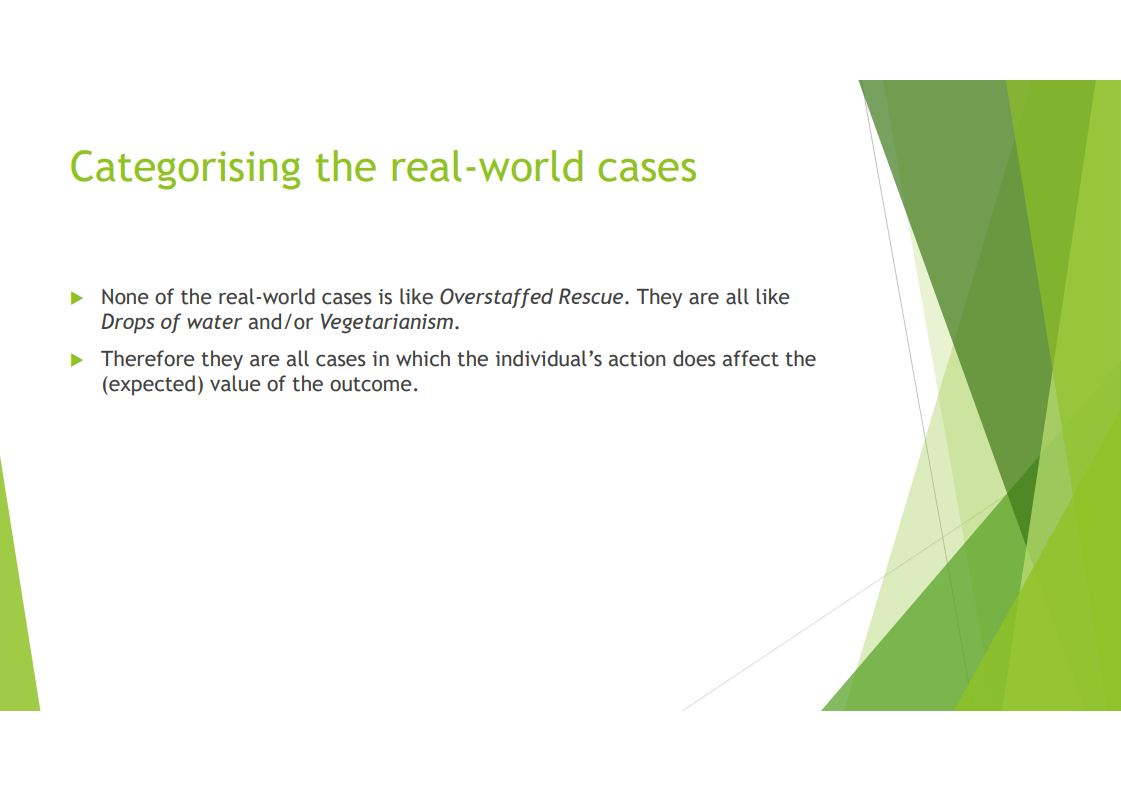
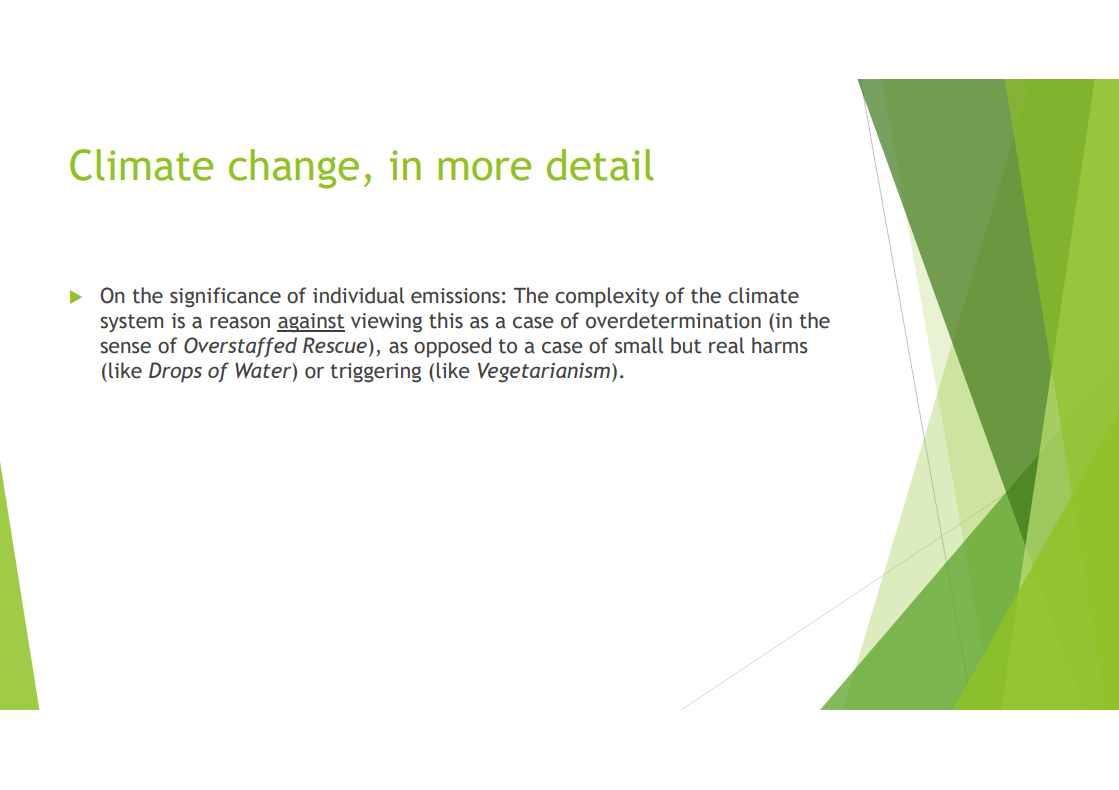
I should remark that I’m not sure that the “expected badness amount of buying one chicken” is roughly equivalent to one-chicken death marginally, because markets take a while to adjust to someone’s shift in preferences. So if you forgo eating chicken only for today, the market still expects you might do it tomorrow; but if you become a vegetarian, the industry will eventually realize a drop in demand. Thus there’s a number n > 1 of chickens, a tipping point, below which your consumption makes no difference for the amount of chicken killed. Similarly, a realistic instance of Drops of Water could be framed as a matter of achieving the (unknown) threshold below which people would dehydrate and die – it’d not make any difference to contribute to the pool below that threshold.