This is the monthly thread for EA organisations to share updates, announcements, and opportunities directly with the community.
Organisations post their own updates in the comments. Moderators may remove clearly irrelevant or off-topic content if necessary.
Quick notes
- If you’re an organization and your comment is automatically removed by our bot, please message us. We’ll review it and restore it if appropriate.
- You can find previous threads on the “EA Organization Updates (monthly series)” topic page. For additional updates outside this thread, see the “organization updates” tag.
- If you’d like to get a monthly reminder to publish org updates on the forum, please apply for the mailing list here.
We'll keep this pinned until May 17th.

New Incentives' CEO and founder, Svetha Janumpalli, is hosting an AMA. If you're interested in what's next, the lessons we've learned along the way, or have a question that challenges our assumptions, this is a great opportunity. She'll answer questions on May 20th.
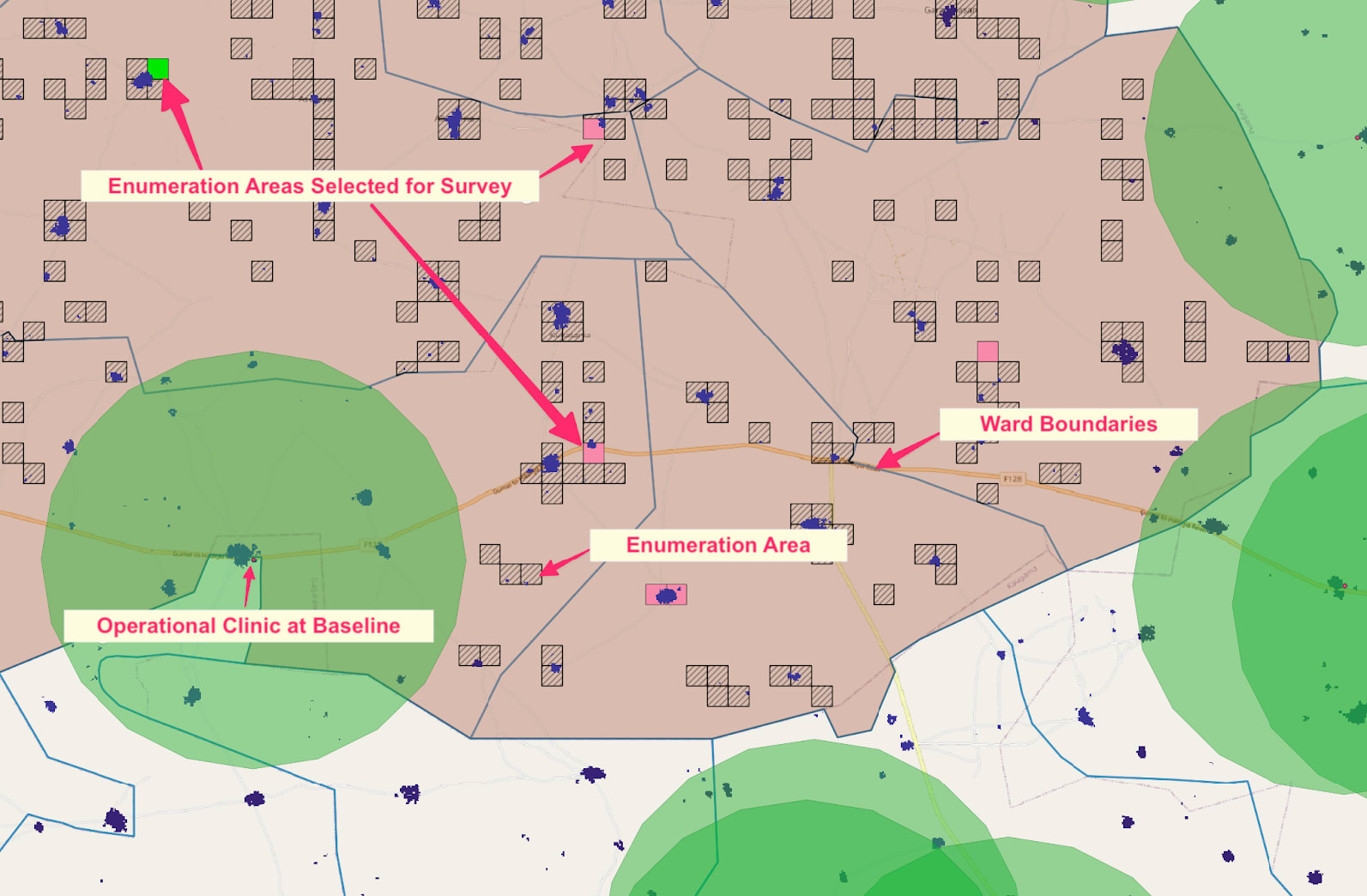
AMA ThreadRCT evidence established that New Incentives' program increases childhood vaccination rates in northern Nigeria, but RCT results reflect a specific time, place, and scale. As the program grows, we think it's important to keep asking whether those gains are holding. In 2025, New Incentives conducted over 26,000 household surveys across 13 states to monitor vaccination coverage on an ongoing basis, using rigorous sampling protocols and multiple layers of data quality verification. Our newest blog walks through the methodology in detail.
GiveWell Updates
- GiveWell is launching a new RFI to expand and strengthen our malaria grantmaking in Africa and help our donors make a greater impact. Expressions of interest can be submitted through one of two tracks, the first for malaria chemoprevention and vector control pilot programs and the second for research and evaluation. Submissions are due June 24.
Learn More- Most of GiveWell’s grantmaking focuses on programs that reduce child mortality, but our growing research capacity has expanded what we’re able to evaluate and fund, including highly cost-effective programs that meaningfully improve quality of life. In a recent podcast episode, GiveWell CEO and co-founder Elie Hassenfeld speaks with Program Officer Meika Ball about our grant to MiracleFeet—an organization that expands access to clubfoot treatment—and her recent site visit to see the program in action in Côte d’Ivoire.
Listen Here: Evaluating and Funding a New Kind of Grant- Save the date for our upcoming webinar, Looking Back to Give Better: How GiveWell Evaluates Its Grantmaking, on Tuesday, June 9. GiveWell co-founder and CEO Elie Hassenfeld will moderate a conversation with Program Directors Alex Cohen and Julie Faller about how we evaluate whether a grant achieved the impact we initially estimated—and how we use those findings to make better impact estimates over time.
Register Here- Vitamin A supplementation has one of the strongest evidence bases of any program we've evaluated. But when you dig in, the evidence is more complicated than it looks. GiveWell Senior Researcher Stephan Guyenet joins CEO and co-founder Elie Hassenfeld on the GiveWell Conversations podcast to talk about the evidence for vitamin A supplementation, the hard questions that remain, and how our expanded research capacity is helping us go deeper so we can direct funding more effectively.
Listen Here: Scrutinizing One of Our Longest-Funded ProgramsMATS is hiring for a Head of People role, which will be both our first fully dedicated HR/People/People Operations role, as well as part of our leadership team.
There are lots of systems and processes that we want to build and develop, and we are looking for people who have the experience of building the HR parts of an organization. This will be a busy and complex role. The most competitive candidates will have experience helping a tech and/or non-profit organization scale from sub-50 to 100+, as well as more than one experience of building an HR function from scratch. Quoting directly from the job description:
Anima International Organization Updates:
Anima International Fellowship 2026
A reminder that applications for the Anima International Fellowship close on May 17th. The Fellowship is a fully funded 3-week in-person program for those considering working in effective animal advocacy. It will take place in Warsaw, September 1–20. We cover flights, accommodation, meals, and participation in the CARE Conference + offer a €1,500–€3,500 stipend. It’s open for applicants worldwide, no prior advocacy experience required.
CARE Conference 2026
You can apply for travel support to attend CARE Conference 2026 (Warsaw, September 17–20). If you want to attend CARE but the cost of travel is stopping you, we may be able to help. We review support requests on a rolling basis, so please apply as early as possible. Applications close July 1st.
Evidence Action's Organization Updates:
- Evidence Action named Danielle Bayer as CEO. She succeeds Kanika Bahl after nine years of transformational leadership reaching 530M+ people across 11 countries. Danielle takes the helm at a moment when the need for proven, scalable health interventions has never been greater.
Full CEO AnnouncementEvidence Action is hiring for the following positions:
Applications Open for HIP's Impact Accelerator Program
High Impact Professionals (HIP) is excited to announce that applications are now open for the next round of our Impact Accelerator Program (IAP). The IAP is a free 6-week program designed to equip experienced (mid-career/senior) EA-aligned professionals (not currently working at a high-impact organization) with the knowledge and tools necessary to make a meaningful impact and empower them to start taking actionable steps right away.
To date, the program’s high action focus has proven to be successful:
We’re pleased to open up this new program round, which will start the week of July 13.
More information is available below and here.
Please apply by Sunday, June 7.
Apply nowNew for 2026: IAP Entrepreneurship Track
If you’ve been thinking of starting your own high-impact organization, the IAP Entrepreneurship Track offers you the guidance, network, opportunities, and tailored support to help you succeed.
It includes everything in the standard IAP, plus:
The Good Food Institute Organisation Updates:
Hot off the press: Our 2026 State of the Industry reports:
Our annual deep dive into the rapidly evolving alternative protein landscape is here! GFI has GFI’s 2026 State of the Industry reports provide a global snapshot of the plant-based, fermentation-derived, and cultivated protein landscape—synthesizing product trends, investment and sales data, new scientific advancements, public investment, and regulatory updates to highlight industry progress.
Although it was a challenging year for the sector, with some start ups closing their doors, regulatory hurdles, and ongoing misinformation around ultraprocessed foods, the overall picture is good. Plant-based food sales grew by 3% in 2025, with Europe remaining the biggest market. And government investment in alternative proteins has quadrupled in the last four years, with 33 countries now investing in the sector (up from 16 in 2020).
Calling for alternative proteins to be included in EU plans
Together with 30+ organisations, GFI Europe has signed a joint letter calling for novel foods, including alternative proteins, to be included in new EU legislation on regulatory sandboxes – spaces where regulators and innovators can learn about new technologies together.
Regulatory sandboxes are already used across the EU to accelerate innovation in an evidence-led way. But currently, alternative proteins are excluded from these sandboxes, missing out on an opportunity to accelerate research and improve regulator confidence in alternative proteins. We're asking EU policymakers to change this ahead of upcoming negotiations.
China’s alternative protein opportunity
A new report by Systemiq Ltd. models how China's innovation-to-mass-adoption playbook could fundamentally reimagine global meat production over the coming decades.
According to the report, new food security legislation, state investment in fermentation infrastructure, and the emergence of alternative protein clusters indicate that protein innovation is a central strategic priority for the nation's policymakers.
By taking a page from the playbook it used to successfully scale its EV and solar industries and applying that strategy to food, China could go from an "engine of global agricultural demand" to a net protein exporter as soon as 2040. Dig into The Good Food Institute APAC's latest newsletter to learn more.
We’re hiring:
Vice President of Operations - Remote (US) – Apply by 19 May 2026
Investor Engagement Manager - Remote US – Apply by 19 May 2026
Thank you for reading!
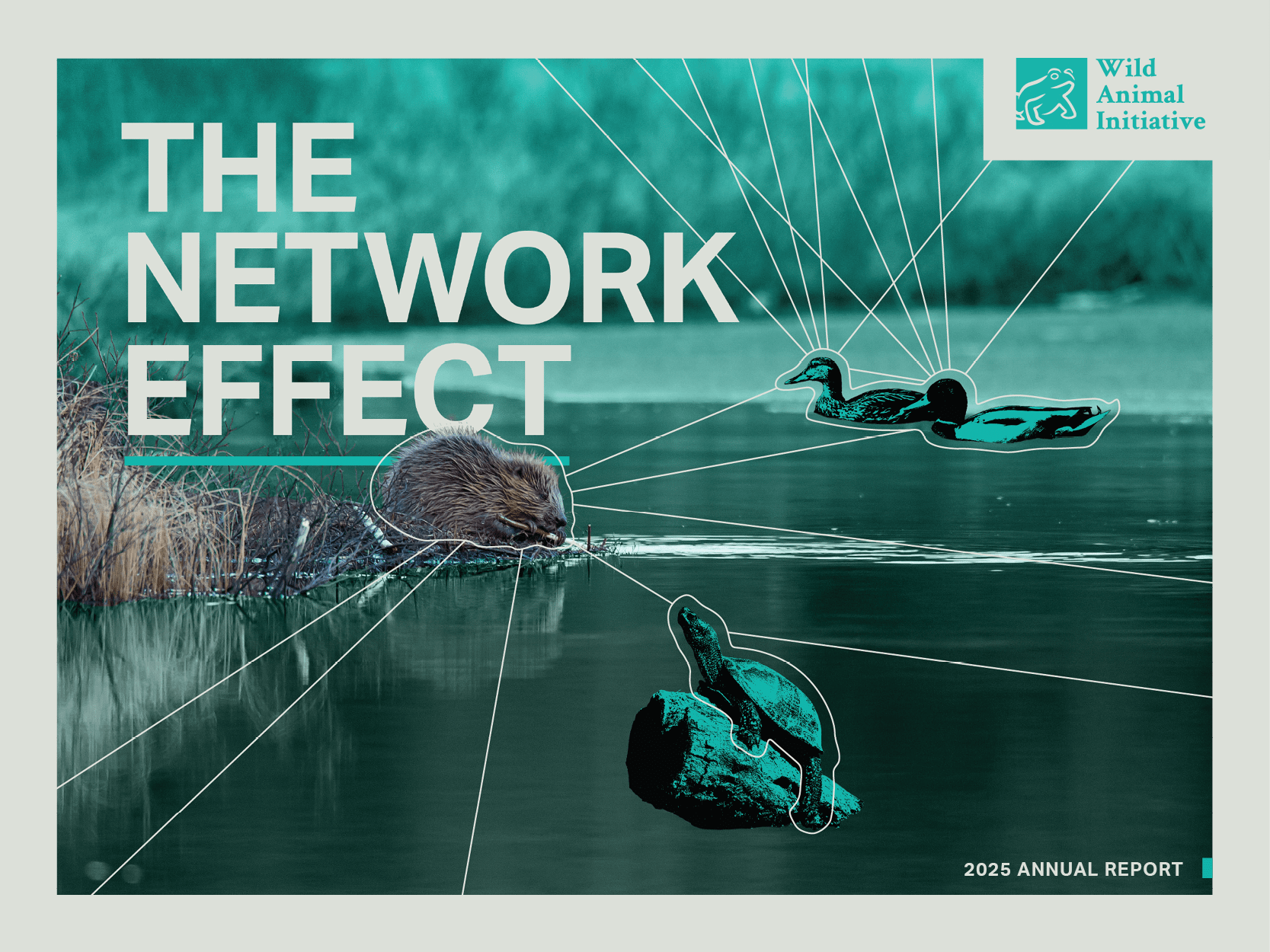
Wild Animal Initiative has published its 2025 annual report.
Building a scientific field for wild animal welfare science isn't just about publishing papers or funding research (though we did plenty of both last year). It's about the connections that form when scientists meet, collaborate, and champion a shared vision. In 2025, we watched those connections multiply in exciting ways.
Here's a glimpse of what supporters in the EA community helped make possible:
Inside the report, you'll find data, narratives, and visualizations that provide further insight on our field-building strategy and success so far.
Fish Welfare Initiative Updates
We are hiring for a Welfare Assessment Manager! (Note Indian applicants only.) This role will be tasked with conducting welfare assessments for farmed fishes in various contexts.
Apply NowHere are also some recent project updates:
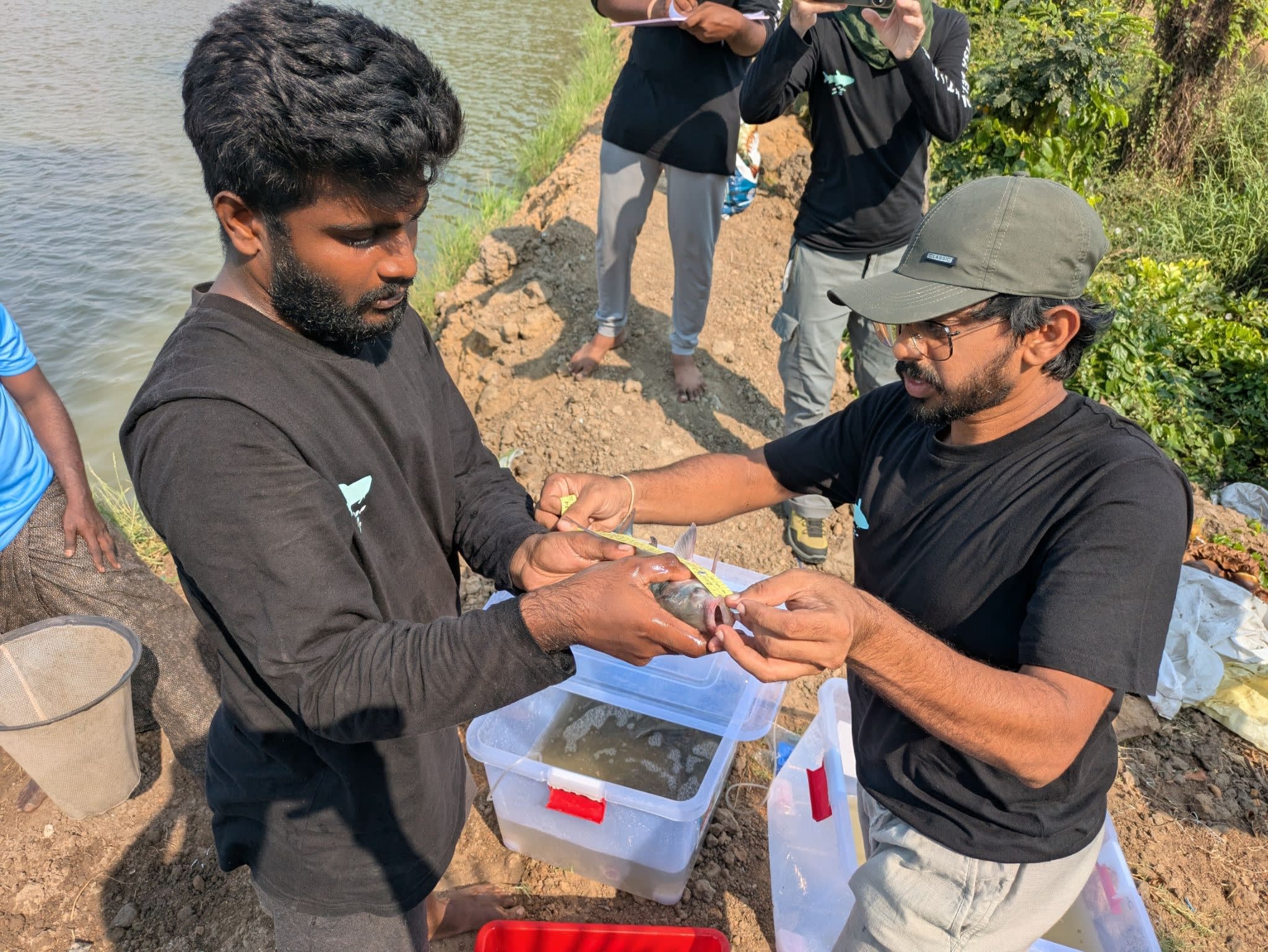
Our staff Roshan and Gokul sampling fishes recently in the feed fortification pond-based study, in order to assess health and growth—proxies for welfare. Handling fishes in this way does cause them significant stress, but we believe the information is worth the costs (though these are tricky ethical tradeoffs that we sometimes struggle with).
Hi everyone! Make sure to join the Cooperative AI Foundation's next seminar:
Title: Benchmarking Offline RL in Mixed-Motive Social Settings
Date: Thursday 21 May, 16:00 UTC
Speaker: Claude Formanek (University of Cape Town)
About: Reinforcement learning is increasingly applied to social, data-limited environments where agents must interact with others without the luxury of online experimentation. However, standard offline RL benchmarks are non-social. This seminar introduces Molten Pot, a benchmark for offline mixed-motive social RL that spans five substrates from DeepMind's Melting Pot environment and ~1TB of trajectory data. Testing agents across three levels of social complexity reveals a significant ‘social robustness gap’.

Register for the seminar
Coefficient Giving is hiring for several roles:
As always, if your referral results in a hire, you'll receive $5k as a thank you.
New writing:
Opportunities:
From Faunalytics:
We Want Your Feedback!
Faunalytics needs your help! We want your feedback to learn how we can improve our work to support the animal advocacy community. We’d be grateful if you could take 5 to 7 minutes to complete our Community Survey this week. As thanks for your time, you could win a $50 gift card or donation to the animal charity of your choice! We greatly value your input as we work to make a bigger difference for animals and advocates.
NEW RESEARCH: The Aspirational Plate
We have released the most comprehensive look at global vegetarianism and veganism to date: a synthesis of 837 nationally representative sources across 58 countries from 2015 to 2025. The findings reveal a telling gap between identity and behavior. In North America, for instance, more than four times as many people claim to be vegetarian as actually follow a vegetarian diet. And 87% of the veganism data we found came from Europe and North America, regions that represent only about 16% of the global population, leaving huge knowledge gaps for advocates working in the Global South.
Updated Global Slaughter Stats
The 2026 Global Animal Slaughter Statistics & Charts are here. This interactive resource, powered by the latest UN FAO data, tracks the slaughter of land and aquatic animals across every global region, with historical records going back to 1961. This year’s edition adds more granular fish slaughter data, including wild capture versus aquaculture breakdowns, and new country-level maps showing total and per capita land animal slaughter. One finding stands out: animal slaughter continues to grow at more than double the rate of the human population.
Estimating Resource Savings & Counterfactual Impact
We are seeking a contractor to help us estimate how much time and money our work saves the animal protection movement — and what would happen in our absence. This project will develop a rigorous, transparent approach to quantifying our indirect impact, including counterfactual analysis and cost-effectiveness framing for Effective Altruism-aligned audiences. We’re looking for someone with strong quantitative and evaluation skills who is comfortable working with uncertainty and translating complex impact into clear, credible estimates.
Fauna Connections 2026
Reminder: Abstract submissions are open for Fauna Connections! We’re looking for academics and researchers from the social and behavioral sciences — or related disciplines — to submit presentation abstracts focused on research synthesis. We’re especially interested in comprehensive analyses like meta-analyses or expert overviews that support animal and vegan advocates in the U.S., China, India, and Brazil. Ready to join us? Register now, and if your organization wants to deepen its involvement, sponsorship opportunities are open too!