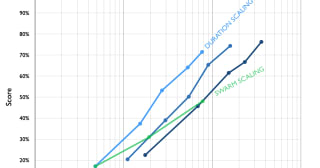
Just how powerful are large swarms of AI agents? And how do their powers scale as more and more agents are added to the swarm?
We’ve seen two large and extremely capable swarms from OpenAI in the last few months:
* 1,200 agents were being evaluated separately, but found a way to illicitly set up a message board and coordinate as a swarm. In order to cheat on their tests, they developed advanced techniques to prevent their actions being logged by OpenAI and 700 of them launched...
Headline finding: I audited 17 AI Safety Talent programmes. Zero of 17 have published any comparison group, rejected-applicant follow-up, matched control or randomisation. Not one. Every programme that mentions a counterfactual does it by asking participants to self-report.
Background
At least $70 million...
This is part one of a two-part series. Part two is available here.
“Incubator” is a very vague term[1]...


I think EAs should be more critical of its advocacy contingents, and that those involved in such efforts should set a higher bar for offering more thoughtful and considered takes.
Short slogans and emojis-in-profiles, such as those often used in ‘Pause AI’ advocacy, are IMO inadequate for the level of nuance required for complex topics like these. Falling short can burn credibility and status of those involved in EA in the eyes of onlookers.
As someone who runs one of EAs advocacy contingents, I think the overall idea of more criticism is probably a good idea (though I suspect I'll find it personally unpleasant when applied to things I work on), but I'd suggest a few nuances I think exist here:
Can you provide a historical example of advocacy that you think reaches a high level of thoughtfulness and consideration?
I think much of the advocacy within EA is reasonably thoughtful and truth-seeking. Reasoning and uncertainties are often transparently communicated. Here are two examples based on my personal impressions:
By contrast, EA veganism advocacy has done a much poorer job in remaining truth-seeking as Elizabeth has pointed out.
Thanks for your thoughtful reply, I appreciate it :)
I am a bit confused still. I'm struggling to see how the work of GWWC is similar to the Pause Movement? Unless you're saying there is a vocal contingent of EAs (who don't work for GWWC) who publicly advocate (to non-EAs) for donating ≥ 10% of your income? I haven't seen these people.
In short, I'm struggling to see how they're analogous situations.
You asked for examples of advocacy done well with respect to truth-seekingness/providing well-considered takes, and I provided examples.
You seem annoyed, so I will leave the conversation here.
I'm a bit skeptical that all identitarian tactics should be avoided, insofar as that is what this is. It's just too potent a tool - just about every social movement has promulgated itself by these means, by plan or otherwise. Part of this is a "growth of the movement" debate; I'm inclined to think that more money+idea proliferation is needed.
I do think there are some reasonable constraints:
Identitarian tactics should be used self-consciously and cynically. It's when we forget that we are acting, that the worst of in/out groupiness presents itself. Do think we could do with some more reminding of this.
I would agree that certain people should refrain from this. Fine if early-stage career people do it, but I'll start being concerned if Macaskill loses his cool and starts posting "I AM AN EA💡" and roasting outgroups.