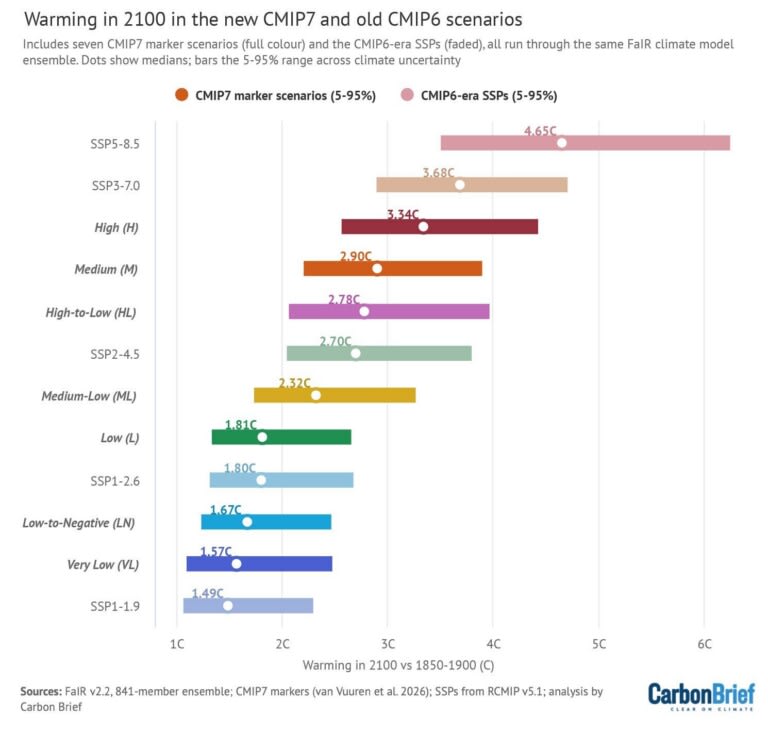
The new CMIP7 emissions scenarios are out for the IPCC's seventh assessment report (AR7). See the CarbonBrief explainer for a full breakdown.
Notable changes:
The highest 8.5 scenario was dropped and the now "high" scenario has much less warming
Much of this is because of climate policy and low cost tech; high coal use for electricity is no longer plausible given the low cost of renewables and batteries
No baseline scenario; instead they show less/current/more climate policy, with a medium scenario with current policy at around 2.9°C of warming
Scenarios still depend on a lot of carbon-dioxide removal that hasn't scaled yet
The lowest (1.5°C) and highest (4°C+) scenarios are less feasible. That's mixed news - less chance of the worst case scenarios, but also means we are more likely to still have disruptive ~2.5-3°C warming.
Edit: The match seems to now be over - the funds were expended in around 35 minutes. But many of these charities are great and should be supported regardless!
***
On October 22nd starting at 10:00am Pacific Time, Every.org is matching donations to select animal welfare organizations at a 2:1 rate, up to $2,000 per donor per nonprofit (so if you give up to $2,000, they will contribute up to $4,000 and the nonprofit will get up to $6,000). The first donation a donor makes to each el...
Crossposted to Less Wrong
‘Like most of life’s dangers, the dangers of artificial intelligence are not easily identified from the armchair.’
J Dmitri Gallow
Epistemic status
I’m not an expert in this field, and herein I make some sweeping generalisations educated guesses about the overall...