Comments

126
80,000 Hours is coming to bookstores in May
+1 more
80,000 Hours (the book) comes out in just one month!!
We asked OWID’s Hannah Ritchie if she wanted to say something nice about the book, and she said: “If this had been published a decade earlier, it'd have saved me many restless nights.”
I think that applies to me too…
But also: wow, I’d really love for us to get the book in the hands of as many ten-years-ago-Hannah-Ritchies as possible!
Can we do that? And if so, how?
Well, the audacious goal that we’ve been aiming at is to embed the book as part of the “canon” of go-to career advice books.
If we manage to pull that off — which is far from guaranteed — it could have a further-reaching impact than any other research we’ve published.
In this post, I thought I’d:
This is a bold claim, but it’s actually my best guess that the 80k career guide is among the best content ever published, when it comes to helping people have higher impact careers — according to both individual anecdote (including from some people who have gone on to do things I find hugely impressive) and larger data analyses we’ve done.[1]
Even after having spent quite a long time[2] with the core material of the career guide, it continues to find new ways to impress and inspire me.
But it’s still not nearly as widely-known as it could be. So, I think getting it into the hands of more people seems really helpful.
On this ‘canon’ idea: it seems like this is how the world of nonfiction works. There are a few books that will get cited again and again as the go-to place for a given topic (books like Designing Your Life, What Colour is Your Parachute, Atomic Habits, which have been among the top books in their category for many years).
Breaking into that list would, I think, do a lot to shift how people think about their careers in general, and what topics we even view as permissible to discuss (i.e. that you should consider impact!).
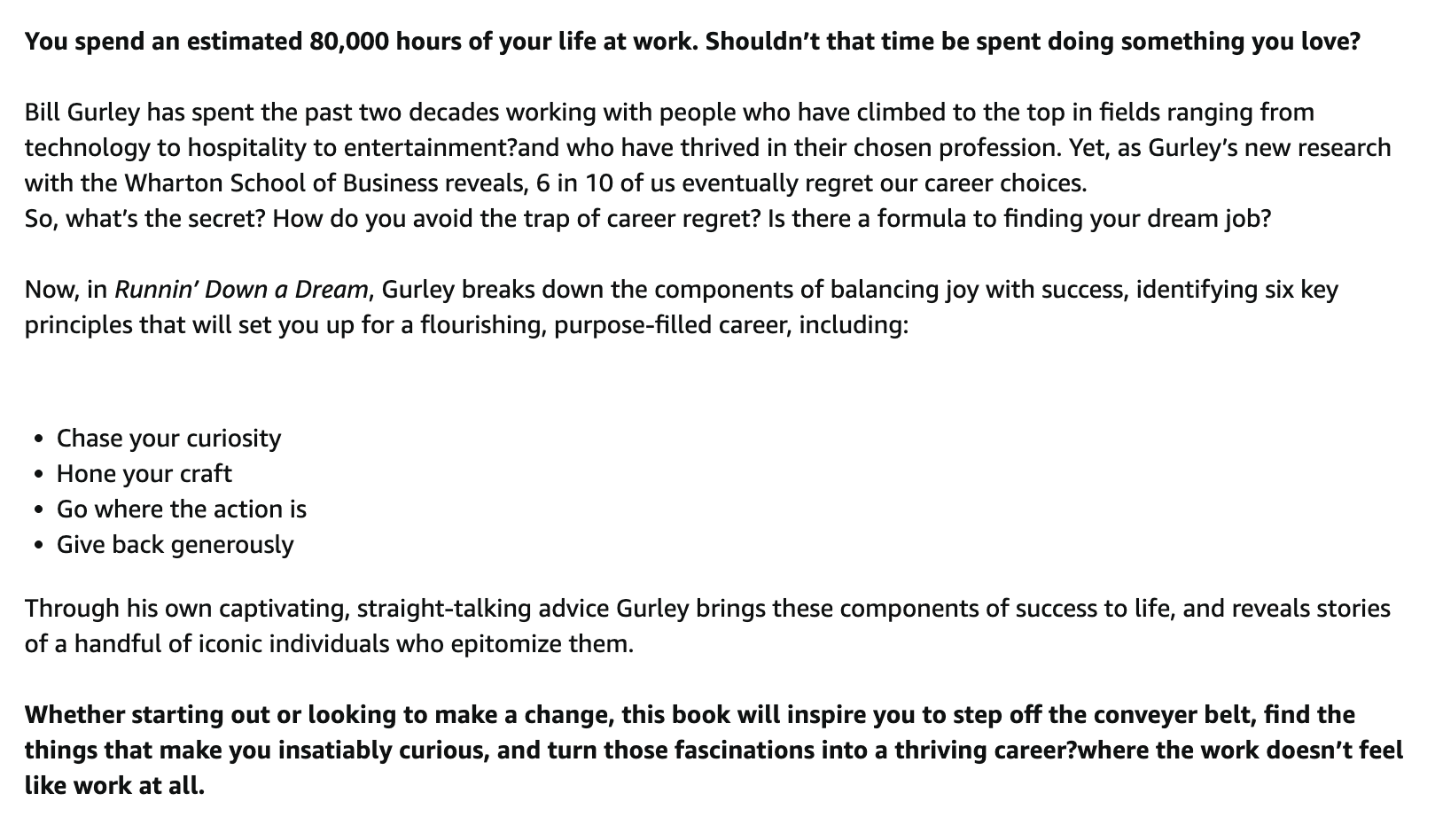
As an example of how thoughtful, successful, and well-regarded authors are dealing with these topics at present, see the Amazon blurb of this recently-released pretty direct competitor to our book:
The message is still personal satisfaction and interest, over direct consideration and comparison of the amount of positive impact one could have.
While there’s definitely some value to this sort of advice, overall, this seems like a shame to me!
If this is going to happen, we need help.
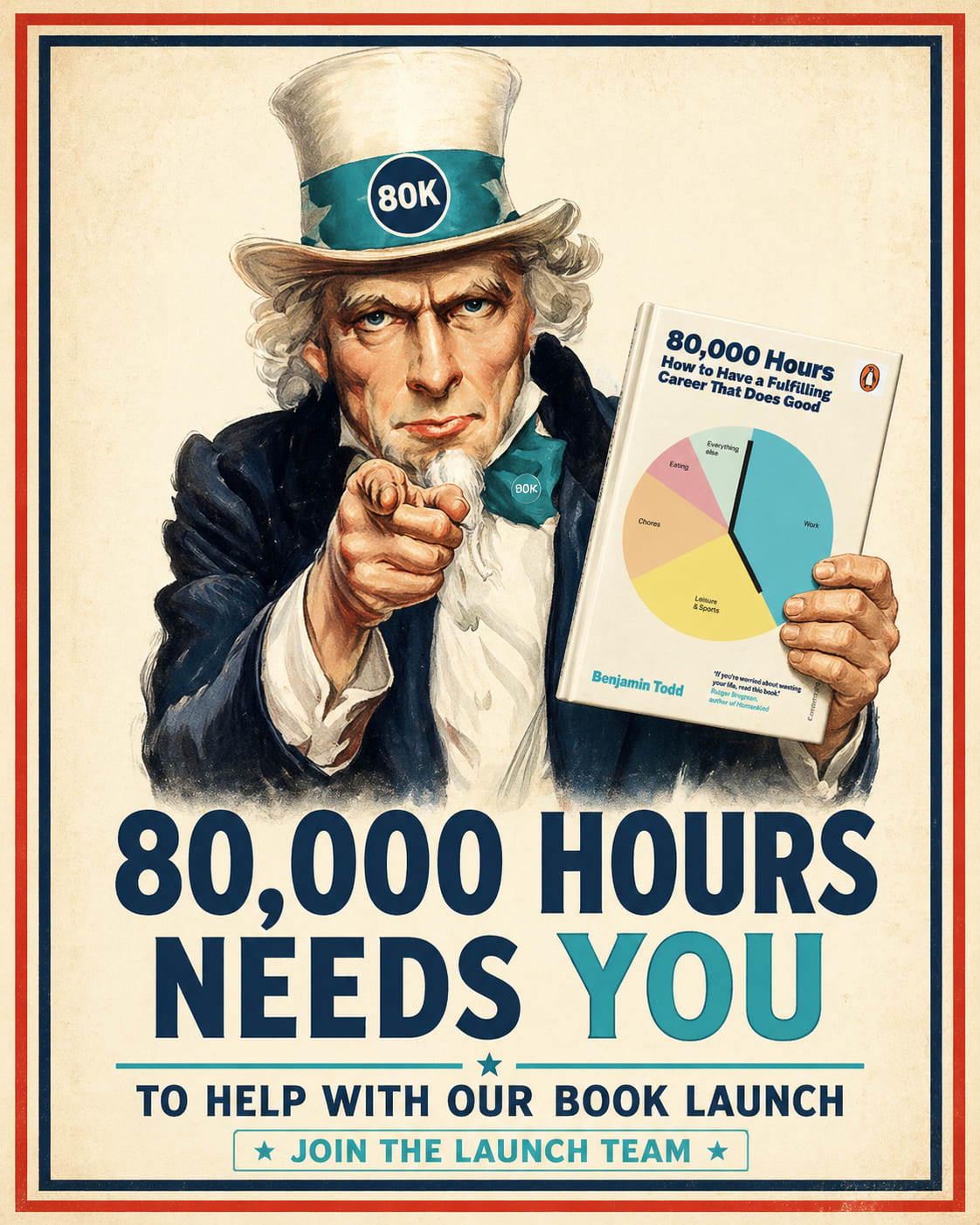
The main model of how we get into the ‘nonfiction canon’ is by having a healthy book launch that reaches (at least some) bestseller lists, and establishes the book as a serious, relevant resource in the space.
There’s lots to do if we want this to happen.
Keen to help? Fill out this form and we’ll be in touch with more detail!
We’d especially love to hear from anyone who:
Or, if you want to help out in a more lowkey way, here’s our preorder page — we really appreciate orders or shares. Ordering this month counts for much more, so if you think you’ll get a copy anyway, now’s the time!
According to the EA Survey, 80k is the biggest individual source both of people finding out about EA for the first time, and the biggest single entity having a positive impact on respondents’ ability to have an impact. The career guide appears consistently across metrics to have a very outsized impact among 80k’s programmes, both in terms of engagement hours and impact-weighted engagement hours.
“Hundreds of hours” is probably the most precise estimate I can do, depending on what you mean by engaging with the material. That's certainly more than most, although Ben has easily spent several thousand!