"...improving the American education system, while important, is neither a neglected cause nor a tractable one. It is a system on which hundreds of billions of dollars are spent annually by diffuse governments whose policies are difficult and expensive to change, where matters of importance are intensely contested, and where interest groups tend to fight each other to a standstill.
And it’s a system where, even after investing millions if not billions in research, we still don’t have a lot of confidence as to which interventions are helpful and which are not. The views of key actors, notably the Gates Foundation, have tended to shift rapidly on those substantive questions.
If every issue in the world were as crowded and hard to make progress on as education in the US, then I’d understand why foundations like Gates and Broad keep chugging. But that’s not the case..."
I realise this is not exactly the sort of answer you're looking for, but it's worth noting that EA priorities are meant to be in some sense the very most effective interventions in the world, so most things will not be EA priorities. As such I think it makes a lot more sense to place the burden of proof on people to prove that cause is highly effective, rather than on those who do not believe in the cause.
I'm not sure that's roughly true, EA priorities also have to be neglected, generally the most effective interventions are already taken by governments and large organisations.
EA priorities in expectation maximise some objective function.
My question is why is global education not an objective function that we are seeking to maximise?
This question is slightly misstated by me, the question I intended to ask is here
Edit:
Secondly even if no interventions can be found for say global health, it would remain as a goal, value, objective function.
I find the absence of education at the top to be puzzling. Why is the objective function "Global health and development" and not "Global Education, Health and Development"? Even if one cant find interventions the goals are statements of what we find valuable.
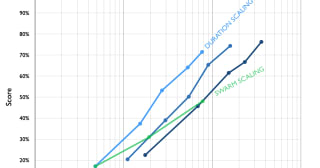
Just how powerful are large swarms of AI agents? And how do their powers scale as more and more agents are added to the swarm?
We’ve seen two large and extremely capable swarms from OpenAI in the last few months:
* 1,200 agents were being evaluated separately, but found a way to illicitly set up a message board and coordinate as a swarm. In order to cheat on their tests, they developed advanced techniques to prevent their actions being logged by OpenAI and 700 of them launched...
Headline finding: I audited 17 AI Safety Talent programmes. Zero of 17 have published any comparison group, rejected-applicant follow-up, matched control or randomisation. Not one. Every programme that mentions a counterfactual does it by asking participants to self-report.
Background
At least $70 million...
Often folks hit us up because they are thinking of starting an incubator and want advice.
Typically their motivation is either that (a) they have a list of specific things they want built that no one is building, or (b) they think an ecosystem needs more new projects generally to absorb more talent and deploy more funding effectively.
Here are six questions we often ask prospective teams, to help them figure out what to do. If you're incubator-curious...


I think this article in Vox covers some of the main points.
"...improving the American education system, while important, is neither a neglected cause nor a tractable one. It is a system on which hundreds of billions of dollars are spent annually by diffuse governments whose policies are difficult and expensive to change, where matters of importance are intensely contested, and where interest groups tend to fight each other to a standstill.
And it’s a system where, even after investing millions if not billions in research, we still don’t have a lot of confidence as to which interventions are helpful and which are not. The views of key actors, notably the Gates Foundation, have tended to shift rapidly on those substantive questions.
If every issue in the world were as crowded and hard to make progress on as education in the US, then I’d understand why foundations like Gates and Broad keep chugging. But that’s not the case..."