Thanks for writing this! I agree it is a bit odd that both 1) funders say they are short on for grantakers, and 2) lots of people would love to do AI safety grantmaking. I basically think funders are right to keep a high bar, and have strong AI safety knowledge/experience as an important hiring desideratum. I think the more logistical/operational aspects of investigating and making grants can be learned quite quickly on the job, whereas developing taste and judgement about AI strategy and safety is harder. So I think the current strategy of taking existing research-y/policy/technical AI safety people and training them up to be grantmakers seems better than taking existing non-AI grantmakers and training them up in AI safety (though of course running career transition programs for people getting into AI safety is also valuable!).
(I am biased by being one of those EA/AI safety research-y people who transitioned into grantmaking.)
Thanks, Oscar! This pretty much articulates the typical view I have heard on this question so I am asking you here, but mostly because it strikes me as the standard view / response to the OP.
I am curious where the intuition that developing research taste / AI safety knowledge is inherently harder than developing grantmaking expertise comes from.
I think it is quite plausible to believe the opposite, roughly for the following reasons:
Given how strongly AI and AI politics are changing, many existing AI strategy intuitions are outdated -- there is less advantage in having been around for a long time given the field is changing so quickly (clearly there is AI-field-specific knowledge that is and remains very useful, but a large part of grantmaking is about understanding the political context and how social change happens and this is not something where existing AI safety knowledge is very helpful (both because it seemed to have been poorly calibrated, but also because the AI politics situation has changed fundamentally).
Upskilling on AI-context knowledge is much more legible and more easily described than becoming a good grantmaker / grantmaking researcher. My sense (YMMV) is that good grantmaking requires both a set of skills / intuitions learned from experience and also that having a good view of the strategic landscape and how to integrate different considerations is a skill set that is quite useful and not field-specific.
Somewhat roughly, on this view, it seems easier to compile a syllabus "here is what you need to read to have a good overview over the strategic picture on AI safety" compared to "here is what you need to read to become a good grantmaker".
I think there are many considerations also that point in your direction, but I often have the impression that the notions of "grantmaking is trivial to learn" and "research taste is really hard to build" are often just assumed to be true but I don't really understand what the deeper reasoning is to believe those.
Tbc, I am not sure where the balance lies, but would like to understand better how deeply reasoned the assumed ease of grantmaking skill v AI safety context knowledge comes from.
Also would be keen to hear from other AI-safety-grantmakers on this.
It seems easier to compile a syllabus "here is what you need to read to have a good overview over the strategic picture on AI safety" compared to "here is what you need to read to become a good grantmaker".
Agreed, but I suspect the former is harder than you might expect. Much of the material you would need to make some high context doesn't exist and, in any case, I don't know if it's as easy as just "read this syllabus". To quote Wittgenstein, "a language is a way of life".
I wasn't suggesting it's easy, I am trying to understand / interrogate an assumption about relative ease (vis-a-vis grantmaking or other domain-independent skills).
Thanks for your comment. I think the key distinction is that I'm not arguing that funders should lower the bar, or that traditional grantmaking experience is more valuable than deep AI safety judgment. I'm asking what happens if the current model genuinely constrains how much funding can be deployed.
If the preferred strategy is to recruit from a small pool of research-y/policy/technical AI safety people and train them as grantmakers, that may be a deliberate choice. But it also means drawing from a talent pool that is already scarce and valuable elsewhere in the field. If that choice is contributing to undisbursed funding, then it seems worth exploring whether other models could increase allocation capacity without materially reducing decision quality.
That could mean mixed teams, technical review layered onto broader grantmaking expertise, partnerships between organizations, or other funding models. If funders test those alternatives and still conclude that the current profile is necessary, that’s useful information too.
My main point is that if the field decides to keep a very narrow model and accepts that less funding will go out as a result, then the public messaging around a “grantmaker bottleneck” should be more specific. The shortage is not simply of people willing or able to do grantmaking; it is of people who meet a very particular profile that funders have chosen to prioritize.
AI Safety has invested very heavily in funding more research outputs, but the gap to frontier capabilities continues to grow. I think that's evidence enough that more diverse perspectives are needed in the grantmaking and funding processes. There needs to be a focus on outcomes over outputs as the measure of whether funding is warranted and was successful. We proposed the primary outcome here to be "AI safety outputs (research, controls, defenses, governance, policy and more) are broadly diffused across all functions, roles and orgs allowing widespread application and adoption. The field's output compounds instead of accumulating.". This is the type of thinking, analysis and advocacy that broader perspectives could bring to the grantmaking processes. I think it's often overstated how deep of a background one needs to contribute to this space. Ideally, grantmakers work in matrixed teams where experts in each of their diverse areas bring their perspectives to the table, and then the team works collaboratively to find the best options based on all of those. This is how decision making works in industry, and presumably at frontier labs based on the jobs they post. So, it's unclear to me why AI safety is unique in only needing narrow perspectives.
Hundred percent with you. This has always been a bottleneck to EA effectiveness we seem slow to learn. We need all sorts of diversity of age, experience, field or technical experience, etc and we get stuck waiting at the same output pipe for the next batch of EAs of the style we like to come out. A blind spot. I hope you expand some minds, the challenges deserve it.
Thank you, Jeffrey! I think many people would be excited to get involved in EA work and bring great experience with them. I hope we'll see more diversity soon.
This mirrors a lot of the frustrations regarding role profiles in what does get funded and built by AI safety. There's been a lot posted on it this year, and I'll throw our recent work on experienced builders role profile out there:
Arguably having more 'experienced builders' from industry embedded with grantmakers would help diversify their perspectives and approach, including alongside the other philanthropic experience. This could help get different types of projects funded, but also build more robust evaluations, outcome measurement and reporting like you advocate for.
I completely agree with your point about bringing different kinds of experienced judgment into the grantmaking process rather than expecting one profile to cover everything. I think experienced builders could be particularly useful for evaluating execution ability, organizational capacity, and whether a proposed intervention is actually practical.
This also reinforces something I was trying to get at: broadening the profile doesn’t necessarily mean replacing technical expertise, but building teams where different kinds of expertise complement each other. Thanks for the links to the experienced builders work, I'll definitely check it out.
AI Safety Has a Grantmaking Bottleneck. How Much of It Is Self-Imposed?
Epistemic Status: I'm interested in this question partly for personal reasons, as someone coming from traditional philanthropy and exploring a move into AI safety. I was surprised by the repeated claims of a grantmaker shortage, despite how many capable people I saw trying to enter the field.
TL;DR
AI safety funders often cite grantmaking as a major talent bottleneck, but they also seem to be hiring from a relatively small pool. They seem to have already defined a narrow profile: high-context, research background, already connected to the AI safety or EA ecosystem. In a small sample of 27 grantmakers at major AI/Global Catastrophic Risk (GCR) funders, 81% had prior AI safety/GCR experience, and 81% had a research background. In contrast, only 15% had prior professional philanthropy experience. This might be the right profile for technical grantmaking, but it also overlaps significantly with the profile needed for AI safety research itself.
Funders are already struggling to allocate money, and with AI-related philanthropy anticipated to grow significantly over the next several years, it seems important to ensure grantmaking capacity can keep up. I struggled to find much public evidence that this narrow profile is necessary across the very different kinds of work currently being funded. Therefore, it seems worth exploring broader talent profiles, organizational partnerships, or alternative funding models before resigning ourselves to unallocated capital and delayed impact.
The grantmaking bottleneck
Ransohoff has suggested that AI-generated wealth could infuse hundreds of billions of dollars into the philanthropic ecosystem within the coming years, with annual intended giving possibly reaching tens of billions. With Anthropic’s recent proposed IPO filing, this scenario may even arrive within the next several years. Of course, we cannot know exactly how much money will be available or how quickly, but AI-related philanthropy will likely scale, and perhaps quite quickly. I strongly believe that philanthropy should play a major role in society's response to the AI transition, and therefore the sector must be able to allocate that capital well. So, we need to develop a robust philanthropic infrastructure to identify and support the right interventions. Funding will obviously be spread across many causes, but AI-related risks and broader transition challenges seem likely to receive a meaningful share. If so, the current AI safety grantmaking ecosystem gives us an early look at whether the allocation capacity is ready to keep up.
Large AI safety funders have already reported that grantmaking capacity limits their ability to deploy capital quickly and effectively. Hazell has noted that the field is currently extremely small, with only around 30-60 people currently working full-time on AI safety grantmaking. Żurek, Gertler, and Muehlhauser also point to a shortage of grantmakers with deep field context, strong research judgment, and enough autonomy to make high-stakes funding decisions. This profile also substantially overlaps with the talent pool for technical AI safety research, meaning the two activities will compete for the same limited human resources. Żurek has also questioned whether the current approach to filling these roles is optimal. She describes a tradeoff between hiring less experienced but aligned people or bringing in more experienced outsiders. I think this is a particularly relevant observation because it discredits many mid-career professionals who may have a harder time demonstrating their AI safety or EA alignment.
It surprised me how fixed the grantmaker profile seems to be already, especially given how little public evidence exists to show that this bundle of traits leads to better funding decisions[1]. Much of the AI safety funding ecosystem has been shaped by effective altruism ideas, especially around uncertainty, counterfactual thinking, and updating on evidence. With this backdrop, I expected to see either more variety in grantmaker backgrounds or clearer evidence for why this particular profile works best. This is what made me want to look more closely at who is actually getting these jobs and why. An unnecessarily narrow talent profile could mean an increasing share of intended giving remains undeployed or delayed. Of course, funders could respond to the allocation capacity problem in other ways, but this piece focuses on the oft-cited talent bottleneck and whether the apparent shortage of grantmakers partly reflects how narrowly the role is currently defined and recruited for.
What does the current grantmaker profile look like?
To better understand the current grantmaking ecosystem, I conducted a brief convenience analysis of grantmaking staff at major AI safety funders with publicly identifiable teams, using the latest Manifund funder bulletin[2]. Of the 27 grantmakers I identified, only 4 (15%) had prior professional grantmaking/philanthropy experience; 81% had prior AI safety/GCR experience; and 81% had a research background. Most (78%) also had clear connections to the EA community, either having previously worked or volunteered for an EA-connected organization. I recognize this is not necessarily a comprehensive sample, but Jason Green-Lowe reached a similar conclusion in a more extensive 2025 review of AI governance and AI safety grantmaking, finding very little prior mainstream philanthropic experience among major funders and arguing that the field relies heavily on people already embedded in EA and AI safety networks. This provides good evidence of what funders currently trust, but not necessarily that this bundle of characteristics is necessary for effective grantmaking.
Perhaps this selectivity reflects the highly judgment-intensive work of AI safety grantmaking, which requires unusually capable, highly contextualized people. 80,000 Hours’ recent review of AI safety grantmaking makes a strong case for why funders might prefer people who are already embedded in the field. The work involves high levels of uncertainty, disagreement between experts, and judgment about both projects and people. Hazell also points out that grantmaking is becoming more active, rather than simply reactive, which naturally is easier for people who already have the relevant context and networks. For technical grants in particular, Coefficient Giving’s role descriptions suggest that grantmakers can also shape broader research agendas, not just make individual funding decisions. Poorly chosen grants could divert funding, talent, and attention away from more promising approaches. With this context, it’s understandable to prefer people already deeply embedded in AI safety and capable of independent judgment.
So, the profile is justifiable, but what evidence shows it produces better funding decisions? How successful have these grants been? Does the expected impact match realized outcomes? Do we know that specialist judgment actually changes grant decisions? In such a young field, I wouldn't expect overwhelming evidence here, but some basic information would help show whether the current profile is proven or a matter of convenience. I do think it is too early to describe this as a severe talent bottleneck if other, broader backgrounds or alternative staffing models have barely been tried.
How do we know whether the model works?
Most AI safety funders do have developed grant-assessment processes, but they vary in detail and transparency. For example, Coefficient Giving shares its cost-effectiveness framework, including how they use back-of-the-envelope calculations to estimate impact and compare opportunities. They are also transparent about the limits of their models: data is rarely perfect, assumptions are not certain, and there is still a fair amount of judgment involved. CG does sometimes look back at predicted versus actual outcomes and uses tools like Brier scores to check how well-calibrated their judgments are over time. A small caveat is that this methodology is most developed in CG's global health and wellbeing work, so it may be less relevant in AI safety funding.
Astralis says its grantmakers develop a case for each grant, identify key uncertainties, consult outside experts, and stay involved with grantees afterward. Macroscopic Ventures lists factors such as theory of change, expected cost-effectiveness, execution ability, and fit with its focus areas. However, in both cases, much less public information exists on how they compare competing opportunities or weight specific criteria in practice. Macroscopic also says most of its funding is sourced proactively, which makes the process even harder for outsiders to understand.
In a young field with contested theories of change, ultimate impact will likely be realized only over a longer time horizon. Still, funders could already publish basic data to better defend their giving decisions. Funders could show whether a grant accomplished what it was funded to do and whether the assumptions behind their decisions held up. I found relatively little public evidence even on these basic questions. Disagreement could still exist between grantmakers, or within the wider community, about the ultimate value of the grants disbursed, but recording these assumptions allows that discourse to happen later. This doesn't mean funders are not monitoring their grants internally. Coefficient clearly does, and Longview has also described internal monitoring and learning processes. Public materials usually make it easy to see what was funded and why, but not whether those grants lived up to the expectations behind them. So it is difficult for us outsiders to understand the evidence for both the grants and the decision quality behind them.
To be fair, traditional philanthropy hasn't solved this problem either. Impact is difficult to measure across the sector. However, many established foundations have at least made their learning processes more visible. The Rockefeller Foundation publishes an annual impact report based on grantee reporting, third-party evaluations, and internal reviews. The Ford Foundation has also undertaken independent evaluations of major initiatives, like BUILD, to see whether they are having their intended effect. I do not want to suggest that every grant needs to produce a clean set of measurable outputs. This is challenging and undesirable for many reasons. Resner, for example, rightly points out that philanthropy can also go too far in the other direction and favor grants that are easiest to measure and overlook harder-to-capture outcomes. Philea has raised similar concerns. Again, the goal is not perfect measurement, but better evidence about what happened after a funding decision was made.
None of this is proof that traditional foundations make better grants, or that their staff would outperform current AI safety grantmakers. But mainstream philanthropy has spent decades grappling with these questions already and has built effective ways to evaluate, review, and learn from their work. At least some of that experience is likely to be relevant as AI philanthropy grows. The OpenAI Foundation’s $50 million Cities Deliver initiative is an interesting example of how AI-funded philanthropy can benefit from this experience. Rather than building all the infrastructure itself, it is partnering with the Rockefeller Foundation to implement it.
Returning to the current AI safety grantmaker profile, publicly available information makes it hard to assess whether their preferred grantmaker profile produces more impactful grants. Without knowing which grants worked well and why, it is easy for hiring patterns to become locked in and limited. Funders like to hire people who look like the grantmakers they already trust, which is entirely understandable. Many of these funding decisions are high-stakes, and hiring someone who already knows the field and shares the same context obviously feels much safer. My concern is that these people seem scarce, and that failing to broaden the scope where possible won't solve the problem.
Do different grants require different grantmakers?
Not all AI safety grants relate to technical research. Setting aside proactive grantmaking for a moment, a brief scan of contemporary RFPs shows grantmaking efforts in capacity building, programs and events, policy work and institution building, in addition to previous funds for field-building, career development, and economic transition work. These grants all do very different things, so I don't think it makes sense to assume they all need the same kind of grantmaker.
To make this more concrete, I used 80,000 Hours, Hazell, and current funder role descriptions to break up the described activities and clarify the judgment needed for each. I also considered when technical AI safety expertise would likely be indispensable, versus a nice-to-have. For example:
Activity
Necessary judgment
Is technical AI safety expertise indispensable?
Portfolio strategy
Which problems deserve the most attention
Maybe, if the strategy depends on technical assumptions
Technical research assessment
Is the work credible, novel and worth funding
Generally yes
Team/organization assessment
Can the team execute and are they fiscally responsible
Not necessarily; could be helpful for context
Cost-effectiveness / expected value
Does the upside justify the cost and uncertainty
If inputs depend on technical claims
Due diligence / governance
Financial risk, structure, accountability, basic organizational health
Generally no
Sourcing
Knowing who is doing good work and spotting white space
Generally only in highly specialized fields
Monitoring / renewals
Is the work progressing and still worth supporting
Dependent on grant type
Grantee support / incubation
Strategy, operations, introductions, problem solving
Dependent on grant type
This is only a rough breakdown, but I think it illustrates why I find it hard to see why one background is required across all areas of grantmaking work. Deep technical expertise is much more logical when evaluating technical research, but AI safety has now broadened significantly beyond that. So, it certainly seems like there could be room for more varied profiles across portfolios.
Coefficient Giving is already moving a bit in this direction, and has separate roles for generalist AI-governance grantmakers, technical specialists, policy specialists, and capacity-building work. However, even though they've broken up the work, the talent profile seems to stay remarkably the same. In my sample, even people with different titles and responsibilities still came from research-heavy, EA-connected backgrounds.
So, is the field overlooking relevant professional philanthropic experience? Prior grantmaking experience was rare in my sample, and Ransohoff noted that some AI-focused funders are hesitant to hire directly from traditional philanthropy. There could be good reasons to think those skills don't transfer well enough, or maybe funders are really just more comfortable hiring from their own field. Either way, I could find little public explanation.
I'm also not arguing that traditional grantmakers would make better decisions, or that technical expertise is overrated. I just don't believe the public evidence is strong enough to say that the current high-context, research-heavy profile is the clear winner across such a wide range of grants. And if the field needs to scale quickly, this is a question worth addressing.
What could we realistically learn?
I don't think funders need to prove that their hiring model is perfect. But if they say a lack of talent is reducing allocation, then examining the strength of the current profile is a logical place to start. This could mean reviewing previous grant decisions against the need for specialist knowledge. For example, where did specialist input actually change the outcome? Did the entire grant depend on deep AI safety context, or was it equally about organizational, operational, or general grantmaking knowledge?
Funders could also explore alternative models incrementally, keeping technical expertise in the loop, while slowly delegating responsibility to see where specialist judgment is actually indispensable. Experienced, traditional grantmakers could partner with technical reviewers, perhaps even through partnerships between organizations (such as CG and Rockefeller) rather than internal hires. The technical review could also be split out from the final funding decision. Most of this experimentation would remain internal, which is fine, but even internal clarity on the necessary grantmaker profile could improve how the problem is discussed publicly. If the existing profile is truly necessary, funders could be more explicit about what this means and potentially expand the potential solutions, even finding ways to rely less heavily on full-time grantmakers.
Why this matters for allocation capacity
If the anticipated capital boom arrives, philanthropic funders will continue to need more people who are capable of making high-quality decisions about how to allocate that money. AI safety funding has already expanded beyond technical research and into important areas for the AI transition, like governance and institutional resilience. I believe we should evaluate the philanthropic infrastructure now to ensure the system can keep up before the next wave hits and funders are left scrambling.
There may be a talent bottleneck in AI safety, but if funders want to keep the current research-heavy profile, the options for expanding capacity seem fairly limited: persuade experienced researchers to move into grantmaking, or wait for less experienced people to build the context and judgment necessary to take on those roles. Broadening the profile opens up other possibilities. A more diverse grantmaking team might even strengthen outcomes, especially in areas beyond technical research. Either way, clarifying where technical expertise is truly necessary can help funders better direct scarce resources and, hopefully, increase their allocation capacity, whether through expanded teams or alternative funding models.
This is based only on publicly available information. It wouldn't surprise me if funders are already reviewing this; if so, publishing some of their reasoning would be helpful. If not, I hope they seriously consider whether they're unnecessarily limiting their allocation capacity.
I reviewed the publicly available professional histories of 27 AI/GCR grantmaking staff at Coefficient Giving, Longview Philanthropy, Astralis Foundation, EA Funds, and Macroscopic Ventures. I counted someone as having a “research background” if they had previously worked in a professional research role, and as having “AI safety/GCR experience” if their prior work was directly related to AI safety or global catastrophic risk. “Professional philanthropy” meant they had worked as a grantmaker or at a foundation. "EA connection" meant they had been employed by or had substantial involvement with an EA-affiliated organization.
Crossposted to Less Wrong
‘Like most of life’s dangers, the dangers of artificial intelligence are not easily identified from the armchair.’
J Dmitri Gallow
Epistemic status
I’m not an expert in this field, and herein I make some sweeping generalisations educated guesses about the overall...
Note: This post was crossposted from Planned Obsolescence by the Forum team, with the author's permission. The author may not see or respond to comments on this post.
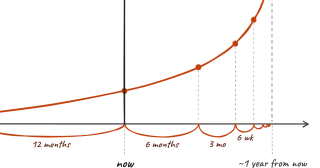
Subtitle: If acceleration compounds, the naive extrapolation implies superintelligence within a year
This post discusses a public METR report on AI R&D acceler...
This post is part of the Rethink Priorities Cross-Cause Fund (CCF) series on how to allocate funding across causes when it is uncertain what matters most.
...


Thanks for writing this! I agree it is a bit odd that both 1) funders say they are short on for grantakers, and 2) lots of people would love to do AI safety grantmaking. I basically think funders are right to keep a high bar, and have strong AI safety knowledge/experience as an important hiring desideratum. I think the more logistical/operational aspects of investigating and making grants can be learned quite quickly on the job, whereas developing taste and judgement about AI strategy and safety is harder. So I think the current strategy of taking existing research-y/policy/technical AI safety people and training them up to be grantmakers seems better than taking existing non-AI grantmakers and training them up in AI safety (though of course running career transition programs for people getting into AI safety is also valuable!).
(I am biased by being one of those EA/AI safety research-y people who transitioned into grantmaking.)
Thanks, Oscar! This pretty much articulates the typical view I have heard on this question so I am asking you here, but mostly because it strikes me as the standard view / response to the OP.
I am curious where the intuition that developing research taste / AI safety knowledge is inherently harder than developing grantmaking expertise comes from.
I think it is quite plausible to believe the opposite, roughly for the following reasons:
Given how strongly AI and AI politics are changing, many existing AI strategy intuitions are outdated -- there is less advantage in having been around for a long time given the field is changing so quickly (clearly there is AI-field-specific knowledge that is and remains very useful, but a large part of grantmaking is about understanding the political context and how social change happens and this is not something where existing AI safety knowledge is very helpful (both because it seemed to have been poorly calibrated, but also because the AI politics situation has changed fundamentally).
Upskilling on AI-context knowledge is much more legible and more easily described than becoming a good grantmaker / grantmaking researcher. My sense (YMMV) is that good grantmaking requires both a set of skills / intuitions learned from experience and also that having a good view of the strategic landscape and how to integrate different considerations is a skill set that is quite useful and not field-specific.
Somewhat roughly, on this view, it seems easier to compile a syllabus "here is what you need to read to have a good overview over the strategic picture on AI safety" compared to "here is what you need to read to become a good grantmaker".
I think there are many considerations also that point in your direction, but I often have the impression that the notions of "grantmaking is trivial to learn" and "research taste is really hard to build" are often just assumed to be true but I don't really understand what the deeper reasoning is to believe those.
Tbc, I am not sure where the balance lies, but would like to understand better how deeply reasoned the assumed ease of grantmaking skill v AI safety context knowledge comes from. Also would be keen to hear from other AI-safety-grantmakers on this.
Agreed, but I suspect the former is harder than you might expect. Much of the material you would need to make some high context doesn't exist and, in any case, I don't know if it's as easy as just "read this syllabus". To quote Wittgenstein, "a language is a way of life".
I wasn't suggesting it's easy, I am trying to understand / interrogate an assumption about relative ease (vis-a-vis grantmaking or other domain-independent skills).
Thanks for your comment. I think the key distinction is that I'm not arguing that funders should lower the bar, or that traditional grantmaking experience is more valuable than deep AI safety judgment. I'm asking what happens if the current model genuinely constrains how much funding can be deployed.
If the preferred strategy is to recruit from a small pool of research-y/policy/technical AI safety people and train them as grantmakers, that may be a deliberate choice. But it also means drawing from a talent pool that is already scarce and valuable elsewhere in the field. If that choice is contributing to undisbursed funding, then it seems worth exploring whether other models could increase allocation capacity without materially reducing decision quality.
That could mean mixed teams, technical review layered onto broader grantmaking expertise, partnerships between organizations, or other funding models. If funders test those alternatives and still conclude that the current profile is necessary, that’s useful information too.
My main point is that if the field decides to keep a very narrow model and accepts that less funding will go out as a result, then the public messaging around a “grantmaker bottleneck” should be more specific. The shortage is not simply of people willing or able to do grantmaking; it is of people who meet a very particular profile that funders have chosen to prioritize.
AI Safety has invested very heavily in funding more research outputs, but the gap to frontier capabilities continues to grow. I think that's evidence enough that more diverse perspectives are needed in the grantmaking and funding processes. There needs to be a focus on outcomes over outputs as the measure of whether funding is warranted and was successful. We proposed the primary outcome here to be "AI safety outputs (research, controls, defenses, governance, policy and more) are broadly diffused across all functions, roles and orgs allowing widespread application and adoption. The field's output compounds instead of accumulating.". This is the type of thinking, analysis and advocacy that broader perspectives could bring to the grantmaking processes. I think it's often overstated how deep of a background one needs to contribute to this space. Ideally, grantmakers work in matrixed teams where experts in each of their diverse areas bring their perspectives to the table, and then the team works collaboratively to find the best options based on all of those. This is how decision making works in industry, and presumably at frontier labs based on the jobs they post. So, it's unclear to me why AI safety is unique in only needing narrow perspectives.