TLDR: Paying healthcare worker salaries in low-income countries won’t solve the biggest bottlenecks to improving healthcare access and is unlikely to be a good use of money.
As I perused a sensible list of how Coefficient Giving think we might spend hundreds of billions, I hit an idea that made me blink once, then twice. I immediately thought “this seems like a bad idea”. Then I researched a bit and concluded “yes this seems like a bad idea”. I reply to just one paragraph in a broad-strokes article, but like Nzube, I think this suggestion is important enough to prompt deeper discussion.
Pay Health workers at scale? The Coefficient Giving paragraph
Coefficient Giving crew: “The WHO and African Union project Africa will need more than 6 million more health workers in the coming years to deliver essential care to everyone who needs it. While there are other constraints to providing care (e.g. cheap drugs) and to scaling up the workforce itself (e.g. training skilled personnel), paying salaries is one of the most direct ways to turn money into care quickly, and to incentivise people to become medical professionals.”
We do need more health workers in more places in Sub-Saharan Africa, and there is evidence this can save lives. Yes, we need to get care to everyone who needs it, and paying salaries might seem like a straightforward, actionable solution. But CG have both misdiagnosed the constraints to care (cheap drugs and training skilled personnel) and provided the wrong treatment. Here I outline what I think are the real bottlenecks to getting better care to more people, to show why hiring more staff won’t make much difference.
Staff supply isn’t a big problem
CG: “paying salaries is one of the most direct ways to turn money into care quickly, and to incentivize people to become medical professionals.”
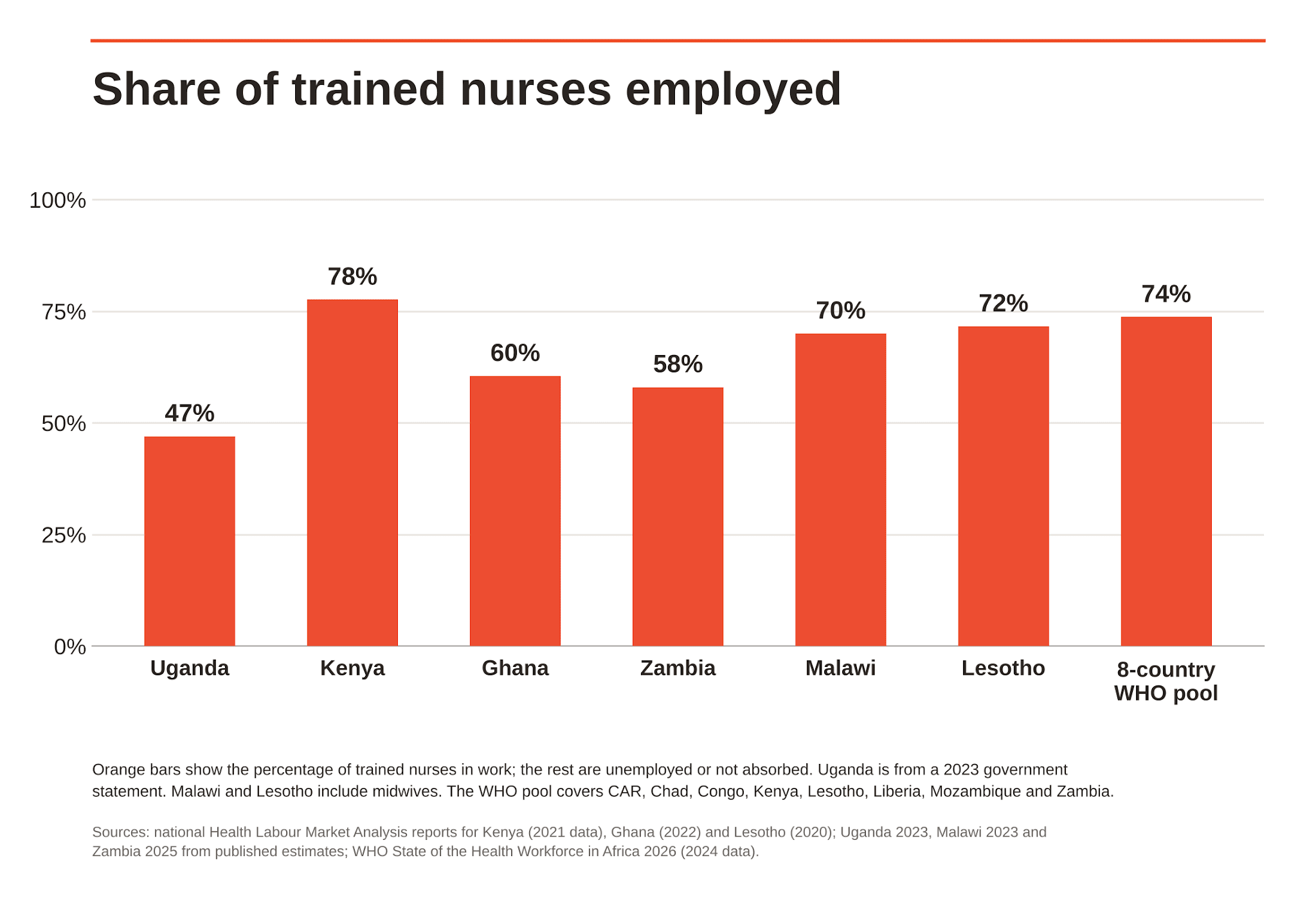
We don’t need to incentivize people to become medical professionals – we already have plenty. Nurses are the most important professionals, providing the bulk of healthcare in low-income countries, and right now there are far more nurses than jobs, here in Africa at least. Medical jobs remain popular, and private institutions keep churning out nurses. Most African countries have large-scale nurse unemployment, and it is getting worse. This in itself doesn’t mean that philanthropy shouldn’t pay nurse salaries, but there’s no need to incentivisze supply.
Drugs are already cheap – clinics just don’t have enough
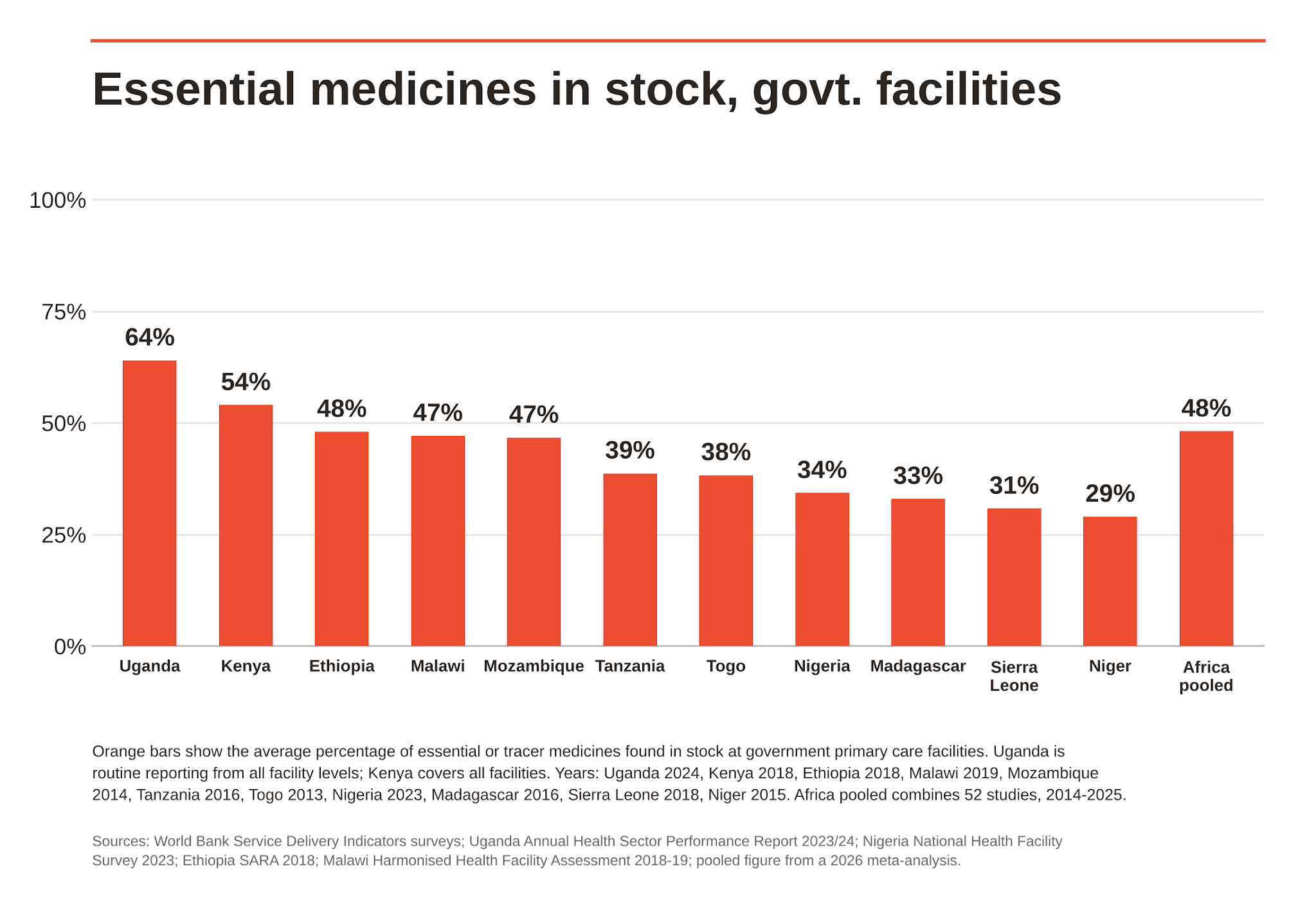
Most important drugs are not expensive. Competition between Indian manufacturers has driven prices way down. Medications that treat important conditions like malaria, pneumonia, diarrhea and hypertension are mostly cheap – $1–$2 for a box of 100 tablets.
But governments just don’t buy enough medication to stock facilities. Many facilities are out of essential medications more than half the time. Here in Uganda, people keep track of whether free medications are in stock. After they are gone, they turn to the private sector. There’s no point in hiring more staff to just sit around half the time. We need to stock facilities properly first, then hire more staff. Even worse, if we hire more staff without buying medications, extra workers will run facilities out of stock even faster. I love the USAID programs that give free malaria commodities, and although I don’t think it’s always the best approach, it makes more sense for philanthropies to buy essential medications than to pay for more staff.
To caveat, I love the work CHAI and others do to drive down prices through a range of mechanisms – there are still some important drugs that are way too expensive. This needs more philanthropic money. But the price of most common, life-saving medications is not a major reason sick people don’t get treated for common conditions in LMICs.
Fix absenteeism first
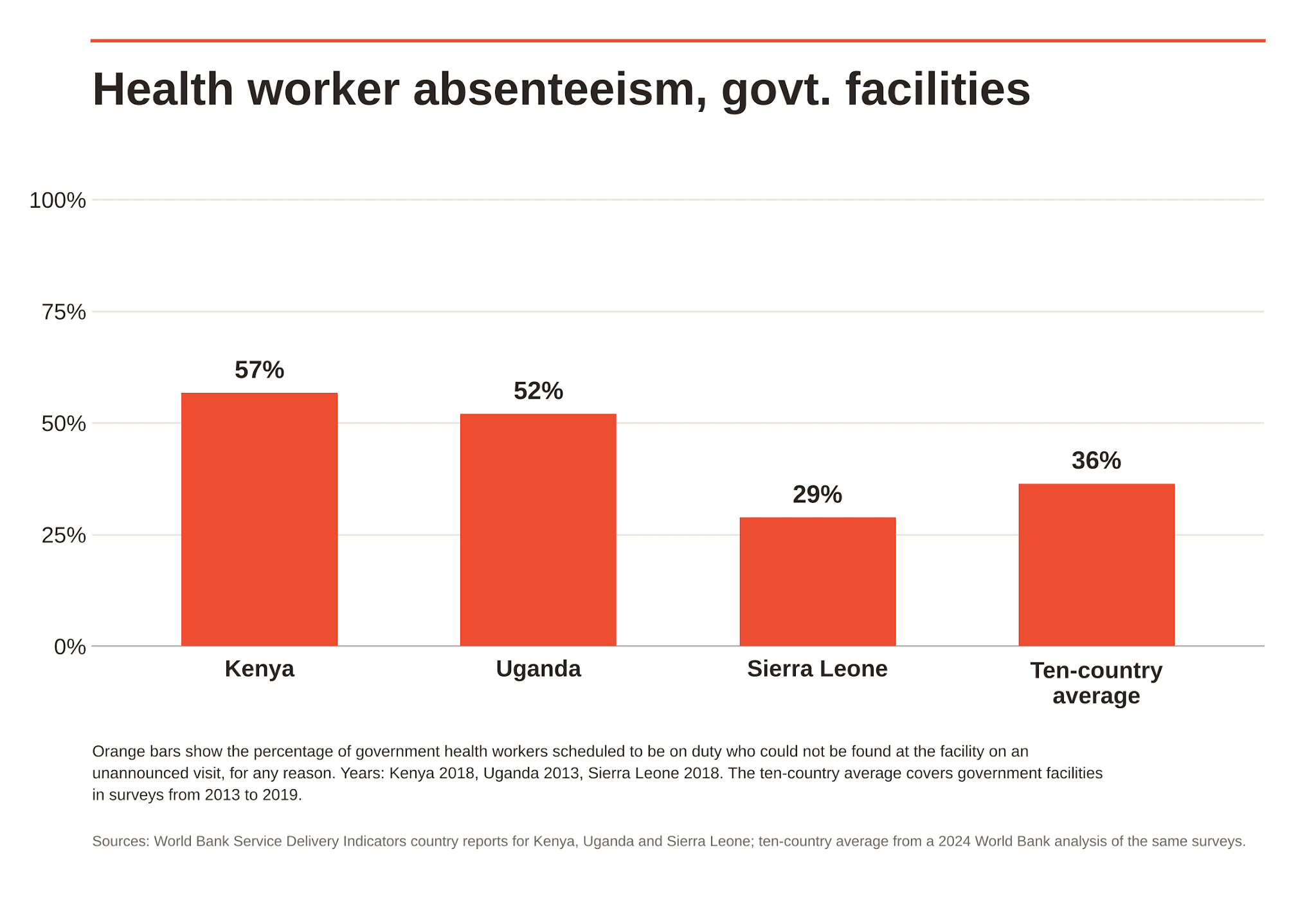
One in three government medical staff aren’t on duty in low-income African countries when rostered. We need to fix this absenteeism before hiring more. If you come from a high-income country work environment, it’s hard to fathom how often staff just aren’t at work. There’s often no functional oversight or discipline system. My wife once worked as a technical assistant for our governor. When she asked what could be done about staff absenteeism at health centers, he gave her a confused look and said “I’m not sure, we haven’t had a disciplinary meeting in 2 years”. Governments could reduce absenteeism by tracking attendance, tying salaries to attendance, and offering fixed-term rather than lifelong contracts. But governments will have even less incentive to make these changes if we instead just pay more money for more absent staff.
Government staff are paid too much
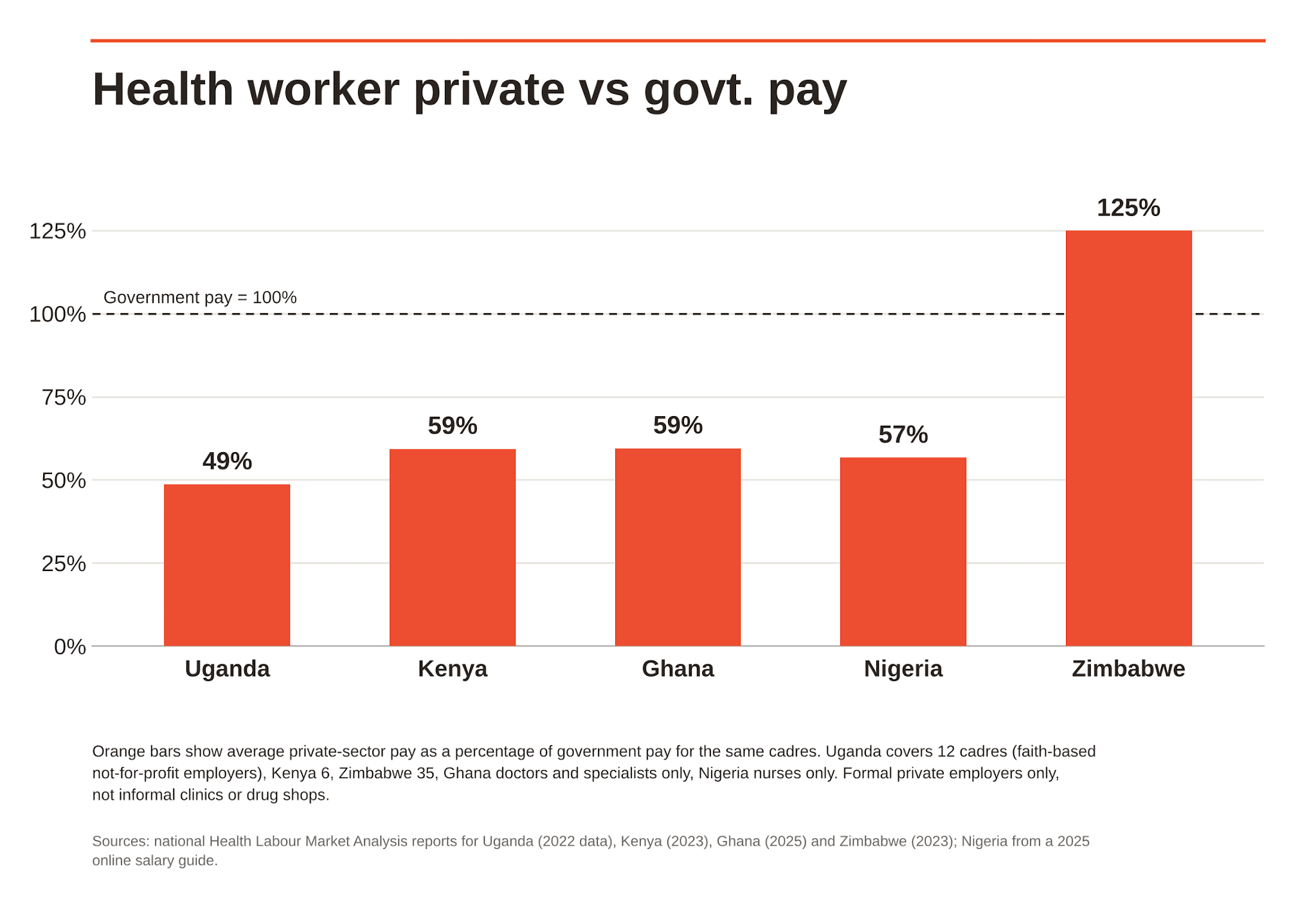
In many low-income countries, you could almost halve the salary of government nurses and almost double the number of nurses deployed. Government salaries are much higher than the market, due to in-service bargaining and the patronage-style system designed to garner government support. Six years ago, Uganda almost doubled government nurse salaries despite already having hundreds of applications for every post and extremely low staff attrition. Lowering (or at least freezing) salaries is a far more efficient way to employ the staff surplus.
Inefficient primary care models
I’m heavily biased because we at OneDay Health operate an efficient primary care model. We can treat patients for $2 each, while most government models cost $5–$8. Across Africa, large, expensive facilities, stocked with not enough medication, employ the wrong kinds of staff to treat not enough patients. By simplifying the primary care model (we put one nurse in one rented room), we can provide cheaper, higher-quality primary care in more places than ever.
Given the major bottlenecks to care I’ve outlined above, I struggle to imagine how paying for more government health staff can be an effective and efficient way to spend huge amounts of philanthropic money. Although I think large scale salary payments aren't a good idea there are many individual cases where it makes sense and if these bottlenecks above were fixed, it might become a best-big-buy.
I’ll caveat that I wrote this quickly and the Fable-generated graphs may contain errors. I’m happy to be corrected on specifics.


I couldn't agree more with you, Nick. From our experience at Lafiya, we're seeing similar bottlenecks around availability of commodities and inefficient systems, which results in trained health workers not finding employment in health facilities and being asked to volunteer instead to keep their skills sharp. There is interest from those state governments to cover their salaries as well as funding available in the health budget but it's more an issue of government capacity to release this funding and to cover the stockout issues so that their health staff can do the work.