Comments
Good commentary. Great to have insights from people within the system. Disturbing if Coefficient Giving have completely misunderstood the bottlenecks.
TLDR: Paying healthcare worker salaries in low-income countries won’t solve the biggest bottlenecks to improving healthcare access and is unlikely to be a good use of money.
As I perused a sensible list of how Coefficient Giving think we might spend hundreds of billions, I hit an idea that made me blink once, then twice. I immediately thought “this seems like a bad idea”. Then I researched a bit and concluded “yes this seems like a bad idea”. I reply to just one paragraph in a broad-strokes article, but like Nzube, I think this suggestion is important enough to prompt deeper discussion[1].
Coefficient Giving crew: “The WHO and African Union project Africa will need more than 6 million more health workers in the coming years to deliver essential care to everyone who needs it. While there are other constraints to providing care (e.g. cheap drugs) and to scaling up the workforce itself (e.g. training skilled personnel), paying salaries is one of the most direct ways to turn money into care quickly, and to incentivise people to become medical professionals.”
We do need more health workers in more places in Sub-Saharan Africa, and there is evidence this can save lives. Yes, we need to get care to everyone who needs it, and paying salaries might seem like a straightforward, actionable solution. But CG have both misdiagnosed the constraints to care (cheap drugs and training skilled personnel) and provided the wrong treatment[2]. Here I outline what I think are the real bottlenecks to getting better care to more people, to show why hiring more staff won’t make much difference.
CG: “paying salaries is one of the most direct ways to turn money into care quickly, and to incentivize people to become medical professionals.”
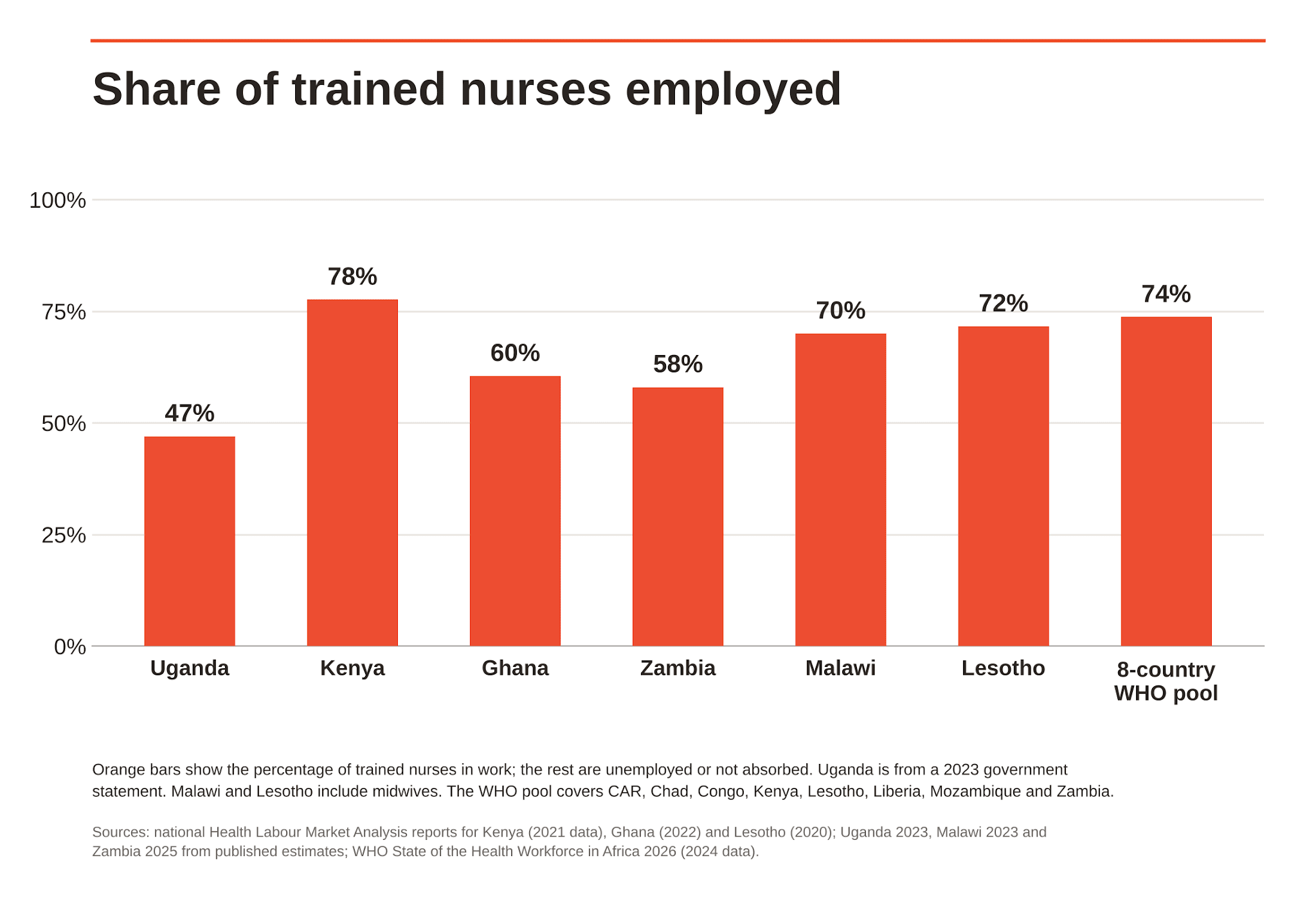
We don’t need to incentivize people to become medical professionals – we already have plenty. Nurses are the most important professionals, providing the bulk of healthcare in low-income countries, and right now there are far more nurses than jobs, here in Africa at least. Medical jobs remain popular, and private institutions keep churning out nurses. Most African countries have large-scale nurse unemployment, and it is getting worse. This in itself doesn’t mean that philanthropy shouldn’t pay nurse salaries, but there’s no need to incentivisze supply.
Most important drugs are not expensive. Competition between Indian manufacturers has driven prices way down. Medications that treat important conditions like malaria, pneumonia, diarrhea and hypertension are mostly cheap – $1–$2 for a box of 100 tablets.
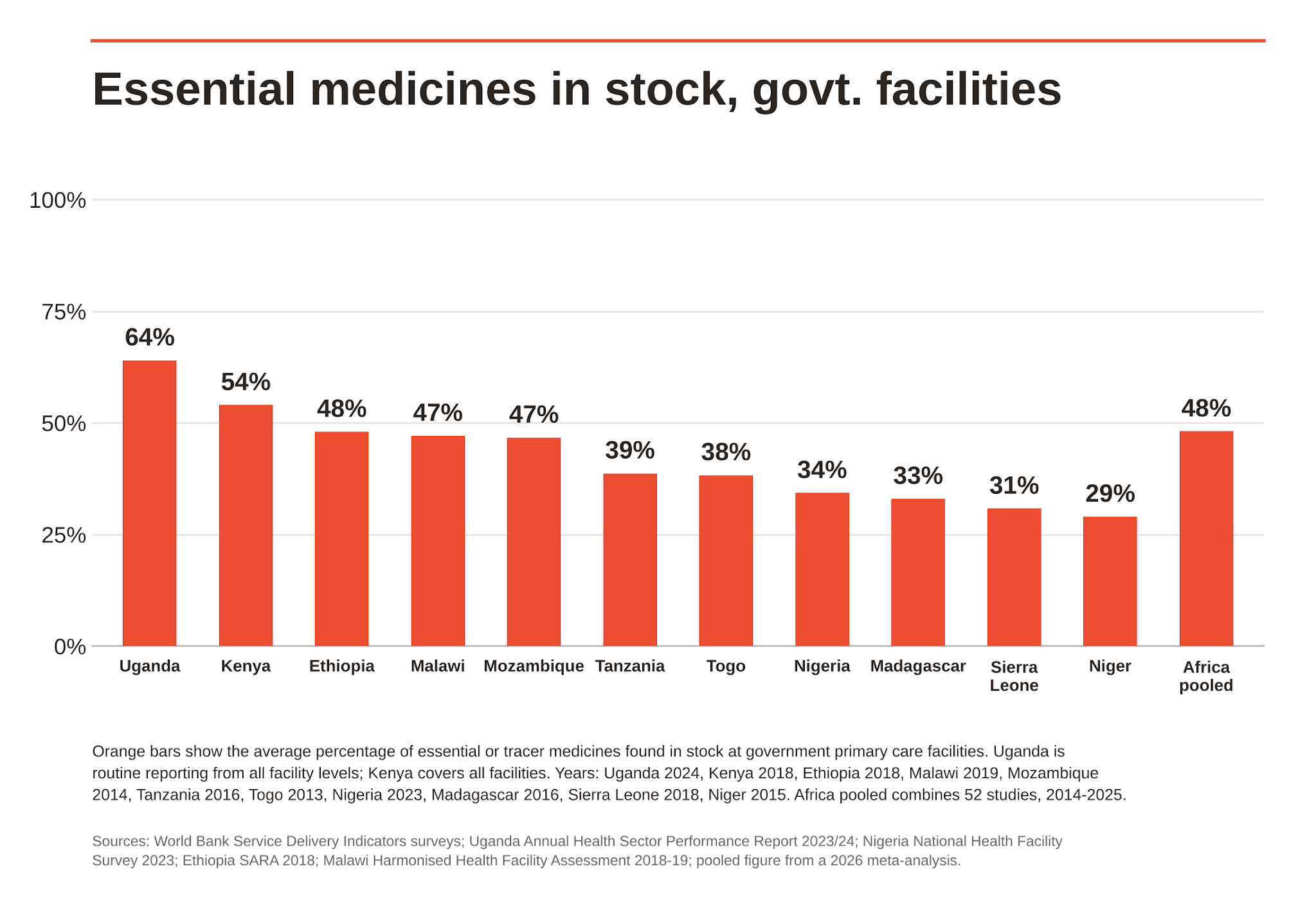
But governments just don’t buy enough medication to stock facilities. Many facilities are out of essential medications more than half the time. Here in Uganda, people keep track of whether free medications are in stock. After they are gone, they turn to the private sector. There’s no point in hiring more staff to just sit around half the time. We need to stock facilities properly first, then hire more staff. Even worse, if we hire more staff without buying medications, extra workers will run facilities out of stock even faster. I love the USAID programs that give free malaria commodities, and although I don’t think it’s always the best approach, it makes more sense for philanthropies to buy essential medications than to pay for more staff.
To caveat, I love the work CHAI and others do to drive down prices through a range of mechanisms – there are still some important drugs that are way too expensive. This needs more philanthropic money. But the price of most common, life-saving medications is not a major reason sick people don’t get treated for common conditions in LMICs.
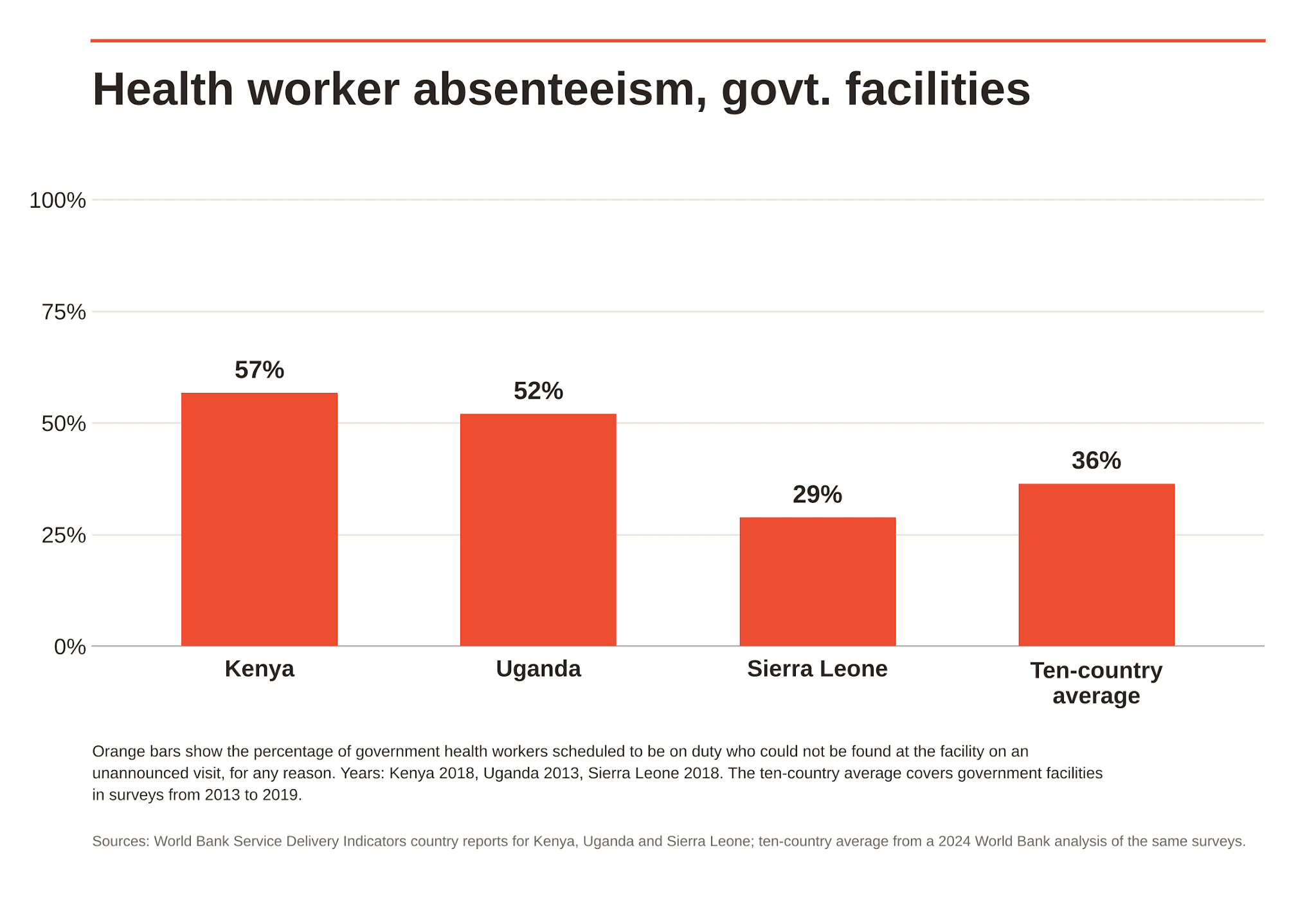
One in three government medical staff aren’t on duty in low-income African countries when rostered[3]. We need to fix this absenteeism before hiring more. If you come from a high-income country work environment, it’s hard to fathom how often staff just aren’t at work. There’s often no functional oversight or discipline system. My wife once worked as a technical assistant for our governor. When she asked what could be done about staff absenteeism at health centers, he gave her a confused look and said “I’m not sure, we haven’t had a disciplinary meeting in 2 years”. Governments could reduce absenteeism by tracking attendance, tying salaries to attendance, and offering fixed-term rather than lifelong contracts. But governments will have even less incentive to make these changes if we instead just pay more money for more absent staff.
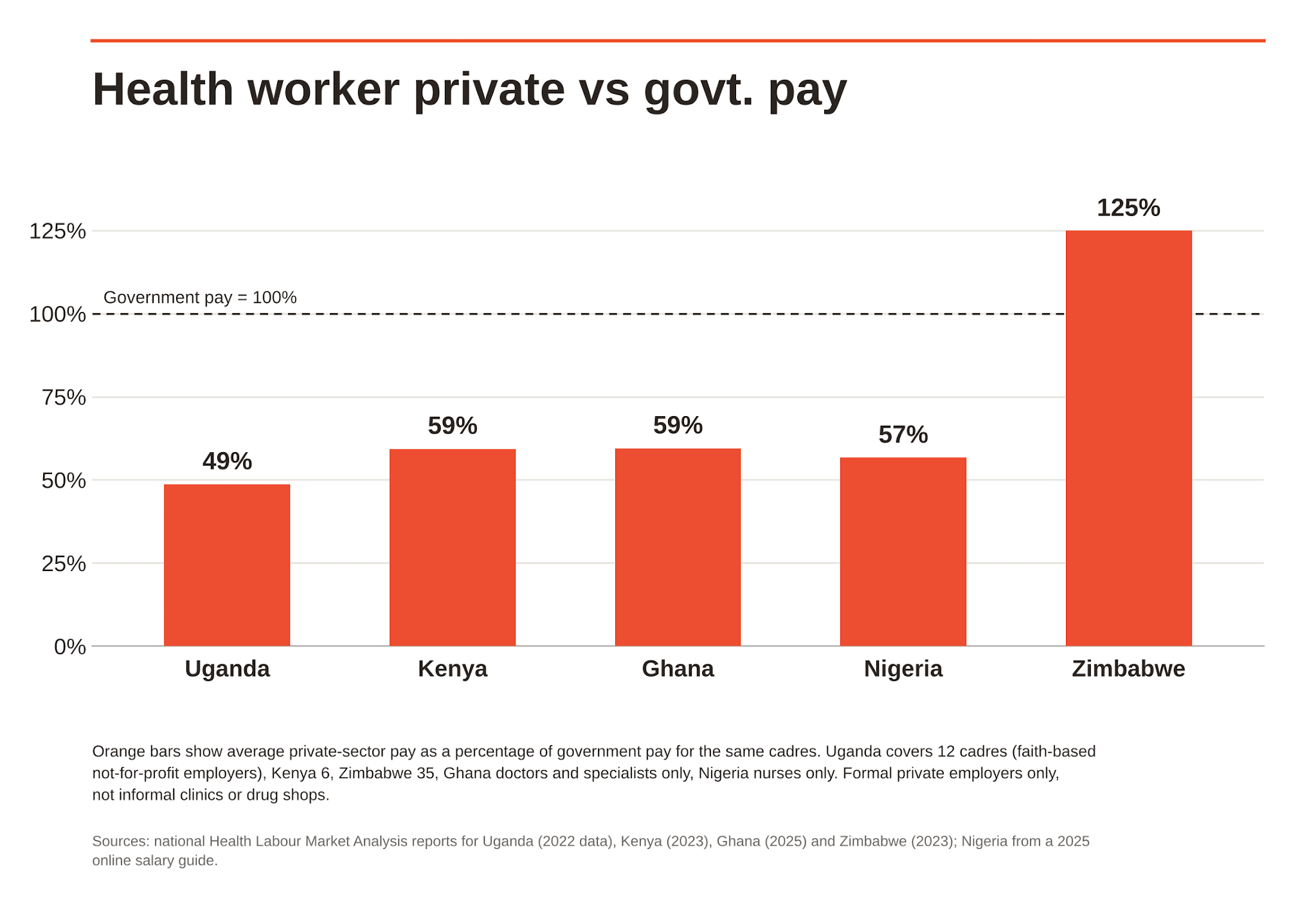
In many low-income countries, you could almost halve the salary of government nurses and almost double the number of nurses deployed. Government salaries are much higher than the market, due to in-service bargaining and the patronage-style system designed to garner government support. Six years ago, Uganda almost doubled government nurse salaries despite already having hundreds of applications for every post and extremely low staff attrition. Lowering (or at least freezing) salaries is a far more efficient way to employ the staff surplus.
I’m heavily biased because we at OneDay Health operate an efficient primary care model. We can treat patients for $2 each, while most government models cost $5–$8. Across Africa, large, expensive facilities, stocked with not enough medication, employ the wrong kinds of staff to treat not enough patients. By simplifying the primary care model (we put one nurse in one rented room), we can provide cheaper, higher-quality primary care in more places than ever.
Given the major bottlenecks to care I’ve outlined above, I struggle to imagine how paying for more government health staff can be an effective and efficient way to spend huge amounts of philanthropic money. Although I think large scale salary payments aren't a good idea there are many individual cases where it makes sense and if these bottlenecks above were fixed, it might become a best-big-buy.
I’ll caveat that I wrote this quickly and the Fable-generated graphs may contain errors. I’m happy to be corrected on specifics.
Good commentary. Great to have insights from people within the system. Disturbing if Coefficient Giving have completely misunderstood the bottlenecks.
Yes it's not exactly a great idea. I tried to with with nuance but if I'm forced to pick a side I'll say no.
Thanks @Nzube Ifediba ! I was also happy on reading your article that your better-researched stats broadly lined up with my loosely-made graphs as well ;).
My charts were screenshots from peer review articles. But Claude is really good these days.


I agree - “salaries” was the wrong word as the CG write up doesn’t mean only govt health workers. Competitively outsourcing or social contracting PHC is a good idea for both public and philanthropic money. In fact, most high income country health systems operate PHC through private providers.
Wow thanks Amanda! Competitively outsourcing PHC is something that sounds like it could be great, and obviously something we'd be interested in being a part of at some stage. Are there examples of Lower and middle income countries doing this at scale?
Also yeah I only had a paragraph to go on from the CG article and couldn't find any background on it so I'm sure I misinterpreted a lot more than just that point. If you have any more background info for the paragraph woudl be interested - or I may have missed a more detailed analysis!
many in the field worry that private provision increases costs (and tbh some of the direct comparisons btwn NGO and govt costs show govt coming in lower cost - as in when Pepfar stepped back in S Africa and govt absorbed HIV patients bc NGO providers were more expensive. Ofc should control for quality differentials too).
Yep a lot of private providers are much more expensive than government providers 100% agree, especially things like PEPFAR here. Many providers (like us) have shown it doesn't have to be that way though. Also community health workers per patient-treated often come in as quite expensive because of low numbers treated every month - but that varies a lot too, can also be cheap.
In Uganda though Pepfar privately funded nurses got paid only about the same as government although I'm sure admin costs on top of that were waaaaaaay higher - I'm sure in other countries though even pepfar staff might get paid more than government workers. NGOs interestingly often peg salaries to government rather than the competitive private market. WE hired a nurse who weirdly lives next door to us who worked for us for 18 months, then got a high paying job with MTI in the refugee camps (which is great) but now that funding has been reduced has been out of a job for 18 months. Its a weird world being a medical worker in a low income country
As w all things: depends on the specific context and local markets, lots of heterogeneity within and between countries.
Best though dated resource on health worker absenteeism https://documents1.worldbank.org/curated/en/380481637326015488/pdf/The-Quality-of-Health-and-Education-Systems-Across-Africa-Evidence-from-a-Decade-of-Service-Delivery-Indicators-Surveys.pdf
Nice one! This stacks up with the claude-analysed figures, actually the absentee rates stated in that paper are even higher than mine...