Comments
Edit: I didn’t see how old this post was! It came up on my feed somehow and I’d assumed it was recent.
Thanks for this. I’ve only skimmed the report, and don’t have expertise in the area. So the below is lightly held.
Section 4.2.3 talks about negative wellbeing effects. I think these are a serious downside risk, but other than noting that severe harms are indeed faced by guest workers, the report’s response is based on a single paper (Clemens 2018) and the idea that the intervention could improve things via surveys and ratings. Most of the benefit/harms considered in the rest of the report are financial (it appears on a skim).
I think the risk of facilitating severe harms against individuals (participating in the ‘repugnant transaction’) is very unsettling, and would be my main reason not to donate to such a charity. If I were a prospective donor I would want to see deeper exploration and red teaming of this worry.
I’d also note that this issue has characteristics that EA/AIM is likely to systematically underrate:
Note that The Unjournal has commissioned evaluations of Naidu et al (2023). See the summary and ratings here, and the linked evaluation reports. The second report offered substantial critiques and questions about the methods, interpretations, and context.
Executive summary: This report explores incubating a nonprofit to support temporary international labor migration via a digital platform and facilitation service. It would aim to reduce costs and risks while improving outcomes.
Key points:
This comment was auto-generated by the EA Forum Team. Feel free to point out issues with this summary by replying to the comment, and contact us if you have feedback.


TLDR: This report explores the idea of incubating a nonprofit organization that would support temporary international labor migration using a digital information and job-search platform paired with transparent, low-cost facilitation.
We’re seeking people to launch this idea through Ambitious Impact (Charity Entrepreneurship) next August 12-October 4, 2024 Incubation Program. No particular previous experience is necessary – if you could plausibly see yourself excited to launch this charity, we encourage you to apply. The deadline for applications is April 14, 2024. Apply here.
Author: Filip Murár
Review: Aidan Alexander, Samantha Kagel, Sam Hilton
Date of publication: February 2024
Research period: 2023
We are grateful to the experts who took the time to offer their thoughts on this research: Professor Mushfiq Mobarak, Professor Samuel Bazzi, Dr. Tutan Ahmed, Jason Wendle, Prerna Choudhury, and Pall Kvaran.
We thank Professor Mushfiq Mobarak for bringing this topic to our attention.
For questions about the content of this research, please contact Filip Murár at [email protected]. For questions about the research process, please contact Sam Hilton at [email protected].
International labor migration has the potential to create large financial returns for workers and their families. While permanent migration is often not legally possible for citizens of low- and middle-income countries (LMICs), temporary labor migration – also known as guest work – is highly prevalent. LMICs in regions such as South Asia, Southeast Asia, and East Africa collectively send millions of workers every year to richer countries in neighboring regions, such as countries of the Gulf Cooperation Council, Malaysia, or Singapore. However, this type of migration is a complex, risky, and often costly process for the migrants, reducing the returns for those who manage to migrate and incurring losses for those who don’t.
Potential migrants typically learn about and get access to job opportunities via networks of intermediaries who use their privileged position to charge exorbitant fees – often multiples of people’s annual salaries – and extract value from the market.
Existing intermediaries often have incentives to underinform or misinform their clients, resulting in migrants accepting jobs with lower-than-expected salaries and worse working conditions. Individuals who start the application process but, for whatever reason, fail to migrate often suffer huge losses and sink their families into debt.
The idea behind this charity is to create a “one-stop shop” service to support potential migrants along the process of learning about working abroad, finding the right job, and fulfilling the necessary requirements for successful migration. It would achieve this by creating a digital platform featuring a job board paired with free, transparent information on the pros & cons and the practicalities of migrating, personalized one-to-one support (via a call center), and recommendations to high-quality third-party services.
While there are many existing organizations that offer some of these services, we have not found any that provide all of them on a unified platform. Additionally, the existing market is dominated by for-profit organizations that often exploit individuals’ motivation and extract value from them. A new, impact-oriented nonprofit organization operating in this space could create large economic and welfare gains. There is good evidence that well-managed international labor migration can create such returns, and the barriers to achieving this are also relatively well understood. While the theory of change behind this charity is somewhat complicated, most of the activities have been done by past actors, demonstrating their tractability.
We have modeled several cost-effectiveness estimates for this charity. A model that assumes the charity would only reduce the cost of migrating, and not result in a counterfactual increase in migration rates, estimates 13 DALY-equivalents per $1000 spent (or, equivalently, $78/DALY) for a charity operating in Nepal. If the charity charged its successfully-migrating users a modest $50 fee, it would achieve 25 DALYs per $1000 (or $39/DALY). Lastly, if it managed to create some counter-
factually additional migration, its cost-effectiveness would be 38 DALYs per $1000 (or $26/DALY), even in the absence of fees. This means that the charity would be more cost-effective than the top charities recommended by the charity evaluator GiveWell.
We have several uncertainties about this charity’s operation, including how difficult it would be to gain users’ attention their trust for them to use the platform and benefit from it; how many (potentially costly) personalized services the charity would have to offer on top of the digital platform itself; and where it should aim to operate.
The experts we spoke with agreed that misinformation, high fees, and exploitative practices are extremely prevalent, and that solutions to address these problems are needed in multiple countries. While they have warned that an information-only platform may fail to attract users and effectively support them on their migration journey, they believed that a more personalized recruitment/facilitation service could achieve this, potentially at significant financial and well-being benefits to the migrants.
Our main model of this charity assumes that most migrants would go to established destination countries with relatively saturated labor migration markets. Therefore, we did not assume that the charity would create additional, counterfactual migration. However, we think that there is a potential upside where this charity manages to work directly with employers in destination countries (potentially in less well-establishedd markets) and thereby create new migration that wouldn’t have happened otherwise. Given the large financial returns to working abroad, this could significantly increase the charity’s impact and cost-effectiveness. However, such expansion might be complex and costly to undertake, so we haven’t factored it into our main models.
Overall, our view is that this is an idea worth recommending to future charity founders.
This report evaluates the idea of a digital “one-stop shop” platform for international migrant workers from LMICs. The aim is to assess how promising it is for the Charity Entrepreneurship (CE) Incubation Program.
CE’s mission is to cause more effective non-profit organizations to exist worldwide. To accomplish this mission, we connect talented individuals with high-impact intervention opportunities and provide them with training, colleagues, funding opportunities, and ongoing operational support.
CE researchers chose this idea as a potentially promising intervention within the broader areas of the best targets within the Sustainable Development Goals. This decision was part of a multi-month process designed to identify interventions that are most likely high-impact avenues for future non-profit enterprises.
This process began by listing hundreds of ideas, gradually narrowing them down, and examining them in increasing depth. We use various decision tools such as evidence reviews, theory of change assessments, group consensus decision-making, case study analysis, weighted factor models, cost-effectiveness analyses, and expert inputs.
This process is exploratory and rigorous but not comprehensive – we did not research all ideas in depth. As such, our decision not to take forward a non-profit idea to the point of writing a full report does not reflect a view that the concept is not good.
In this research round, CE focused on identifying promising ideas for new charities within the Sustainable Development Goals (SDGs). Researching these two areas meant evaluating ideas from various fields, including maternal health, chronic diseases, neglected tropical diseases, migration, public administration governance, and education.
The SDGs are a mechanism designed to focus global action toward specific objectives. Like the Millennium Development Goals (MDGs) before them, these goals aim to redirect efforts and funding toward an agreed-upon list of priorities. They were agreed to by the United Nations (UN) General Assembly as part of its post-2015 ambitions (Wikipedia contributors, 2023). Unlike the MDGs, the SDGs have grown significantly in number of goals and targets (from eight to 17 and 21 to 169, respectively).
Figure 1: The United Nations’ 17 Sustainable Development Goals.
The global community succeeded in some of the most critical MDGs. MDG targets related to poverty reduction and safe drinking water, among others, were met. Despite missed targets, observers have noted the role of a concise list of eight priorities in focusing energies and driving progress. By drawing comparisons to the MDGs, observers have criticized the SDGs for being too many and too broad (Lomborg, 2023).
Progress toward achieving SDG goals has stalled. Only 15% of SDG targets are on track to completion, 48% are moderately or severely off-track, and 37% are regressing or stagnating (United Nations Publications, 2023).
The purpose of this research round was to investigate if a nonprofit organization of the style CE incubates could support the progress toward the goals and associated targets cost-effectively. We used the list of goals from the Copenhagen Consensus’ Halftime to the SDGs project as an initial departure point, listing all interventions prioritized in that project and supplementing the list with research from other sources, such as the Global Education Evidence Advisory Panel’s smart buys in education (Banerjee et al., n.d.), and our own brainstorming and consultation exercise.
There is a staggering amount of income inequality between countries. Some 60% of the variability in global incomes can be explained by people’s country of citizenship (Milanović, 2010). This inequality exists even for people with the same skills: The exact same worker may earn 10+ times more money (in nominal terms) in some countries than in others (Clemens et al., 2008).
One reason these differences exist is that much of the economic productivity of a worker is determined not by their work itself but by the economy of their place of work. Workers providing services in higher-income places create a greater economic value than workers providing similar services in lower-income places. Regionally, such differentials will often result in a reallocation of labor, with workers seeking out jobs in places where productivity and wages are higher (such as in cities instead of rural areas). However, internationally, significant differences in productivity and wages may persist in the long term due to a range of legal and practical barriers preventing workers from migrating and getting higher-paying jobs.
While many of these returns are only theoretical and unrealized, there is growing evidence that international labor mobility can be transformative for families experiencing poverty. For instance, the families of the winners of a visa lottery that allowed some Bangladeshi citizens to migrate for work to Malaysia experienced a 109% increase in their household incomes (Mobarak et al., 2023). Observational evidence also shows that employment abroad allows workers to send back home considerable amounts of money as remittances and that a 10% increase in remittances is, on average, associated with 3.5% decline in the share of people living in poverty (Adams, 2009).
The potential benefits are, in reality, reduced by a range of factors:
Governments of migrant-sending countries, as well as intergovernmental organizations, have been trying to address the issues discussed above. So far, however, top-down approaches have only had limited success. For example, the International Labor Organization (a UN agency) and the Institute for Human Rights and Business (a think thank) have been pushing for all costs to be covered by employers – the so-called “Employer Pays Principle” (IHBR, n.d.). However, this has yet to happen. Governments of countries like Nepal have also tried to set ceilings on the fees intermediaries can charge; however, these are often not followed in practice (Amnesty International, 2017; The Kathmandu Post, 2023). As Martin (2017) says, overcharging may often go unreported if workers get what they want, i.e., a well-paying job abroad.
This situation creates a high-impact opportunity for nonprofits to intervene and assist potential migrant workers in getting jobs abroad in an affordable, safe, and well-informed way. We believe that “bottom-up,” migrant-focused solutions may be especially effective in this environment where there is political support for change, but the on-the-ground reality is lagging. In section 3 of this report, we map out the barriers to better-quality labor migration and explore the range of activities nonprofits in this space can undertake.
The main nonprofit idea explored in this report is to create a “one-stop shop” service consisting of a digital platform – a website plus a mobile app – and light-touch personalized facilitation aimed to help potential migrants find suitable jobs, fulfill any migration-relevant requirements (obtaining visas, medical checks, skill certificates, etc.), and be informed about the pros & cons and the risks of migrating. This process currently typically relies on large networks of intermediaries who transmit information about job opportunities from large agencies to potential migrants living in local towns and villages and who then assist their clients with securing those jobs. We expect that this charity could have a positive impact in several different ways:
The focus of this report is primarily on temporary low- to mid-skilled voluntary and regular migration (also known as guest work), from low- and lower-middle-income countries to upper-middle-income countries. It does not focus on permanent migration, irregular migration, or refugee support, and it gives comparatively less attention to high-skilled migration and migration to high-income countries in Europe, North America, or East Asia – even though the charity could conceivably expand to serve these types of migrants as well.
The reasons for this focus are:
The focus on temporary labor migration is also in line with the priorities of governments, as well as intergovernmental organizations, such as the UN or the World Bank, all of whom have recently been creating new formal pathways for workers to get jobs abroad (based on our expert interviews).
There is a complex set of barriers preventing potential migrant workers from getting good, fair jobs abroad and migrating safely at a low cost. These barriers must be simultaneously overcome for labor migration to be successful and generate greater social returns.
We can organize these barriers into multiple levels:
The importance of each of these barriers will vary substantially between different countries. For instance, countries with an extensive culture of labor migration (like Nepal) will experience different barriers (and enablers) than countries where international labor migration is currently more limited.
There is a wide range of services that charities in this space can offer to increase labor migration rates and ensure that people can migrate safely and affordably and reap the benefits they expect to get from working abroad. In Figure 2 below, we map the needs of potential migrants (in grey) and show how they relate to potential charity activities/services (in yellow). The figure also displays several “enablers,” i.e., features that enable the usage of the yellow services. These include transparent information (about what services are needed and what exactly is being offered), recommendations for high-quality (third-party) services, and financial affordability, which can either be achieved by making the services low-cost or by offering financial products, such as loans or insurance.
The relative importance of each of these services will depend on the specific context in which the charity operates. Different countries of origin may be experiencing different gaps in service provision that act as the key barriers to migration – charities in this space will need to assess local needs and services that are already available to determine where they can be most effective. They may also choose to provide a combination of services, such as linking job boards with initial stages of recruitment or offering pre-departure training on top of language training and certification.
Figure 2: Barriers, services, and enablers needed for prospective migrants (in countries where visas and job opportunities are available).
While all of these services are important, we believe that transparent information provision paired with job boards and low-cost support with applications are especially promising. This is for several reasons:
Experts we spoke with highlighted access to finance as a priority need. This is especially true for individuals intending to get higher-skilled jobs abroad, which may require expensive certificates and months-long language courses. However, for lower-skilled migrants, most expenses are spent on intermediary fees (see Figure 6 in section 4.2). As such, we believe it is more tractable and cost-effective to work on reducing these fees rather than providing loans to help cover them.
Note that the mapping above assumes that a lack of job opportunities or visas would not be a major barrier. This is unlikely to be the case: in fact, a promising avenue for a charity may be to focus on advocacy for increased numbers of work visas between specific countries of origin and destination. However, based on our conversation with Prof. Mushfiq Mobarak, we have deprioritized this option, for the following reasons:
In the following section, we explore how exactly a charity focused on information provision could operate and how it would achieve social impact.
The key idea behind this potential charity is to create a semi-automated service consisting of a digital platform and one-on-one facilitation, aiming to reduce the many inefficiencies, information gaps, and exploitative practices that potential migrant workers in LMICs experience. There are multiple ways such a platform could be developed to address different kinds of migrant needs. Correspondingly, this charity may need to undertake a range of activities and may have several ways of achieving impact. The charity founders will need to engage in repeated strategic planning and re-evaluations to identify the highest-impact marginal activities.
In Figure 3 below, we explore these different theories of change in detail. The diagram highlights which elements of the theory of change we consider to be key for any charity in this space but also includes elements that we think are optional or secondary in importance.
Figure 3: Theory of change of the charity. Boxes with full outlines signify key activities, outputs, outcomes, and ways of achieving impact; dotted boxes highlight optional activities or secondary ways of achieving impact. See Appendix 1 for a simplified version.
Each numbered circle is associated with an assumption about the link between elements of the theory of change. We explore these assumptions below:
The above analysis focuses primarily on activities targeted at individuals who intend to migrate but haven’t done so yet. However, the charity could conceivably provide services that support the full life cycle of a migrant, from before they even consider migrating to support during migration and after return (Bossavie, 2023). We omit these from this report, as we don’t think their inclusion is critical for deciding in favor of or against this charity idea. However, we encourage potential future founders to think about such additional services they may be able to provide.
The main path to impact assumed in the previous section is improving the quality of low- and mid-skilled international labor migration, by improving access to information, reducing fees migrants are asked to pay, and reducing the chance of migration failure. However, there are additional ways that this charity could achieve positive impact:
These are generally less well-evidenced, or we are less confident in their feasibility, but they may be worth considering for the charity founders.
1. Helping higher-skilled workers to migrate
The charity could use much of its infrastructure built for supporting low- and mid-skilled workers to also support high-skilled workers to migrate. Based on our shallow review of the evidence and conversations with experts, we understand that high-skilled workers – such as engineers, IT staff, education workers, or healthcare workers – also face extensive information barriers that prevent them from migrating, such as information about available visa options or achievable job opportunities.
However, high-skilled workers may also face additional barriers not experienced by lower-skilled workers, such as needing to know the language of the destination country to a high level of proficiency, having their skills certified by an internationally recognized agency, or otherwise being able to demonstrate their skills to employers from a different country and cultural background. These additional barriers may necessitate additional charity activities. While these could be costly, they may still be cost-effective, as the returns to high-skilled migration can be especially high: In terms of benefit-to-cost ratios, skilled migration was actually identified as one of the “best investments for the SDGs” by the Copenhagen Consensus Center (Maskus, 2023).
Additionally, helping skilled workers migrate raises the risks of causing harm through brain drain. This is most concerning to us in the domain of healthcare, where the emigration of professionals may have significant negative consequences on care provided in the country of origin. However, this topic is a complex one, with experts disagreeing about the effects and their magnitudes. For instance, Clemens and McKenzie (2009) argue that physician emigration creates incentives for more people to locally train as physicians, thereby being net positive. But Bhargava et al. (2011) found that while emigration does induce more training, the magnitude of the effect doesn’t fully offset the loss due to migration. We do not have a strong view on this debate, but we highlight these considerations in case future founders wish to expand in this direction.
2. Increasing the amount of migration (to current destination countries)
We are uncertain about the amount of counterfactually additional migration that the basic charity model would create. On the one hand, multiple experts we spoke with indicated that migration to well-established destination countries (such as Saudi Arabia, the United Arab Emirates (UAE) or Qatar) is very saturated, with high awareness of this option by populations in the migrant-sending regions and a resulting high supply of potential workers. This would mean that any migrant who is assisted by this charity to get a job would displace another potential migrant, who then wouldn’t get the job. On the other hand, anecdotal evidence shared with us by Dr. Tutan Ahmed indicates that this is only true for low-skilled jobs, and that recruitment gets harder for mid-skilled jobs, many of which go unfilled. If this is the case, then this charity may be able to create additional migration – and thereby the large impact associated with migrating (see section 4.2.2 for evidence) – by following the basic theory of change outlined in the previous section. This uncertainty is reflected in section 7 where we model cost-effectiveness in two ways: assuming no additional migration and assuming that some migration is additional.
In summary, if the charity wants to be more confident that it is creating additional migration (without an offsetting effect), we recommend that it focuses more on finding candidates for more mid-skilled jobs (such as cooks, tailors, carpenters, truck drivers, car mechanics, etc.).
3. Allowing poorer people to migrate
A charity in this space may also be able to create impact by changing who migrates, without increasing the overall quantity of migration. Generally, the poorer a worker (and their family) is, the more they benefit from migrating. However, the current high cost of migration and the poor information environment (see sections 4.1 and 4.2) mean that international guest work is often out of reach for the migrant-sending countries' poorer and more rural members. By reducing recruitment fees and improving access to information – as the main theory of change assumes – the charity may achieve this benefit automatically.
The charity may also try to actively recruit lower-income users in order to boost this path to impact. This may involve, for instance, conducting outreach activities in particularly poor regions of the target country, or by trying to target their online advertising at users with very low incomes.
4. Facilitating migration to novel, higher-income destinations
The highest-impact expansion option would likely be for the charity to send migrant workers to very high-income destinations, such as Western Europe, South Korea or Japan. Given the high typical wages in those countries the potential returns are very large. These migration pathways are currently not very well established, so much of this migration would likely be fully counterfactual.
While the potential returns are high, the barriers for workers are also higher. Unlike countries in the Persian Gulf or Southeast Asia, these destinations typically look for at least mid-skilled workers. Additionally, given that only a small proportion of employees at the destination firms will typically be of the same migrant background, these migrants will typically be required to learn the local language. Language training alone is estimated to cost around $2000 and requires 6-12 months of full-time study, which not only creates a high opportunity cost but also increases the risks of losing money in case of migration failure. As such, if the charity wanted to expand in this direction, it may need to provide additional services, such as help finding high-quality language schools and offering low-cost loans (or other financing solutions) to make these upfront expenses possible.
In contrast to existing destinations, additional work would be required to activate employer demand. Given that employers in those destination countries may have limited experience with advertising their jobs abroad or employing foreign workers, the charity would likely need to engage extensively with specific employers and support them in expanding their recruitment to the target LMICs.
Although we are excited about the migration opportunities to these destinations, the evidence base is currently too limited for us to confidently recommend this option. Various pilot projects are underway to test models of facilitation migration to very high-income countries (by organizations such as LaMP, Malengo, or Imagine Foundation), but few of these have been sustainably scaled up or rigorously studied and evaluated. We recommend that the charity founders stay in touch with organizations and researchers in this space and review their options for this form of expansion in several years, by which point the evidence base may have grown.
Judging whether this charity idea is worth recommending requires a chain of evidence and reasoning. We explore these in the following subsections: Section 4.1 examines the information aspect of this charity idea: whether potential migrants are currently well-informed or misinformed (section 4.1.1), and how good the current information channels are (section 4.1.2). Section 4.2 then explores the evidence that charities in this space can have a positive impact. First, section 4.2.1 focuses on the (avoidable) harms experienced by migrant workers; then, section 4.2.2 reviews the evidence on the potential financial benefits from temporary international labor migration; and section 4.2.3 briefly reviews the evidence on non-financial considerations related to migrant workers’ well-being. Lastly, section 4.3 provides evidence that a charity can achieve this.
Overall, international labor migration is an academically understudied field, with limited high-quality observational evidence and even less causal evidence of the impact of interventions. In fact, the renowned economist Lant Pritchett has called it “development’s missing agenda” (Harvard Center for International Development, 2018). Even where labor migration has been explored, it has often focused on dealing with migration that is already happening or on ways of discouraging irregular migration – as opposed to increasing or improving voluntary, legal and orderly migration.
Nevertheless, there is much that we can learn from existing data, and given the large effects that international migration can have on people, there is arguably less need for rigorously conducted trials for us to make the argument in favor (or against) the idea.
For this charity to have a counterfactual impact, it needs to (1) provide information to people that they don’t already know, and (2) provide information in a way that is more accessible or useful than information provided by other sources. There will surely be huge differences across countries, with some populations having bigger knowledge gaps and worse access to information. However, given that our evidence review suggests that such gaps exist even in countries with high migration rates and in high-income contexts, we believe that it is likely that these gaps are widespread, with this charity likely being additional in many different locations.
Much of the existing evidence on knowledge gaps comes from South Asian countries, many of which have a strong culture of labor migration. Studies suggest that potential migrants are often misinformed about the basic aspects of working abroad, such as how much they can earn. As shown in Figure 4 below, Bangladeshi migrants often expect to be able to earn significantly more than they end up earning. These misaligned expectations can result in them being willing to pay unreasonably high fees to intermediaries with the hope of quickly recouping their losses. They are also the leading reason for migrants’ disappointment at their destination and for returning home earlier than planned (Ahmed & Bossavie, 2022). The situation is similar for Nepalese and Pakistani migrants.
Figure 4: Wage levels expected before departure compared with wages actually earned overseas by temporary migrants from Bangladesh. (Ahmed & Bossavie, 2022, p. 14)
Some of these realities, however, may be highly country-dependent. In the case of Tongans migrating to New Zealand, McKenzie et al. (2007) found a large underestimation of potential earnings, by about 40% on average. In the context of Nigerians intending to migrate to Europe, Beber and Scacco (2022) also find evidence of underestimated earnings.
Potential migrants are also often under-informed about how to migrate safely. Bosssavie (2023) cites research indicating that some 60% of Bangladeshi migrants were never exposed to information about how to migrate safely, and of those who say they have learned about safety, 58% say that they got this information from their friends (rather than via any formal channels).
While the reasons for this lack of information or misinformation are complex, there are reasons to believe that current channels are often insufficient or ineffective in providing accurate and up-to-date information to potential migrants.
In the South Asian region, networks of private agents and middlemen are the most common way for people to obtain information (conversation with Dr. Tutan Ahmed; Bosssavie, 2023). While these agents have a profit motive to connect potential migrants with real job opportunities and services, it may also be in their interest to systematically misrepresent information, such as understating costs and risks and exaggerating potential returns. It may also not be economical for them to operate in rural areas, thereby leaving much of the population with limited access to information (Bosssavie, 2023).
Intermediaries are a crucial part of the migration process. In many regions, essentially all migrant workers use intermediaries (e.g., 100% of the sample of Indian guest workers in Saudi Arabia, as observed by Naidu and colleagues, 2023). Inter- mediaries help aspiring migrants navigate complex immigration bureaucracies and address the many uncertainties prospective migrants face (Jones & Sha, 2020). They conduct various activities to facilitate migration, including helping broker visas, arranging birth certificates and passports, booking transportation, guiding, finding jobs and accommodation, connecting migrants to healthcare and medical tests, etc. They may also arrange training and assist in candidate selection.
The charity described in this report would try to reduce the need for in-person intermediaries. Instead, it would provide information for free in a digital format and scale up semi-automated ways of offering the above-described services at a low cost.
Governments sometimes step in to provide information to migrants and prepare them for working abroad. For instance, governments in the Philippines and Sri Lanka organize comprehensive pre-departure programs for all international migrant workers (Ahmed & Bossavie, 2022). In many other countries, however, such services are more limited. In Bangladesh, the government does provide some formal sources of information, but they are rather limited in their extent and quality (Bosssavie, 2023). In India, the government behaves more like a regulator of migration rather than a direct service provider, so its role is even more limited (conversation with Dr. Tutan Ahmed).
In some countries, information sharing is also being done by local NGOs. For instance, in Bangladesh, District Employment and Manpower Offices collaborate with local NGOs to share information on safe migration across Bangladesh. However, these NGOs tend to have limited capacity to run their programs at scale and struggle to reach rural populations (Bosssavie, 2023). BRAC, Bangladesh’s largest NGO, also provides extensive services to potential (as well as current and returning) migrants. Between 2006 and 2018, it provided 937,000 potential migrants with information on safe migration. However, to our knowledge, its programs also tend to be community-based, which – while being ideal for building trust and providing personalized support – likely limits the scale and ability to deliver fully up-to-date information.
The above-discussed channels – private, government-provided, and community-based nonprofits – could be supplemented, enhanced, or replaced by a high-quality web-based platform delivered by an impact-maximizing nonprofit. Given the high smartphone penetration rates in many developing countries (e.g., 71% in India; Statista, 2023), there is an opportunity to bring this information directly to users instantaneously and at no cost to them.
What do existing web-based services offer? While it was not feasible for us to do a comprehensive assessment of the current websites and online services, we have conducted a quick review of the websites that come up when searching the web for information on how to work abroad from the perspective of a worker in India (the top country in our geographic assessment). We found the following types of websites:
Table 1: Large recruitment agencies (with an online presence) in India and the type of information and services they offer.
| Website | Type of organization | Information and services offered |
| Ambe International | A large employment agency and consultancy that has helped make over 350,000 placements since 1983. They have worked with unskilled, semi-skilled, and highly skilled workers in the oil & gas, construction, and other sectors globally. |
|
| Magic Billion | A company offering support with getting jobs abroad, including upskilling, assessment, financing, and helping with visa documentation. |
|
| G.Gheewala | An employment agency and consultancy in existence since 1978. It’s focus is both on low and semi-skilled jobs (construction, oil & gas, mining, manufacturing, hospitality, transportation, agriculture) and highly skilled jobs (e.g., healthcare and IT). |
|
| Kansas Overseas Careers | A large company (200+ employees) providing personalized guidance, legal advice, and interview training to help people study or work abroad. |
|
| Global Tree | A company that intends to be the one-stop shop to support Indians’ international career plans. They provide personalized advice and guidance on various ways of emigrating. |
|
While all of these websites are informative, we do find significant gaps:
The services typically provide much of this information, but typically for a fee rather than in a free and transparent manner.
The experts we spoke with also agreed that a service like the one imagined in this report doesn’t currently exist (at least in India and Indonesia, which they have the most experience with). One reason may be that mobile and internet penetration has only recently gotten meaningfully high in these regions, so such digital services are yet underdeveloped (Prof. Samuel Bazzi). Another reason may be related to organizations’ business models: For-profit companies are not incentivized to provide information for free; nonprofit organizations may struggle with sustainability if they do not generate any revenue (Jason Wendle). This suggests that an appropriate model for this organization may be of a revenue-generating nonprofit: one that aims to maximize welfare (not profits) but can sustain itself by generating income and not being entirely dependent on donor money. We briefly explore this option in the Appendix 2.
In sum, we have found extensive opportunities that a nonprofit in this space could fill and that would likely provide significant value to potential migrants.
There are three main ways in which this charity may have a positive impact:
A charity may be able to create all three of these paths to impact simultaneously. However, we see this as a helpful way to analyze the quality of evidence and think about what the charity should focus on. The table below summarizes our views on the potential impact and tractability of these three paths to impact.
Table 2: Summary of main paths to impact.
| Path to impact | Primary mechanism of impact | Potential scale of impact | Evidence of tractability |
| (1) Increasing the number of migrants | Increasing wages of low-income individuals and their families | Very high – experts estimate millions of new migration opportunities could be created | Low – evidence exists from pilot projects, but we are not yet confident in the scalability and sustainability of their models |
| (2) Improving migration quality | Increasing average returns by decreasing costs | High – multiple countries suffer from problems affecting millions of people | Medium-high – extensive of evidence of the problems, more limited evidence of solutions |
| (3) Changing who migrates | Increasing the relative returns by decreasing the baseline salary | Low-medium | Uncertain – we have explored this option less so are uncertain about the state of the evidence |
In this report, we focus on improving the quality of migration. This is due to a combination of good-quality evidence on the problem and its potential solutions paired with a large scale of potential impact. Moreover, we believe this charity may naturally change who migrates (benefit (3)) by reducing the cost of migrating, and it may additionally be able to expand to focus on increasing the number of migrants (benefit (1)), as discussed in section 3.4.
While the evidence is somewhat limited, we believe that there are good reasons to believe that this charity could improve the quality of migration and improve its returns for migrants and their families.
The first way this may be achieved is by lowering the costs associated with migrating. The largest fraction of these costs are due to fees paid to intermediaries and employment agents (see Figure 5). These fees can be extremely high, equaling years of at-home salaries and months of full-time salaries at the destination (Figure 6).
Figure 5: Intermediation costs for Bangladeshi migrants in 2018/2019, split by component. Intermediary costs consistently make up the majority of migration-associated expenses (Ahmed & Bosssavie, 2020, p. 51)
The reasons for such high fees are complex but seem to primarily be the result of:
By creating an easy-to-use web platform that potential migrants can use directly and for free, many of these middlemen can be removed from the process, increasing efficiency and reducing costs (supported by our conversation with Dr. Tutan Ahmed).
Figure 6: The costs of migrating for selected pairs of countries (Migration Data Portal, 2021).
There are reasons to believe reducing these fees is possible. As shown in Figure 6, these costs vary widely across migrant-sending countries. Filipinos, whose labor migration is managed by the government, pay about three times less than Indians, where the migration market is much less regulated. In the example of Bangladesh, a visa lottery that allowed some workers to migrate to Malaysia under a government-managed scheme lowered fees from the typical USD$3,000-$4,000 to around $400 (Mobarak et al., 2023). This points to inefficiencies and overcharging in these countries that an impact-maximizing charity could tackle.
Another way a charity could increase the quality of migration is by reducing the likelihood of migration failure and its associated costs. Bossavie (2023) says: “The current lack of formal information sources about migration opportunities in Bangladesh [...] leads to frequent migration failures. One-third of migration attempts from Bangladesh currently end in failure.” (pp. 15-16) On top of misinformation, failure may simply be the result of changing preferences or situational factors of the potential migrant (based on our conversation with Dr. Tutan Ahmed). In such cases, however, the typical practice in countries like India and Bangladesh is that the intermediaries keep the fees paid to them instead of returning them to the customer.
Such financial losses can be substantial. The medium and average losses associated with failure to migrate from Bangladesh were $250 and $818, respectively (Das et al., 2014). In the context of West Bengal, data collected by Dr. Tutan Ahmed indicates an average loss of $580. Given average monthly household incomes of $250-$300, these are very large expenses, often putting families significantly in debt.
Again, an impact-maximizing – rather than a profit-maximizing – organization could likely significantly reduce these costs, either by not charging the user at all or by setting fees without any margins, and returning fees in cases of migration failure. By providing transparent information about the costs, returns, and risks associated with migration, the charity may also discourage from migrating those who wouldn’t benefit from it (as was observed in the Safe Migration for Bangladeshi Workers pilot program run by BRAC in Bangladesh; Das et al., 2014).
Relatedly, extensive inefficiencies likely exist in information-poor environments regarding the choice of other migration-related services – such as language training or skill certification – where uninformed customers may inadvertently use poor-quality, high-cost services. If a charity could develop a reliable recommendation system for third-party services, it could likely save users non-trivial sums of money. Two experimental studies support this contention:
There are also non-financial ways in which this charity could increase migration quality. One of these is migrant safety. Temporary labor migrants can suffer from issues such as forced labor, having their passports withheld by employers, delayed wage payments, and other forms of abuse and discrimination (Reza et al., 2019). A charity focused on maximizing migrant welfare (as opposed to its own profits) could implement systems to collect information on such abuses and discourage future migrants from taking up jobs with problematic employers. One way to do this would be to allow current migrants to fill out surveys or upload video testimonials about their migration and job experience for future migrants to see; this is currently being trialed on the platform developed by Dr. Tutan Ahmed for migrants from India. While migrants from LMICs are often willing to undertake a significant risk of harm, it is highly likely that they would switch to safer alternatives if the charity provides them with such options (based on our conversation with LaMP).
By improving access to information and decreasing the costs of migrating, the charity may achieve additional impact by changing who migrates (benefit (3) in Table 2 above). Migrants from lower-income families stand to earn more from the same job abroad, since their relative wage increase is higher. At present, however, migrant workers typically come from families with close connections to past migrants, and only those who can afford the high upfront fees can reap the benefits of working abroad. Clemens (2020) found that people preparing to migrate out of low-income countries typically have incomes 30% higher than the average. In Bangladesh, only 2% of the households in the bottom consumption quintile have one or more migrating family members, compared to over 15% in the top quintile (i.e., a sevenfold difference; Ahmed & Bosssavie, 2020). In Nepal, where costs are lower, the effect of income is weaker, with the respective figures being 12% and 26% (i.e., a roughly twofold difference).
The evidence on the causal impacts of international labor migration is generally limited. However, we find sufficient reasons to believe they are substantial. The main benefits we consider in this section are the financial returns to migrants and their families and the associated well-being gains. The primary risks that we consider are those of financial loss and of being mistreated at the destination. There is a range of additional positive and negative considerations that we don’t have space to address in this report. These include the effects on the economies of sending and receiving countries, concerns around “brain drain,” effects of return migration, the value of information (to CE and the broader migration-research community), non-utilitarian considerations (such as agency, equality of opportunities, dignity etc.), and effects that orderly labor migration may have on the acceptability of international migration more broadly. Overall, we believe these are less important than the primary effects and more likely to be net positive than negative.
Estimating the causal effects of migration is challenging since migration is difficult to randomize, and observational estimates suffer from severe selection effects. Past studies have employed methodologies such as matching, instrumental variables, regression discontinuity designs, and panel data techniques (see Mobarak et al., 2023 for references).
Here, we will only review randomized experiments and studies that exploited natural experiments, arguably the most robust non-experimental method. We are only aware of three such studies. One is an RCT and two studied the effects of visa lotteries (quasi-experimentally). This gives them a clear causal identification strategy, with the downside that they cannot isolate the effect of migrating for work per se but only the effect of migrating for work under the visa RCT/visa-lottery program. The winners of one of the programs also received government-provided intermediation services that losers weren’t eligible for. Nevertheless, these are the best empirical estimates available.
All three of these studies find large financial returns for the migrant and their close family members:
Out of these three studies, the latter two are more relevant to the idea explored in this report, as they study the effects of temporary migration of workers unaccompanied by their family members, which is the predominant mode of international labor migration. Both of these found a rough doubling of household incomes – which can be transformative for families experiencing poverty.
Financial returns are the primary motivation for people to migrate internationally under temporary work visas. However, they should not be the only consideration for organizations working in this space. Whether or not this form of migration is net beneficial for people’s welfare will depend also on non-financial factors, the key one of which is the experienced well-being of migrants during their time abroad.
Temporary migrant workers are exposed to a high risk of exploitation and harm, owing to the fact that their permit to stay is typically tied to their jobs and that they often need to work for several months just to repay the debt they took on in order to migrate. While these risks exist everywhere, the situation in the countries of the Persian Gulf – the top destination for many low-skilled migrant workers – is especially concerning. Numerous reports over the years have reported on the abuses these workers experience, including long working hours, poor housing conditions, confiscation of passports, limited food allowances, and insufficient workplace safety (e.g. Sherman, 2022). They may also have to endure racism and xenophobia from the local population. Ahmed and Bossavie (2022) report that about half of Nepali migrants in Qatar report violations of their rights, with the commonest issues being prolonged exposure to extreme heat, inability to change employers, and withholding of travel documents. Similar findings were also common in the literature review by Reza et al. (2018) on Asian migrant workers.
Experimental evidence supports the concern that workers at destination suffer negative well-being effects. In the experiment with Indian construction workers by Naidu et al. (2023) described in the previous section, the authors found that roughly 50% of participants in the treatment group did not take up the offer to go to the UAE and instead stayed in India, an observation which the authors explain by an expectation of disutility at destination (“the jobs in the UAE are particularly unattractive relative to jobs in India,” p. 2). Those who did migrate reported significant falls in their well-being, driven by primarily by increases in physical pain, effort, and heat, and, to a smaller extent, by non-significant increases in loneliness, stress, and anger. Overall, though, the well-being decrease was modest, around 0.16 standard deviations (on a composite measure of well-being).
It may, however, be somewhat misleading to look at the well-being of these migrants at the destination, without the broader context of their pre- and post-migration quality of life. In fact, many migrants come from families at risk of severe poverty and may be experiencing comparable risks to their well-being in their home countries.
One way to examine this question is to ask whether these migrants are experiencing worse conditions than they expected and whether third parties with better knowledge should discourage or try to eliminate it – what some authors call a “repugnant transaction.” This is what Clemens (2018) did in his analysis of data from a natural experiment of Indian construction works in the UAE, who either did or didn’t get a quasi-randomly visa, depending on their application's timing.
The author found “weak if any” evidence that this type of migration meets five different criteria for repugnance (coercion, regret, externality, equilibrium effects, and inequity). Namely, he found that overseas work experience by one family member causes household members to seek out this type of work in the future; that living conditions are usually estimated relatively accurately by future migrants (suggesting limited space for regret); that many Indians actually earn more than expected, due to availability of off-the-books overtime work beyond that promised by their formal contracts; and that this kind of work doesn’t cause “remittance dependency” by the household (as feared by prior authors) and instead helps increase new business investment at home. The author says that “guest work in this setting typically causes Indian construction workers to earn multiple times what they otherwise could, be much more likely to hold a job at all, pay their debts, start new businesses, and help their family members to access some of these same opportunities” (Clemens, 2018, p. 26).
He concludes that these findings are inconsistent with the idea that migrant workers suffer harm to such an extent that this type of migration should be discouraged.
We also suspect gaps and biases in the literature on migrant workers’ well-being. For instance, the literature on the well-being of female migrants often focuses on domestic workers and their risk of being mistreated (e.g., Blaydes, 2023). However, anecdotal evidence (from our conversation with residents in Qatar) suggests that many female migrant workers – such as those working in retail or other customer-facing services – report increases in their well-being. For instance, Indian migrants experience much lower risk of sexual assault in Qatar than in India, allowing them to walk alone at night – something many used to find inconceivable at home.
Our conclusion from this literature is threefold: Firstly, temporary migrant workers are definitely at risk of harm in their destination countries, and this needs to be carefully considered and monitored by any future charities working in this space.
Secondly, despite these risks, the migration experience is likely still highly beneficial to the long-term well-being of migrant workers and their families. Thirdly, the existence of these harms and abuses in certain current migration corridors (or by certain employers) creates an opportunity to improve the quality of worker migration: By creating greater transparency, feedback mechanisms, and reliable recommendations for safer job opportunities, a charity in this space could create significant improvements in migrants’ quality of life.
We believe that it is tractable for a charity to deliver the services outlined in this report. However, we do have some concerns about the complexity and tractability of certain steps along the theory of change. Please see section 3.3 and section 8 for more details.
In this section, we substantiate this reasoning by referring to two existing services, overseas.ai and duoflag.com, which feature some of the aspects of the platform this charity could develop. The former service is being developed by Dr. Tutan Ahmed and the latter by Beto de Castro Moreira, both of whom we spoke with about charity ideas in this space.
Overseas.ai is an academic pilot project and not yet registered as a standalone organization. However, it has engaged in many of the activities we have considered, demonstrating their feasibility. These include:
Growing the user base via outreach has proved challenging since the organization doesn’t have much brand recognition, and potential users aren’t sure whether they can trust it. However, we believe that this is a tractable problem. We are encouraged, for instance, by the recent experience of the CE-incubated charity Kaya Guides, which is also developing a digital service in India (although for different ends, namely guided self-help for depression). Kaya Guides have been able to gain their first 900 users in one month – compared with similar organizations taking a year to recruit their first 1000 users – with retention rates severalfold higher than the industry average, all for a total recruitment budget of $105 (Abbott, 2023). This demonstrates that outreach and user retention are tractable challenges for digital-service charities operating in countries like India, even with limited budgets and brand recognition.
One benefit of the idea explored in this report is that outreach targeting needn’t be overly selective. While it needs to focus on individuals who may be interested in migrating, it doesn’t need to target people over a specific threshold (in a way that a depression-treating service does): Given the very large potential returns on labor migration, most sections of the population – even those relatively well off – stand to benefit from it (although, as discussed earlier, poorer people stand to benefit more).
The second example demonstrating tractability is duoflag.com. Duoflag is a website that helps individuals migrate for work, focusing primarily on skilled migrants, such as those interested in jobs in software development, tech product management, and sales. It currently features information on visa options in different destination countries and a job board of visa-sponsoring employers. A future potential feature is a “migration calculator” that tells users where they can migrate to and how to do it, based on their existing skills and preferences. Duoflag has attracted users via online discussion forums like Quora where some people have asked questions about getting jobs abroad, and others have directed them to Duoflag. The Duoflag experience demonstrates that, with sufficient software development skills, it is possible to build a user-friendly website that lowers the information barriers present in this space and helps individuals get jobs abroad.
Both overseas.ai and duoflag.com are small-scale pilot projects rather than nonprofits operating at the scale we envisage in this report. However, both of the founders are optimistic about the potential impact of such platforms, assuming that they can attract sufficient funding to finance their operations (we return to the topic of funding in section 8.2).
We spoke with several experts about charity ideas in this space. Overall, they were supportive of additional efforts in this space and of the specific approach considered in this report. The conversations also highlighted the fact that the guest work market is complex and understudied in published resources, requiring organizations to invest resources in deeply understanding the local situation in order to design a service that users will seek out and rely on.
We spoke with Professor Mobarak early on in this research. He initially pointed us in the direction of focusing on international labor migration as a topic and recommended that charities in this space focus on one of three areas:
He noted that many of these services can be provided by private companies but that experience suggests this often results in low quality and high prices – which are possible due to market failures resulting from asymmetric information. There is space for nonprofits to have a significant impact if they can deliver these services well.
However, he also cautioned against information-only solutions, as other factors, such as asymmetry of power between migrants and intermediaries, may prevent people from acting on the information.
In our conversation, we discussed several points:
Dr. Ahmed and his team have been running the overseas.ai app (discussed earlier) for the past 2.5 years. This platform shares multiple features with the charity idea explored in this report, so our conversation focused on Dr. Ahmed’s experiences.
Prof. Bazzi’s area of expertise is in Indonesia, where he has been working for 15 years. Our conversation focused on the migrant situation in Indonesia, as well as whether a charity like the one explored in this report could be successful there.
In this section, we conduct a preliminary exploration of the geographic areas where this charity’s work may be especially promising.
Given the range of activities this charity could undertake, different countries may look as more or less promising targets for this intervention. Our model assumes that the charity would focus on countries of origin with a well-established culture of labor migration. However, it could also aim to operate in countries where this type of migration is currently less common, with the primary aim of increasing its rates.
Due to the digital nature of the charity idea, it may also be relatively easy for the charity to expand internationally. However, due to differences in culture, regulatory environments, and various contextual factors, we would still expect international expansion to require a significant investment of resources.
We have created a simple geographic weighted factor model to identify promising target countries for this charity. The model is built on imperfect data, and its results depend on a series of subjective choices, so it should only be seen as a preliminary model that future users can build upon.
The model consists of variables we expect to indicate the potential impact and tractability of the intervention. Neglectedness considerations are not included and instead discussed qualitatively in section 6.2.
The input variables were given weights based on a subjective assessment of how well they may predict intervention success. Note that we gave a relatively high value to indicators of the existing extent of labor migration – future users may wish to downgrade these weights if they want to focus on countries with low migration rates.
Given the limitations of available data, this model is intended to be indicative only. We have limited confidence in the top 15 countries predicted by the model, displayed in Table 3 below, actually being the highest-priority countries to work in. The charity founders should combine this information with other qualitative and quantitative data sources when choosing their target country.
The following variables were used:
We would have liked to include several variables if we had more time/if we could find good-quality data on:
Table 3 below shows the top 15 countries from this model, along with some of the input variables (in their Z-scored form).
The most promising countries in our assessment are a mixture of countries in South and Southeast Asia, sub-Saharan Africa, Central Asia, and Latin America. Many of the top countries in South Asia, which has a known problem of high recruitment fees. The other countries tend to be LMICs with high remittance rates and/or high unemployment rates.
Table 3: Top 10 countries in our geographic assessment, including a selection of input variables.
| Country | Final score | Popu- lation | Average labor income | Total emigrants | Unemploy- ment rate | Remittan- ces as % of GDP | Cost of migrating |
| India | 0.619 | 2.356 | 0.610 | 1.994 | -0.394 | -0.395 | high |
| Nepal | 0.547 | 0.696 | 0.739 | 0.973 | -0.551 | 2.031 | high |
| Pakistan | 0.398 | 1.600 | 0.705 | 1.444 | -0.670 | 0.221 | high |
| Ethiopia | 0.360 | 1.247 | 0.798 | 0.438 | -0.781 | -0.728 | high |
| Honduras | 0.344 | 0.217 | 0.707 | 0.459 | 0.036 | 2.500 | unknown |
| Tajikistan | 0.333 | 0.215 | 0.684 | 0.185 | -0.093 | 2.500 | unknown |
| Bangladesh | 0.316 | 1.453 | 0.574 | 1.527 | -0.521 | -0.177 | high |
| Armenia | 0.312 | -0.284 | 0.130 | 0.445 | 2.137 | 1.659 | unknown |
| Syria | 0.305 | 0.578 | -0.428 | 1.598 | 0.386 | -0.100 | unknown |
| Nigeria | 0.290 | 1.561 | 0.685 | 0.739 | 0.253 | -0.228 | unknown |
| Lesotho | 0.276 | -0.393 | 0.834 | -0.379 | 2.500 | 1.928 | unknown |
| Uzbekistan | 0.275 | 0.789 | 0.482 | 0.842 | -0.193 | 1.428 | unknown |
| Iran | 0.264 | 1.163 | 0.072 | 0.616 | 0.536 | -0.100 | unknown |
| Algeria | 0.262 | 0.886 | 0.530 | 0.840 | 0.747 | -0.639 | unknown |
| Kyrgyzstan | 0.243 | 0.090 | 0.672 | 0.332 | 0.137 | 2.500 | unknown |
There are many organizations that do work overlapping with the charity idea we propose in this report. This includes private businesses, local and international NGOs, as well as local and national government organizations. In some countries (such as the Philippines), governments provide extensive support and training for aspiring migrant workers; in many other countries, this role is filled by other actors.
It is infeasible for us to review the full landscape for this report. In Table 4 below, we provide an overview of some of the nonprofit organizations that we are familiar with, together with their countries of operation and areas of focus. Most of these organizations have a relatively limited focus – for instance, supporting with job search or responsibly recruiting workers in a specific profession – instead of a providing a “one-stop shop” migration service similar to what we have outlined in this report.
The organization whose work is closest to our charity idea is Just Good Work, which is a mobile app that provides comprehensive information about deciding to migrate, migration safety, and various practical tips for migrant workers, such as how to find accommodation, receive healthcare, or switch jobs. It focuses on several existing migration corridors and provides information for migrants
While it provides high-quality and easy-to-understand information (in both text and voice formats), it focuses more narrowly on making migrants safe and informed rather than on being a more versatile platform that also helps migrants get jobs or other migration-related services. As such, we see this organization as a potentially impactful partner to collaborate with rather than a “competitor” in this space.
Table 4: Nonprofit organizations active in the space of improving the quality of international labor migration (non-exhaustive).
| Organization | Countries | Information and services offered |
| Just Good Work |
|
|
| overseas.ai |
|
|
| BRAC |
|
|
| Fair Employment Agency |
|
|
| Pink Collar |
|
|
| Imagine Foundation |
|
|
| NSST |
|
|
| LaMP |
|
|
We built a spreadsheet model to estimate the potential cost-effectiveness of this charity. We model the effect of increasing the quality of international worker migration from India, Nepal, and Bangladesh to countries like Malaysia and Saudi Arabia – the current typical destination countries. The model can be altered to assume migration to other destinations; however, that wasn’t our focus.
The default model assumes that no migration is additional, i.e., that the charity only improves the “quality” of migration (by lowering fees and reducing the rates of migration failure). However, as discussed in section 3.4, this may be an overly conservative assumption. As such, we created an additional model for one country (Nepal) where 13% of migrants are assumed to be additional. This subgroup, on top of benefiting from lower fees and lower rates of migration failure, is also modeled to reap the main benefit of labor migration, i.e., the higher wages at the destination.
Lastly, we modeled the option whereby the charity charges the successful migrants a small fee – $50. In this case, the charity would operate as a revenue-generating organization/a social enterprise. While this slightly reduces the benefit to the users, the charity’s costs decrease very substantially, thus improving cost-effectiveness.
Table 5 below provides a summary of the results of our models. Assuming that our rough bar for cost-effectiveness is around 10 DALYs per $1000, we can make several observations:
If the charity wanted to fully cover its operating costs via users fees (once at scale), we estimate that it would have to charge $58, $66, and $55 per person in India, Nepal, and Bangladesh, respectively.
Table 5: Summary of modeled cost-effectiveness of the charity. These results are based on best-guess point estimate inputs.
| Country | Quality only (no additional migration) | With counterfactually additional migration | Quality only with a $50 fee to migrants |
| India | $196/DALY 5.1 DALYs/$100 | not modeled | $49/DALY 20 DALYs/$1000 |
| Nepal | $105/DALY 9.5 DALYs/$1000 | $26/DALY 38 DALYs/$1000 | $39/DALY 25 DALYs/$1000 |
| Bangladesh | $78/DALY 13 DALYs/$100 | not modeled | $15.9/DALY 63 DALYs/$1000 |
The results in Table 5 are based on calculations that rely on best-guess point estimates of input variables. However, the models can also be run using uncertainty modeling. For these models, we inputted variables as distributions and used the Carlo app to produce a Monte Carlo simulation of the distribution of the resulting cost-effectiveness. Table 6 below shows the results of these simulations, and Figure 7 shows the distribution of cost-effectiveness for Nepal (as an arbitrary example). Note that the concept of “cost-effectiveness” is not meaningful when the costs approach zero or get negative – which can happen if the charity collects revenue from the migrants. As such, we didn’t run these simulations for the fee-charging models.
The expected-value results of these models are in good agreement with the results in Table 5, with the 90% confidence interval generally being about one order of magnitude wide. We do not have a strong preference between these models: On the one hand, taking uncertainty into account should produce more accurate results (as argued e.g. by Haber, 2022). However, we have generally put more thought into our best-guess inputs than we have into our distribution inputs, and our confidence intervals may not be very well calibrated (see GiveWell’s (2024) reasoning for why uncertainty modeling may not be better than best-guess inputs.)
Table 6: Summary of modeled cost-effectiveness of the charity, based on Monte Carlo simulations using inputs with uncertainty. The table shows the expected values and the 90% confidence intervals.
| Country | Quality only (no additional migration) | With counterfactually additional migration |
| India | 4.1 (1.2 – 11.2) DALYs/$1000 | not modeled |
| Nepal | 8.2 (2.4 – 18.2) DALYs/$1000 | 31 (10 – 65) DALYs/$1000 |
| Bangladesh | 10.4 (3.1 – 28.0) DALYs/$1000 | not modeled |
Figure 7: Distribution of modeled cost-effectiveness of the charity, in Nepal, assuming no additional migration.
Section 7.1 and 7.2 below describe the main components of effects and costs used in our models and outline how the calculation was performed.
In the models with no additional migration, we assumed two main effects (benefits) of the charity: decreased fees to intermediaries and reduced rates of loss of money due to migration failure.
For intermediary fees, we assume that:
We are the most confident about the potential value of the reduced fees in India, as we have spoken with a local expert there. We are somewhat less certain about the potential reductions that are realistically achievable in Nepal and Bangladesh.
For the reduced risk of losing money, we assumed that:
The estimates for Nepal are the least empirically supported, so we are the most uncertain about them.
In all three countries, we assumed that we could reduce these costs by about 85%. This is because the majority of these costs are associated with fees paid to intermediaries, even if the person fails to migrate. These are avoidable if the charity doesn’t charge any fees to its users (or at least those who don’t manage to migrate). However, some fees are less avoidable, such as if people pay for visas but then decide not to go ahead with migrating.
Next, we modeled what impact this reduction in the cost of migration has on the (economic) consumption of the migrants and their families. We made several simplifying assumptions: (i) The migrant is a male member of a four-person family; (ii) their income is roughly at the 68th percentile of the country’s income distribution (i.e. they are above-average earners; see the last paragraph in section 4.2.1); (iii) the money saved on fees is consumed over the course of a year, equally by all family members; (iv) the people who lose money by failing to migrate take out loans to pay off this amount, and this loan reduces their and their families’ consumption until it’s repaid.
These costs and benefits were then expressed in terms of annual income doublings, i.e., the number of years of doubled income. As an example, if a person’s consumption doubles for one year, this counts as “one”; if the consumption of a four-person family doubles for two years, this counts as “eight.” The reasoning behind this measure is that, empirically, there is a roughly linear relationship between the logarithm of GDP per capita and subjective well-being. In other words, people’s well-being tends to increase by the same increment whenever the GDP per capita doubles – see Figure 8 below for a cross-sectional, cross-country demonstration of this phenomenon. GDP per capita is closely correlated with consumption (Our World in Data, n.d.). Therefore, we expect a similar log-linear relationship between consumption and well-being.
Figure 8: Relationship between GDP per capita and life satisfaction (Ortiz-Ospina & Roser, 2013).
Lastly, we converted consumption doublings to DALY equivalents. Specifically, we followed GiveWell's methodology of moral weights (2020). In their framework, they assign a “moral value” of 1 to the value of doubling one person's consumption for one year. Based on their team’s inputs and empirical data collected by the NGO IDinsight, they assign a moral value of 2.30 to one year of healthy life. This implies that one income doubling is equivalent to 0.43 DALYs.
The model with counterfactually additional migration additionally assumes the benefit of increased income of the migrant (compared to the income they would have earned at home). We model migration to two countries, Malaysia and Saudi Arabia, the latter of which is also intended to represent other countries in the Persian Gulf region. 30% of migrants are assumed to travel to Malaysia and 70% to Saudi Arabia. We assume that, in both countries, workers would earn roughly minimum wage and be able to remit about 50% of their earnings. We assume that migrants would typically spend two years at the destination and that they and their families would consume the additional income in this period.
Note that we have not modeled any other well-being effects on the migrant. As reviewed in section 4.2.3, low-skilled migrant workers in the Gulf Cooperation Council countries (as well as other destinations) may experience a decrease in their subjective well-being, due to issues such as long working hours, high temperature, or other kinds of poor working conditions. However, since our primary model assumes no changes in the total number of people migrating, there is not counterfactual decrease in well-being. In fact, by improving transparency in the process, the charity may counterfactually increase workers’ well-being. However, we were too uncertain about the possibility of these effects to include them in the model.
The only model where the well-being considerations are relevant is the model that assumes a counterfactual increase in migration. In this case, it is possible that our model overestimates the benefit to the migrant, as the financial benefit would be partly offset by a decrease in subjective well-being.
The model assumes several kinds of costs:
One potentially important cost we didn’t factor in is that of a software developer. Depending on this person’s country of origin, level of skills, and whether they would be paid at a level competitive with the private sector (vs. a level more typical for a charity), this cost could vary widely, from an amount that would fit under the “fixed-costs” overhead to being an important separate item on the budget.
In line with CEAs for other charity ideas, this model assumes two phases: A linear scaling phase and a constant at-scale phase. The scaling phase is assumed to take three years for costs and eight years for effects. Both the charity’s costs and effects are then modeled to remain constant until year 20, at which point they stop. Note that all of these are simplifying assumptions made for the purposes of modeling and comparability with models for other charities; they are not the most likely way we expect this charity to grow. We expect that, in reality, growth will likely follow an exponential curve, with initial users being hard to acquire and growth being initially slow while the service is being developed. If things go well, though, the charity could enter a rapid growth phase and quickly acquire more and more users.
At scale, we assumed that the charity could reach some 55,000 website users per year and help around 5,570 users migrate. This corresponds to around 1% of the annual number of emigrant workers in each modeled country. Note that this value is rather arbitrary, but it is quite consequential for the charity’s cost-effectiveness: In our model for Nepal with no additional migration and no fees, doubling the number of annual migrants improves cost-effectiveness by 55%, but halving it reduces cost-effectiveness by 42%. It is even more consequential for the model with a $50 fee: doubling the number improves cost-effectiveness by a factor of 26 whereas halving it lowers cost-effectiveness by a factor of 3. Clearly, scale will be an important predictor of not just the total amount of impact the charity can reach but also of its cost-effectiveness.
Table 7: CEA considerations
| Reasons this intervention could be more cost-effective than modeled, all else equal. | Reasons this intervention could be less cost-effective than modeled, all else equal. |
|---|---|
|
|
Working on this idea may resemble aspects of leading a tech start-up. Firstly, the main solution will be a technological one – likely a website plus an app – so the founders will need to focus on developing a high-quality, user-friendly product. Secondly, this charity will essentially have users or clients in a similar way that private businesses do. As such, it will need to create a service that attracts people’s attention, builds trust, and caters to people’s needs. This is unlike many other CE-incubated charities that aim to improve people’s lives without needing their active opt-in. Lastly, we expect a key aspect of the work to involve finding opportunities for automation so that the service can be as cost-effective and scalable as possible.
We expect that the founders will – at least initially – need to spend considerable time in the destination country to form a deep understanding of the migration landscape there, the experience of past and future migrants, and the existing organizations that offer services to them. After this initial period, there may be less need for continued local presence, although it may be beneficial for at least one co-founder to spend considerable time locally, to provide guidance and support to the hired team of migration facilitators (/call center employees).
Given the digital nature of this charity idea, we expect that much of the work could happen remotely. A major area of focus will need to be on developing a high-quality digital product. This involves designing a user-friendly front end of the platform and overseeing the building of the platform's backend (i.e., the algorithms powering its interactive features). While much of this work can be delegated to hired specialist staff, the founders will likely need to stay closely involved with the high-level design.
We expect a large part of the role to involve drafting and updating strategies for the organization and constantly prioritizing tasks based on new available data and where the organization can have the most impact at the margin. There are many possible features the digital platform could have, offering many different directions for this charity – unlike some other CE-incubated charities, which focus primarily on efficient scaling of a narrow set of services or products. Given that it may be difficult to measure the ultimate (and counterfactual) impact this organization is having, we expect there to be a risk of pursuing the wrong metrics of success. Keeping an “eye on the target” will likely be key to the organization’s success.
Given that the idea of this charity is one of an “enabler” of migration via third-party migration pathways, jobs, and (likely) third-party services, engaging with stakeholders will likely form an important part of the job. These may include local businesses and NGOs in the target country, as well as national and international organizations involved in labor migration.
Lastly, if the charity wants to expand in the direction of creating new job opportunities for migrant workers, one of the founders may need to spend time engaging with potential employers in the destination countries. These may include the typical status quo destination countries, as well as the more novel destinations, such as countries in Europe.
This section summarizes our concerns (or lack thereof) about different aspects of a new charity putting this idea into practice.
Table 8: Implementation concerns
| Factor | How concerning is this? |
| Talent | Low Concern |
| Access to information | Moderate Concern |
| Access to relevant stakeholders | Low Concern |
| Feedback loops | Moderate Concern |
| Funding | Low-Moderate Concern |
| Scale of the problem | Low Concern |
| Neglectedness | Low Concern |
| Execution difficulty/Tractability | Moderate-high Concern |
| Risk of harm | Moderate Concern |
Table 9 below summarizes our views on the necessary and preferable skills of the charity founders. Overall, there are no specialist skills we see as “must haves” for this charity; we believe that it can be led by a strong generalist with a keen interest in the topic. However, given the platform's digital nature, we expect several skills that would be beneficial to have in the founding team, namely product development, web development, market research, and marketing. We believe that many of these may be fulfillable by early hires; however, it would likely be beneficial if the founders possessed at least some of these skills, so as to reduce the need to multiple additional staff members early on.
Additional experiences that may be useful are work in organizational strategy design (such via management consulting experience). Lastly, given the limited evidence base and high value of additional information on labor migration, a keen interest in working with academic researchers would be a plus.
Table 9: Founder requirements and nice to haves
Must have
| Preferable (offsets a 10% diff in incubatee strength) | Preferable, all else equal |
Tech product development experience
Market research experience
Marketing experience
Web development experience | Personal experience with migrating on a work visa from an LMIC
Organizational strategy/ consulting experience
Keen interest in working with researchers |
Two kinds of information are relevant to consider: Content for the platform and information on different aspects of labor migration.
We expect gathering information for the platform (e.g., on visa options, migration pathways, quality of employers, etc.) to be an important part of the charity’s activities and one that may require a significant amount of effort (and, for instance, searching the internet in different languages). However, all of this information should be available to be found. We are therefore not concerned about this being a barrier for the charity.
Finding good-quality information about migration for it to inform strategic decision-making may be more challenging. International migration is an understudied space, and it is often difficult to obtain high-quality data about international migrants since they (by definition) move around and cross country borders. Additionally, this charity would aim to solve problems of existing informal or semi-formal intermediary markets, on which no good data may exist in many migrant-sending regions. As such, the organization may need to rely on imperfect information or set up systems for its own information collection, such as running surveys.
There is high willingness by various actors to address the problems experienced by international guest workers. This includes country governments and various local and international NGOs. We therefore expect that it should be relatively easy to access those stakeholders (although we are uncertain in this view).
We are uncertain about the willingness of private-sector stakeholders to cooperate, such as for the functionality featuring recommendations for third-party services. On the one hand, some businesses may welcome this. On on the other hand, businesses may oppose the efforts of an organization that is aiming to increase efficiency in the system, as that will inevitably reduce some players’ profit margins.
The primary theory of change behind this charity is to improve the quality of international labor migration. These effects may be difficult to measure in a truly counterfactual way. The charity may need to set up careful data-collection systems – including users surveys and interviews – to make sure that it is actually achieving its desired impact.
On the other hand, giving the digital nature of the platform, it will be relatively easy to collect extensive data on proximal outcomes of interest, such as website traffic, engagement, and the usage of various features or services. Additional data may be possible to collect by partnering with other websites and services and using cookies to track users’ activity on third-party websites.
Funding from funders in the CE network
We are not very concerned about this charity’s ability to raise funds from funders in the CE network. We expect funders on the seed network to be about as interested in this idea as in ideas that focus on global health. In terms of mid-stage funding, we have some uncertainty owing to CE’s relative lack of experience with topics like migration. However, our best guess is that funding may only be ~10% harder to attract than for ideas that focus on health.
We are also encouraged by the fact that Open Philanthropy, a major funder in the CE network, has long been interested in migration and has made impactful grants in this space. Additionally, there is anecdotal evidence that certain funders going through CE’s grantmaking program are interested in focusing their portfolios on livelihood-improvement in LMICs. If these plans materialize, we believe there should be good opportunities for early and mid-stage funding for this charity.
Broader funding sources
Attracting funding to initiatives in the space of international labor migration has been a challenge. Based on the experience of LaMP, voluntary labor migration often falls outside of funders’ grantmaking areas. Therefore, extra work may be needed by this charity to convince grantmakers to allocate funding to this space.
One consideration that makes us less concerned about fundraising for this charity is that its running costs may be relatively low. Due to its primarily digital services and a lack of distribution of physical goods, it may be able to keep costs relatively low. The availability of funding may then be more of a factor determining which additional, more costly services the charity may offer, rather than whether or not it will be able to offer its basic information-providing services.
We are not concerned about this organization struggling due to low scalability. In other words, the scale of the problem is very large, concerning millions or potentially tens of millions of migrants each year. The top country in our geographic assessment, India, sends over a million migrant workers per year, and Asia as a whole had 4.6 million new migrant workers in 2022 (Statista, n.d.; Nikkei Asia, 2023). Moreover, we expect labor migration to continue growing in the coming years and decades.
Overall, we have low concerns about the neglectedness of this charity idea. The space of international labor migration seems generally neglected by nonprofits. And while governments in multiple countries have been attempting to address the issues experienced by migrants from their regions, they have largely been ineffective. There is some risk that high-quality for-profit organizations will fill part of this niche. However, given that it is usually beneficial for companies to maintain the asymmetry of information and power that is typical of this market, we do not think this development is likely.
Tractability is one of our biggest concerns for this charity. The theory of change is quite complex and requires that multiple activities be done alongside each other. We expect that the charity founders will need to spend considerable time understanding the realities of the local migration market in their target area to design a service that is useful and attractive to users. Then, they will need to work with web and app developers to design an appropriate tech solution and collaborate with employment agencies to be able to advertise their jobs.
We imagine that the charity may have to spend considerable time with the initial batch of migrants – much more than we expect will be the case at scale. This is because (i) initial users will be difficult to recruit, (ii) the charity will first need to find ways to effectively support these migrants before finding efficient and more automated ways of doing so, (iii) minimizing any risks of harm to the initial clients will be crucial for the charity’s subsequent growth.
On the other hand, given the digital-first nature of the solution, we expect this charity to be able to scale up quickly if its initial phase goes well. We imagine that the charity’s growth will likely be closer to exponential – similar to private-sector tech startups – rather than linear, as may be the case for charities delivering on-the-ground services.
International labor migration, especially when focused on migrants from low-income backgrounds, carries significant risks with it. There are numerous stories of workers being abused, exploited, and even dying while in the destination country (see e.g., McQue (2022) on the Gulf countries or Booth (2023) on risks even in countries like the UK). This risk will always be present, and it is impossible to reduce it to zero. The charity will have to develop careful mechanisms for minimizing such risks and for supporting migrants wherever such risks arise. Not only is this a moral consideration but also a practical one: A single high-profile incident of harm to a migrant that this charity helped could significantly harm the charity’s reputation and slow down its growth.
Another way that this charity may do harm is by reducing the revenues of people who currently act as intermediaries supporting migrants. While we believe that it is, on the whole, a good thing to reduce the size of this market, and with it the harms that it causes, it is worth acknowledging that some people’s livelihoods will be negatively affected if this charity is successful.
We have some remaining uncertainties about how much in-person (or otherwise personalized) support is needed and how much of this can vs cannot be automated. Given that many of the users of this platform will be low-skilled workers experiencing poverty, may not be highly literate, and may have various uncertainties and doubts about the migration process, they may require more extensive support and reassurance than we assumed to get to the point of successfully migrating. Current intermediaries may accompany migrants to visa-issuing offices, help review their paperwork, etc. The charity may need to do this as well (or possibly for some candidates and not others), and not all of it may be automatable or doable fully remotely. There may also be a need for responsive “firefighting”, such as helping people who’ve made a mistake, lost their visas, had their debit cards blocked, missed their flights, etc.
Much of this report has focused on the migration situation in the South Asian region, as that is where many of the world’s low-skilled international migrant workers come from and where most of the written evidence exists. However, a charity like this – one that offers a technological solution that enables people to migrate safely and cheaply – could be promising in other world regions (e.g., Central Asia, sub-Saharan Africa, or Latin America). We are generally unsure which of our conclusions apply to these other regions. If the charity founders wish to operate there, they will need to conduct careful country-specific preliminary research and outline a localized theory of change for their work.
Overall, our view is that this charity idea is worth recommending to future nonprofit founders.
This intervention addresses the risks and harms experienced by temporary migrant workers, which have been documented to be widespread across migrant-sending countries. While governments, NGOs, and intergovernmental organizations have so far had limited success in making labor migration cheaper, safer, and less financially risky, we believe that recent advances in smartphone and internet penetration have created the conditions for novel technology-based interventions to provide scalable and financially sustainable solutions.
Now is a great time for new charities in this space. International labor migration has been a relatively neglected issue by actors in international development. However, its potential to transform people’s lives is huge. Moreover, given the demographic trends in developed and developing countries, the opportunities for labor migration will likely continue to grow. As such, a charity that finds an effective way of supporting this process could create a large-scale positive impact for years or decades to come.
The diagram presented in section 3.3 is rather complex, showing both activities and paths to impact that we perceive as key and those that we see as optional or additional (on top of the basic model of the charity). Therefore, we also present here a simplified diagram, which only contains the key elements.
Figure A1: Simplified theory of chang
In contrast with most CE-incubated charities that are fully donor-funded and don’t charge their end users or partner organizations fees, this charity may benefit from having such revenue streams. There are a few options here, including charging the successful migrants, employers whose jobs get filled, or partnering with third-party organizations. We explore these options below.
Firstly, the charity may choose to charge its users a small fee for the services it provides. There are multiple arguments in favor of this consideration:
However, there are also arguments against this option:
Overall, we recommend that the charity begins operating without charging its users any fees, but consider this option once it has successfully established its operation.
The second option is for the charity to charge a fee to employers. Employers from the destination countries are typically keen to find workers, and are willing to pay organizations who help them find suitable candidates. We see few downsides to this revenue-generating stream. However, we have uncertainties about the necessary requirements for it, such as whether it is possible to collect this fee even if the charity isn’t the primary organization posting the job but rather an organization that re-posts third-party job listings.
Lastly, the charity may be able to charge partnering third-party private-sector organizations. For instance, if the charity runs a service that rates and recommends third-party service providers (e.g., language schools), it may be able to collect a commission for every successful referral it makes. We expect this to be a minor but non-negligible option for generating revenue. The main downside of this stream is the risk of the financial incentive distorting the recommendations the charity makes, i.e., incentivizing the charity to recommend the highest-paying companies rather than the highest-quality ones. However, this is a risk that the charity founders can be aware of and ensure to mitigate.
Abbott, R. (2003). Kaya Guides- Marginal Funding for Tech-Enabled Mental Health in LMICs. Effective Altruism Forum. https://forum.effectivealtruism.org/posts/CdELxtHgQjzCYPhtm/kaya-guides-marginal-funding-for-tech-enabled-mental-health
Adams, R. H. (2009). The Determinants of International Remittances in Developing Countries. World Development, 37(1), 93–103.
Ahmed, S. A., & Bossavie, L. (2022). Toward Safer and More Productive Migration for South Asia. World Bank Publications.
Bazzi, S., Cameron, L., Schaner, S. G., & Witoelar, F. (2021). Information, Intermediaries, and International Migration (29588). National Bureau of Economic Research. https://doi.org/10.3386/w29588
Beber, B., & Scacco, A. (2022). The Myth of the Misinformed Migrant?: Survey Insights from Nigeria’s Irregular Migration Epicenter. RWI - Leibniz-Institut für Wirtschaftsforschung.
Bhargava, A., Docquier, F., & Moullan, Y. (2011). Modeling the effects of physician emigration on human development. Economics and Human Biology, 9(2), 172–183.
Blaydes, L. (2023). Assessing the Labor Conditions of Migrant Domestic Workers in the Arab Gulf States. ILR Review, 76(4), 724–747.
Booth, R. (2023). Foreign care workers invited to UK “exploited on grand scale”, says union. The Guardian. https://www.theguardian.com/society/2023/nov/28/foreign-care-workers-invited-to-uk-exploited-on-grand-scale-says-union
Bossavie, L. (2023). Low-skilled temporary migration policies: The case of Bangladesh. Background Paper to the World Development Report 2023: Migrants, Refugees, and Societies. https://thedocs.worldbank.org/en/doc/3ab0cffdc2e4621f8b5a70a0410213d5-0050062023/original/Bangladesh-case-study-FORMATTED.pdf
Browne, E. (2015). Impact of communication campaigns to deter irregular migration. GSDRC. https://gsdrc.org/wp-content/uploads/2015/09/HQ1248.pdf
Clemens, M. A. (2018). Testing for Repugnance in Economic Transactions: Evidence from Guest Work in the Gulf. The Journal of Legal Studies, 47(S1), S5–S44.
Clemens, M. A. (2020). Migration from Developing Countries: Selection, Income Elasticity and Simpson’s Paradox. https://doi.org/10.2139/ssrn.3688065
Clemens, M. A., & McKenzie, D. (2009). Think Again: Brain Drain. https://foreignpolicy.com/2009/10/22/think-again-brain-drain/
Clemens, M. A., Montenegro, C. E., & Pritchett, L. (2008). The Place Premium: Wage Differences for Identical Workers Across the US Border. https://papers.ssrn.com/abstract=1233047
Das, N., de Janvry, A., Mahmood, S., & Sadoulet, E. (2014). Migration as a risky enterprise: A diagnostic for Bangladesh. https://escholarship.org/uc/item/6574658k
Fernando, A. N., & Singh, N. (2023). Regulation by Reputation? Intermediaries, Labor Abuses, and International Migration. Working Paper. https://steg.cepr.org/publications/regulation-reputation-intermediaries-labor-abuses-and-international-migration
Gibson, J., McKenzie, D., & Stillman, S. (2011). The impacts of international migration on remaining household members: Omnibus results from a migration lottery program. The Review of Economics and Statistics, 93(4), 1297–1318.
GiveWell. (2024). How We Plan to Approach Uncertainty in Our Cost-Effectiveness Models. Effective Altruism Forum. https://forum.effectivealtruism.org/posts/NWmBkMe3yF4GQNnai/how-we-plan-to-approach-uncertainty-in-our-cost
GiveWell’s Uncertainty Problem. (2022, October 29). Haber, N. https://www.metacausal.com/givewells-uncertainty-problem/
Harvard Center for International Development. (2018). Migration: Development’s Missing Agenda. Youtube. https://www.youtube.com/watch?v=aQ6c9epqxlY
Statista (n.d.). India: number of work emigrants 2022. (n.d.). Statista. https://www.statista.com/statistics/1378038/india-number-of-work-emigrants/
International Labor Organization (2020). Guidelines for skills modules in bilateral labour migration agreements. https://www.ilo.org/global/topics/labour-migration/publications/WCMS_748723/lang--en/index.htm
International Labour Organization. (2021). ILO Global Estimates on International Migrant Workers – Results and Methodology. https://www.ilo.org/global/topics/labour-migration/publications/WCMS_808935/lang--en/index.htm
IOM. (n.d.). Key Migration Terms. International Organization for Migration. Retrieved February 9, 2024, from https://www.iom.int/key-migration-terms
International Labour Standards on Migrant Workers’ Rights: Guide for Policymakers and Practitioners in Asia and the Pacific. (2008). International Labour Office.
Jones, K., & Sha, H. (2020). Mediated migration: a literature review of migration intermediaries. MIDEQ. https://www.mideq.org/en/resources-index-page/mediated-migration-literature-review-migration-intermediaries/
Lomborg, B. (2023). Best Things First. Copenhagen Consensus Center.
Center for Global Development (2021). Malaysia-Bangladesh G2G program. https://gsp.cgdev.org/legalpathway/malaysia-bangladesh-g2g-program/
Martin, P. (2017). Merchants of Labor: Recruiters and International Labor Migration. Oxford University Press.
Maskus, K. (2023). Halftime for SDGs: Skilled migration. Copenhagen Consensus. https://copenhagenconsensus.com/publication/halftime-sdgs-skilled-migration
McKenzie, D., Gibson, J., & Stillman, S. (2007). A land of milk and honey with streets paved with gold: Do emigrants have over-optimistic expectations about incomes abroad? SSRN Electronic Journal. https://doi.org/10.1016/J.JDEVECO.2012.01.001
McKenzie, D., Stillman, S., & Gibson, J. (2010). How Important is Selection? Experimental vs. Non-Experimental Measures of the Income Gains from Migration. Journal of the European Economic Association, 8(4), 913–945.
McQue, K. (2022). Up to 10,000 Asian migrant workers die in the Gulf every year, claims report. The Guardian. https://www.theguardian.com/global-development/2022/mar/11/up-to-10000-asian-migrant-workers-die-in-the-gulf-every-year-claims-report
Median income or consumption per day vs. GDP per capita (n.d.). Our World in Data. https://ourworldindata.org/grapher/median-daily-per-capita-expenditure-vs-gdp-per-capita
Migrant recruitment costs. (2021). Migration Data Portal. https://www.migrationdataportal.org/themes/migrant-recruitment-costs
Migrant workers in Asia approach pre-pandemic levels. (2023). Nikkei Asia. https://asia.nikkei.com/Spotlight/Work/Migrant-workers-in-Asia-approach-pre-pandemic-levels
Milanović, B. (2010). The Haves and Have Nots. https://www.lse.ac.uk/assets/richmedia/channels/publicLecturesAndEvents/slides/20110208_1830_theHavesAndHaveNots_sl.pdf
Mobarak, A. M., Sharif, I., & Shrestha, M. (2023). Returns to International Migration: Evidence from a Bangladesh-Malaysia Visa Lottery. American Economic Journal. Applied Economics, 15(4), 353–388.
Naidu, S., Nyarko, Y., & Wang, S.-Y. (2023). The Benefits and Costs of Guest Worker Programs: Experimental Evidence from the India-UAE Migration Corridor (31354). National Bureau of Economic Research. https://doi.org/10.3386/w31354
Nepal is a champion country for fair recruitment, but on paper only, observers say. (n.d.). The Kathmandu Post. https://kathmandupost.com/money/2023/01/30/nepal-is-a-champion-country-for-fair-recruitment-but-on-paper-only-observers-say
Nepal: Unscrupulous recruiters given free rein to exploit migrants. (2017). Amnesty International. https://www.amnesty.org/en/latest/press-release/2017/06/nepal-unscrupulous-recruiters-given-free-rein-to-exploit-migrants/
Ortiz-Ospina, E., & Roser, M. (2013). Happiness and Life Satisfaction. Our World in Data. https://ourworldindata.org/happiness-and-life-satisfaction
Reza, M. M., Subramaniam, T., & Islam, M. R. (2019). Economic and Social Well-Being of Asian Labour Migrants: A Literature Review. Social Indicators Research, 141(3), 1245–1264.
The Employer Pays Principle. (n.d.). IHBR. https://www.ihrb.org/employerpays/the-employer-pays-principle
Travel Smart: Work Smart: a Guide for Nepali Migrant Workers in Qatar: Promoting Safe Migration and Protecting Migrant Workers. (2015). ILO.
World Bank Country and Lending Groups – World Bank Data Help Desk. (2024). World Bank. https://datahelpdesk.worldbank.org/knowledgebase/articles/906519-world-bank-country-and-lending-groups



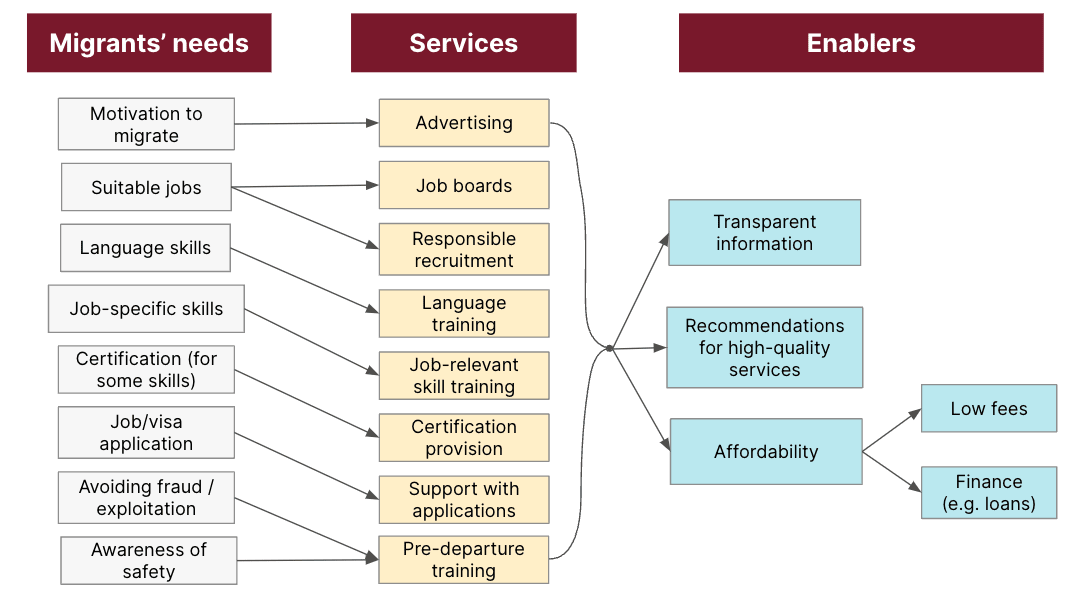
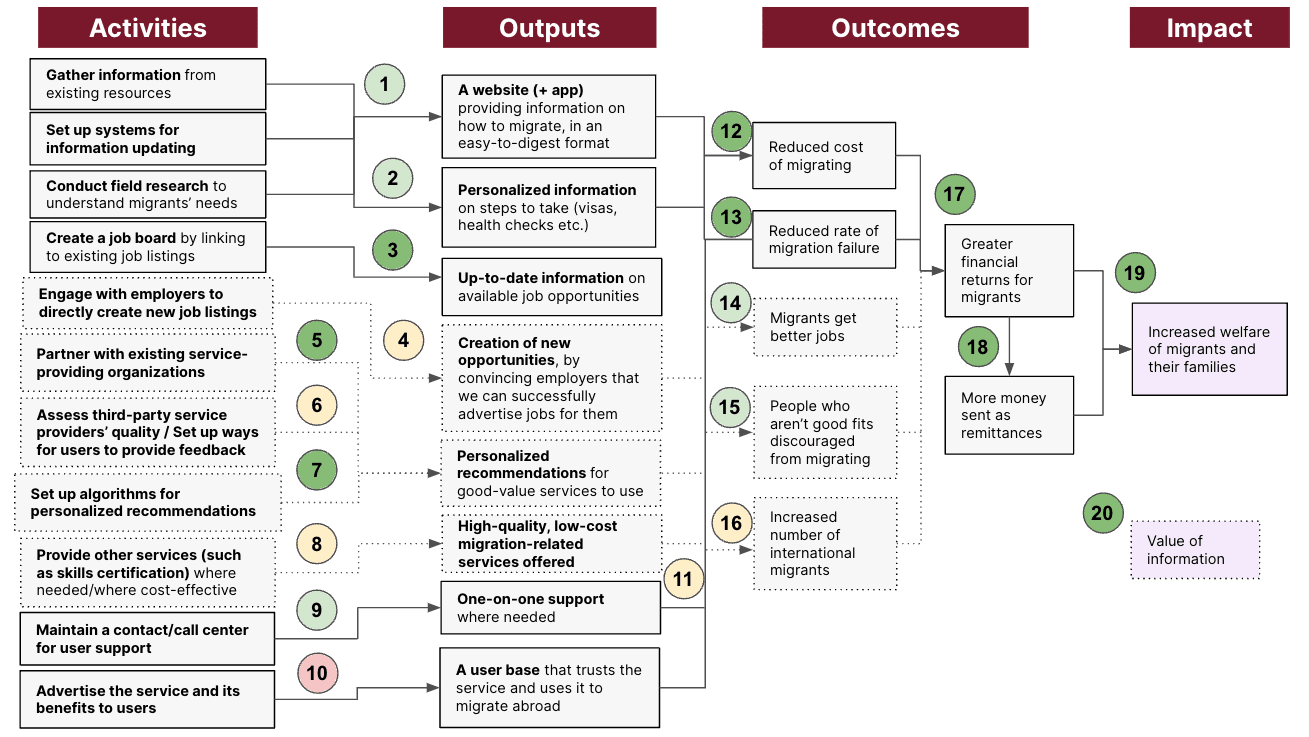
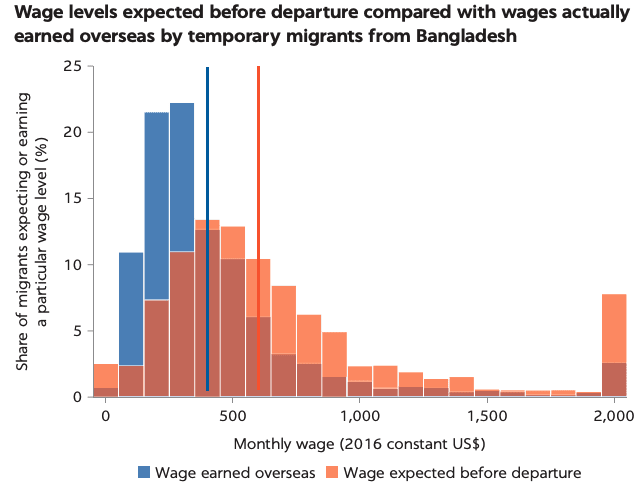
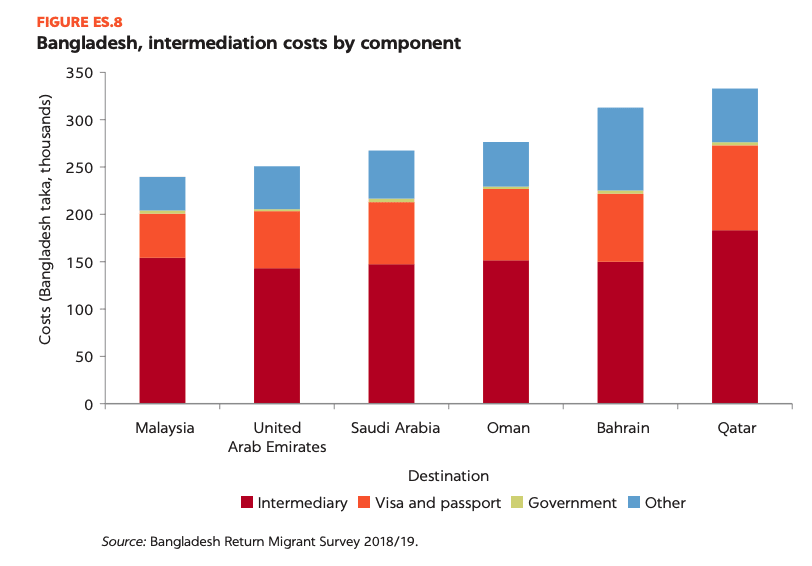
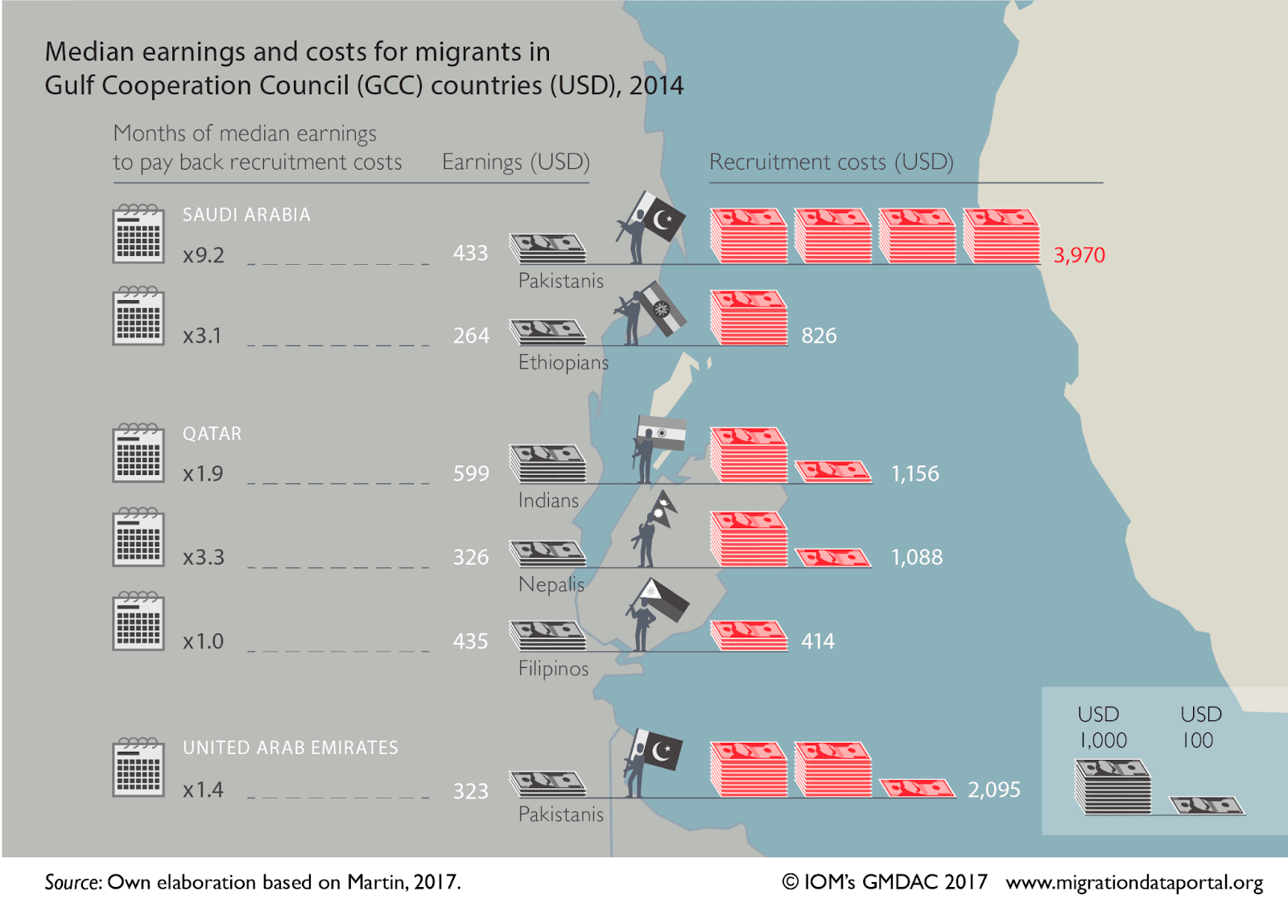
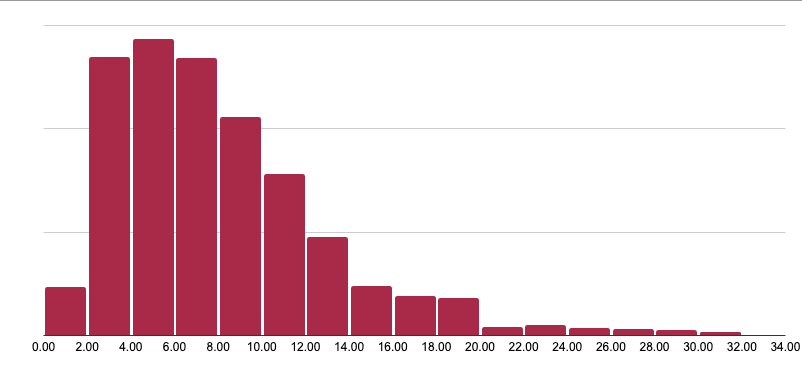
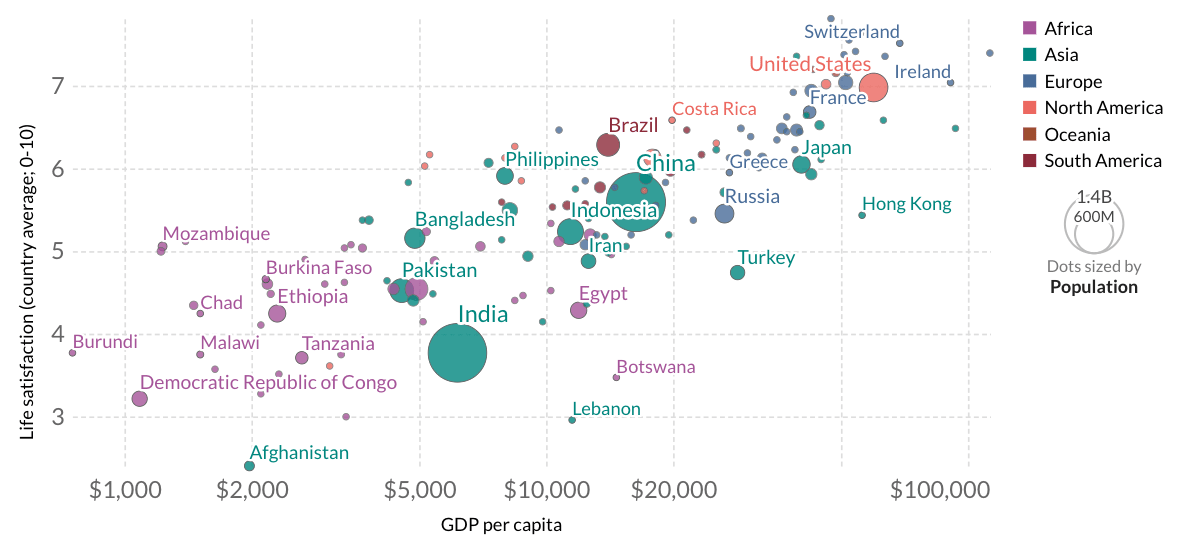
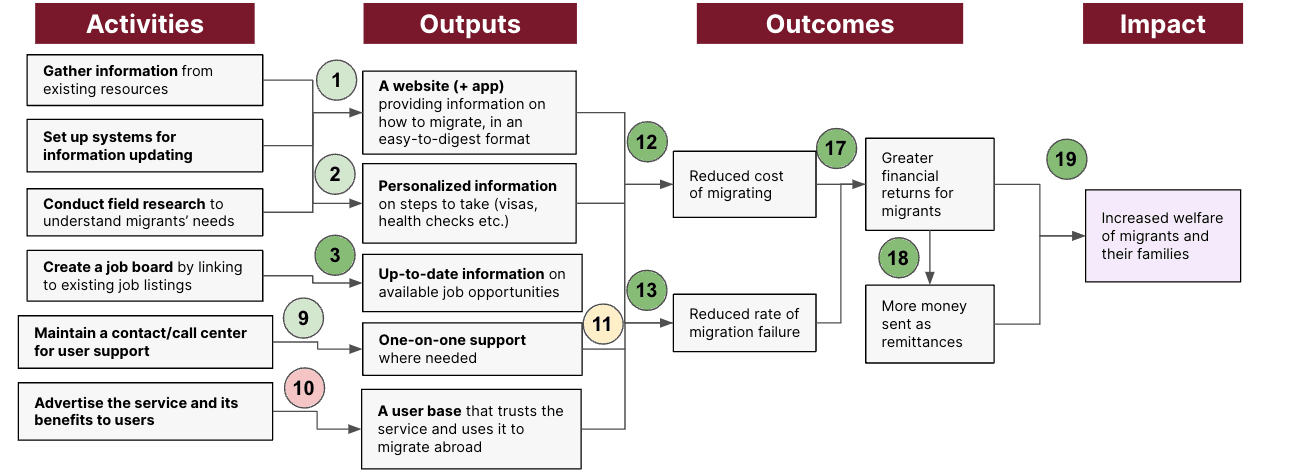
By the way, the paper “The Benefits and Costs of Guest Worker Programs: Experimental Evidence from the India-UAE Migration Corridor”, which seems relevant to this post, was evaluated by The Unjournal – see https://unjournal.pubpub.org. Please let us know if you found our evaluation useful and how we can do better; we're working to measure and boost our impact. You can email us at [email protected], and we can schedule a chat. (Semi-automated comment)