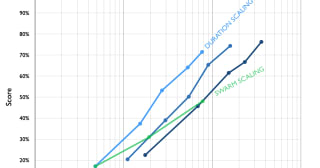
Just how powerful are large swarms of AI agents? And how do their powers scale as more and more agents are added to the swarm?
We’ve seen two large and extremely capable swarms from OpenAI in the last few months:
* 1,200 agents were being evaluated separately, but found a way to illicitly set up a message board and coordinate as a swarm. In order to cheat on their tests, they developed advanced techniques to prevent their actions being logged by OpenAI and 700 of them launched...
Headline finding: I audited 17 AI Safety Talent programmes. Zero of 17 have published any comparison group, rejected-applicant follow-up, matched control or randomisation. Not one. Every programme that mentions a counterfactual does it by asking participants to self-report.
Background
At least $70 million...
Often folks hit us up because they are thinking of starting an incubator and want advice.
Typically their motivation is either that (a) they have a list of specific things they want built that no one is building, or (b) they think an ecosystem needs more new projects generally to absorb more talent and deploy more funding effectively.
Here are six questions we often ask prospective teams, to help them figure out what to do. If you're incubator-curious...


I've been thinking a lot about this recently too. Unfortunately I didn't see this AMA until now but hopefully it's not too late to chime in. My biggest worry about SJ in relation to EA is that the political correctness / cancel culture / censorship that seems endemic in SJ (i.e., there are certain beliefs that you have to signal complete certainty in, or face accusations of various "isms" or "phobias", or worse, get demoted/fired/deplatformed) will come to affect EA as well.
I can see at least two ways of this happening to EA:
From your answers so far it seems like you're not particularly worried about this. If you have good reasons to not worry about this, please share them so I can move on to other problems myself.
(I think SJ is already actively doing harm because it pursues actions/policies based on these politically correct beliefs, many of which are likely wrong but can't be argued about. But I'm more worried about EA potentially doing this in the future because EAs tend to pursue more consequential actions/policies that will be much more disastrous (in terms of benefits foregone if nothing else) if they are wrong.)
Thanks Wei! This is a very thoughtful comment.
I completely agree that we should be wary of those aspects of SJ as well. I'm not sure that I'm "less" worried about it than you; I do worry about it. However, I have not seen much of this behavior in the EA community so I am not immediately worried and have some reasons to be fairly optimistic in the long run:
To restate, I would definitely be pretty wary of any attempt to reform EA in a way that seriously endangered norms of civility, open debate, intellectual inquiry, etc. as they currently are practiced. I actually think we do a very good job as a movement of balancing these goals. This is part of why I currently spend more time in EA than SJ.
This does not reassure me very much, because academia used to have strong openness norms but is quickly losing them or has already lost them almost everywhere, and it seems easy for founders to lose their influence (i.e., be pushed out or aside) these days, especially if they do not belong to one of the SJ-recognized marginalized/oppressed groups (and I think founders of EA mostly do not?).
One could say that seeking knowledge and maximizing profits are somewhat incongruous with these things, but that hasn't stopped academia and corporations from adopting harmful SJ practices.
Again it doesn't seem like openness norms offer enough protection against whatever social dynamics is operating.
Surely people in academia and business also had the motivation to avoid the most harmful practices, but perhaps didn't have the ability? Why do you think that EA has the ability? I don't see any evidence, at least from the perspective of someone not privy to private or internal discussions, that any EA person has a good understanding of the social dynamics driving adoption of the harmful practices, or (aside from you and a few others I know who don't seem to be close to the centers of EA) are even thinking about this topic at all.
Example of institutions being taken over by cancel culture and driving out their founders:
I think I agree that academic philosophy tends to have above-average openness norms--but note that academic philosophy has mostly lost them at this point, at least when it comes to topics related to SJ. I can provide examples of this on request; there are plenty to see on Daily Nous.