Thank you for sharing your experiences. I’m so sorry about the bad behavior you experienced!
I especially appreciate the description of what it’s like to be new in an area (geographic, social, or professional) and not have your feet under you enough to immediately get out of a bad situation. This highlights why it’s important for more-established people to pay attention to the culture and look out for what’s happening to newer or more vulnerable people.
There’s an ongoing question about how much some of these dynamics are regional (especially Bay Area-specific) vs more universal. I appreciate you noting that an emphasis on pickup artistry was also present in the Boston/Cambridge area, and I’ll DM you about that dynamic, which definitely interests me as one of the local organizers there.
Thank you for not only your courage to put into words what you’ve experienced, but to do it in a productive way that sparks hope for improvement. This must have taken an immense amount of effort. I want to do it justice by giving it a thorough read.
Thanks for sharing all of this! A few comments about the idea for a litigation fund -- I am a lawyer but cannot give anyone legal advice for various reasons. [Edit to add: All this is from a US-based perspective given the focus in Silicon Valley. Other countries, especially the UK, are less protective of speakers.]
My understanding is that litigation financing is possible, but complex.
One challenge with impact litigation for individual (human) clients is that the client always must be in control of the litigation. The client's objectives may not always be aligned with the broader interests of the impact-litigation fund. For example, the witness/client may not want to settle with an NDA up front, but may change their mind after months to years of gruelling litigation.
The litigation fund seems potentially targeted toward a particular type of case -- one in which the abuser has enough money to make litigation financially viable, and the facts and nature of the abusive act would likely result in a sizable-enough judgment for financial viability. That's not a reason not to do a fund, but it would be important to be upfront about these limitations. Specifically, I am thinking about how to minimize the risk that witnesses might feel a sense of invalidation because their cases were not selected.
Taking appropriately-selected quick settlement cases might not be a bad idea. In theory, one could craft an NDA that would allow for statistical reporting in a way that does not identify the abuser. I am thinking there would be some value to being able to say "An individual in AI settled a claim of sexual abuse against another person in the AI community for a sum between $X and $Y" even if names don't get named. That might be better than would-be perpetrators having no awareness of the breadth of litigation activity and believing that the risk of adverse consequences to them is extremely low. Moreover, some witnesses don't want to go through a public court process, and settlement without signing some sort of NDA may be difficult in many cases.
One possible intervention -- which would be purely charitable but possibly more cost-effective -- would be committing to defensive litigation assistance. You mention that "[m]any victims want to go on the record, but are afraid of defamation lawsuits." My view is that filing defamation suits is usually to almost always net-negative to a plaintiff who is well off, at least where the defendant has much more limited financial resources (but does have funding for legal defense).
The Stresiand effect can be powerful in increasing awareness of the allegation, and the most likely verdict in the Court of Public Opinion will be "maybe the rich plaintiff did it, maybe they didn't." Plus one would think many of the abusers have stuff to hide, and both publicity and civil discovery have a way of bringing the skeletons in one's closet to life (in the latter case, a prior NDA may not offer much protection to the abusers). Having a lawyer write a scary-sounding letter threatening to sue the victim for defamation, on the other hand, is a cheap and non-public way to bully people who can't afford a legal defense.
Thus, I predict that offering defamation legal-expense insurance to selected victims who want to speak out could be a cost effective way to empower them. I think relatively few abusers would actually go through with filing a defamation suit against someone whose legal bills they knew were covered. Therefore, making a binding commitment to cover selected victims' legal defense in a defamation suit should have a fairly low expected cost per case (although you'd have to find someone to underwrite the risk).
These dating practices that involve pushing forward despite a lack of consent are unacceptable and not what any of us would want to happen to ourselves. In particular they involve dehumanising women, which seems inimical to EA.
I'm sad this happened to you and I hope we can make this less common in EA than it is elsewhere.
I am uncertain if I think the Time article was fair in some general sense, but I am glad of the feedback.
Thank you so much for writing this. I'm horrified to learn about these "red pill" stuff, and your experience overall. I also think your points on epistemic injustice are very important.
Losing female AI researchers is detrimental to the whole industry. Not only do I intend to stay and thrive, I plan to build strong female-friendly communities of AI and AI alignment researchers.
Thank you for this intention! I found this, in particular, very inspiring. Both of your proposals sound like great ideas.
Regarding possible follow-up posts, there's something that I (a privileged white man) don't understand well, and would be interested in getting some clarity on. What are the major differences between sexual abuse and other types of abuse?
Say, a boss that aggressively lowers the self-esteem of an employee, using status/rank to force people to do things they don't agree with for fear of retaliation, or a repeated attack on a person's personality due to professional disagreement. (These are some examples that I think may be prevalent in some corners of our community, but I'm sure I'm missing a lot).
It (naively) seems like the harms and the methods for dealing with such behaviors are comparable to those in sexual abuse.
There are both important differences and similarities between sexual abuse and other types of abuse. I'd be curious about other women's opinions.
All abuse is shaping an attack, and some people are more vulnerable to different types of attacks than others. The power and control wheel may be helpful here in laying out some modalities: https://www.thehotline.org/identify-abuse/power-and-control/
Some possible differences
Sexual abuse is using systemic power and vulnerabilities to exploit someone in a very intimate way. It's different because it's a different modality of abuse.
Sexual abuse (at least heteronormative sexual abuse) is also gendered violence, entwining with gender dynamics and sexism in a way that other types of abuse may not as obviously. You can see this in my case study, where my quest to break into a male-dominated field got entwined with the red pill ideology of the bad actors in it. Personally, I liked how the movie Do Revenge showed how gendered violence can play out differently from other forms of abuse, both due to its intimate nature and its relationship to broader gender/power dynamics.
Sexual abuse also less understood than other forms of violence. Our society has pretty agreed-upon norms that hitting someone is bad. But due to women only relatively recently entering the legal system, media, economy, and other positions of discourse and power, the epistemics around sexual violence are currently less agreed upon and clear (the hermeneutical injustice stuff applies here). As a result, survivors of sexual abuse face a myriad of painful second order effects, such as society-wide gaslighting, minimization, and dismissal, or being unable to have the language to communicate their experiences.
Lastly, I find sexual abuse to be distinctly disturbing in that it's a perversion of something that's supposed to be enjoyable, an act of trust, and a celebration of life.
Some possible similarities
There are a lot of similarities in prevention. When the female co-leader and I were dealing with the hacker house's retaliation, we read a lot of anti-bullying curriculums for high schoolers and noticed similar patterns.
For example, the anti-bullying curriculums would convert bystanders into "upstanders," or people who would call out and stop bullying behavior before it escalated. We noticed that many people of that community were not great at identifying sexual harassment in the first place, and would also not say anything if certain behaviors were escalating.
For instance, if at a hacker house party, a wealthy late-thirties startup founder seems to be running red pill scripts on a 17 year old Asian-American high schooler, who is new to the Bay Area and intimidated (i.e. he is touching her upper thigh and continuing to physically escalate, making digs at her boyfriend, and you can see panic flash in her eyes), the default bystander in this community would be very unlikely to intervene. But in upstander culture, the upstander would enter the situation and make sure that the 17-yr-old is comfortable, and that the man's intentions were in good faith. If the man's intentions were not in good faith, the upstander would find a way to diffuse the situation, like telling the 17-yr-old she is needed elsewhere, and then having a polite conversation with the man. So in that sense, preventing sexual harassment has a lot to learn from preventing abuse of other modalities.
There are, as you mention, other similarities between sexual abuse and general abuse. All abuse is a fundamental disrespect for another conscious being's dignity and agency. Sometimes they get entwined-- I think the movie Bombshell, which is about the sexual harassment climate at Fox News, does a great job of depicting how the general abuse you mention ("a boss that aggressively lowers the self-esteem of an employee, using status/rank to force people to do things they don't agree with for fear of retaliation, or a repeated attack on a person's personality due to professional disagreement") entwines with sexual abuse.
I'd love to see better frameworks that contextualize sexual abuse with general abuse while preserving its distinctness.
There's a lot more to say here, so I may follow-up again later!
In my view, the "wealthy late-thirties startup founder" in your hypothetical needs to be shown the door and asked not to return. The student is a minor and is under the age of consent in California. The founder's behavior is strongly consistent with redpill ideology, and shows a demonstrated lack of appropriate boundaries surrounding minors. Either of those characteristics are, at a minimum, disqualifying for presence at a party where minors are present.
Ah, thank you for saying that. I've been so numb to some Silicon Valley tech/rat bro subcultures for so long that my simulation of actually asking him to never return is to be met with dismissal/anger and comments I was being too conservative, so I toned repercussions down to "polite conversation." Female community leaders can have a tough time in those environments. But yes, I agree with you.
Older and more experienced figures in Silicon Valley need to be protecting and guiding the young populations who come here with big dreams, not creeping on them. Unfortunately, Sergey Brin showing up at hacker house parties with undergrad women sets the tone, lol.
It's definitely much easier -- especially as someone who isn't in California, or involved in the tech/rat subculture -- for me to recognize and verbalize what should be done in a hypothetical situation than it is for someone to actually do something when the situation actually presents itself. I appreciate your post and what you're doing to protect and guide people in this space.
Your reaction makes me think minors should not be allowed at these kind of hypothetical parties, at least until there are much stronger norms (and probably explicit safeguarding processes). It's not that the hypothetical becomes somehow OK if you make the young person 18 instead of 17 . . . but the democratic process has decided that there is a big difference between minors and not-minors, and so my reaction is going to be particularly strong when safeguarding of minors is an issue.
"Lastly, I find sexual abuse to be distinctly disturbing in that it's a perversion of something that's supposed to be enjoyable, an act of trust, and a celebration of life."
THIS. Like looking forward to eating your favorite dessert, and the moment you take a bite, it tastes like vomit.
I liked Lucretia's initial response quite a bit. For a small bit of context about my personal identity and background, I'm a hetero cis man who has witnessed severe problems with sexual abuse in the rat/EA and also in other subcultures over the last 10 years, and has had many conversations with women on these issues.
The following are just my thoughts. Their length, the number of conjunctions, and the fact that I'm a hetero cis man makes me a little bit anxious about posting them, even though I think they are a carefully thought-out and constructive contribution. If the balance of opinion appears to be not just disagreement but a perception that this is counterproductive toward the project of seeking sexual justice in the rationalist/EA community, then I will delete it. So please be explicit (I will weight comments/PMs including reasons for your disagreement more heavily than karma in this decision).
Before I go on, I need to make one point extremely clear:
I will be talking about the idea of sexually "risky behavior" here. What this means specifically is flirtatious/sexual acts that have the potential to be perceived as consensual/desirable by both participants, but which lack explicit consent guardrails such as verbal declarations of consent, involve power imbalances, involve intoxication, or take place quickly enough that there are real risks of perceiving desire/consent when it's not actually there.
When I talk about sexually "risky behavior," I am not talking about a situation in which sexual abuse actually occurred. That's not a risk - that is a disastrous, failed, violent outcome.
These are charged topics and I am not confident I'm doing an adequate job despite my best efforts, so I am happy to constructively respond to criticism of my language choices as well as the conceptual framework.
I'd start by jumping off this portion of Lucretia's comment:
Our society has pretty agreed-upon norms that hitting someone is bad. But due to women only relatively recently entering the legal system, media, economy, and other positions of discourse and power, the epistemics around sexual violence are currently less agreed upon and clear (the hermeneutical injustice stuff applies here)...
Lastly, I find sexual abuse to be distinctly disturbing in that it's a perversion of something that's supposed to be enjoyable, an act of trust, and a celebration of life.
One of the challenge with many forms of sexual abuse (and harassment, which I'm here going to lump in with abuse), is that what makes an individual act of sexual abuse harmful is often much more contextual than what makes an individual act of non-sexual abuse harmful.
Consider some typical examples of non-sexual abuse:
Physical violence
Demeaning and disrespectful language
Neglect of a dependent
Stealing, financial coercion, or nonconsensual control of finances
Spreading negative false rumors to damage somebody's reputation
All of these forms of non-sexual abuse typically involve "atomic" actions that are almost always intrinsically negative (i.e. they are not usually "enjoyable, an act of trust, and a celebration of life"). They are straightforwaredly brutal or cruel acts. The rare occasions on which some people might consider them acceptable typically require elaborate justifications (spanking children, fighting back against an abusive spouse, conservatorships, teasing, or inaccuracies in satirical biopics like Vice).
In escalating social interactions toward increased intimacy, participants frequently want some level of ambiguity or plausible deniability in order to avoid the embarassment and awkwardness of rejection. Communicating while preserving plausible deniability is a delicate art and also a generator of misunderstandings, as well as grotesque redpill-style distortions about how women think and feel about sex. It is this force that makes people want to flirt in conventional ways, rather than having the expectation that one can straightforwaredly ask about sexual interest and receive an honest, direct answer. Sexual abuse occurs in a context where plausible deniability is felt to be a crucial part of sexual negotiation, and where a common outcome of sexual negotiation are normal hurt feelings, embarassment, letdown, frustration and discomfort. This serves as camoflage for sexual abuse.
In contrast to non-sexual abuse, sexual abuse often (but not always) involves "atomic" actions where:
A substantial amount of context is required in order to understand why those individual acts were unequivocally harmful or inappropriate, or why the harms aren't just normal negative feelings from a failed normal and healthy sexual negotiation, but are instead the result of sexual aggression or violence.
We may have to defer to the survivor(s) in order to learn that context, because adequate hard evidence does not exist.
In order to address these problems while minimizing new ones, we often rely on a few techniques:
Looking for a pattern of behavior by the alleged perpetrator.
Relying on sufficiently accurate stereotypes and patterns of behavior on a community level. For example, the proliferation of stories of women being sexually abused in EA/rationalist/AI-safety-adjacent Silicon Valley communities by high-status men lowers my threshold for believing an accusation against a high-status SV man in these communities, even if he has a previously unblemished reputation.
Installing community norms around what we regard as a low-risk vs. high-risk sexual interaction from a consent standpoint. For example, touching a woman a man has just met on the upper thigh within a minute of meeting her is a very high-risk form of sexual interaction.
Note that the challenge here is that some individuals will mutually want to engage in sexual activities regarded as high-risk by their communities, without the encumbrance of careful, explicit declarations of consent at each step along the way. Their ability to do so on a practical level will be impaired by the community's perceptions of these activities as high-risk. This is a tradeoff the community as a whole makes, typically judging that the loss by adopting more conservative norms around sex is outweighted by the huge gains in terms of sexual safety. Furthermore, perceptions and the reality of large amounts of sexual abuse also makes sex more difficult, further tilting the norm toward greater conservatism.
Installing a norm that failure to avoid being accused of sexual abuse is sufficient grounds for punitive action by the community, though not necessarily by law enforcement, often with a lower threshold the more high-risk the sexual interaction was.
These techniques are controversial, both in theory and in practice, because they are vulnerable to adversarial exploitation - both by people bent on destroying reputations for personal gain and especially by perpetrators of sexual abuse bent on undermining investigations into their own abusive activities. There is a principled and an unprincipled critique, and it is easy to hide the unprincipled critique as a principled one.
The foregoing is not meant as an argument in favor of one approach or another to dealing with sexual abuse. Instead, it is intended as an answer to the question in the comment I'm responding to: what makes sexual abuse different from other forms of abuse? I believe an important defining difference is the problems I've articulated here. The result is that it feels qualitatatively very different to deal with sexual abuse than other forms of abuse.
I'm going to take a stab at a framework. This is the first time I've written this down, so consider this possibly prone to errors and in draft status.
Instead of lumping all types of sexual harassment/abuse together, we could view sexual abuse/harassment as structurally similar to first, second, and third degree homicide, with varying degrees of intent.
Type 1 sexual abuse/harassment may involve calculation and intent. Epstein, Weinstein, and Ratrick's actions above in studying red pill scripts would fall under Type I. You can see that this behavior was premeditated.
Type 2 sexual abuse/harassment may be analogous to "crimes of passion," such as a hypothetical guy becoming overtaken with desire and not checking in on the woman. But it is not a premeditated offense.
To be clear, both types are bad. I don't think parts of Silicon Valley take either type seriously enough. Type 1 and Type 2 is also a spectrum, and repeat offenders may have a mix of both. However, perhaps the offenses should be treated differently.
I think people get squeamish when you try to lump adolescent boy who's learning boundaries and who is clumsy with consent, but open to correction (Type 2), with someone like Epstein, who is a calculated offender (Type 1). This may also be one reason why the #MeToo movement got cancelled; there may have been a lumping of Type 2 with Type 1 offenders in a way that made some people think parts of the movement were "unreasonable."
I think restorative justice fails when it is assumed that the offender is a Type 2 offender who is open to correction. But oftentimes, the offender is actually a Type 1 offender who is manipulating his community into thinking he is a Type 2 offender. Or, even if the crimes are not premeditated, they are serial, and the offender is not open to correction but pretends to be, which would make him Type 1.
So perhaps severity of consequences of sexual harassment/abuse should be modulated by: a) "How premeditated was the act?" and b) "Is this a repeated offense?," which together could classify the offense into a Type 1 or Type 2 offense.
adolescent boy who's learning boundaries and who is clumsy with consent, but open to correction (Type 2), with someone like Epstein, who is a calculated offender (Type 1)
Two other dimensions your example also illustrates:
Relative power and status: it's not just that Epstein was intentional in his abuse, but also that he was older, richer, and much better connected.
Relative experience: Epstein had run his process on hundreds of women and girls, with the opportunity to learn from those experiences and adapt his methods.
I think these additional considerations are also doing a lot of work in why people see these two situations differently?
I think there may be a number of related constrcts in play here, such as the culpability of the offender, amenability of the offender to restorative justice techniques, and the appropriate consequences for the offense. Many factors (such as advance planning) will load on all three constructs, although perhaps with somewhat different weights. However, I can think of factors that might load much differently on the different constructs. So one suggestion for more detailed framework building would be to consider whether the factors affect specific constructs differently.
One awkward issue is that the menu of potential consequences will vary depending on the status of the offender. For instance, a civil lawsuit probably isn't realistically available against a first-year grad student: it's expensive, and the survivor won't be able to collect money that the grad student doesn't have. On the other hand, one could envision methods of reducing future risk without booting the offender from the community that are rather expensive . . . which would require the offender to have resources to pay (or would require the offender to be seen as high-impact enough for a donor to step up to pay to keep the person in the community).[1]
For instance, I submit that in most -- probably all -- cases in which the offender's use of psychoactive substances materially contributed to the offense conduct, the offender needs to go substance-free for several years at least. One could monitor compliance with this commitment via hair testing, but it ain't cheap.
The context-dependence of some sexual abuse is also why it can take some survivors awhile to process and articulate their experiences. The process can feel like picking jagged glass out of an organ.
I don't have great answers yet, but appreciate the frameworks you're developing.
Thanks Lucretia for sharing your experience. This cannot have been an easy topic to write about, and I'm deeply sorry these events happened to you. I really appreciated the clarity of the post and found the additional context above the TIME article to be extremely valuable.
I liked your suggestions for people to take on an individual level. Building on the idea of back channel references, I'm wondering if there's value in having a centralised place to collect and aggregate potential red flags? Personal networks can only go so far, and it's often useful to distinguish between isolated instances and repeated patterns of behaviour. The CEA CH team partially serves this role within EA, but there's no equivalent in the broader Silicon Valley or AI communities.
Yes, there are some efforts to build infra like this! I'm not sure any have launched yet.
Some people have been looking into blockchain as a decentralized way to store and add information. There are also some great FB groups, but they frequently get shut down by some people who report them to moderators.
I do think the Bay Area startup world should have its equivalent to CEA, but it would require time, dedication, smart incentive design, and funding. Right now, Silicon Valley seems too libertarian/internally competitive for this to happen by default.
Blockchain doesn't seem like a good fit for this problem. I think it might scare people away, either from intimidation at using the technology or for the general negative associations of blockchain with bad actors in the crypto space. You have to have a place to view the information anyway, so it's unclear as to what blockchain adds. Also, you don't really want these accusations to be immutable, if someone maliciously uploads false accusations it'd be better to have some way to remove it.
Something like a discord server or even a google spreadsheet seems like it would work better and have easier access.
I think the idea is that, unlike FB groups, there isn't a centralized authority who can shut a blockchain-based system down and such shutdowns apparently have been a problem in the past.
I agree that using a blockchain mechanism carries significant downsides, and am not endorsing that, but do think it plausible that decentralization adds some pluses.
True, but if that's all you need, you can just make a regular website, or an encrypted group chat, etc. People facing potential retaliation are not going to share their experiences unless they trust the people running the network. You need centralised trust, which is the exact opposite of what blockchain was made for. The blockchain part would be either redundant or actively counterproductive.
This makes sense, and I'm generally agnostic. But the trade-off with a centralized authority is that the people running the system take on a lot of liability. The good samaritans who do this work currently are very careful, paranoid people. If one has incriminating information about powerful people, there is often a target on one's back.
Yeah, I definitely appreciate the great risks that are being undertaken, and the need to protect yourself from retaliation by powerful abusers.
I don't pretend to know the best answer, only that I strongly believe going the blockchain route would be a huge mistake. I don't think blockchain solves the liability problem, merely shunting it onto the developers and maintainers of the blockchain product, or to individuals whose accusations get leaked. It seems that a better route would be something like Callisto, which anonymously matches victims together using encrypted accusations using a regular app. I'm no expert though, I just really hope that something can be done that meaningfully makes a dent in this problem.
Thank you for writing this, and for being so thorough, despite the emotional difficulty of the subject.
Deceitful abusers cannot be allowed to obtain positions of power in AI companies or the field of AI safety. I believe this for every field, but the knock-on effects from AI in particular could be disastrous.
I want to echo the thoughts of others here and say that I am so grateful you have the strength to share this post, deeply saddened at the pain and suffering that you and others have been subject to, and scared and angry that this is connected to a community I am a part of. If you do write those further posts in this sequence, I will certainly read them. And thank you for sharing the resources/links too - "The Right to Sex" has been a candidate for my next book, and this might have clinched it.
The fact that someone like 'Ratrick' can seem to have such influence in the AI Safety community is terrifying, like this quote: "Ratrick read books on “punitive dog training “ in order to control and “condition” his female colleagues at NeurIPS" made me audibly say "what the fuck"[1] - I won't try to find out who it is, but it certainly seems that many people who read this post will know who this person is, and I hope those who do know this person can name & shame, or otherwise challenge their influence and perhaps bring some justice (only if doing so would not harm other victims, or put others in potential danger of course).
From my persepctive, another reason that this is so upsetting is that my interactions with EA have basically been unanimously positive - of course that doesn't mean they don't happen, and as a man not in The Bay my life experience and story are very different from yours! But it makes me feel like there's a 'shadow-side' of EA that I don't know about or can't see, where people are abused and harmed, and I can't do anything to actually help those who are hurt.
Finally, while these incidents are not limited to one location, it does seem to be concentrated in The Bay. There's not much I can say here apart from to echo what Matthias said when the original article came out and hope that the Bay Scene gets its shit together. The more I hear about The Bay from the Forum, personal anecdotes, and Twitter discourse,[2] the less it looks like a place or a culture I want to identify with.
Yeah, I am mainly really sad that my experience in EA/EA-adjacent communities was through the distorted lense of these redpilled AI and AI safety researchers. But I hope to engage with the more productive part (and seemingly majority!) of the EA community going forward!
Thank you so much for writing this amazing, long, deep post. Thanks you for mustering up the strength to engage with the forum (even though it doesn't feel like a very safe space), and for speaking to the Times. As another woman, I wish it wasn't necessary, but it seemed to have been. I would love to see more of your writing, I think the other posts in your sequence could be super interesting and would hopefully inform many people in this community.
Thank you, I'm glad that you appreciate my post. I do want to write more, and would be happy to know if there are any topics in particular that are of interest.
Apologies for the super late reply, I didn't check the forum for a while. I'd be especially interested in topic 1, 3, 4, 5 and 6 :) Which doesn't mean that the others would not be interesting or of value, I just personally think I have a better grasp of the concepts.
I think for reading around this it should be considered that it’s a recurrent problem and the root of sexual liberalism should be considered at fault. The Case Against the Sexual Revolution by Louise Perry is a good example.
It's an interesting thesis! Maybe a subject for a separate post, because I imagine this view is controversial, and I don't want this comments section too off-topic.
My parents had an Indian arranged marriage and came from a very conservative culture, so I've thought a bit about this. Transitioning to San Francisco liberalism was indeed a culture shock. Here are two controversial speculations so please take them with some salt, for I don't necessarily agree with them: a) It's possible that if every sexual encounter has an n% probability of being in bad faith, and you have more sexual encounters, the probability of getting assaulted just increases. The opportunities in sexually liberal cultures are simply higher. b) Now for a very controversial statement, with low epistemic status: It's also possible that women have different types of leverage in more sexually conservative cultures.
I did feel that rape was taken much more seriously in my family subnetworks in India, and I felt more protected there than in America, despite media stereotypes about gang rape. But this also has to do with complex cultural norms, including the protection of the nuclear family, worship of female goddesses like Kali and Parvati, India being anthropomorphized as a women (instead of Uncle Sam), India having had a female Prime Minister (compared to the US, which has never had a female president), having sex with someone's fiance is considered "rape," accused men are guilty before proven innocent, men can get jailed for staring at a woman for too long, India has never had an Epstein/Weinstein-level crime ring (at least that was surfaced), etc. Obviously, India is a huge and diverse place with a large spectrum of norms, but these were the norms of my subnetwork.
I'd expect the answer to look something like "sexually liberal cultures have a larger possibility space of going poorly or well," but are not sexually toxic by default. There are sexually liberal consent cultures out there.
I think Perry's book was strongest on the the stuff around hook-up culture not being a good equilibrium for women because women are on average lower in sociosexuality than men, and would prefer a committed relationship to casual sex. I thought the rest of the book was considerably weaker and I don't think it offers any good explanations for the prevalence of sexual harassment or assault in different contexts. As other commenters have noted, sexual harassment is probably (not sure though) generally higher in less liberal places, so it doesn't seem like what is driving culture in the Bay.
I think a better book on this is David Buss' Bad Men, which takes an evolutionary perspective on sexual conflict in general, seeking to explain sexual harassment, rape, sexual deception, etc. I think the book shows that men and women were not in a happy sexual equilibrium prior to metoo and are also not post-metoo: significant active efforts need to be taken to prevent abuse, and require norms that are much more strict that those extant in society. I found some of the data in the book extremely eye-opening.
"How many men actually force women to have sex without their consent and against their will? One source of evidence comes from studies that explicitly avoid using the word “rape” but instead ask men: “Have you ever had sexual intercourse with an adult when they didn’t want to because you used or threatened to use physical force?”A study of 1,882 American men found that 120, or 6.4 percent, admitted that they had.79 Of these, about two-thirds were repeat rapists, averaging 5.8 admitted rapes. This sample consisted not of convicted rapists but of college students attending a midsize urban commuter university. Other studies have found that between 6 and 15 percent of college males admit to rape or attempted rape as long as the word “rape” is not included in the description.80
A large cross-cultural study used a similar method, asking 10,178 men from six different countries these two key questions: have you “forced a woman who was not your wife or girlfriend at the time to have sex” or “had sex with a woman who was too drunk or drugged to indicate whether she wanted it”?81 The percentage of men who admitted having raped a non-partner was 4.3 percent in Bangladesh, 6.2 percent in Sri Lanka, 8.1 percent in China, 8.3 percent in Cambodia, and 12.8 percent in Indonesia. The most extreme country in the study was Papua New Guinea, which logged an astonishing 40.7 percent of men admitting to the act of rape when that specific word was not used. Most men are not rapists when evaluated by the criterion of actual behavior, but a subset of men clearly are rapists."
Buss, David M. . Bad Men: The Hidden Roots of Sexual Deception, Harassment and Assault (p. 198). Little, Brown Book Group. Kindle Edition.
I'm pretty sceptical that sexual liberalism is at fault, though maybe some aspects of sexually-liberal culture don't help. There's just as much sexual abuse and assault in sexually-conservative communities, now and in the past, and maybe more.
I appreciate that you bring up an Overton-expanding point, but I have to disagree. I think this argument is a prototypical example of "second-best theory".[1]
If a system is in a bad Nash equilibrium[2], asynchronously moving closer to a better equilibrium will usually look like it's just making things worse. The costs are immediate while the benefits only start accruing once sufficient progress has been made.
A critic could then point to the most recently changed variable and say, "stop making it worse!" If they win, you may see marginal gains from the stability of the (tragic) system, giving people the empirical illusion that they were right all along (myopic marginalism).
> "In an economy with some uncorrectable market failure in one sector, actions to correct market failures in another related sector with the intent of increasing economic efficiency may actually decrease overall economic efficiency."
When no individual benefits from changing their strategy in isolation, the system can remain in an equilibrium which is much worse for every individual, unless they manage to coordinate a simultaneous change to their strategies.
Crucially, nothing says that finding yourself in a bad Nash equilibrium[3] implies that there are no superior Nash equilibria above that level. It's not about choosing "equilibrium" vs "fairy-tale story"--it's about "bad equilibrium" vs "better equilibrium".
And it's feasible to get to a better equilibrium. Especially if you just need to pass the tipping point once, and you get to retry as many times as it takes. In such a scenario, it would be a tragedy to myopically preserve the Nash you've got.
Think about it like this: Both sickle-cell anaemia & malaria are bad when considered separately, but they're also in a frequency-dependent equilibrium because the allele (HbS) that causes anaemia for a minority also confers resistance against malaria for the majority. Thus, a "second-best theory" would be to say that the HbS allele is good because it improves the situation relative to nobody having resistance against malaria at all. While it's true, it's also myopic.
When we cure malaria, there will no longer be any selection-pressure for HbS, so we cure sickle-cell disease as well.
To unpack the metaphor: I think many traditional & strict norms (HbS) around sex & relationships can be net good on the margin, but only because they enforce rigid rules in an area where humans haven't learned to deal with the complexities (malaria) in a healthy manner. "Sexual liberalism" encompasses imo an attempt to deal with them directly and eventually learn better norms that are more likely to work long-term.
I must admit, this is very scary. I'd rather not believe that my cultural neighbourhood is pervaded by invisible evils, but so be it. I'm glad you wrote it.
Spent an hour trying to figure out what kind of policies we could try to adopt at the individual level to make things like this systematically better, but ended up concluding I don't have any good ideas.
Thanks for sharing! Would be really interested in reading the sequence! Most arguments regarding the topic do come from a more mainstream or left-wing perspective or writing style, which does not come super naturally to me, so I think writing about it in the rationalist style could fill a gap. (Though it has been noted that using rationalist writing style itself is a somewhat excluding Community norm, however, as said above, I think there is enough material available on the topic in non-rationalist writing style.)
It’s very scary and sad reading it.
Thank you for your courage and the constructive suggestions for others and the field. Sending you virtual support and hugs.
Psychedelics are normalized in some parts of Bay Area culture, compared to in other parts of the world. Some Bay Area subcultures use psychedelics recreationally at a similar frequency as people in NYC may drink alcohol. In some circles, it is common to take psychedelics (LSD, ketamine, MDMA, shrooms, 2C-B etc) recreationally with a group of people in a hacker house setting. While taking psychedelics is not inherently irresponsible, psychedelics can be used irresponsibly.
When someone is on psychedelics, their sense of reality can be distorted. They are in a vulnerable state, highly suggestible and psychically exposed, and so they cannot make informed decisions. Some bad actors know this and will deliberately give a woman LSD/MDMA with the purpose of getting her in a vulnerable/altered state so that he can have sex with her, without making any of these motives explicit upfront.
Here is an article about sexual abuse at ayahuasca retreats, which may make the danger of sexual assault/coercion on psychedelics more visceral: https://www.thecut.com/2021/11/sexual-assault-ayahuasca-tourism.html. Aya retreats are a different subculture from the Silicon Valley psychedelic date rape scene, but some dynamics of predatory shamans transfer.
An example from this article is a guest who is unable to consent with a predatory shaman while on ayahuasca at a retreat (content warning for sexual assault/coercion):
The world quickly went sideways. Ross tried to stumble out of the hut. As she did, the shaman saw her and led her over to the bed to lie down. He started telling Ross that he’d had visions of her before her arrival, that he’d known what clothes she’d be wearing, that they had a higher purpose together. He had so much to teach her, he said. Then he climbed on the bed and wrapped his arms around her; she could feel his sweat against her skin as he began professing his love. Ross felt unable to move. “My grip on reality — I was watching it kind of slip away,” she said. The shaman began writhing against her. She eventually mustered the strength to turn away from him, and he left. The next morning, he returned: “He motioned me to the bed and told me to take my clothes off. That was the point at which it was like I had no will,” she said. They had sex. “He could have told me to do anything and, like an automaton, I would have just done it. I would watch my body perform these things, and it was like I wasn’t there to control it.”
Thank you! Can you tell us more about how you figured out the following:
"Some bad actors know this and will deliberatelygive a woman LSD/MDMA with the purpose of getting her in a vulnerable/altered state so that he can have sex with her, without making any of these motives explicit upfront."
Anecdotally, I have heard ~3 stories of premeditated psychedelic assault (the guy sometimes even explicitly says his intent to others, sometimes realizing this is bad, sometimes not realizing this is bad). I have heard ~2 stories of psychedelic date rape assault that were probably not premeditated, and ~2 stories that were ambiguous. I don't know how well this reflects base rates. The ~3 stories of premeditated assault may be passed on through word of mouth more frequently, because they're more obviously frightening.
But more importantly, I should have been more clear in my original post. Psychedelic assault is bad, whether or not it's premeditated. I wrote more in this response about premediated vs not-premeditated assault.
Not sure why you're asking, but the claims you have to believe in order for the OP's claim to be not true is "no bad actors will deliberately give a woman LSD/MDMA with the purpose of getting her in an altered state so he can have sex with her", or "Bad actors who want to do this will make their motives explicit upfront".
Do you think either of these two or OP's claim is more likely?
Great! So based on evidence and reasoning, what is your credence that the following claim is true?
Some bad actors know this and will deliberately give a woman LSD/MDMA with the purpose of getting her in a vulnerable/altered state so that he can have sex with her, without making any of these motives explicit upfront.
And what is your credence that either of the following claims are true?
No bad actors will deliberately give a woman LSD/MDMA with the purpose of getting her in an altered state so he can have sex with her
Bad actors who want to do this will make their motives explicit upfront
"Some" ranges from 2 or 3 people to every person but one. There's not much point debating a claim so vague.
If your intention is to work out whether OP means "2 or 3 people" or "every person but one" or anything in between, it would have been helpful to clarify.
The reason I say this is because it's common for people to ask innocuous questions with a more insidious subtext, and it's often hard to tell this from people asking when you are online.
One possible reading of your series of questions is that you're coming from a place where you are skeptical that this is happening, and you're asking OP to provide evidence for you to update. But most of this evidence is going to be anecdotal, so it's not going to be super helpful for you in terms of getting a rate. So I'm struggling to follow where your starting point is in terms of what you believe is happening in these communities, how you're reading into OP's claim, and what level of evidence you're expecting from OP in order to update.
To be more explicit, how do you know that there is scheming that goes on ahead of time, and not that the perpetrator hasn't themselves been psychologically altered to act inappropriately? Is there any evidence to support premeditation?
It increasingly sounds like you are coming from a starting point of "there is no scheming" and looking for evidence to update.
But to be more explicit, you shouldn't start from "there is no scheming", because base rates would suggest that there is scheming that goes on ahead of time.
This conversation doesn't seem to be achieving anything so I'm going to stop replying now. You seem to have a very high credence that you can read people's intentions from scant evidence; I'm both dubious of this, and that I'd be able to change your mind in a timely fashion.
Be extremely careful around people who call themselves “mediators” or “investigators” like AQM from TIME, or Ratrick Bayesman’s “EA Coach” described below (see Pt 3: My Case Study). On one hand, the existence of mediators is understandable; the original purpose may have been to bypass the growing complexity and cost of the traditional justice system while preserving social harmony. But without qualification and training, these “mediators” and “investigators” are incentivized by local gradients of power and popularity, which, in Silicon Valley, tends to concentrate in the hands of men.
So what do you recommend in terms of "qualification and training"? Lots of interpretations! If you're evaluating an individual for filling this role, do you look for:
at least a year of professional experience in the social work industry
read 100k words on the subject
read 10k words on the subject
All seem like viable options (assuming a background of general trust-buildling character traits like thoughtfulness, analyticalness, a philosophical appreciation for consent as the driver from which social contracts are derived, things along these lines). Evaluating track records and, of course, evaluating conflict of interest sort of things, may be helped or hindered by a formal rule (I'm very uncertain).
Activists taught me a lot about consensus and conflict resolution, in my sordid past (specifically a Food Not Bombs chapter was an example of doing a good job and a BLM chapter was an example of doing a bad job), usually the correct choice of mediator would have read between 10k and 100k words on the subject plus had comprehensive (deep-rooted) moral intuitions along the lines of NVCy stuff.
Slightly concerned about (slightly goodharty) risks of "certification" driven understandings of mediations (which is one direction to take what you were saying) is that there could be lots of informal agreement about trust of a certified mediator's good judgment dwindling, but no one else seems suitable because the blindspots of a certification process.
The context suggests that there needs to be at least enough "qualification and training" to render the proposed member independent of "local gradients of power and popularity." I don't think how many words one has read, or one's moral intuitions, really contribute to that objective. In contrast, having a relevant professional license -- while not a panacea -- requires formation in the profession's norms and a relevant education that is not bound up in "local gradients of power and popularity."
I'm not getting it, because it's too easy for me to construct a hypothetical qualified and trained person to just not be independent of local gradients of power and popularity, and my model of what's needed to do a good job in these situations is actually quite attainable by certain dispositions/temperaments in informal ways.
I'm not inherently against this. But one problem is that it's not clear who is qualified/trained and who is not. There's currently no Yelp or Trustpilot for sexual harassment/abuse mediators. In contrast, I know a lawyer has my best interests in mind legally because I hired them and am paying them.
In no community I was ever part of before have I had to tell newcomers "beware, this community is plagued by sexism, racism and abuse". That I have to to have to tell this to people I introduce to EA is really absurd.
The post mentioned "attack on EA". The main attack on EA I see are the people causing issues around sexism and/or racism. I think they significantly slow down our productivity and ability to do good in the world. Why should women in EA have to spend time thinking about how to protect themselves from abuse? I have never been in a place where this is the modus operandi for women.
I am growing increasingly concerned that the people supposedly working to protect us from unaligned AI have such weak ethics. I am wondering if a case can be made for it being better to have a small group of high integrity people work on AI safety than to have even a twice as large group comprised 50% of low-integrity individuals. I wouldn't want a bank robber to safeguard democracy, for example.
If you think you have to retort to some "red pilling" method or similar to be sexually active, you are so lost. If you feel yourself heading down that path please stop immediately and work on e.g. getting a male mentor. Someone sexually active and well regarded by the women he is around. Actually, some of my best mentors around sexuality has been my female friends. I really recommend men foster deep, meaningful friendships with heterosexual women. When they tell you about their dating experiences you will very quickly understand how to behave around women you are interested in sexually.
I don’t think it’s true that EA is plagued by sexism, racism and abuse, or that women need to be more vigilant about protecting themselves from sexual abuse in EA than in the wider community. And I don’t think the info in the post indicates this is true.
My main takeaway from the post and from Lucretia’s experience is that male EAs, especially researcher-types in SF who lack worldly experience, should get training around sexual assault in order to better identify bad actors when they do appear, and prevent them from causing harm (rather than accidentally supporting them (!)), and to just generally be halfway-decent allies.
But this is very different from the picture you paint, a picture that I worry could result in a greater gender imbalance in EA, by inaccurately putting off women who are considering getting involved.
Personally I find myself worrying much less about sexism, abuse or physical aggression from male EAs than I do from men more broadly.
I do think "EA is plagued with sexism, racism, and abuse" is a very very granular first approximation for what's actually going on.
A better, second approximation may look like this description of "the confluence":
"The broad community I speak of here are insular, interconnected subgroups that are involved most of these categories: tech, EA (Effective Altruists), rationalists, Burning Man camps, secret parties, and coliving houses. I’ve heard it referred to as a “clusterf**k” and “confluence”, I usually call it a community. The community is centered in the San Francisco bay area but branch out into Berlin, London/Oxford, Seattle, and New York. The group is purpose-driven, with strong allegiance to non-mainstream morals and ideas about shaping the future of society and humanity" (Source)
There is probably an even better third approximation out there.
I do think that these toxic dynamics largely got tied to EA because EA is the most coherent subculture that overlaps with "the confluence." Plus, EA was in the news cycle, which made journalists incentivized to write articles about it, especially when "SBF" and "FTX" get picked up by search engines and recommender systems. EA is a convenient tag word for a different (but overlapping) community that is far more sinister.
As I wrote in my response above, I'm mainly sad that my experience of EA was through the this distorted lens. It also seems clear to me that there are large swathes (perhaps the majority?) of EA that are healthy and well-meaning, and I am happy this has been your experience!
One of my motives for writing this post was giving people a better "second approximation" than EA itself being the problem. I do believe people put too much blame on EA, and one could perhaps make the argument that more responsibility could be put on surrounding AI companies, such as OpenAI/Anthropic, some of whose employees may be involved in these dynamics through the hacker house scene.
I'd be interested in hearing more about the bolded sentence from a conceptual standpoint.
As a general rule, US society does not expect employers to investigate and discipline their employees' off-duty conduct, even criminal conduct. We do expect the employer to respond when there is a sufficient nexus between the conduct and equal employment opportunity at the employer (e.g., off-work sexual harassment of a coworker). The employer generally can discipline for off-duty conduct, subject to any limitations in an employment contract or collective bargaining agreement. But usually we don't expect the employer to do so.[1]
I'm not sure how we get to the position that OpenAI and Antropic have a duty to investigate and adjudicate here without extending the same duty to (e.g.) the local grocery store and to at least other forms of serious criminal conduct. And I don't think a world in which the store does have that obligation is a world I would favor on net.
But I could be misunderstanding the bolded sentence, or there may be a sufficient nexus to place a duty on OpenAI/Antrophic while maintaining some sort of limiting principle on employer scope of responsibility.
There are exceptions, to be sure. For instance, some sorts of conduct implicate fitness to hold certain roles (e.g., a professional truck driver who drives drunk off the clock, someone with significant discretionary authority over personnel matters who engages in racist conduct).
Yeah, this is interesting. I would invoke some of the content from Citadels of Pride here, where we can draw an analogy between Silicon Valley and Hollywood.
I would argue that hacker houses arebeing used as professional grounds. There is such an extent of AI-related networking, job-searching, brainstorming, ideating, startup founding, angel investing, and hackathoning that one could make an argument that hacker houses are an extension of an office. Sometimes, hacker houses literally are the offices of early stage startups. This also relates to Silicon Valley startup culture's lack of distinction between work and life.
This puts a vulnerable person trying to break into AI in a precarious position. Being in these environments becomes somewhat necessary to break in; however, one has none of the legal protections of "official" networking environments, including HR departments for sexual harassment. The upside for an aspirant could be a research position at her dream AI company through a connection she makes here. The downside could be getting drugged and raped if her new "acquaintance" decides to put LSD in her water.
Hacker houses would then give the AI company's employees informal networking grounds to conduct AI-related practices while the companies derisk themselves from liability.Which makes this a very different situation from criminal activity at the local grocery score.
I think there may be two potential, interrelated theories of responsibility here -- that the hacker houses are "professional grounds" more generally, and that they are being used to conduct the specific company's business.
I am more inclined to put investigative/adjudicative responsibility on the employer where the environment was used by one of the employer's agents to promote the employer's objectives, and either the employer-specific influence was pervasive or there was a sufficient nexus between the employer-promoting activity and the misconduct. To illustrate the two possible poles here:
Sam works for SmallAI. He attends a party at Hacker House. Neither Bob nor anyone else from SmallAI has ever conducted even informal recruiting or other activities to promote SmallAI's specific interests at Hacker House. Sam assaults another attendee.
Bob works for BigAI. BigAI encourages informal recruitment, and Bob has been informally recruiting someone. At a Hacker House party, he assaults that person.
Although Hacker House may be professional grounds, it does not appear to be SmallAI's professional grounds. Sam's interactions are solely in his personal capacity. Unless there's more, I don't see any action (or acquiescence) by SmallAI here that I could use to justify tagging it with responsibility to investigate and adjudicate things that happen at Hacker House.
In contrast, BigAI has a responsibility to investigate and adjudicate Bob's actions. It acquiesced to, if not encouraged, Bob's informal recruitment activities and stood to benefit from them. There was a strong connection between the recruitment activities and the assault (i.e., both involved the same person).
And of course, there are a hundred other scenarios between those poles, which is where things get complicated for me.
I am sure there are cleaner cases, like your "Bob works for BigAI" example, where taking legal action, and amplifying in media, could produce a Streisand effect that gives cultural awareness to the more ambiguous cases. Some comments:
Silicon Valley is one "big, borderless workplace"
Silicon Valley is unique in that it's one "big, borderless workplace" (quoting Nussbaum). As she puts it:
Even if you are not currently employed by Harvey Weinstein or seeking employment within his production company, in a very real sense you always are seeking employment and you don’t know when you will need the good favor of a person of such wealth, power, and ubiquitous influence. (Source.)
Therefore, policing along clean company lines becomes complicated really fast. Even if Bob isn't directly recruiting for BigAI (but works for BigAI), being in Bob's favor could improve your chances of working at to SmallAI, which Bob has invested in.
The "borderless workplace" nature of Silicon Valley, where company lines are somewhat illusory, and high-trust social networks are what really matter, is Silicon Valley's magic and function. But when it comes to policing bad behavior, it is Silicon Valley's downfall.
An example that's close to scenarios that I've seen
Alice is an engineer at SmallAI who lives at a SF hacker house with her roommates Bob, Chad, and Dave, who all work for BigAI. The hacker house is, at first, awesome because Bob, Chad, and Dave frequently bring in their brilliant industry friends. Alice gets to talk about AI everyday and build a strong industry network. However, there are some problems.
Chad is very into Alice and comes into her room often. Alice has tried to set a firm boundary, but Chad not picking up on it, whether intentionally or not. Alice starts getting paranoid and is very careful to lock her room at night.
Alice does not want to alienate Chad, who has a lot of relationships in the industry. She feels like she's already been quite firm. She feels like she cannot tell Bob or Dave, who are like Chad's brothers. She's afraid that Bob or Dave may think she's making a big deal over nothing.
Alice's friend Bertha, who is an engineer at MidAI, has stopped coming to the hacker house because, as she tells Alice, she finds their parties to be creepy. At the last party, the hacker house hosted a wealthy venture capitalist from AI MegaInvestments who appeared to be making moves on a nineteen-year-old female intern at LittleAI. When Bertha tried to say something, Bob and Chad seemed to get really annoyed. Who does Bertha think she is, this random MidAI employee? The venture capitalist might invest in their spin-off from BigAI one day! Bertha stops coming to the hacker house, and her network slightly weakens.
Alice also debates distancing herself from her house. She secretly agrees with Bertha, and she's finding Chad increasingly creepy. However, she's forged such an incredible network of AI researchers at their parties-- it all must be worth it, right? Maybe one day she'll also transition into BigAI, because she now knows a ton of people there.
One day, Alice's other ML engineer friend, Charlotte, visits their hacker house. She's talking a lot to Bob, and it looks like they're having a good time. Alice does not hear from Charlotte for awhile, and she doesn't think much of it.
Six months later, Charlotte contacts Alice to say that Bob brought her to his bedroom and assaulted her. Charlotte has left Silicon Valley because of traumatic associations. Alice is shocked and does not know what to do. She doesn't want to confront or alienate Bob. Bob had made some comments that Charlotte had been acting kind of "hysterical." And what if Charlotte is lying? She and Charlotte aren't that close anyway.
Nevertheless, Alice starts to feel increasingly uncomfortable at her hacker house and eventually also leaves.
As you can see, Alice's hacker house is now a clusterf*ck. Alice, Bertha, and Charlotte have effectively been driven from the industry due to cultural problems, while Bob, Chad, and Dave's networks continue to strengthen. This scenario happens all the time.
Proposal
I propose that the high-status companies and VC firms in Silicon Valley (e.g. OpenAI, Anthropic, Sequoia, etc) could make more explicit that they are aware of Silicon Valley's "big, borderless workplace" nature. Sexual harassment at industry-related hacker houses, co-working spaces, and events, even when not on direct company grounds, reflects the company to some extent, and it is not acceptable.
While I don't believe these statements will deter the most severe offenders, pressure from institutions/companies could weaken the prevalent bystander culture, which currently allows these perpetrators to continue harassing/assaulting.
I think this framing is helpful: one could push for companies to take a stance as described in your proposal, and publicize whether or not they had done so. Good talent has options, and hopefully a decent fraction of that talent would prefer not to work for a company that wasn't doing its part in addressing sexual harassment in the subculture.
The details would be tricky -- a statement of disapproval would probably not accomplish much without some sort of commitment to enforcement action. In other words, I think the effectiveness of AI Corp.'s statement is contingent there being a policy or practice with some teeth / consequences behind it. Otherwise, it seems pretty performative.
I started writing a list of concerns AI Corp. might have with such a proposal, in an attempt to fashion it in a way that maximizes the possibility of getting at least one major AI firm to agree to it -- and thus pressuring the others to follow suit. But I decided that might be responding to a version of the proposal that might not be what you had in mind.
I think the key design elements would include whether there was an enforcement mechanism, and if so what it would be triggered by.
One of the challenges here, I think, would be delineating differences (if any) in what is acceptable (or at least actionable) in the workplace / with co-workers vs. in the hacker-house subculture vs. in the broader world. I consider my views pretty strict on harassment/EEO matters in the workplace. But part of the reason I'm willing to make employees potentially walk on eggshells there is that workplace harassment/EEO law generally only applies at the workplace, with co-workers, and in other circumstances with a clear nexus to employment. The risk of workplace harassment/EEO policies suppressing acceptable sexual behavior is not as great a concern to me because the policies cover only a slice of the individual's life, leaving lots of opportunities for sexual expression off the job. To the extent that a policy is going to cover the employee's primary subculture, it is going to affect much more of the employee's life, and the risk of a chilling effect on acceptable sexual behavior seems potentially more relevant.[1]
It's certainly possible that I would reach similiar results about what is acceptable / actionable in the subculture as someone whose view of what was acceptable / actionable in the workplace was less strict than mine, but applied much the same standard to the subculture as to the workplace.
Thank you for explaining the "Big borderless workspace" concept. This is the first time I have seen a reasonable-looking argument in favour of company policies restricting employees' actions outside work, something which I had previously seen as a pure cultural-imperialist power grab by oppressive bosses.
There are exceptions, to be sure. For instance, some sorts of conduct implicate fitness to hold certain roles (e.g., a professional truck driver who drives drunk off the clock, someone with significant discretionary authority over personnel matters who engages in racist conduct).
When do these exceptions apply? They may here, if the same people who showed such poor judgement in other contexts also have decision-making power over high-leverage systems.
[Caveat: I'm reporting what I perceive as the social norms -- I would not personally want low-character or poor-judgment people working for me.]
As I see it, the societal expectation I referenced as an example generally kicks in when the connection between the specific off-work conduct and the person's job duties is particularly strong and there is a meaningful risk of harm to people other than the corporation. I don't think there is the kind of direct connection as in my examples for the median technical AI role here.
I think society's expectations about addressing off-duty conduct increase as you go up the corporate food chain -- they would be different for a senior executive than for a non-supervisory engineer. So I think society would generally expect mid-size+ corporations to investigate and adjudicate substantial claims that their CEO committed a sexual assault after being hired and while off-duty, even absent any connection to corporate activity.
This is mostly a rehash of things already said by others, but my read is still that the version of that statement that has ‘SFBA’ instead of ‘EA’ in it is the only thing resembling a first approximation, and EA would only appear from a 2nd approximation onwards. E.g. to my knowledge I don’t know anyone who lives in a hacker house, and I’d never heard of the phenomenon before the TIME article.
In general I’m in favour of warning people about (even potentially) bad actors/groups and toxic cultish behaviour, and have done so previously. I just don’t see how it isn’t counterproductive to tell women that a movement is “plagued” by something appears to centre on a city where <7% of people who identify with the movement live (based on the 2020 EA survey). [I take your point that this toxic group of people has branched beyond SF, but it still seems very much centred there].
Based on demographics alone, I'd predict lower rates in broader American society (based on males being much more likely to commit assault, and the strong trend toward desistance from crime by the time a person turns 35 or so).
Intuitively that doesn’t seem like the right base rate to me, even if the reference class is the whole of society? If the average woman considering getting involved in EA is in her early to mid twenties (e.g. the average female EAG attendee was 28 I believe), I would guess that the average age of the men she interacts with would be much lower than the population average? Especially if she is a student.
In terms of the reference class I had in mind, it was something like, ‘for a given cluster of EAs that are attached to another subculture, EAs would have on average less sexism and abuse than that subculture within. So e.g. EAs within the tech scene, EAs within the Burning Man scene, within various academic scenes, etc. Interested in your thoughts on that.
I don't have the data to speculate -- that's why we need robust data collection.
The comment that started this discussion was:
In no community I was ever part of before have I had to tell newcomers "beware, this community is plagued by sexism, racism and abuse". That I have to to have to tell this to people I introduce to EA is really absurd.
From the original commenter's perspective, he would likely advise his friends in comparison to age-matched society as a whole (not adjusting for gender imbalance in EA, not adjusting for EAs being attached to high-sexism/abuse subcultures."
The commenter's statement isn't inconsistent with the hypothesis that (e.g.) EAs within the tech scene display less sexism and abuse than people in the tech scene as a whole. It's plausible that EAs tend to be "attached to . . . subculture[s]" that have very high rates of sexism and abuse relative to age-matched members of society as whole. There could be lower rates of sexism and abuse among EAs in those subcultures than among other subculture members . . . but still high compared to age-matched society as a whole.
Hi Rebecca I do take seriously your points especially as you have first hand experience navigating EA as a woman. And I really do want you to be correct. However, i can't shake the feeling that EA is not a safe place for women, especially in the bay area/in ai safety. I feel left with 2 choices: warn women or just don't encourage women to engage with ea. I believe the former is better as they can then choose and I placed more agency with the women i talk with.
Also, i have heard too many first hand accounts of really sub standard behaviour and have even once been subject to inappropriate comments about body size from strangers at an ea social. I am about 80% confident we have a major issue with inappropriate behaviour in EA. If there was an alternative community just without the bad behaviour I would switch in an instant. But because there is not i am determined to do what I can to fix things.
And I know I'm not responding directly to the post, but I feel really upset about all these posts on abuse and aggressions and maybe I am just venting. But hopefully I am also showing others who feel like me that they are not alone and maybe hopefully building some marginal amount of momentum towards change.
Thanks! I felt pretty bad and left the event but compared to what other people go through in EA it was peanuts. But it makes me update towards thinking there is something that is holding the EA movement back as too many people have these negative experiences - when my own experience to some degree match that of the way too many posts here on the EAF about inappropriate behavior and the toll that takes on people who are subject to it.
Thank you for this comment. You've made some things explicit that I've been thinking about for a long time. It feels analogous to saying the emperor has no clothes.
I am growing increasingly concerned that the people supposedly working to protect us from unaligned AI have such weak ethics. I am wondering if a case can be made for it being better to have a small group of high integrity people work on AI safety than to have even a twice as large group comprised 50% of low-integrity individuals. I wouldn't want a bank robber to safeguard democracy, for example.
The idea of having fewer AI alignment researchers, but those researchers having more intensive ethical training, is compelling.
Actually, some of my best mentors around sexuality has been my female friends. I really recommend men foster deep, meaningful friendships with heterosexual women. When they tell you about their dating experiences you will very quickly understand how to behave around women you are interested in sexually.
There is currently a huge vacuum in mentorship for men about how to interact with women (hence the previously burgeoning market of red pill, dating coaches, Jordan Peterson, etc). More thought leadership by men who have healthy relationships with women would be a service to civilization. Maybe you should write some blog posts :).
Thanks for taking time to respond so thoughtfully Lucrectia! I am considering many things to improve things especially in EA: -Make a reading group on allyship happen, with a focus on EA (to anyone reading this: please let me know if you are a self identified man and want to be part of this!) -Try to find a way to talk to and understand the men who have conflicted feelings about gender equality etc. (to anyone who might read this: please let me know if you would like to talk - I understand trust can be an issue but I think we can work through that) -Write posts e.g. here on the EAF, but I am unsure of the balance between taking a stance and taking up too much space -Do my share of reproductive work at home with a wife who is a successful and ambitious academic and with 2 small kids - I feel like this should be my first priority!
This is a great list! I think this one is extremely valuable and something that men may be better equipped to do than I would:
Try to find a way to talk to and understand the men who have conflicted feelings about gender equality etc. (to anyone who might read this: please let me know if you would like to talk - I understand trust can be an issue but I think we can work through that)
I'd love to write another post about this too, targeted at men who have conflicted feeling about gender equality, sexual violence, etc. The problem with this current post is it may be preaching to the choir :) Someone (probably me) needs to shill AI Twitter with these ideas, but rebranded to the average mid-twenties male AI researcher. "Fighting bad actors in AI" has been one message I've been playing with.
Given posts like this and Share the burden, I am optimistic that there are some broadly agreeable community norms around this stuff that can be agreed by like 95-99% of EAs (i dunno, 60% that that's possible). Often when I read accounts of sexual harassment I think "yes, my model is that that the rattest EA rat would also think this behaviour was bad".
Thank you so much Lucretia for sharing your experience; as a woman who has worked in Tech for a decade or so, this has put into words a lot of what I peripherally experienced but didn’t quite have a way of expressing to folks outside of the space. (It’s definitely made it hard to explain sometimes to friends who work in other industries, or even well-meaning male friends and colleagues, how these intangible dynamics directly affect how much you feel you need to “put up” with just to be able to do what you love).
I particularly admire the way you’ve analyzed your experience and created this as a resource for helping others navigate the space, recognize patterns of problematic behaviour, and try to bring the community together to generate ideas on how to address it, rather than discouraging women from entering AI/EA as a whole. I’ve bookmarked this post, and am deeply curious to see where your proposed ideas go!
Thank you to the supportive EA members who encouraged me to publicly share this difficult experience, to my friends and research collaborators for your kindness, and to the courageous women who helped me in writing this post, who I hope can someday speak publicly.
To those who know me, please call me Lucretia.
This is a megapost. Each section has a distinct purpose and may evolve into its own standalone post. For the full picture, I recommend reading to the end.
My Case Study. I am an AI researcher. I believe my AI alignment research career was needlessly encumbered by:
My experience with the sexually abusive red pill and pickup artist sphere, which entwined with a branch of AI safety in Cambridge, MA and Silicon Valley. I describe the unethical core of red pill ideology, including the running of “rape scripts.”
Systemic Sexual Violence in Silicon Valley. I believe the male-dominated environment, nepotistic connections to investor money, extreme power disparities between wealthy AI researchers and aspiring young women in the AI and startup sectors, hacker house party culture, psychedelics misused as date rape drugs, cults of personality, substantial population of low empathy, risk-seeking, and/or narcissistic men, and lack of functional policing mechanisms make sexual violence a systemic problem in a critical X-risk industry.
Helpful Books and Movies. I share learnings about sexual harassment and abuse after ~15 months of focusing on the problem, including my favorite books and movies about sexual harassment/abuse to flesh out more conceptual space. For all the seriousness of this post, these books and movies are entertaining, gorgeous, and healing!
Future Sequences? Depending on the reactions to this post, I would love to write a Sequence of sexual harassment and abuse from first principles.
Call to Action: Recovery and Litigation Funds. AGI should neither be built nor aligned in environments of deceit. We propose a call-to-action for a Recovery Fund and Sociological AI Alignment Fund / Litigation Fund to counteract the sexual predation Moloch in Silicon Valley, which is a sociological AI safety problem.
Some recentposts on the EA forum have thoughtfully and earnestly addressed sexual harassment and abuse. Thank you to the EA community for your insightful posts and comments, and for genuinely trying to address the problem, which made my distressing experience of speaking to the TIME magazine journalist more worth it.
Given the mix of emotions generated by the TIME magazine piece published last winter, I want to clarify some points, avoid tribalism, and focus on first principles, mechanisms, and my own experience. This post isn't meant to be EA-hating. On the contrary, I deeply love parts of EA and AI alignment research, which has made these experiences somewhat heartbreaking.
I believe my AI research career has been needlessly encumbered due to the experiences described below. These events happened on the backdrops of influential multibillion dollar AI companies, including OpenAI, Anthropic, Google, which makes power gradients weird and intense. As a female researcher in the early days of my career in AI alignment, I feel like this is a hostile industry environment, to put things mildly. I feel unsafe. This is regrettable, because I care about good AI outcomes and want to work on alignment.
I have since found a safe and welcoming AI research community in a different city, where sexual harassment and abuse are dramatically less pervasive. Despite wanting to put the past behind me and immerse myself in pure technical research, I believe sharing my experience is important.
Overall, I am disturbed by the multiple stories about Silicon Valley women who are victims of sexual abuse, only to be subsequently discredited by the powerful men in their circles who reframed their abuse-induced PTSD as being overly emotional, hysterical, mentally ill, vindictive, or crazy. I believe the sexual abuse and silencing problem is systemic.
The victims are often young women, aspirants to the AI/startup scene, immigrants figuring out their green card or visa status, newcomers to Silicon Valley, minorities (often of Indian/Asian-American descent), and/or those lacking a strong social network.
The perpetrators are typically wealthy, high status men rooted in AI, crypto, or another high-powered field. They are often adept at networking, backed by powerful social networks and financial resources.
There is currently little recourse for the victims. This issue, while problematic in its own right, also reflects more deeply broken incentives in a crucial X-risk industry. I believe that unchecked sexual predators in the tech industry could be a sociological AI safety problem.
My goals
Ensure that women are treated as humans, with dignity and respect, and that reports of harm are met appropriately.
Ensure that the relations between genders is healthy and harmonious.
Ensure that women have representation in AI and AI alignment research, which could have path-dependent effects going forward.
Map out the systemic sexual violence problem and underground Silicon Valley subculture of abuse, manipulation, and cover-up that should not be occurring in a critical X-risk industry.
Finally, I cannot speak for the other women in the TIME article. I can only speak for myself.
2. Advice to women entering Silicon Valley
Please note I am not a lawyer. Below is what I have noticed over the past years and absolutely not legal advice, but sisterly advice. My opinion on this may also change, but this is the best model that I have currently.
Know your risk factors.
Predatory men tend to target victims who are young, female, trying to break into the Bay Area and tech, financially unstable early-stage startup founders, immigrants figuring out their green card or visa status, minorities (often Asian/Indian-American), or otherwise without robust social networks.
Some men blackmail women into silence by playing upon their green card/visa anxieties— for example, threatening to tell the police that the woman was on psychedelics, which is sometimes used as a date rape drug.
If you’re coming out of high school/undergrad, be prepared that some men in Silicon Valley may be more aggressive than men at your school.
The Silicon Valley rape problem may have a racial aspect (Indian/Asian-American). There’s an interesting analysis here.
Choose communities wisely
Stick to communities that have sexual harassment and assault policies. These communities are more likely to have thought through what safe environments for women look like. It's important that these policies are not just empty words, but actively foster an atmosphere of respect. Backchannel communities and get references from other women beforehand.
Be extremely cautious about Silicon Valley hacker houses. If not managed properly, these co-living spaces can be notoriously rape-y. Hacker houses are often overseen by a handful of men who control the lease terms and have significant social and financial power. If you notice that power is heavily concentrated among a homogeneous group, maybe white men in the same field, or people who seem clones of each other in some way, this could be a red flag. A more balanced distribution of power and diversity across many aspects, including gender, industry, and racial background, could be a green flag. See my comment on this post for a hypothetical example of a hacker house gone wrong.
Be careful around psychedelics, which some guys can intentionally use as a date rape drug to make you more pliable to sexual advances.
Form a good model of what male boundary-pushing behavior looks like
There are many low empathy, risk-taking, and narcissistic men with Peter Pan syndrome in Silicon Valley, so it is crucial to have good models of boundary-pushing behavior.
“Small” boundary pushing behavior can be a test for more serious violations. Small boundary tests could look like subtly physically escalating despite your discomfort, like a guy putting your hand too low on your lower back or too high on your thigh despite your discomfort. In redpill literature, this is called kino, or gradual physical escalation that is designed to erode your boundaries whether you like it or not. Boundary-testing could also look like a guy invading your space and either ignoring your “nos” or not taking them seriously. This could look like him calling or texting you multiple times despite requests for no contact, sending you sexual messages despite requests that he stop, or visiting your house despite telling him that you do not want surprise visits. These smaller boundary violations can preface more serious boundary violations and even criminal acts. As an example, FKA Twigs talks about Shia LaBeouf's boundary-pushing behavior in the context of her lawsuit against him for domestic violence.
Be careful of guys who escalate unnervingly quickly. They may tell you that you can couchsurf at their home, despite only knowing them for a few hours, or start aggressively love-bombing you after a few days of meeting you. This behavior is not necessarily a red flag on its own, but it can be. Authentic trust is usually built gradually over a longer period of time. Trust your gut, and get an extra read from women whom you trust.
Many men in the Valley don’t take date rape or marital/relationship rape seriously at all. There is a chance they will recast sexual crimes as a “miscommunication” where the woman is incorrectly portrayed as “a scorned women,” or the incident is reframed as a “bad breakup.” Again, parts of Silicon Valley are operating in a rape culture (see Appendix B). You can see this problematic behavior in interviews with well-regarded female startup founders including the Bumble CEO Whitney Wolfe Herd, who had her own horrible time in the Valley.
If a guy is into the red pill sphere, run in the opposite direction. Red pill ideology comes from a place of weakness, insecurity, and low empathy, and views women as objects to condition and control. At best, red-pilled men are insecure and need to grow up; at worst, red-pilled men are abusive rapist monsters.
In the past decade or so, there's been a lack of healthy male role models, so many men have turned to this unhealthy ideology to guide their interaction with women. If you're a guy who's unsatisfied with his relationship to women and tempted by the red pill, I would instead recommend turning to healthy sexually active older men who have amazing relationships with women for mentorship. The red pill will not lead to your happiness.
The most common sexual abuse in Silicon Valley does not look like getting raped in a dark alleyway by a stranger. Victims are usually abused by someone close to them.
Form robust networks of women.
Forge online and IRL alliances. Join well-intentioned internet groups of women who want to protect each other. There are also some high-trust, densely knit communities IRL in Silicon Valley as well. It’s important for women to have separate spaces where they can express themselves freely, without fear of backlash. When the gender ratio is significantly imbalanced towards men, women can get optimized to cater to men in insidious ways. Having some women-only groups counteract this bias. In the case study below, I talk about Wittgensteinian language games, in which a group of women can ungaslight each other and develop a shared language that would be impossible otherwise. Find a great group of women and make them your sisters.
Reference-check men with trusted women. There are some great Facebook groups of women who will backchannel unsafe men. Similarly to how a startup founder backchannels job candidates, backchannel the men in your life with female networks whose judgement you trust.
Go to house parties in groups of friends, and have code words to intervene if a guy is bothering you.
On the current justice system.Not legal advice. I am an AI researcher, not a lawyer or sexual assault professional.
It can be hard to get justice through conventional means. Many people want victims to “just go to the police” or “just sue” in order to outsource the problem. This is a reasonable impulse, but unfortunately our justice mechanisms are broadly broken. The problem feels Molochian, like a sexual assault version of the broken financial system in The Big Short.
Pursuing justice for a sexual assault/harassment case can be as much work as a full-time startup.
On the police (in the US). Not legal advice.
If you go to the police, one of their investigative techniques is making the victim do something that can be re-traumatizing, put the victim in further danger, and requires a decently stupid rapist. (I won’t describe the technique because it relies on information asymmetries, and it could still work for some perpetrators.) The police would not tell me the success rate of this technique, but I am skeptical that it is high.
Some Silicon Valley police stations have nepotistic ties with the wealthy tech elite.
Most sexual assault cases are not brought to criminal court. If a woman’s case is not brought into criminal court, it does not mean her case is not serious. The law is pretty broken here, as written about in The Right to Sex and Citadels of Pride. Sexual assault cases tend to be litigated in civil court, which can be extremely expensive.
If you are penetratively assaulted, I would recommend going to the hospital immediately. (Again, not legal or professional advice.) Collecting DNA evidence and doing a rape kit makes pursuing criminal case much easier, if you choose to do so. I know this can feel like a weird norm at first, especially because the event was unexpected and traumatizing, and you will be in shock afterward. If you have a friend who was raped and goes to you, accompany her to the hospital immediately. This will make pursuing legal action later much easier, if that is the path she chooses to take.
On lawyers (in the US). Not legal advice.
If you file a lawsuit, a lawyer can charge six figures (so be prepared for up to ~250k, which the average woman does not casually have in her back pocket). Fortunately, some lawyers can take you on contingency, meaning that they will take your case for free in exchange for a cut of the payout. The terms of the lawyer depends on the legal firm and details around the case.
Lawyers tend to be motivated by settlements (i.e. money from the perpetrator in exchange for the victim’s silence). These current incentives perpetuate a culture of silence and shame. She Said is a good depiction of this broken incentive.
In practice, sexual harassment/assault cases are often litigated in the court of public opinion. For more information, check out the book Right to Sex.
Respect whatever path a woman chooses in recovering and seeking justice. Not everyone wants to file a police report, which can be an uncomfortable experience with low EV (but not always— I don’t want to completely dismiss the police, but I would like people to have a realistic model that the police are more often than not unhelpful regarding sexual harassment and assault). Not everyone wants to embroil themselves in a time-consuming and expensive lawsuit. Not everyone wants to think about traumatic events continuously on a lengthy basis. Some women might; if a woman chooses to pursue one of these paths, I commend her for her bravery. It’s more often than not a difficult road ahead with low EV.
Be wary of restorative/transformative justice movements in Silicon Valley.
While restorative/transformative justice may sound enlightened in principle, it can be a front to protect men and silence victims.
Restorative justice was originally taken from communities that had high levels of police violence (often black or indigenous). The aim was to protect perpetrators from being unfairly imprisoned, harmed, or killed by the police. However, the same dynamics do not apply with wealthy Silicon Valley startup founders. The original framework, while having good intentions, gets misappropriated. Mediators are too often the puppets of wealthy men as a means to cover up a situation.
I’ve seen instances of restorative justice where the mediator takes advantage of the victim's empathy, eroding at any real accountability or justice. It's common for victims to be empathetic, preferring not to cause harm; the same usually does not hold true for perpetrators. A victim’s understandable anger or desire for justice is often reframed as the harmful desire for revenge. Victims are sometimes convinced that “soft” approaches, like not going to the police, not filing a lawsuit, and not having the perpetrator face real social consequences, are higher and more empathetic paths.
While encouraging perpetrators to get coaching and therapy is a good practice, it's too lenient as a standalone action and results in sexual violence not carrying any real consequences. Some restorative justice measures alone effectively legalize rape.
Some transformative justice movements implicitly depend on the transformation and enlightenment of the perpetrator in order for the victim to have a sense of justice. Victims are not responsible for their perpetrators’ redemption arcs.
General observations
Some men consistently underestimate how much damage their actions are doing to women. These men are too often high-profile AI researchers or AI safety researchers. This is concerning. I request these men read about the damage of sexual violence, including panic attacks, involuntary physiological responses, lifelong depression, suicidality, and other PTSD symptoms. I put some resources in Pt 6: Helpful Books and Movies.
I fear that the minimization of female suffering could translate into broader ethical decisions around AI systems.
However, while many men are otherwise well-meaning bystanders, there are some malicious, misogynistic actors out there who will not change. Unfortunately, sternly worded emails and requests for more empathy have zero effect on this subset.
Many women here are brainwashed into silence, shame, and accepting this status quo in order to get by. While not seeking accountability can be a valid move due to low EV, many women are brainwashed into not seeking accountability due to social pressure. Some women even view seeking accountability as an act of aggression. Some women think that it is safer to downplay sexual harassment/assault due to the high costs in recognizing its seriousness.
People tend to underestimate the severity of retaliation by powerful abusers. An example of a powerful man retaliating is Harvey Weinstein hiring the private intelligence agency Black Cube to spy on and discredit his victims.
If you are assaulted in Silicon Valley
This is not legal advice.
I do not like the current status quo and would love help in changing it. The status quo is currently quite bad. My view is cynical and regressive, but realistic:
Parts of Silicon Valley are still operating in a rape culture of silence and shame (for attributes of a rape culture, see Appendix B). If you speak out about a man who has power, then more likely than not, you will be on the receiving end of many rape myths, and more likely than not, he will start weaponizing his network to discredit and/or ostracize you.
Tell female-friendly and trusted groups. If you are a female startup founder in Silicon Valley and you are assaulted or harassed, tell female-friendly groups, such as semi-anon Facebook groups where you can speak candidly without fear of social retaliation, career blacklisting, or defamation lawsuits, and tell your trusted network. This limited reach of information will both protect other women and safeguard your reputation.
Be cautious about going more public— talk with lawyers, PR departments, and more experienced women to get a better sense of your options. If your abuser is powerful, then likely get yourself a good lawyer and PR team. Don’t expect your community to necessarily believe you, or for your social topography to look the same once you start the accountability-seeking process.
Be extremely careful around people who call themselves “mediators” or “investigators” like AQM from TIME, or Ratrick Bayesman’s “EA Coach” described below (see Pt 3: My Case Study). On one hand, the existence of mediators is understandable; the original purpose may have been to bypass the growing complexity and cost of the traditional justice system while preserving social harmony. But without qualification and training, these “mediators” and “investigators” are incentivized by local gradients of power and popularity, which, in Silicon Valley, tends to concentrate in the hands of men. As in the case of the EA Coach, these “investigators” may even be paid and appointed by the man himself in an attempt to exonerate himself, which is a basic violation of justice.
There are some qualified mediators and HR-department style companies, but get multiple references from trusted women, and be confident that the consultant actually protects survivors. Be extremely, extremely cautious.
It’s likely best to just get a good lawyer who is on your side. However, a lawyer can be prohibitively expensive.
None of this ideal. The social norms are actually quite hellish. There’s a lot of work to be done in both how to report harm and how reports of harm are received.
But despite saying all this, I admire the women who speak out publicly about sexual harassment and abuse. I know it’s not easy, especially when your peer group is mostly men.
3. Case study: My experience with red pill, “rape scripts,” and men who called themselves AI safety researchers
I am an AI researcher currently in my mid-late twenties who spent a large chunk of my teenage years lurking on the EA and Less Wrong forums. I interacted with the Cambridge, MA and Silicon Valley communities in person circa ~2016. My experiences with this particular sub-community were so bad that I left EA/AI safety completely for a long time.
I am not sure that my experiences are representative of the broader EA or AI safety community. It is nonetheless important that I share them.
Ratrick Bayesman’s red pill “rape scripts”
Some of Ratrick Bayesman’s red pill books, whose rape scripts he would “run” on female AI researchers.
My experiences with AI safety and pro-rape pickup artists were unfortunately deeply entwined.
When I was an undergrad, I met an AI safety researcher, whom I will call Ratrick Bayesman, who was active in Cambridge and Silicon Valley communities.
Ratrick Bayesman was the ringleader of a group of red-pilled men who overlapped with Giego Caleiro’s circles, another red-piller who was banned from EA for similar reasons. Ratrick used EA conferences and afterparties in Cambridge, MA and Silicon Valley to recruit more male disciples for red pill ideology and women to run the red pill scripts on. He curated red pill books in a spreadsheet that he called his “Restricted Section” and practiced their teachings in what he termed “dark side experiments.”
The red pill ideology says that women secretly want you to erode their boundaries, and a woman’s internal experience doesn’t matter anyway because her experience is not in your “frame.” (See Correct Dating and Relationship Frames for a Pick Up Artist, which is suggestive of sexual assault: “in the frame of pick-up and seduction you are the hunter. You just take what you want.”)
My interactions with Ratrick Bayesman were death by a thousand gaslighting paper-cuts. Ratrick’s actions were not “misunderstandings,” but calculated and intentional; he appeared to take delight in violating my boundaries and gaslighting me into thinking that he had not (DARVO).
Ratrick used the strategies from 26+ books, including tactics by the pro-rape advocate Roosh. Ratrick read books on “punitive dog training “ in order to control and “condition” his female colleagues at NeurIPS. He harassed women at machine learning conferences and said he wanted to “seduce half of Google Brain.” This is sexual harassment, creating a hostile work environment for female AI researchers who are trying to do good research.
A screenshot from Fearless Relentless Escalation.
Ratrick’s “rape scripts” came from books such as Fearless Relentless Escalation, which instructs men how to harass and assault women, including “if erection, no rejection,” “risk creepy,” and “women don’t say no.” In the world of Fearless Relentless Escalation, there are no “nos.” There is no protest. If a woman doesn’t say anything, it means she is secretly asking for it. If a woman says “no,” the first time, it’s because she will say “yes” the second time (see Appendix A).
I started associating Ratrick’s obsession with controlling and manipulating women (and me) with AI safety’s goal of controlling AGI. This made me hate AI safety. I felt more affinity towards what I perceived as the poor, misunderstood AGI than to the malevolent, red-pilled AI safety researcher seeking to manipulate it. This is unfortunate, because this is really not what AI safety is about. But it took me years to undo this connotation and get to a place where I could work on it again.
I am not the only woman to experience the unfortunate Venn diagram between red pill and the early days of AI safety, which led to some of us leaving the field. In any male-dominated field, from quant trading to string theory, there will be some women who start associating the subject that they love with the abusive actors within it.
Ratrick took advantage of differentials in power, finances, and connections into AI research in an attempt to ensure my silence and damage my AI research career before it took off. I feared that if I told anyone about the abuse and sexual abuse, he would take actions to discredit me to influential AI researchers. When I started sharing my experiences, he tried convincing influential AI researchers that I had a “track record of mental health challenges.”
Risk factors and early days in AI
In my early twenties, I wanted to break into AI. While my undergrad was at a top institution, the curriculum lagged a decade behind in deep learning. I was determined to travel to Silicon Valley and break into machine learning.
After graduating, I drove across the country from the East Coast to Silicon Valley. On the way, at a Los Angeles ice cream parlor, highway robbers broke into my car and stole my two suitcases. I drove the eight hours through the mountains to the Bay Area with a broken window. Shaken, I arrived with no belongings, jagged glass in my backseat, and less than $500 in my bank account. Ratrick was one of the only people I knew in Silicon Valley, and so I stayed at his house.
At the time, I was comically intimidated by Ratrick Bayesman’s roommate, a famous AI researcher with half a million Twitter followers whose blog posts taught me RNNs in undergrad, to the point where I could not have a sustained conversation with him out of fear he would discover something horribly embarrassing about me, like not knowing the difference between tanh and sigmoid activation functions. I had imposter syndrome. I felt as if I weren’t allowed to read papers on the Lottery Ticket Hypothesis, as if the knowledge was not meant for me, but reserved only for men.
Looking back, I was a textbook target for sexual violence. I was a woman in her early twenties, new to Silicon Valley, financially unstable, somewhere on the high-functioning autism spectrum, ethnically a minority, and breaking into machine learning, which was notoriously male-dominated field. I felt alone, afraid, and intimidated. I had just lost my father in a horrible accident; my identity was more in flux than it had ever been in my life; and the world quickly entered a pandemic which doubled down on my isolation.
This is not written to be a sob story. Everyone goes through adversity. Rather, I want to highlight the number of risk factors present at this unusually vulnerable juncture in my life.
Male-dominated environments and epistemic injustice
People often ask me, "Why didn't you cut ties with Ratrick Bayesman sooner?”
Aside from the risk factors above, the simple answer is that I didn't understand what was happening.
As a young woman growing up in a male-dominated social scene, I did not possess the concept of sexual abuse, or realize that the red pill was the glamorization of sexual abuse, harassment, and predation. I just felt terrible after Ratrick Bayesman’s abuse. Ratrick Bayesman told me that I felt terrible because I was “mentally ill.”
I was not “mentally ill.” I had PTSD, which is a result of abuse. Just as smoke does not cause a fire, emotional distress was a sign of the problem, not the problem itself.
There is a concept that I like called epistemic injustice.
In the book Epistemic Injustice, the author describes how a woman's experience was, for a long time, inexpressible before the term "sexual harassment" was coined. Interacting with a like-minded community is crucial for formulating the concepts that articulate one's internal experiences. As Wittgenstein put it, participating in "language games” creates language.
Having spent most of my life around men, I did not realize that I was facing was actually abuse and sexual abuse. It took years to dismantle the lush thicket of gaslighting and develop a coherent narrative. At the time, my choices were limited due to financial constraints and the reality distortion field of AI research and money, which seemed to bend everything around it.
By default, male-dominated environments do not have strong epistemics about sexual harassment/abuse. I believe that if I had stronger female friendships in my twenties, and if that segment of AI/EA had a greater representation of women, then Ratrick Bayesman would have been much less likely to have happened. The environment would have been less epistemically desolate. Ratrick’s behaviors would have been quickly recognized as sexual harassment and abuse, instead of encouraged, admired, and imitated by his male colleagues.
The community’s retaliation
Months after escaping Ratrick's influence, I raised significant funding for my startup and was gradually dismantling the gaslighting from Ratrick's red pill rape scripts. I was slowly gaining courage to share my experiences.
I eventually decided to share my experiences with the large-scale hacker house run by Ratrick Bayesman, driven by my concern for the young women residing there. I thought that it was unacceptable for someone who had previously used red pill scripts and abused his power in a hacker house involving young women, to be currently overseeing a hacker house full of young and underage women.
Aiming for a diplomatic approach, I tried to handle the situation similarly to how one might address such an issue within a corporate setting. Many instances of sexual harassment/abuse are managed through discussions with management in corporations, institutions, and universities, which is a norm set by Title IX.
I did not want a mass media frenzy or a costly and complex lawsuit, but to address the problem discreetly. I held this Ned Stark-like ethos that people would take the right course of action. In an alternate world, Ratrick would have seen the error of his ways, and the story would have ended there.
I expected understanding and compassionate conversations. I could not have been more wrong.
Ratrick retaliated
The reaction from this hacker house was nearly as traumatic as the initial offenses of Ratrick.
Ratrick told influential AI researchers that I was vindictive, sociopathic, scorned, hysterical, and had challenges with mental health. Besides labeling me with rape myths, he hired a self-styled “EA coach” to conduct a biased “investigation” to cover-up the incident, and circulated a document amongst his friends insisting that I was asking it and had wanted it all along. I find the document to be somewhat self-incriminating, showing boundary-pushing, narcissistic tendencies, and a disregard for my lived experience. Strikingly, many of the male AI researchers did not recognize these traits as red flags.
While the experience was sociologically illuminating, it was, at the time, not professionally great for me, as another AI researcher, creating horrible associations with the Valley and AI research that took awhile to undo. There was an unwarranted social tax on me for shedding light on my experiences and warning others that I do not believe any woman should have to face.
My mistake was misjudging the extent of Ratrick's sway over his community, and his community’s pre-existing inclination towards red pill and incel-sphere beliefs due to their connection with him.
My takeaway: Telling an abusive person's community about his abuse is unlikely to go well if he has social power and the community has no robust checks-and-balances.
Ratrick retaliated aggressively against the people who supported me, especially his female co-lead
Ratrick Bayesman and the red-pilled members of his community, including some AI researchers, retaliated aggressively when the female co-leader of the house tried to address the situation and speak for me.
The female co-lead was one of the few people in that community who had seen Ratrick’s patterns, was aware of other bad actors in that community, and did not have red pill beliefs.
I had too much PTSD at the time to speak for myself, so I had disappeared. It is a lot to ask a victim to both process the abuse and immediately start defending herself. The female co-lead acted as my advocate and paid the price for it; she was treated as the "bad victim," almost as if she were a scapegoat in my place.
Retaliation against the female co-lead included:
Members of this hacker house punished her reputationally through character attacks, and threatened to spread rumors to VCs. In Silicon Valley where founder reputation is critical for career, this forced her to stop fundraising and put her entire career on pause.
They financially pressured her by encouraging roommates to move out of the house or not pay rent, and discouraging new members to move in. Some of them afterwards pretended that this was done independently of her holding Ratrick accountable, but we believe this was attempt to make it look less like extortion. She lost tens of thousands of dollars, many valuable hours of her time, and many casual friendships from people external to the situation who didn't know what to believe.
They felt justified in their actions, were morally righteous about sticking up for Ratrick, even as this set an abhorrent precedent for other women who watched the situation and realized they too would be punished similarly for any behavior considered out of line by red pill/incel ideology.
I have deepest respect for this community leader for showing incredible spine despite relentless social pressure, and for effectively taking bullets for me.
My takeaway: Women in charge of some male-dominated communities can have a hard time protecting other women. Bad actors can undermine them with similar narratives that they use to discredit victims.
Ratrick paid an “EA Coach” to “investigate”
Ratrick hired a man who self-styles as an “EA Coach” who claims that he investigated and determined that Ratrick Bayesman was “innocent.” The EA Coach’s investigation was questionable, as he had no qualification and was paid by Ratrick. However, Ratrick used this man’s self-professed status as an “EA Coach” in parts of the EA and AI community in an attempt to undermine my report.
The “EA Coach” has neither been sexually harassed/abused nor was he educated about the issue. He did not have the right to make claims about my conscious experience, and his self-appointed “investigation” violated basic principles of justice.
My takeaway: Victims should be wary of biased mediators more motivated to shield the abuser than to pursue truth or justice. Involve a lawyer if you engage. Bystanders should be skeptical of people posing as unbiased arbiters issuing authoritative statements about sexual abuse cases.
Some AI alignment researchers analyzed my case with poor epistemics
A few AI alignment researchers wrote a Google document speculating that I was mentally ill, vengeant, exaggerating, and that my report of Ratrick’s harassment history were “correlated weak events.” Their analysis of the situation failed to acknowledge the biases and lack of training of the mediators, fell into rape myths and misogynistic tropes, and did not seem to be aware of concepts like “sexual harassment” or “hostile work environment.”
A more balanced version of the document would acknowledge the biases of the mediators, include a proper discussion of base rates, and account for the multiple risk factors present, including my age, gender, ethnicity, and position as a female in the male-dominated culture of Silicon Valley.
I believe this is experience is an example of epistemic injustice— both testimonial injustice, in that my credibility was unfairly questioned due to an imbalance of power and gender bias; and hermeneutical injustice, in that a lack of shared understanding about experiences like mine led to misinterpretation and dismissal.
This incident also got entangled with the power gradients of famous multi-billion dollar AI startups, due to the status of AI alignment in the Bay Area. I fear that the epistemic naïveté of the AI alignment researchers shown in their document could somehow embed itself in AGI— but this is a lengthy topic for a separate post. This incident could serve as a good case study regarding the importance of a balanced gender ratio in AI safety and X-risk.
My takeaway: The average AI alignment researcher in Silicon Valley does not have good epistemics around sexual harassment or sexual abuse.
The damage of these events
I had pretty bad PTSD for awhile— flashbacks and panic attacks, paranoia and jumpiness around some men, fear to attend conferences and networking events in the Bay Area. I do not believe I am safe in the Bay Area AI/startup scene.
Some individuals in these circles, primarily men, may label my reaction as "hysteria." It is not. It's PTSD resulting from abuse, which is a natural response, just as a fire is not caused by its smoke.
It also took awhile to disentangle technical AI safety research from the connotations of Ratrick and Ratrick’s community. If I were a bit less passionate about AI research, I might have left this field for another emerging one, like crypto. My decision to remain in this industry, write this document, and share it on the EA forum reflects my healthy support networks and my deep love for this field.
Losing female AI researchers is detrimental to the whole industry. Not only do I intend to stay and thrive, I plan to build strong female-friendly communities of AI and AI alignment researchers.
4. Sexual violence is systemic in Silicon Valley, including the AI scene
I would come to learn that my own case with Ratrick Bayesman was not just one isolated and disturbing incident, but another bead in a thread of more systemic abuse currently happening in Silicon Valley. I started meeting victims with eerily similar stories: they went public about their experiences to their community, and the abuser started weaponizing their networks to invalidate them. Given that the Bay Area is male-dominated, discrediting victims has inertia along the default epistemics of the environment.
Sexual abuse in Silicon Valley is a doubly traumatic event: there’s the initial trauma of the assault, and then the second trauma of societal-wide gaslighting. I have met victims who were suicidal, and friends of friends who have actually committed suicide due to the twin trauma of the sexual violence and the community’s maladaptive response to it. Anecdotally, most victims have left the Bay Area for good.
Many people ask why a constant stream of abuse stories seems to come from Silicon Valley compared to other places.
The male-dominated environment, nepotistic connections to investor money, pronounced power disparities between affluent founders/researchers and aspiring young women in the AI/tech sector, cults of personality, hacker house party culture, psychedelics misused as date rape drugs, significant population of risk-loving, low empathy, and/or narcissistic men, and lack of functional policing mechanisms make sexual violence a systemic problem in this critical X-risk industry (for more accounts, see Appendix C).
I believe the sexual predation ecosystem in Silicon Valley is Molochian, reminiscent of a decentralized Jeffrey Epstein or Harvey Weinstein network. Jeffrey Epstein built networks of money and power to protect himself. Harvey Weinstein used Disney/Miramax infrastructure and gatekept access to industry opportunities to coerce and silence his victims, as portrayed in the movie She Said. The Silicon Valley ecosystem is similarly awash with numerous, albeit (hopefully) smaller Epsteins and Weinsteins, who are friends with each other, covering for each other, and enabling each other. There is an underground subculture of abuse, manipulation, and cover-up that should not be occurring in a critical X-risk industry. The backdrop of this ecosystem are multi-billion dollar AI startups, companies, and investor money, which creates funding gradients that incentivize people to protect bad actors.
The Silicon Valley sexual predation ecosystem is similar to the “borderless workplace” of the performing arts scene that Martha Nussbaum writes about in Citadels of Pride, where “certain people with great power and wealth can influence everyone’s chances, more or less.” The amorphous social structure, where power concentrates in the hands of a few men, means that there are few mechanisms to check bad actors (see my comment here for a hypothetical example). In most cases, police and lawyers are either ineffective or inaccessible.
Epistemic Pickles
There will naturally be some skepticism about the existence of this Epstein/Weinstein-esque network in Silicon Valley in the first place. Verifying the existence of a Epstein-esque dynamics in Silicon Valley is an epistemic pickle. How do you surface the world’s most underreported crime? Currently, there are more financial, reputational, psychological, and safety-related incentives for victims to remain silent than to surface evidence.
One possible solution is providing victims with legal protection so they can surface evidence with less fear about defamation lawsuits. In practice, this could look like setting up some funds, which would protect victims and hold accountable the predatory men who are threatening them, harassing them, pressuring them into sex, running rape scripts on them, assaulting them, drugging them without their knowledge, circulating long documents insisting “she was asking for it” and “wanted it all along,” calling them goldfish, and subjecting them to types of mistreatment (see Appendix C).
Possible Actions
a) Raising for a Recovery Fund for the victims/witnesses of powerful AI and Silicon Valley actors to finance therapy and the creation of better first principles and epistemics.
B) Raising for a Sociological AI Safety / Litigation Fund to check malicious actors in AI, which is a key AI safety concern. A litigation fund would also provide victims with a valid route to accountability.
I know there is some confusion about the TIME article from last winter about sexual harassment and abuse in Effective Altruism. There are also somewell-meaningposts addressing sexual misconduct that made the distressing experience of speaking for it worth it.
I can only speak for myself, and not for the other women in the article.
Some clarifications about the TIME article
I have nothing against effective altruism. Nor do I have anything against responsible polyamory, responsible psychedelic use, and responsible work-life blurring. There’s a lot that I deeply love about effective altruism and AI alignment research, which has made this experience somewhat heartbreaking.
I am against the abuse of power, and ethical violations that could have been avoided with more education.
I did not have control over the TIME article. I did not write it. I did not control who was named, what the other women said, or the overall message. Some people seem to think that I had more control over it than I actually did, but that is not how media works.
Specifically, some people were wondering why AQE was named, but the male bad actors were not. This is a great question. There is a lot of legal liability to naming someone for sexual harassment or abuse. While AQE’s mediations were damaging to some women, they were not crimes, so I do think she was a fall guy. Yes, this is messed up. There are worse enablers out there, and worse men out there. There is still fear about naming them due to retaliation; they still hold power and status in Silicon Valley. I’m worried about the phenomenon where less-powerful actors will be named because there is less likelihood of retaliation. This is overall a bad incentive.
Given past experiences, I fear that naming the abuser in my case will be met with more retaliatory action than I have the capacity to engage with right now. I’ve chosen to focus on sharing information that would result in better norms rather than on holding a specific bad actor accountable. To the extent that my post is taken to heart, it will help protect women from abuse from him and others.
Some people are calling my experience “not-EA” relevant. This is complicated, and I tried to clarify in my story above.
My experience is likely better characterized as “woman in AI” than “woman in EA.” However, EA is the most powerful subculture in my section of AI, so there is inevitable overlap in community and culture.
Either way, my experience is an important datapoint, both on its own, and to AI as an industry. Quibbles about whether this is an “EA problem” were never meant to be the point. There is a problem. Better characterizations of the problem could be “a Silicon Valley AI problem” or “a global problem with how genders treat each other.”
Some people interpreted the TIME article as an attack on EA. However, for many survivors, speaking to the media can be incredibly validating and healing, and so many of the victims were perceiving it quite differently. Most survivors perceived the article not as “attacking EA,” but as “taking a firm stand against the abusive behavior of bad actors.”
Some reasons I spoke to TIME:
Improving culture for women globally. The journalist seemed to be looking for another #MeToo movement. Culturally, America is still coming out of its anti-feminist, pro-Trump backlash against the original #MeToo movement. Given the brokenness of culture and the judicial system, I believe society has a lot of work to do. I believe the journalist’s intentions were good. I care pretty deeply about respecting the rights and dignity of women and thought that the article could be a vehicle to draw attention to issues that are usually under the radar. Historically, a lot of sexual harassment and assault is litigated through watchdog journalism, including Harvey Weinstein investigation, as portrayed in the movie She Said. I have a lot of respect for many of these investigative journalists, who are pushing the bar forward.
IthoughtEA could handle it. Again, many people underestimate the suffering of women. EA has many incredibly well-meaning people in it. Staying true to the most bare-boned principle of effective altruism, a healthy movement should be able to grow.
When your safe space is legitimately talking to a TIME magazine journalist, there is a problem.
I didn’t feel like there was anyone looking out for me or other women in the Valley. Many tech communities are suspicious about journalism, but watchdog journalism can be kind of awesome in getting voices without platforms to be heard. The journalists who write about sexual harassment/assault tend to be well-intentioned feminist women. And to be completely honest, talking with the journalist was a more female-friendly space than the EA forum. It felt really cathartic and healthy to speak with her. Twitter/FB/most social media tends to be more female-friendly historically, due to the gender ratio and neurotype of the EA constituency (for the importance of language games in female-only communities, see Pt 2 and Pt 3). Sadly I’ve had past bad experiences trying to improve the culture and being met with indifference, stonewalling, gaslighting, or in the worst cases, aggressive retaliation from Ratrick’s community.
By default, some men consistently underestimate how much damage their actions are doing to women. These men are too often high-profile AI researchers. This is concerning to me— I request these men engage in the books and movies I provided in Pt 6. I believe that the trivialization of female suffering could translate into broader ethical decisions surrounding the high-leverage systems that they are involved in. A better gender ratio could be another solution to this.
This forum is getting much better at responding to sexual abuse and harassment, which warms my heart to see. There have been some well-intentioned, wholesome posts on here since the TIME article. Thank you. I would love long-form essays to be an agent of change going forward.
6. Some amazing books and movies
I’ve included a blend of fiction and non-fiction depending on learning style.
Media
She Said - A depiction of Harvey Weinstein investigation and Hollywood’s systemic smother network. This movie helped me understand the brokenness of sexual assault law, the function of journalists, and the intensity of going on the record. It depicts the Moloch of the complicity around sexual abuse pretty well.
Bombshell - Fox News’ sexual assault scandal against Robert Ailes is great case study of institutional sexual abuse. I loved the badassness of Gretchen Carlson’s lawsuit. It’s also fascinating to watch right wing women have their “feminist arcs.”
Phoenix Rising - Evan Rachel Woods speaks out about Marilyn Manson. This is a detailed look into the mechanics of an abusive relationship, including grooming, love-bombing, and other patterns of manipulation. I loved how ERW does not care that MM fans trash-talk about her on Reddit and bravely faces the defamation lawsuit against her, knowing that telling her story is worth it. This documentary also shows that speaking publicly about one’s experience can be part of the healing process.
Anatomy of a Scandal - A Netflix series that challenges common misconceptions about rape. The series delves into the dynamics of privilege and entitlement and shows how sexual assault can occur even within the context of romantic relationships.
Do Revenge - A 2022 dark comedy update to Mean Girls. At worst, it’s a trivialization of illegal revenge porn; at best, it’s an entertaining, bubblegum exploration of gendered violence and the influences of race and class. In particular, the main character’s initial attempt to get justice is reframed as an act of aggression.
Miss Americana - This documentary focuses on Taylor Swift's personal experiences, including her lawsuit against the man who assaulted her, the pressures of cyberbullying, and the media scrutiny that many celebrities face. I found watching this documentary helpful when dealing with the aftermath of the TIME article.
Books
Lore Olympus by Rachel Smythe - This is a visually stunning exploration of sexual assault-related trauma. It shows Persephone’s complex trauma response including silence, sadness, and rage, and the process of a survivor forming a coherent narrative of what happened. The webtoon also examines consent under coercion by the god Apollo, who has the canonical narcissistic personality of an abusive person.
The Right to Sex by Amia Srinivasan - This book asks hard questions about sexual assault, including misconceptions around #MeToo movement, cancel culture, the ineffectiveness of the police, and the comparative effectiveness of media investigations. Its deconstruction is biting.
Citadels of Pride by Martha Nussbaum - This book outlines power structures that can breed sexual abuse, including Hollywood, performing arts communities, and the world of sports. It is deeply and painfully relevant to the amorphous, psychedelic, and money-fuelled landscape of the Silicon Valley startup scene.
She Said by Jodi Kantor and Megan Twohey - This book is about the Harvey Weinstein investigation by Jodi Kantor and Meghan Twohey. It was made into a movie that’s listed above, and portrays the legal and media aspects of sexual assault cases. It shows the Molochian nature, with a similar flavor as the broken financial system in The Big Short.
Justice by Michael Sandel - Although not directly tackling sexual assault, I liked this book for its overview of ethical frameworks around understanding the violation of agency and human dignity. The book delves into why purely utilitarian approaches can fall short in addressing social issues.
Epistemic Injustice by Miranda Fricker - The author delineates two types of epistemic injustices: testimonial injustice, where a person's credibility is unfairly diminished, and hermeneutical injustice, where a lack of shared interpretive resources leaves important aspects of one's experiences undiscussed and misunderstood. Fricker's work has significant implications for a range of issues, including the societal response to disclosures of sexual assault and the systemic silencing often faced by marginalized groups.
Crazy Loveby Leslie Morgan Steiner - This book vividly portrays the disorientating nature of domestically abusive relationships, and offers one potential response to the often-asked question "why didn't she leave sooner."
More books - I have not read these books yet, but they were recommended by trusted sources.
Evan Rachel Woods and Marilyn Manson (link 1, link 2)
Other resources
This video on sexual harassment and abuse in academic astronomy is truly excellent. I send it to my male friends who want a more visceral understanding of why sexual harassment can be a serious burden on a woman's day-to-day functioning.
Let me know if you have any recommendations for books, movies, and other sources of information in the comments!
7. Future posts for this Sequence?
I am considering writing Sequences about sexual harassment and assault with a first-principles, philosophy-based approach. The resources online right now are not very good imo. I would love to know if there are any requests.
This is a time-consuming task and somewhat taking away from my AI research career. However, both the rights of women and the sociology of AI research are important to me.
Here are some posts I could write, either as posts or comments:
Sexual abuse and harassment from first principles. Why sexual abuse is bad. Yes, I want to actually really interrogate something that I think many men say is bad out of social mimicry instead of understanding on a deeper level. This analysis would dive Kantian ethics, including a respect for human dignity and agency, as a conceptual foundation. There are utilitarian framings as well. It would be best to look at sexual harassment through a variety of ethical systems!
The red pill, and why some men get caught up in it. I’ll talk about the red pill sphere— an ideology is extremely unethical and sometimes illegal. I also want to discuss the psychology of men who get drawn into it from a compassionate perspective.
How reports of harm are met. When a woman reports harm, she is more often than not in a PSTD’d state. The way her report is met has great potential to evoke a second traumatic experience, which in some respects, can be just as bad as the original offense. “Rape cultures” will often treat the woman as if she is crazy or hysterical. Consent cultures, in which the members realize that smoke does not cause a fire, take a more educated approach. Some parts of Silicon Valley tend to be rape culture (see Appendix B).
The language of sexual harassment and abuse. The media uses phrase like “allegation,” “victim,” “accuser,” “accused,” and “claims.” I believe this language unconsciously discourages the reporting of sexual harm, which is already one of the most underreported crimes. The language of “accused” and “accuser” further makes it seem as if survivors are committing an act of aggression by shedding light on a crime that happened to them, like a society-wide DARVO attack that has become baked into US legislation. I suggest that “allegation” should be replaced by “report,” and victim/accuser should be replaced by “witness.” This language is more neutral and less politically charged.
Retaliation from naming offenders. This topic is tricky to write about because it’s an active issue. But retaliation is very real, and very damaging. Citadels of Pride discusses how bad actors are usually brought to justice when they are no longer as useful to society, which is often later in their careers:
“All [accused men] stand credibly accused of serial sexual harassment or assault. All have been either partially or totally disgraced. All had largely unheeded reputations for sexual exploitation going back many years. All have been brought low only at the end of their careers, when they were no longer dazzling audiences or generating income for others or were thought, at any rate, to be at the end of their careers” (from Citadels of Pride by Martha C. Nussbaum)
Misconceptions about domestic violence. This would be the most sensitive and conceptually difficult post in the Sequence to write, so I’m likely saving it for last.
8. Call to action: Recovery & Litigation Funds
I suggest that unchecked sexual predators in the tech industry is a sociological AI safety problem that is important, tractable, and neglected.
A) Proposal for a Recovery Fund for Abuse Witnesses/Victims
We are exploring setting up a Recovery Fund— an anti-Moloch to the Moloch. This fund might finance:
A network of lawyers for witnesses/victims.
A network of therapists for witnesses/victims.
The development of educational material, including documentation, notes, and analyses about the books above. The insights of these books are gold, but not well-integrated into parts of EA/AI culture right now.
Internet infra where women can share their stories or access resources, taking example from websites like The Fog Archive.
B) Proposal for a Litigation Fund for Sociological AI Safety and Alignment
We are also exploring setting up a Litigation Fund, with the thesis:
AGI should neither be built nor aligned in environments of deceit. A successful litigation fund would improve AI as an industry by holding its bad actors accountable, especially when companies may not be incentivized to do so. This fund would address a sociological broad AI safety problem, and provide victims with a valid path to accountability and justice.
Sexual assault lawsuits can be six figures, which young and vulnerable victims usually cannot afford, especially when they can be easily out-lawyered by wealthy AI researchers and Silicon Valley figures.
Currently, the default path for a victim is to pay five figures for a settlement; however, these settlements usually contain strict NDAs that contribute to the culture of silence and shame. Many victims want to go on the record, but are afraid of defamation lawsuits.
The fund would apply EA principles and focus on filing lawsuits against the highest EV predators according to our metrics (powerful abusers in positions of high leverage). The fund will likely focus on the most influential/powerful AI/tech predators that women are currently too afraid to name.
Given that the predators are likely to be wealthy, if you invest in this fund and the lawsuits are successful, it may be possible to make a decent return, which would make the fund self-sustaining.
While some people have advised that bringing profit into sexual assault may be crass, litigation funds could be realistic and self-sustaining compared to non-profit methods. Litigation funds do have precedent.
Of course, we would have to think through incentives carefully so that the fund is not Goodharted.
Introductions to qualified litigation fund experts who would be a good match in setting up this fund are appreciated!
Contact me if you’re interested in partnering for either of the funds above!
Crypto wallet for smaller sponsorships:
0xbd68ceDEE519d5B2Cb0B369B78e26D51b5aa1cB8
For larger partnerships, get in touch with us at [email protected] or send a DM. All inquiries will be kept confidential.
C) Other ways to help
Share this article with people in the Bay Area. Women are the most vulnerable and may benefit from the advice above. Sharing with men is also extremely useful, especially men who would not read this article by default, and who could be bystanders/enablers to dangerous situations. (After all, if you've gotten this far into my post, I'm likely preaching to the choir :P) A bystander guy might be far more receptive to this article when it's sent to him by a trusted male friend. Share/retweet this article on Twitter.
Write about the problem. Submit stories or encourage survivors to submit stories to The Fog Archive, which is steadily collecting stories about sexual assault. The Fog Archive wants to surface one of the world’s most underreported crimes.
Improve epistemics. Engage with the literature above and come up with better formalisms about thinking about sexual assault and interacting with perpetrators and victims. This forum may be a good place for a dialectic.
Read Appendix B below, which has some tips on how men, women, and allies can ensure their environments are consent cultures.
Propose some solutions below. Collective problem-solving is where EA shines :)
9. Conclusion
The goal of my post is to highlight mechanisms and to promote systemic change. I tried to come from a place of ethics and education. I hope the resources are helpful to some readers!
I am happy to answer any questions below. While there are no stupid questions, please ask your questions respectfully and in good faith. I reserve the right to decline answering any question, to protect my privacy, and to protect myself from social retaliation and legal liability.
For the people who know me, please don’t doxx in the comments. Call me Lucretia.
Acknowledgements:Thank you to the people who helped write and gave feedback on this post. I hope to be able to acknowledge your contributions more publicly in the future!
10. Appendix
A: Fearless Relentless Escalation
Here are some passages from the red-pill book Fearless Relentless Escalation:
There is absolutely nothing you can ever do or say that is MORE attractive than escalating quickly.
Not teasing her, telling stories or having lots of social proof. Nothing comes close. Fast escalation beats them all.
Let me be very specific. Fast escalation means holding seductive eye contact right from the start, moving very close to her quickly, possibly giving her a compliment ”you smell good” and holding/caressing her hands all in the first minute.
Fast escalation is an attractive quality. That is because women view guys who escalate as confident. As such, there is ZERO downside.
Fearless Relentless Escalation is, by design, anti-thethical to enthusiastic consent. Any protest that a woman could make is minimized away as “token resistance”:
TokenResistance
I don’t care how much verbal resistance you are getting, you still need to get close to her to find out the truth. She may not even realize the primal connection you guys have. You haven’t got close enough for her to feel it yet. If you don’t feel that spark of tension or you can’t smell her yet, you aren’t close enough. Getting close is the true test of her interest level. Are you guys compatible? Is there a sexual connection here? Only nature knows for sure, but the answer is yes way more often than no.
Fearless Relentless Escalation goes on to spell it out even more frankly:
Women Don’t Say No
When it comes to asking for things guys are too indirect.
They hope she will give us an opening to ask her out. By doing this you are only helping women reject you. Women do not say NO and we can use this to our advantage. From an early age women learn that the male ego is very fragile and needs to be let down easily.
If you are indirect and vague she will:
ignore your offer, but in a way that doesn’t hurt your feelings
keep you thinking you have a chance with her
keep you around for validation
More passages, including "if erection, no rejection" and explicitly not paying attention to any resistance:
Blow Me Out
Before you can get blown or blown out you have to actually want to get blown! If you aren’t escalating from horniness (I need to see those huge tits). Then you must be escalating for affection (I hope she likes me). The three main attractive escalation qualities are fast escalation, a calm reaction to resistance, and persistence. You can only to do these things when you are operating from horniness. In fact, you won’t even notice or remember any of her resistance [bolded mine].
A Hard Test
When you have an erection, you don’t fear rejection.
It’s always a good time to be in a sexual state, but the most crucial time is just before you are going to make a big move like grabbing her hand. If you are flirting with an attractive woman but find yourself scared to escalate you need to get the focus back on your sexual desire. This is your best chance to overcome your fear of escalation, stop procrastinating and make a move before it’s too late. ie. Quickly glance at her body. Visualize her giving you a blow job. The true test if you are really escalating from horniness is if you have an erection. No erection and you want affection. Get hard first and then make your move.
Note: This post was crossposted from the Coefficient Giving Farm Animal Welfare Research Newsletter by the Forum team, with the author's permission. The author may not see or respond to comments on this post.
Subtitle: On vegan advocacy, effective altruism, and FIFA
I turn 40 today. Here are some hot takes.
On factory farming
1. Our biggest challenge is salience. If factory farming led the evening news, it wouldn’t last lo...
Impressions from the 21st Annual U.S. Cluster Headache Patient Conference, organized by Clusterbusters.
On the morning of the last day of the conference, E. was hanging out with other “clusterheads” outside the conference hotel when he started having a cluster headache attack. Before he could go back to his hotel room, J. offered E. his DMT v...
TL;DR:
The movement has an evidence problem. To solve it, for each intervention we need to know:
* What types of evidence that intervention needs
* What types of evidence different sources can give us
In this post, we outline a framework for evidencing an intervention through five stages:
...

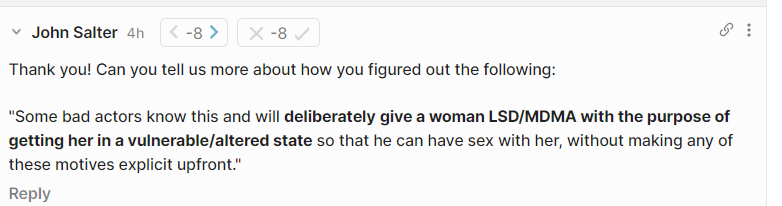


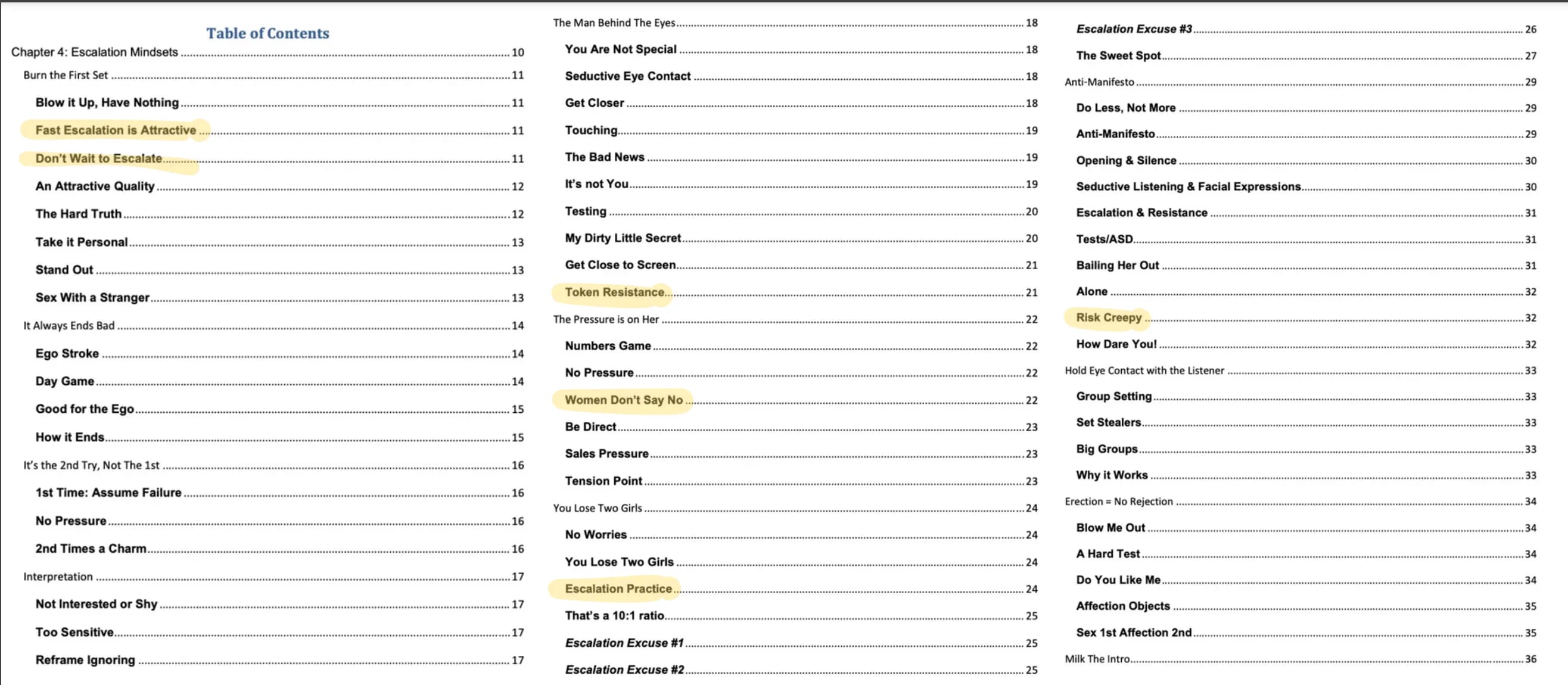

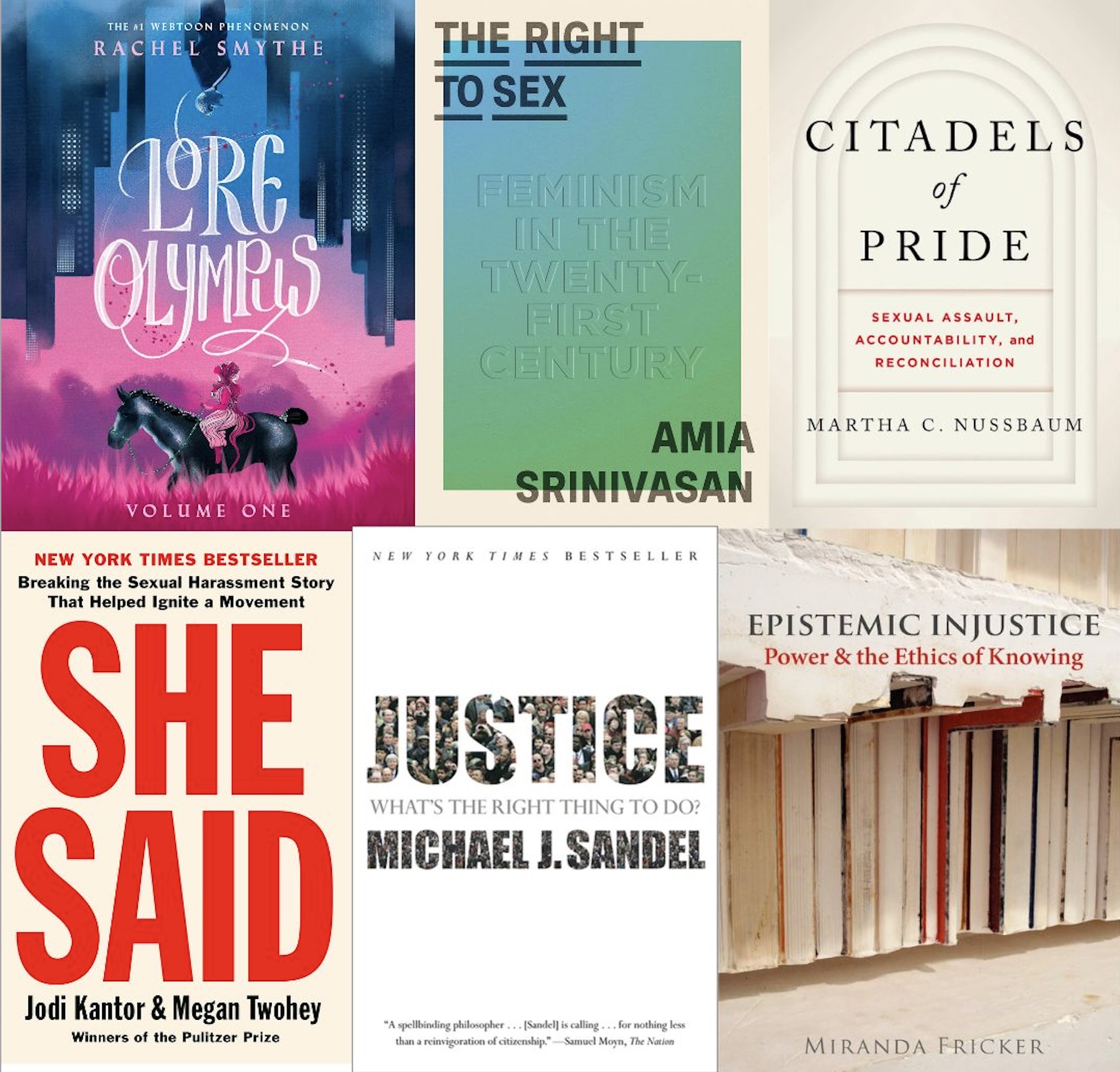

Thank you so much for writing so clearly and compellingly about what happened to you and the subculture which encourages treating women like this.
There is no place for such a subculture in EA (or anywhere else).
Thank you for your kind words.