Comments
Hi Amanda, I have a few points of clarification regarding the evidence on shrimp stunning and Shrimp Welfare Project’s Humane Slaughter Initiative.
We acknowledge it is true that academic peer-reviewed evidence is limited (although we’re excited to report that the Stirling study is no longer a pre-print and has been published in Aquaculture). That being said, our intervention is informed by more evidence than just the peer-reviewed literature. We (and, sometimes, the industry) have access to more evidence than what’s published or able to be communicated publicly.
It may be useful to clarify what we mean by “research” and “evidence-building” in this context. Beyond peer-reviewed studies, evidence-building for humane slaughter means reducing uncertainty across several linked questions, including: whether electrical stunning can quickly render shrimp insensible under controlled conditions; whether it works reliably during commercial harvests; what parameters, protocols, and equipment designs improve outcomes; whether producers are using stunners as intended; and how monitoring systems can make that implementation more verifiable over time.
In practice, that means the evidence base is built from multiple sources: lab studies, field observations, stunner data, producer feedback, behavioral indicators, equipment iteration, implementation protocols, and MEL systems. This is not a linear process where all the research happens first and implementation only begins later. Field implementation is part of the learning which often reveals the constraints, failure modes, and practical questions that the next round of research needs to answer.
Recently, The Center for Responsible Seafood (TCRS) published a summary of a study conducted by the University of Stirling[1]. In a field visit in April 2026, researchers compared electrical stunning and ice slurry on an Indian farm. An excerpt reads:
“In summary, to meet ethical and welfare concerns, shrimp benefit from rapid stunning immediately after harvest. Electric stunning provides a rapid and effective stun as shown by the lack of response to subsequent cold exposure, but the process triggers a strong muscle contraction and elevated blood lactate. Cold shock does not deliver an immediate stun.
The report found that, with ice slurry alone (referred to as cold shock or CS), “shrimp are highly likely to maintain neural sensibility during the CS stunning process,” and those animals “did incur an initial ca. 30 sec tail flip response (since they are not insensible).”
“Therefore,” the researchers wrote, “best practice would suggest that ES needs to be followed by CS (ES+CS protocol).”
For those unfamiliar with TCRS, it’s quite an industry-aligned organisation, so their study coming to this conclusion is noteworthy.
Through our Humane Slaughter Initiative, Shrimp Welfare Project’s team members have seen dozens of harvests using stunners, and we have collected thousands of photos and videos that have informed our intervention (e.g., which parameters work best in certain contexts, how the use of a pump/harvester could minimize time shrimps spent out of water, etc.). We can’t share most of that content publicly because our industry partners (and therefore, we) operate in a competitive market environment where confidentiality, trade secrets, and proprietary information are very important. We understand that many folks in the EA community would appreciate greater transparency, and we’re always trying to facilitate a productive exchange of knowledge about our work – hopefully, this comment will accomplish some of that.
To respond to some of your specific points:
In 2021, Tesco and Hilton Seafood published a report on their use of a modified Optimar stunner in Vietnam. … This gives some reassurance for this particular machine, although I know from talking to people in the field that this machine was a modified version of the commercially available one.
Shrimp Welfare Project has visited that farm and observed the stunner in operation, and it is an early (yet almost-standard) Optimar model. It's a fish stunner that had its electrified "fingers" (which, when they touch animals on an electrified conveyor, complete the electric current and produce the stunning shock) lowered to reach much smaller animals, rather than a completely bespoke modification that could have fundamentally changed the stunner's parameters or operation.
We've worked with Optimar to implement improvements over the years (we’re currently on version ~6), so the shrimp-specific finger-lowering adjustment is no longer a post-manufacturing modification, but a feature of the commercially-available standard model. Perhaps this is the source of the confusion?
Regardless, the important takeaway here is that the 2020 case study used a stunner that is representative of the kind of stunners we support via our HSI program at present, and it concluded that electrical stunning at the recommended parameters was able to “deliver >97% stunning efficacy,” and followed by “immediate immersion in ice slurry achieving 100%” efficacy.
Going into your next point about sample sizes, I wanted to note that this case study used 50kg samples per voltage tested. Since shrimps were 25-30g each at harvest, that’s ~1,700-2,000 animals per 50kg sample, though the report doesn’t state this explicitly. There were also 100 shrimps checked for stunning effectiveness at start-up.
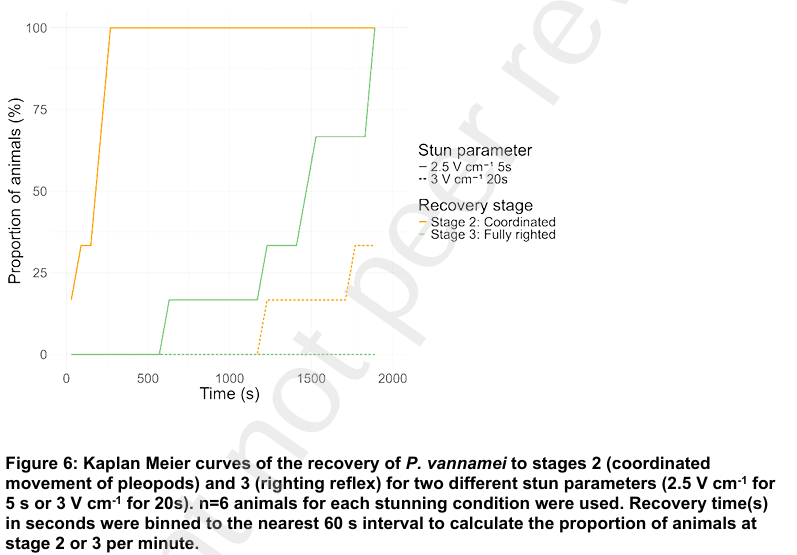
[re: Weineck et al.] The study uses a very small sample size (N = 6 for each intervention) which makes me uncomfortable recommending any action based on it. … [re: Stirling study] This study is also small (N = 4-6 per intervention) which again leads me to have limited confidence in conclusions.
Many of the studies that involve animal testing like this use small sample sizes. In speaking with scientists who specialize in invertebrate biology, it’s understandable why these studies would be designed with small sample sizes. If the desired effect size is large for the variables tested (as is often the case here) and the standard deviation among individuals is only moderate (as is expected to be the case here), this is not necessarily a limitation. It’s statistically appropriate, and even often ethically mandated – by institutional standards and/or the Three R Principles of animal research. This is only to say: we should not have a knee-jerk response to sample size.
That said, we recognize that the actual findings are not a clean on/off, but rather a subtle, dose-dependent difference between responders and non-responders. Our confidence would increase if there were more animals tested to generate more data to support precise parameters for effective stunning. At the same time, the direction of the findings is still informative, especially as they converge with other evidence, including the TCRS study and our own field data.
Based on this data, it is unclear if electric shock followed by ice slurry provides any benefit over ice slurry alone, provided the animals are kept in ice slurry until they are fully dead. (It is unclear how long that would take, though.) … A sufficiently strong electrical shock with proper ice slurry (which is hard to implement in practice) does not provide much improvement over proper ice slurry alone.
I don’t think the Stirling paper supports this.
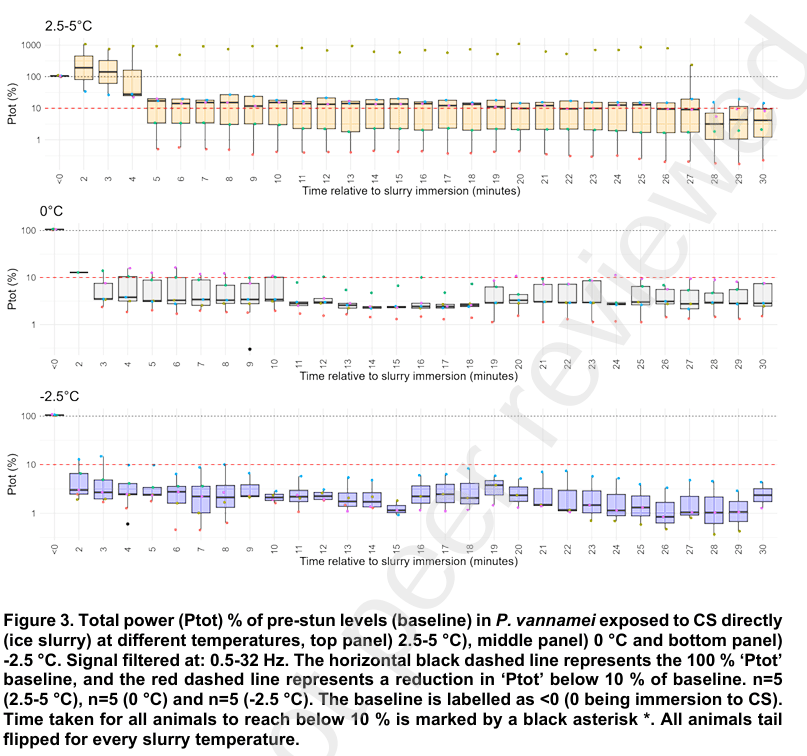
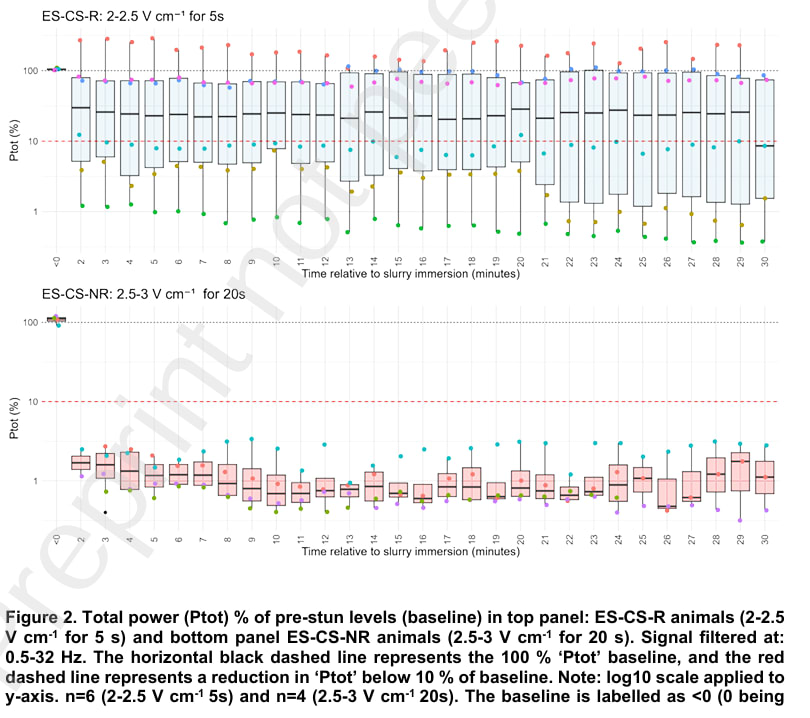
At 2.5–5 °C (which would be a high-performing slurry temperature by current commercial standards) cold shock was slow and unreliable as a route to neurological insensibility. Using the paper’s threshold of Ptot <10% of baseline brain activity, only 4 out of 5 shrimp reached this threshold, and this occurred after 28 minutes. One animal did not appear to reach the Ptot <10% threshold within the 30-minute observation period.
At −2.5 °C, all shrimp reached Ptot <10% within 4 minutes. However, achieving and maintaining a −2.5 °C slurry consistently during commercial harvests, especially in tropical climates and under high biomass loading, is likely to be extremely difficult. We are exploring this avenue, including deepchill-type technology, but at present we are only moderately optimistic about its practical feasibility. At the moment, maintaining these kinds of temperatures is far from “proper ice slurry,” and more appropriately understood as a rare exception in real-world production settings.
The best-supported approach in the paper is electrical stunning (ES) followed by cold shock (CS). In the effective ES + CS group, all animals that did not tail flip after cold exposure reached Ptot <10% after 3 minutes of cold shock. There’s limited research on the relationship between tail flipping and neural insensibility / loss of consciousness[2], so our confidence in this correlation would increase with more data. But it’s important to reiterate that, based on the best available knowledge from the Stirling lab (which they clearly state in the paper), absence of tail flipping after cold exposure is aligned with neurological insensibility[3].
Here is a video that shows shrimp in ice slurry – the first group has been electrically stunned, and the second group has not. The second clip shows a nearly ideal ice slurry in a production setting, with a temperature around 1 degree C. What you see in that video is consistent with what we’ve seen at shrimp farms around the world: that even when in a highly controlled ice slurry, shrimps flip their tails for multiple minutes.
Insufficient electrical stunning with proper ice slurry may be worse than ice slurry alone.
This would be true for basically all stunning methods, across land and aquatic animals. If a percussive stunning bolt is insufficiently administered to a cow’s head, then the slaughter process would be more painful than if a stunning method hadn’t been poorly attempted.
Electrical stunning without proper ice slurry slaughter poses real potential for causing harm.
A few things here:
- Our intervention is not electrical stunning on its own, without an adequate kill step (more on this below).
- We don’t just send stunners to producers – an important part of our intervention is that we train them on how to use the machines properly and help them implement higher-welfare ice slurry protocols.
Additionally, this line of reasoning would seem to contradict your argument in your post, that:
“Many shrimp harvests do not use ice slurry, or do not use it properly (not cold enough, not long enough, etc.).”
There’s a tension here worth flagging: on the one hand, your comparison of electrical stunning vs. ice slurry assumes an idealized version of “proper” ice slurry – cold enough, maintained long enough, carefully managed. But when it comes to what electrical stunning would look like in real-world harvest conditions, your concern raised is precisely that ice slurry is often not implemented properly. If poorly implemented ice slurry undermines the case for electrical stunning, then the same realism has to apply when ice slurry itself is proposed as the alternative. Either way, the fair comparison is between the two methods as they would actually be implemented – and in our view, that comparison favors electrical stunning followed by ice slurry as the kill method.
The science is clear that any stunning method can be reversible if it’s not followed by an adequate kill step. This is true for both electrical stunning as well as ice slurry that’s used for stunning. In the Humane Slaughter Initiative, our protocol calls for ice slurry as the kill step; importantly, we’re not using ice slurry as a stunning method, but rather a method to prevent the shrimps from recovering after the electric shock. We guide farm staff on how to do this ice slurry properly, including monitoring the temperature and replenishing the ice, etc. In our field experience, this process usually involves putting shrimps through the stunner, then directly into an ice bath for several minutes (as in this video and this video), and then into transport crates where they are packed with ice. In this slaughter method, the ice slurry prevents the shrimps from re-warming and recovering, rather than being the step that also stuns them.
Doing a well-implemented ice slurry for stunning is much harder to do effectively in practice than an ice slurry for prevention of recovery/slaughter after electrical stunning. So, although these practices share the same name, their different purposes and application create a major distinction. We are more confident in ice slurry as a slaughter and recovery prevention method after electrical stunning, than ice slurry as a stunning method itself.
Overall, the evidence base for shrimp stunning is still developing and Shrimp Welfare Project acknowledges this and is actively working to develop it further, both through our own fieldwork and by coordinating with researchers, manufacturers, producers, and other industry actors. Given the scale of the problem, we do not think the right response is to wait for full certainty, as it would mean accepting a harmful status quo for billions of animals while the evidence accumulates. The direction of the evidence, our field experience, and the practical realities of commercial harvests so far all point the same way: electrical stunning is faster, more consistent, and more monitorable than industry-typical ice slurry stunning.
More importantly, it is somewhat illusory to think that all the necessary research and R&D can happen first, in isolation, and only then be translated into the field. In industry-facing work, implementation is often what makes the most useful research possible. Without producer buy-in, farm access, commissioning data, firsthand observations of real harvests, and tests in farm conditions, we would be left with a largely theoretical understanding of the problem. We would not know which constraints actually matter, which failure modes appear in practice, or what kinds of equipment, protocols, and monitoring systems can realistically work.
This is especially true in an industry that is often cautious about disclosure around its know-how. Building trust with producers and the wider industry is not incidental to the intervention; it is part of what makes practical progress possible. That is why we think collaborating with the industry is the most effective path: build trust, implement carefully, learn from the field, improve the technology, and strengthen the evidence base as we go. The field implementation work is what creates the conditions for practical, relevant R&D to happen.
Humane slaughter for shrimp is emerging as a higher-welfare standard, and the science on effective stunning is not fully settled. As I’ve outlined, there are things that would increase our confidence levels. But the available evidence indicates that well-implemented electrical stunning beats what is happening on most farms today. And it’s my view that responsible implementation now, alongside continued research, R&D, and monitoring, is one of the strongest bets we can make for reducing suffering at scale.
- ^
This is an example of the fact that we have access to more data than that which is publicly available. In this case, the research summary is published online, but we also have access to the full scientific report (although we’re not at liberty to post or share it). There have been many instances like this over the years.
- ^
Behavioral indicators are tricky because they’re not always a reliable indicator of unconsciousness. It’s like proving a negative: you can often infer consciousness from the presence of certain behaviors, but you cannot reliably infer unconsciousness from a lack of those behaviors alone. However, Stirling’s team measured behavioral indicators and investigated which of them correlated with EEG results, to determine which might be reliable.
- ^
Generally, when shrimps are electrically stunned, there’s one big tail flip when shrimps go through the stunner (likely a reflexive response), followed by immobility. The Stirling study found that this correlates with shrimps having one big EEG spike and then a drop, likely indicating a seizure analog followed by absence of brain activity (a loss of consciousness).
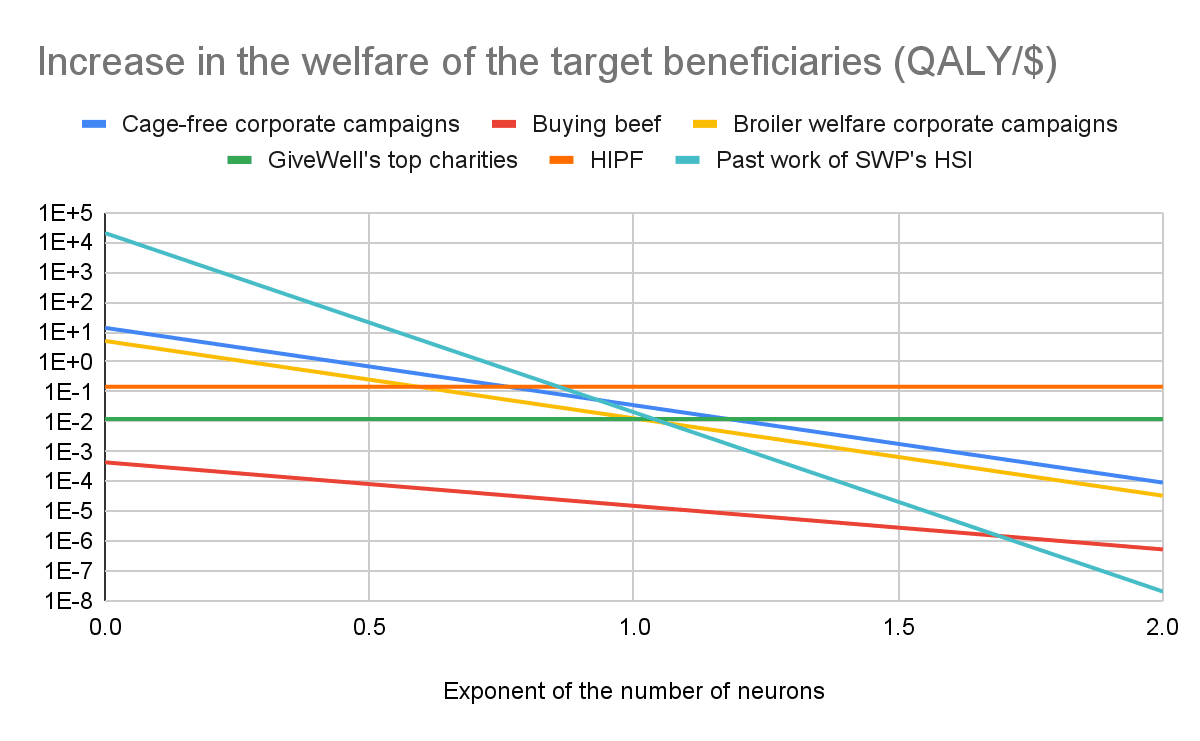

Hi Amanda, thank you for your thoughtful analysis. I do believe taking a step back and scrutinizing the evidence and direction where we're heading is extremely important, and I agree with your conclusion that increasing R&D and talent is very much needed. I also agree that the evidence gaps are enormous. As a research group working specifically to address them, we're very much aligned. In that same spirit, I share some considerations below on the cage-free transition example, into topics to make the text lighter.
The problem with the CSES study as a reference for mortality / welfare conclusions.
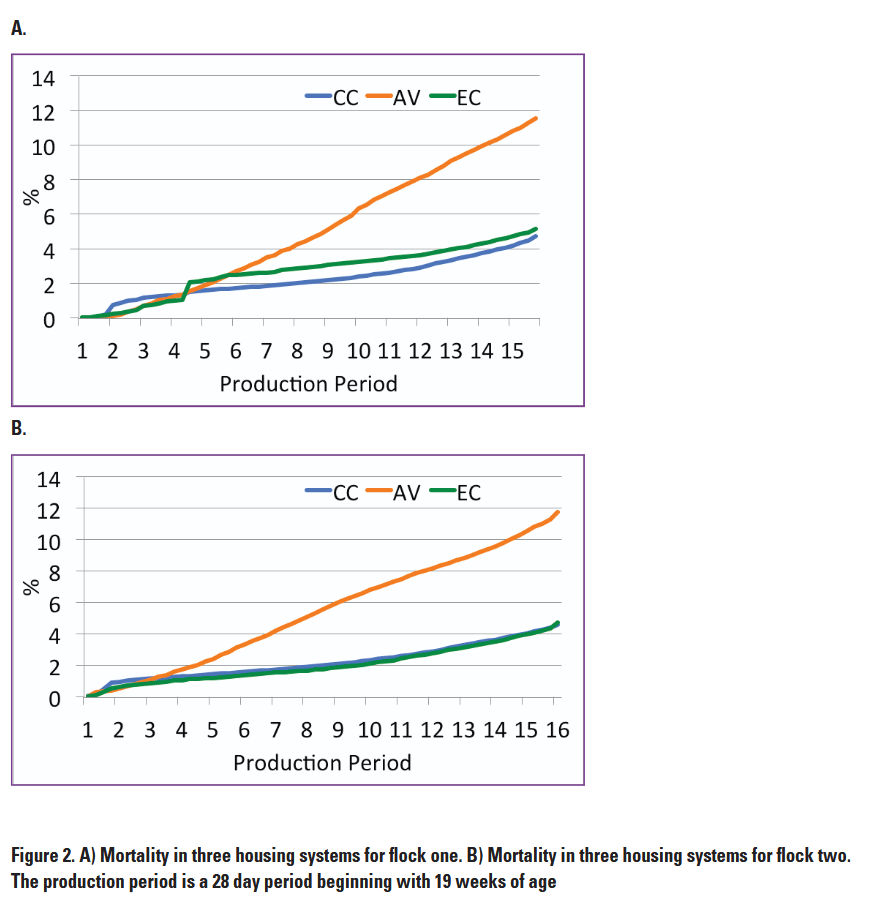
The CSES study is a highly cited reference for the argument that cage-free aviaries are not necessarily better. It was funded by the American Egg Board and facilitated by another industry-funded organization focused on building consumer confidence and maintaining the industry's viability. Unfortunately, this study had multiple design flaws and biases in favor of cages (a more detailed analysis, done some years ago, is available here). A few examples:
Mortality Data
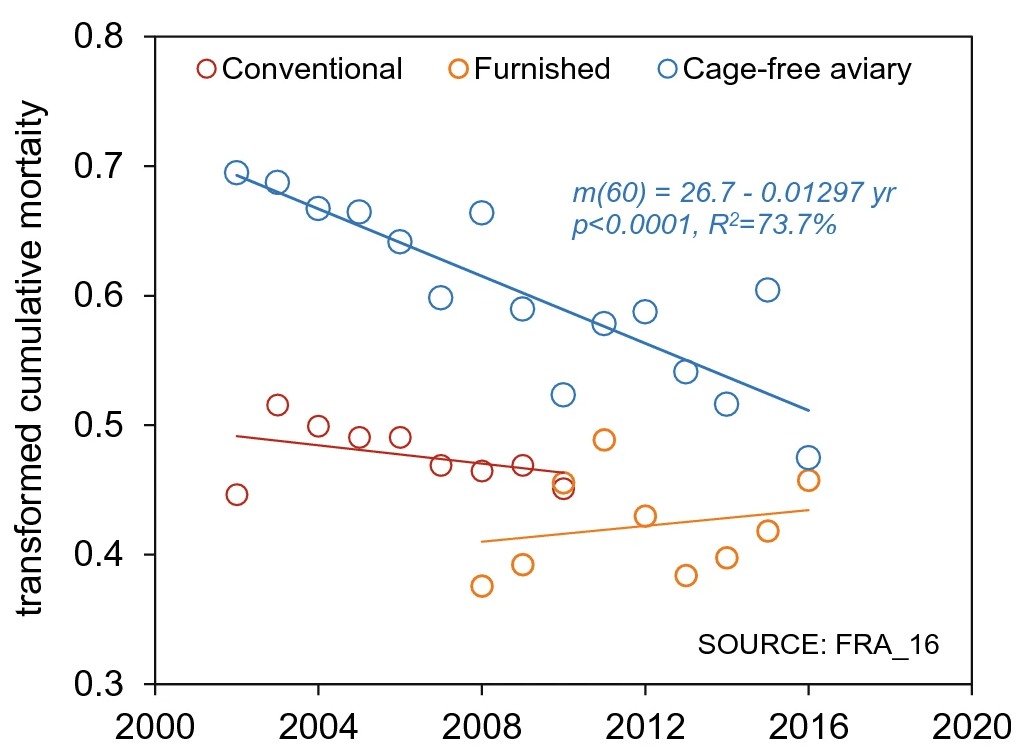
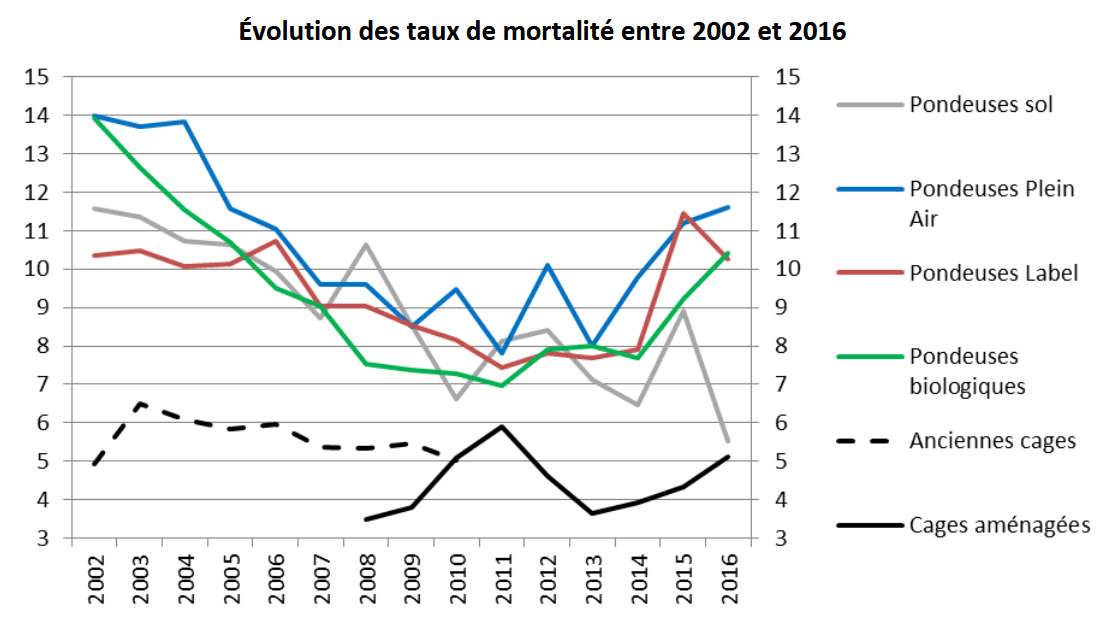
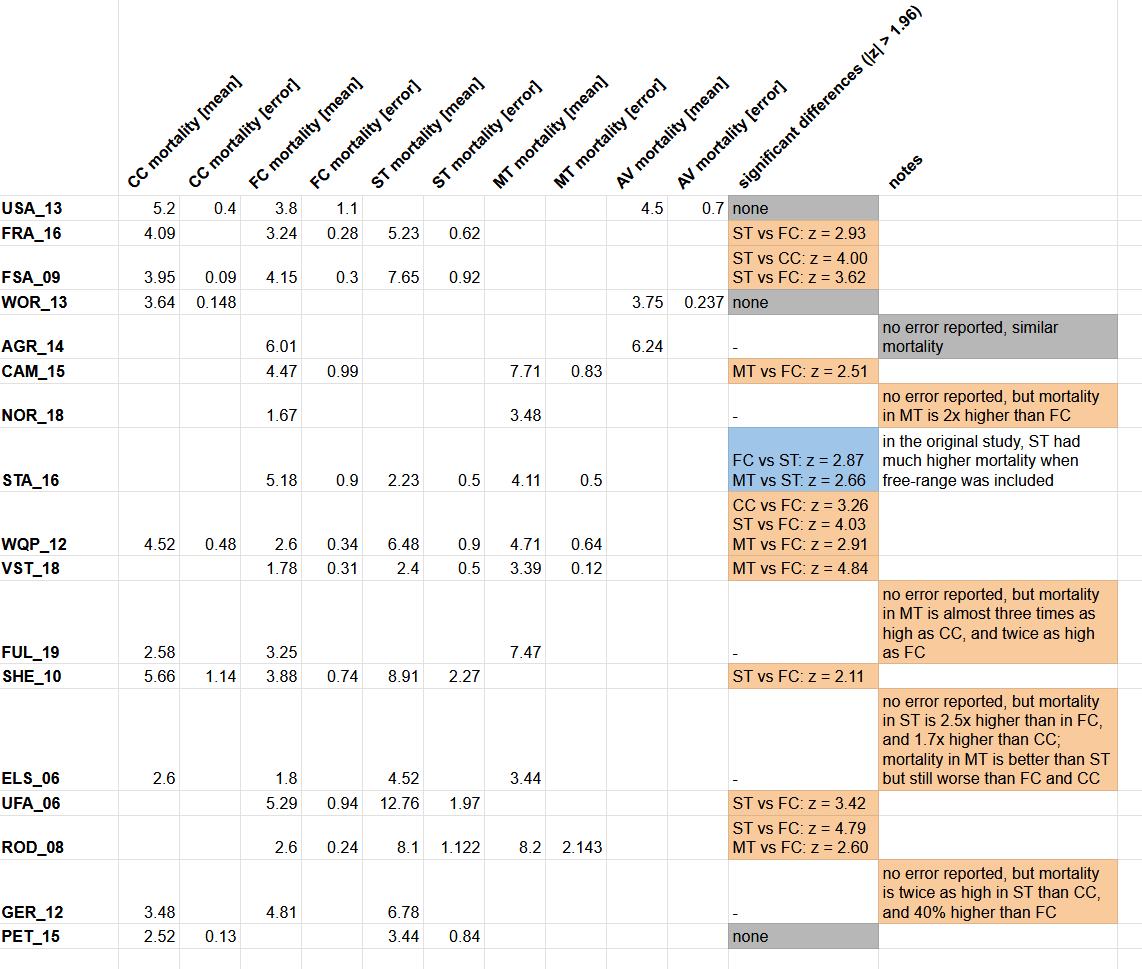
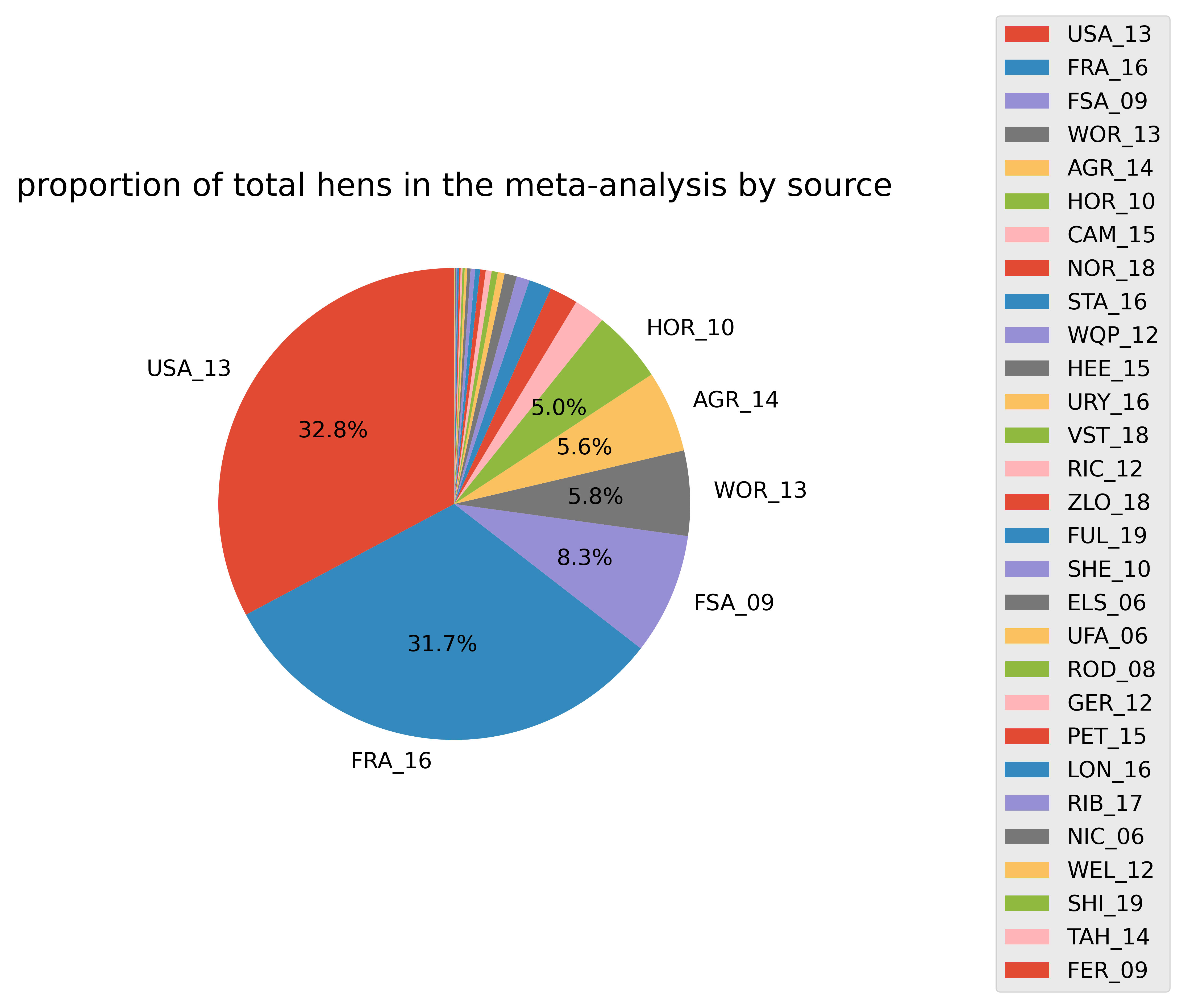
Farm animal welfare in natural and more extensive systems, including cage-free aviaries, depends more heavily on good management practices and stockmanship. As such, we should expect greater variability in terms of mortality, as well as greater absolute mortality in the first production cycles following a transition. For this reason, the fact that there is a greater number of orange cells (mortality higher in aviaries) in the datasets of the meta-analysis is expected, as most are comparisons of established caged systems with newer cage-free systems. The studies span two decades during which cage-free systems underwent major changes. This is why we explicitly modeled the year of data collection as a predictor. Mortality rates are changing systematically over time. Modeling that trend directly, and then reporting recent mortality separately, is necessary for relevance. Another point is that brown-feathered genotypes (associated with higher mortality) are more common in cage-free systems, naturally increasing mortality because of breed, not system.
The data below, from an internal database from a breeder for countries around the world (in 2018), can also be useful.
Mortality as an indicator of welfare
Mortality may or may not correlate well with welfare. It is widely used because it is easy to measure, routinely collected, and economically important. However, mortality captures whether animals survive, not what their lives are like while they are alive.
The industry is often very good at keeping animals alive and productive until the end of the production cycle, even under conditions associated with extremely poor health and welfare (what we refer to as the "hospital bed effect"). Conversely, some more extensive or naturalistic systems may have higher mortality because animals are exposed to more hazards. Healthy pasture-raised animals, for example, may experience higher mortality due to predation. There may often be a trade-off between behavioral freedom and protection from mortality risks (‘children who never play outdoors are less prone to injuries and fatal accidents’, yet few would argue this is better for their well-being).
Mortality is most informative when comparing otherwise similar systems. When comparing systems that differ fundamentally in housing and behavioral opportunities, mortality should be interpreted together with other welfare metrics.
Life Quality/Well-being in cages x cage-free
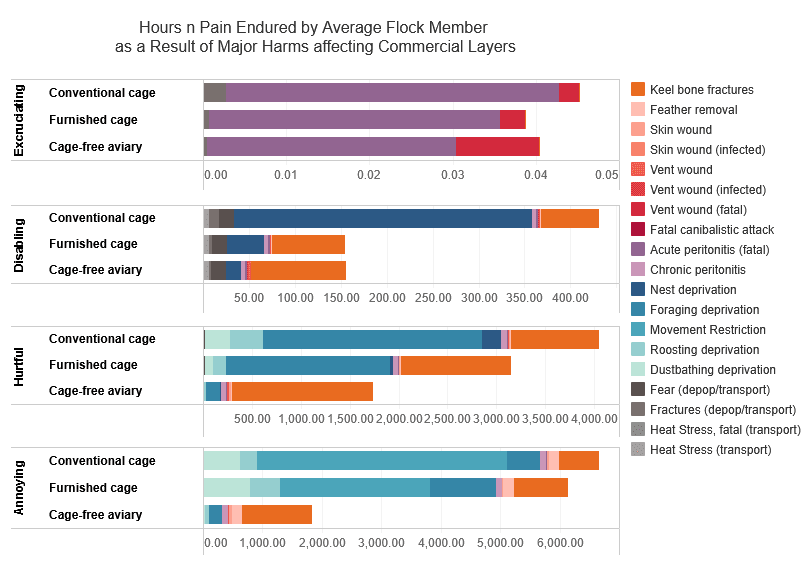
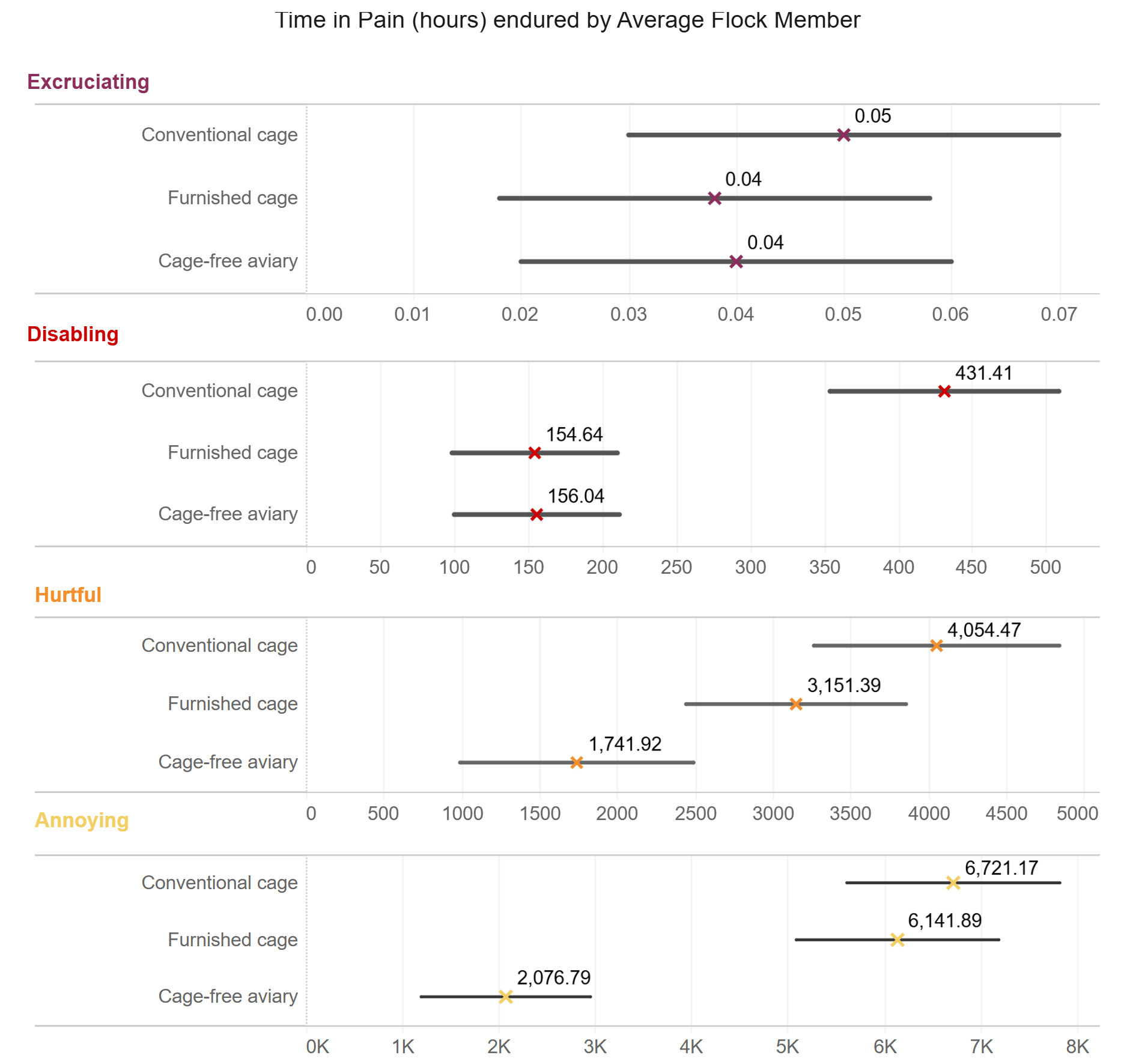
The 2021 WF analysis was very conservative (i.e. favored caged systems) in a number of ways as we discussed in the book and elsewhere. For example, we considered prevalence for ailments in cage-free systems as reported, without any adjustments for improvements over time (despite evidence that the frequency of various harms was going down, similar to mortality).
Also, we did not consider positive welfare (opportunities are naturally more frequent in cages) nor the longer lifecycle of caged hens (welfare is typically worse at the end of life), and end-of-life events such as induced molting, still practiced in many countries in caged systems.
We also did not consider the negative impacts of learned helplessness, lack of agency, and depression-like states in cages - there is now new evidence for such depressive states in caged hens.
Importantly, we did not make any adjustment for what I believe to be robust evidence that the pain from an injury or disease is perceived as more intense and longer in cages than in cage-free systems. Barren, confined environments disable multiple endogenous analgesic mechanisms while simultaneously activating several neurobiological pathways that intensity nociceptive signaling and delay healing. Should that be taken into account, it would further reduce time and intensity of pain in cage-free aviaries.
Fear in Cages vs Cage-free systems
Several studies have found that hens reared or housed in cage-free systems are less fearful than hens kept in conventional cages. Aviary-reared birds show reduced fear responses in tonic immobility, novel object, and novel environment tests, spend more time near humans and novel objects, use elevated areas more readily, and perform better in spatial memory tasks than cage-reared birds (Hansen et al., 1993; Tahamtani et al., 2015; Brantsaeter et al., 2016). They suggest that the more complex environments in cage-free systems may reduce fearfulness and improve behavioural adaptability. See box 9.2 of the laying book for more details.
Behavioural and Physiological Indicators as a standard for welfare-related decisions
Welfare is multidimensional, and cumulative experience matters. So unfortunately no single behavioural or physiological measure, or restricted set of measures, can provide a complete picture of welfare, nor even for humans (for which calibration is possible). Behavioral, immunological, neurological, and physiological measures are valuable for inferring states associated with specific experiences, often at specific points in time. However, they are insufficient for overall welfare assessments, as well as confounded by multiple factors, and more reliable for acute rather than chronic harms (particularly immunology and physiology). Because they are typically species-, harm- and context-specific, they also do not enable comparisons across harms, systems and species. Several attempts have been made in recent years to design an umbrella measure of welfare (e.g., telomere length, cognitive bias tests), but so far unsuccessful. That's not to say indicators are not useful: we rely heavily on them for our work, and believe having more monitoring systems and research would be extremely needed. But for overall welfare assessments and system comparisons as in the case of cage-free transitions, we need welfare metrics, which integrate evidence from multiple welfare dimensions, providing a stronger basis to infer cumulative experience. In case it's useful, here we discuss in more detail the differences between welfare metrics and welfare indicators.
Thank you again for this critical analysis!
Cynthia
Hi Cynthia. Thanks for the great context.
I wonder how much the results of the CSES study would change if the management practices were similarly good for both conditions (instead of worse for the cage-free chickens). You replied to my related question below that "My [your] general sense is that option A leads to a greater welfare increase".
Hi Vasco, my sense is that moving from cages (even if furnished)to cage-free aviaries is an improvement, for the reasons I mentioned in my earlier response. Right now, with the evidence gaps there are, it's very hard though to make a reliable distinction between 10th percentiles.
There are confounding issues with the term “cage free” since some folks frankly cheap out and actually introduce novel downsides that don’t usually exist with typical caged setups… which means it needs to be very precisely defined and checked on the ground.