Comments
Reflections on a decade of trying to have an impact
Next month (September 2024) is my 10th anniversary of formally engaging with EA. This date marks 10 years since I first reached out to the Foundational Research Institute about volunteering, at least as far as I can tell from my emails.
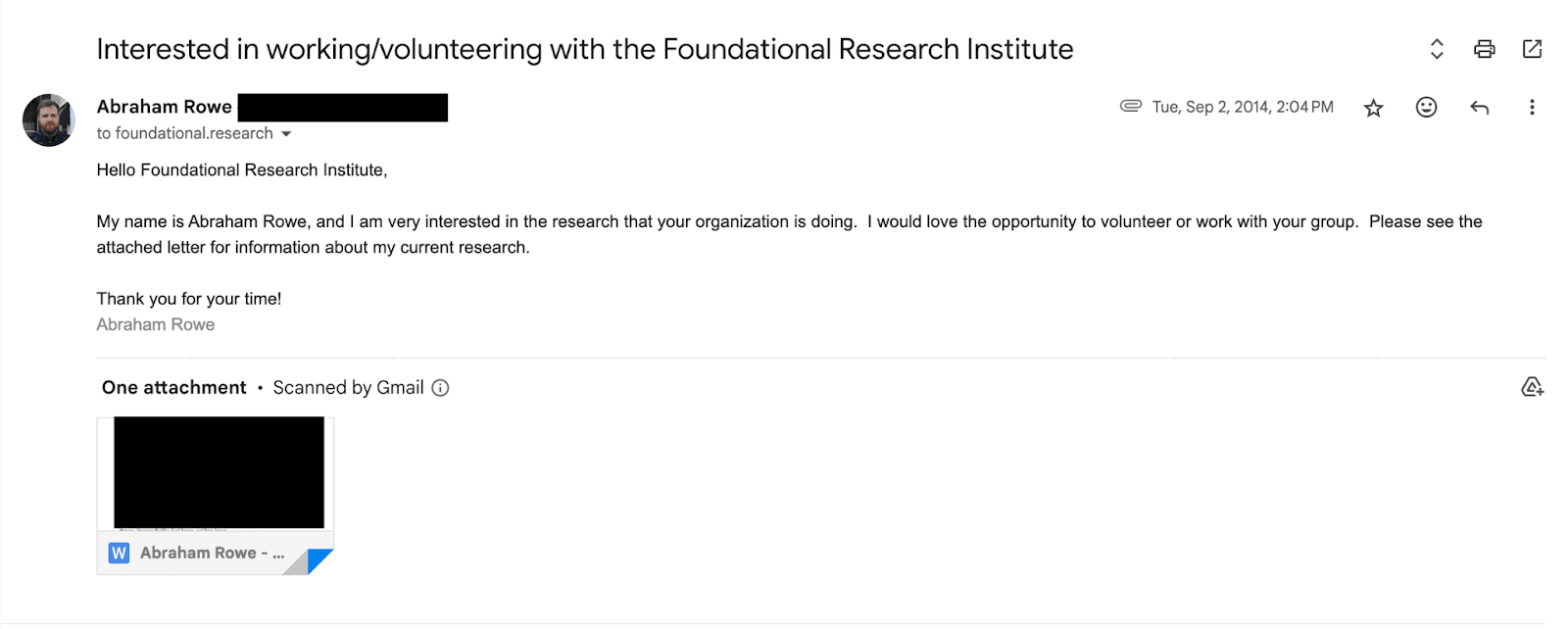
Prior to that, I probably had read a fair amount of Peter Singer, Brian Tomasik, and David Pearce, who might all have been considered connected to EA, but I hadn’t actually actively tried engaging with the community. I’d been engaged with the effective animal advocacy community for several years prior, and I think I’d volunteered for The Humane League some, and had seen some of The Humane League Labs’ content online. I’m not sure if The Humane League counted as being “EA” at the time (this was a year before OpenPhil made its first animal welfare grants).
This post is me roughly trying to guess at my impact since then, and reflections on how I’ve changed as a person, both on my own and in response to EA. It’s got a lot of broad reflections about how my feelings about EA have changed. It isn’t particularly rigorously or transparently reasoned — it’s more of a reflection exercise for myself than anything else. I’m mainly trying to look at what I’ve worked on with a really critical eye. I make a lot of claims here that I don't provide evidence for.
I’m sharing this because I think the major update I’ve had from doing this is that while I’ve generally done many of the “working-in-EA” things that are often presented as high impact, I personally feel much more tangibly the impact of my donations, and right now, if I think what’s made me feel best about being in EA, it’s actions more in the earning-to-give direction than the direct work direction.
My high-level view of my impact over this period is something like:
- $30,000 in counterfactually good donations.
- Overall unclear results for animals, though hopefully will have a big impact for future (primarily wild and invertebrate) animals, primarily because my work hasn’t really borne fruit in terms of direct impact yet.
- I might have helped directly cause a few million animals to suffer mildly less bad deaths on factory farms, but it is unclear to me if this is counterfactual.
- I think I was among the first handful of people to try to seriously get donors to take insect welfare seriously, and to get animal advocacy organizations to take insect welfare seriously, starting in around 2017.
- I think importantly I failed to do this well, and if I had succeeded, insect welfare harms from farming could be lower. Other people obviously had an effect here too, but I think not being strategic about this feels to me like the biggest failure I’ve had as an EA.
- Co-founded or helped found three high-impact orgs (Wild Animal Initiative, Arthropoda Foundation, and one other), all of which I think I can claim would likely not have existed if I hadn’t worked on them.
- Counterfactually meaningfully contributed to another 2 organizations launching (and advised on many more).
- Caused the insect welfare world to focus slightly more than they otherwise should (in my view) on insect farming compared to insecticides. I’m uncertain of the counterfactual, but I can imagine worlds where I lobbied harder for insecticide-focused work would have been better for insects.
- Mild benefits from my operations work, mainly through providing some extra high-trust capacity at critical times to organizations.
Background
I became pretty convinced that factory farming was a moral tragedy as a little kid, I believe due to exposure to either PETA content or PETA Kids content. My brother was also vegetarian, which was a compelling enough reason for me to also become vegetarian. I volunteered for a lot of animal welfare organizations, especially in college. I also did a lot of direct action-type advocacy for animals in college. I was already a fairly hardcore utilitarian at that point, and had mainlined Peter Singer, David Pearce, Timothy Sprigge, and a bunch of other wacky utilitarians. I spent a significant amount of my time in college staying up until the early morning talking about wild animal suffering and other animal issues with my closest friend while playing the video game Super Monkey Ball. This did not help any animals but was incredibly important to how I think about animal issues now.
At some point around 2011 or 2012, I saw a frog that was hit by a bike and dying, and was really distraught over it. I’m not sure why, but this was oddly transformative for me, and I just internalized animal suffering from it really directly in a way I hadn’t before. I also have a fairly strong memory from when I was 20 or 21 of spending an afternoon in the rain putting worms back from the sidewalk into the grass, and feeling bad about them dying naturally. I formed fairly strong views about animals in nature living awful lives, and beliefs about my obligations to help them.
In 2014, I was targeted by a Google Ad for The Foundational Research Institute, I believe on a topic related to wild animal welfare. I think this was my first exposure to EA formally, though I’d read studies on The Humane League Labs website, had read Animal Liberation, Famine, Influence, and Morality, and some other books that informed EA ideas.
I did some volunteering for FRI, read a lot of Brian Tomasik’s website, and also did some experiments at a cat shelter on reducing the impact of outdoor cats on animals. In 2016, I started working at Mercy For Animals, running corporate animal welfare campaigns. I also formally started Utility Farm, a nonprofit that would later merge with Wild-Animal Suffering Research into Wild Animal Initiative. I’ve done a bunch of other things in the EA world since.
My potential impact
- Donations
- I’ve donated approximately $52,000 directly to what I consider to be high-impact charities, and reserved an additional $38,000 for future giving opportunities. I think that I should count this as something like $30,000 in counterfactually good donations.
- I think I was pretty convinced by EA reasoning when I first encountered it, and had I not worked directly on projects, I probably would have taken the GWWC pledge by 2016. I think that my earning potential from 2016-2022 outside of EA was roughly $30,000-$50,0000 higher than within EA. From 2022 to now, I think my earning potential was roughly $25,000-$100,000 outside of EA. Looking at my donations as a percentage of my income over the past 10 years, (including funding reserved for future giving), I expect that this means:
- 2016-2019: $30,000 in additional donations
- 2020-2024: $15,000 in additional donations.
- However, I think I would have donated this funding primarily to farmed animal welfare work that I no longer think is particularly impactful, and I should have viewed them with more skepticism at the time, though it was above the bar I’d apply today until 2019 or 2020.
- I suspect this means that I should discount some counterfactual donations from 2020-2024 to nearly $0, and I should assume the counterfactual is closer to $30,000 in high impact donations.
- I think I was pretty convinced by EA reasoning when I first encountered it, and had I not worked directly on projects, I probably would have taken the GWWC pledge by 2016. I think that my earning potential from 2016-2022 outside of EA was roughly $30,000-$50,0000 higher than within EA. From 2022 to now, I think my earning potential was roughly $25,000-$100,000 outside of EA. Looking at my donations as a percentage of my income over the past 10 years, (including funding reserved for future giving), I expect that this means:
- Provided feedback or directly recommend grants totalling around $5M.
- I think these probably changed how something like $500k was used in expectation, but probably in ways that mostly washed out, so it’s unclear what the impact is to me.
- I’ve donated approximately $52,000 directly to what I consider to be high-impact charities, and reserved an additional $38,000 for future giving opportunities. I think that I should count this as something like $30,000 in counterfactually good donations.
- Corporate Campaigns
- I ran corporate campaigns for Mercy For Animals, primarily on broiler welfare, though to a lesser extent on cage-free, and won some commitments from major corporations.
- I think that it’s possible that these commitments will lead to controlled atmosphere stunning being implemented on some farms, but for the most part the other commitments won’t be implemented fully, so it’s hard to assess their impact directly.
- I think they still plausibly will improve the lives of millions of animals, and I was paid relatively little (~$35,000 / year), so it was probably fairly impactful.
- I think MFA had a pretty easy time hiring campaigners, and would have found someone else good if they hadn’t hired me.
- I think most of my counterfactual impact on corporate campaigning has come via advising on campaigns since I left Mercy For Animals, and by pushing mildly behind the scenes for a shift in campaigning tactics that I think will potentially be significantly more impactful than what major groups are doing now.
- I still generally suspect corporate campaigns are no longer particularly effective, especially those run by the largest groups (e.g. Mercy For Animals or The Humane League), and don’t think these meet the bar for being an EA giving area anymore, and haven’t in the US since around 2017, and outside the US since around 2021.
- I think I can take credit for basically helping a few million animals experience death in a marginally better way over the next decade, which is great! Controlled atmosphere stunning seems better for many chickens, but for many it probably doesn’t make much of a difference compared with live-shackle slaughter.
- It’s unclear to me if this is counterfactual because MFA could have hired someone else to do it.
- I ran corporate campaigns for Mercy For Animals, primarily on broiler welfare, though to a lesser extent on cage-free, and won some commitments from major corporations.
- Founding organizations
- I co-founded Wild Animal Initiative and one of its predecessor organizations, and served as its first Executive Director.
- I am biased, but I think WAI remains one of the most promising ways for EAs to help animals.
- My best guess at when there will be cost-effective wild animal welfare interventions that meet my bar for confidence has been steadily declining, primarily due to WAI’s work.
- I don’t currently feel convinced that there are highly cost-effective ways to help farmed vertebrates in the near future at scale, so I suspect the vast majority of value in the next few decades for EAs will be from helping wild animals and invertebrates.
- I helped launch Arthropoda Foundation, and some other insect welfare initiatives from within EA.
- I co-founded Wild Animal Initiative and one of its predecessor organizations, and served as its first Executive Director.
- Research Impact
- Hiring good researchers
- I served on the hiring committee and worked to hire an individual researcher who I think would not have worked on EA issues without our job offer at all, and who I think has 10-20x the impact of the average researcher in EA animal welfare, including anyone we would have hired otherwise.
- Conducting direct research
- I’ve published 4-5 papers on wild animal welfare or invertebrate welfare, most importantly making some estimates of the number of insects farmed for food or feed. I think this paper has mattered not because it was particularly insightful, but because no one else had published anything like it, and it made a citable figure for academic journals, and is good for communicating impact.
- I think some of my research could be bad. For example, Saulius Simcikas is highly skeptical of my suggestion that cochineal suffering could be reduced by reducing cochineal harvesting. If Saulius is correct and I am incorrect, I think this mildly misled some people, including people in influential positions. However, I don’t think any action has been taken on it.
- I think that my research has generally caused interested EAs to focus too much on farmed insects, and less on insecticides. I am somewhat inclined toward thinking that insecticide-caused suffering is both more tractable and larger in scale. I’m now working on a insecticide project though, so trying to correct this.
- Hiring good researchers
- Cultural Impact
- I’ve written a bunch of EA Forum posts on various cultural issues/concerns/trends in the EA community, and community dynamics. I think these are largely not impactful, though have caused some mild changes in donation behavior among some people.
- I think I can roughly take a large amount of credit for
- Preventing wild animal welfare from becoming a weird forgotten corner of 2010-2020 EA, like many other causes
- In 2017 and 2018, I lobbied hard for the wild animal suffering-focused individuals to abandon its more radical edges, and to adapt the name wild animal welfare instead. I also oversaw the consolidation of groups within the cause area into Wild Animal Initiative, both of which kept the space afloat, and made it look much more legitimate to external scientists and funders.
- I think that there was one other person who could have been in this position at the time (Persis Eskander), but they had gone to a different role.
- Getting the EA world into insect welfare (to some extent)
- I think that my work on insect welfare is likely the most impactful things that I’ve done — I think that besides Rethink Priorities direct work on invertebrate welfare, and Meghan Barrett’s work to normalize the academic work on insect welfare, my direct contributions have probably been particularly important (though not that much has moved there!)
- I pushed major groups to work on this issue earlier than anyone else I know of besides Brian Tomasik, though I was mostly unsuccessful.
- Preventing wild animal welfare from becoming a weird forgotten corner of 2010-2020 EA, like many other causes
- Impact Through Operations
- I don’t really think my ops work is particularly impactful, because I think ops staff are relatively easy to hire for compared to other roles. However I have spent a lot of my time in EA doing ops work.
- I was RP’s COO for 4 years, overseeing its non-research work (fiscal sponsorship, finance, HR, communications, fundraising, etc), and helping the organization grow from around 10 to over 100 staff within its legal umbrella.
- Worked on several advising and consulting projects for animal welfare and AI organizations
- I think the advising work is likely the most impactful ops work I’ve done, though I overall don’t know if I think ops is particularly impactful.
- I don’t really think my ops work is particularly impactful, because I think ops staff are relatively easy to hire for compared to other roles. However I have spent a lot of my time in EA doing ops work.
My beliefs in 2014 compared to now
This is my best effort to estimate how my credence in various beliefs have changed since 2014, based on notes and exercises from that period of my life.
| Belief | 2014 | 2024 | Change |
| Most suffering/welfare is and will be experienced by wild animals | 90% | 90% | +0% |
| I have a deep ethical obligation to reduce as much animal suffering as possible | 95% | 60% | -35% |
| People generally have a deep ethical obligation to change their diet to help animals | 85% | 20% | -65% |
| We can make meaningful progress on abolishing factory farming or improving farmed animal welfare by 2050 | 75% | 10% | -65% |
| We can make meaningful progress on abolishing factory farming or improving farmed animal welfare by 2100 | 85% | 15% | -70% |
| Most experiences are negative / suffering dominates in the wild | 85% | 80% | -5% |
| I have an obligation to reduce suffering, but not to increase happiness | 75% | 65% | -10% |
| I have strong moral obligations to help whoever I can as effectively as possible, independent of location, relationship, etc. | 75% | 80% | +5% |
| I have strong moral obligations to help whoever I can as effectively as possible, independent of time | 30% | 40% | +10% |
| I have a strong moral obligation to ensure future, positive lives occur | 5% | 10% | +5% |
| I have a strong moral obligation to prevent future negative lives from occurring | 85% | 35% | -50% |
| Large scale philanthropy by individuals often threatens democratic institutions, and this is often bad, independent of the benefits | 85% | 60% | -25% |
| The best animal welfare interventions target farmed vertebrates | 95% | 10% | -85% |
| Farmed vertebrate welfare should be an EA focus | 90% | 15% | -75% |
| EA as a movement is/will be positive for the world in the long run | 90% | 30% | -60% |
| Most people interested in EA should earn to give | 60% | 85% | +25% |
| It was good for animal welfare that the EAs “won” the abolitionist/welfarist debates | 80% | 95% | +15% |
How my thinking about EA has changed over time
I have some long-held views that haven’t really changed:
- I’ve always been fairly skeptical of the degree to which EA unquestioningly embraces major donor philanthropy, despite having created the only viable alternative I’ve ever seen to it (lots of medium-sized donors!)
- I’ve always been uncomfortable with the concentration of power in EA.
- I’ve always felt surprised by the lack of experimentation / deference to Silicon Valley norms / lack of interest in alternative organizational structures.
- Likewise, I’ve always felt disappointed by the lack of interesting funding mechanisms, especially ones that try to capture group beliefs about impact / hedge across beliefs more explicitly.
- I have a project forthcoming on this I am really excited about though!
- Likewise, I’ve always felt disappointed by the lack of interesting funding mechanisms, especially ones that try to capture group beliefs about impact / hedge across beliefs more explicitly.
My views have also changed in a bunch of ways:
- I’ve become highly skeptical of most farmed vertebrate welfare work, and the organizations working on it.
- I’ve lost some faith in “EA leadership” to be either moral leaders / people who can effectively guide a community, especially after the FTX political events.
- The closest I came to “leaving EA” was in April 2022, right before peak FTX-hype. I wrote a draft post about what I believed was likely both illegal and harmful election manipulation occurring within EA, and never published it (it’s unclear to me if I was correct — SBF and others were accused of related crimes later, but as far as I can tell haven’t been charged for them). I felt incredibly disheartened and sad that a community I thought was really dedicated to taking morality seriously seemed so easily bought into something that seemed so sketchy. I considered leaving my job at RP, and completely disassociating with EA. While the FTX collapse was obviously awful, for me personally there was some level of validation/relief in it, as I felt really bad during peak-FTX funding about how things were going.
- Post-FTX, the lack of turnover in leadership has made me really worried.
- I think I can credibly claim to have been EA-adjacent from well before it was cool, but I feel a lot more adjacent now.
- I’m a lot more convinced we can cost-effectively help wild animals in the near future than I was when I ran Wild Animal Initiative (ironically?)
Things that changed about me from exposure to EA
I care a lot more about money
- Before I was interested in EA, I made very little money, and didn’t feel like it mattered much. I thought that I was mostly going to help people/animals through volunteering, and felt happy with what I had.
- EA was far more status-oriented than the spaces I worked in before, and generally a lot more focused on the compensation from direct work roles/better paying.
- I think being in EA and aging both have caused me to just care about how much money I make a lot more than I did before.
I care a lot more about status
- I previously primarily worked in fields that were fairly non-hierarchical / didn’t have massive power dynamics (because they were small and decentralized). EA feels very different. Status matters a ton here. People respond uncritically to poorly argued posts from powerful people, over-index on the views of those with funding / status, and generally seem to want to move up a status hierarchy. This seems really natural for the way EA has structured itself, and it’s caused me to care a lot more about it too.
My commitment to doing good feels deeper
- I feel a lot more committed to doing good than I used to. I think I’m a lot less certain about how, or that I can. But it feels more important to me.
I feel more morally compromised
- EA has exposed for me how easily I can become entangled in things that feel compromising — that I am doing what seems good, but simultaneously participating in something harmful. I also think I generally feel like having a positive impact is harder without this kind of moral compromising.
Overall, when I look at my first 10 years engaging with EA, I feel mainly like things are just ambiguous to me. I feel a lot more positive about some donations I made than anything else — in particular large donations to brand new projects that probably helped accelerate them a lot. The animal work I’ve done feels promising but ambiguous. This post feels very melancholy, but ultimately, I still feel excited about trying to do impactful work in the world.

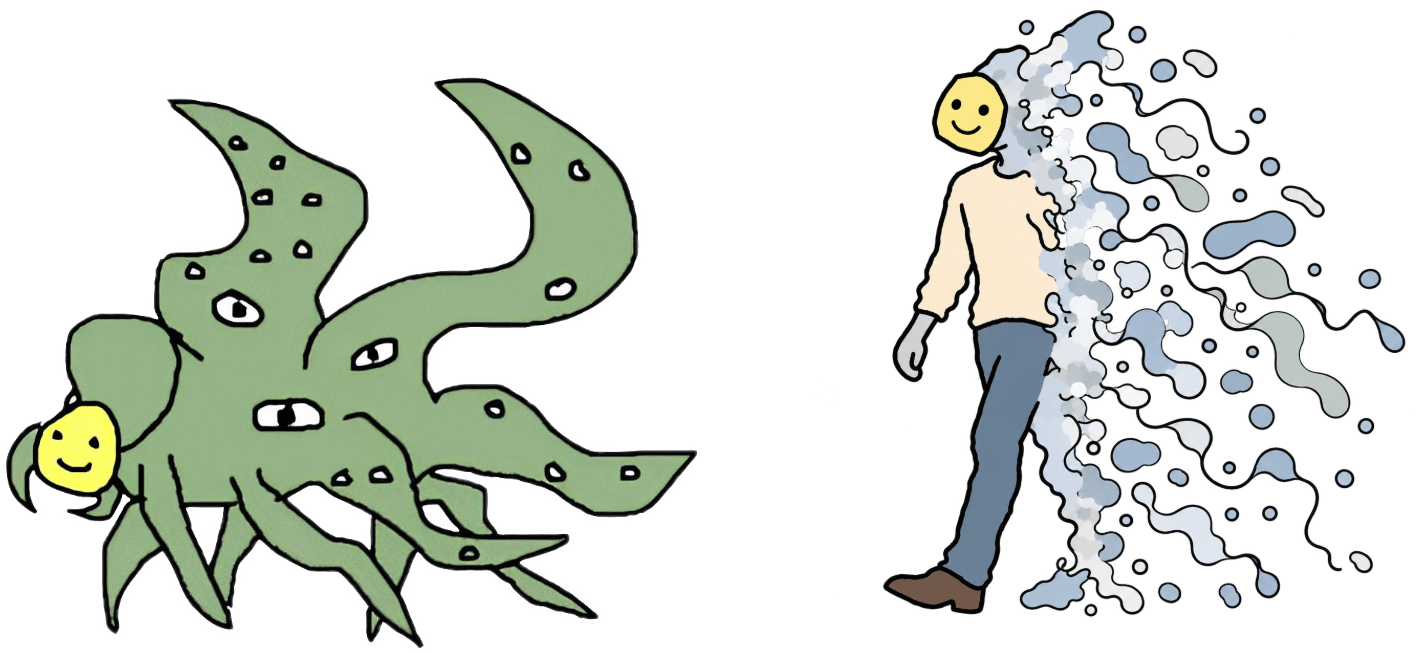

I've had a vague sense that the EA Forum is declining in quality posts/conversation despite having lots of posts, so had an AI tool (Astra) do a bunch of random analyses to look at various measures of activity level, and I think these vaguely confirm my sense. In particular, there has been a decline in commenting from higher karma users, and fewer posts are getting lots of upvotes, despite lots of people still posting. As a lover of the Forum, this seems bad and sad.
I think a big reason for this is that a lot of people are focused more on AI risk than they used to be, and AI risk discussion happens mostly on LessWrong, and a lot of LessWrong power users do not like the culture on the EA Forum (for reasons I don't fully understand).
One anecdote that comes to mind is that Holden's post on Anthropic's RSP v3 got only 8 comments on EAF compared to 83 comments on LW, and the top comment on EAF was just me copy/pasting some of the top comments from LW.
Also, most of the posts on EAF lately are bad bot posts (see my post from today). But if you just look at posts with >30 upvotes or so, I think their quality is still about as good as ever.
Yeah, I agree with this. I do think the EA Forum still has decent posts, but the frequency is just declining a lot. I definitely think a huge part of this is that lots of former power users mostly do AI stuff now, and the Forum doesn't seem great for AI discussion.
FWIW it's very easy to cross-post between LW and EAF, so I post all my AI-related posts on both.
Note: It's easiest from the EAF side because there's a "Cross-post to LessWrong" checkbox.
In addition to the other comments which I agree with, I think substack is also playing a role. Seems in the past few years everyone went and got a substack, and now many posts just live there, and for the ones that are posted in both places, half the comments happens there.
I agree this is playing a role - I think I feel a bit negative about this:
Maybe bringing back the EA Forum Prizes, to incentivize people to post (e.g. in the same way that building an audience on Substack theoretically could earn you money) would help?
Seems there might be something of a negative reinforcement cycle. Less posts/engagement > people less incentivized to visit forum > less posts/engagement > etc.
I'm probably saying something obvious, but it's worth thinking about what might break and reverse this cycle.
Data point: I'm not posting here as much as before because the new UI is frankly just dogshit.
“% of comments from users with >1000 karma” seems like it might experience secular decline: As people move into more important roles, they accumulate karma, but the amount of spare time they have in which to comment declines.
I wonder what the mechanism is here. If I had to guess, I’d say EA is most useful when you’re uncertain about how to do the most good, but many highly-engaged EAs have now decided reducing AI extinction risk is the overwhelming priority, and there are better forums to discuss that.
I agree AI is the most important thing to think about, but I don’t know that the community has thought deeply enough about the priorities we should have to make a transition to super intelligent AI go well. So I share your sadness at the decline of the forum.
Could you extend this back in time to pre-FTX? November 2022 and beyond? A lot of EA engagement metrics started declining around then. If the forum is the same, my guess would be this is due to a broader trend, rather than anything specific to do with the forum.