Comments
Nonlinear’s Evidence: Debunking False and Misleading Claims

61 min readDec 12, 2023
153
Recently, Ben Pace wrote a well-intentioned blog post mostly based on complaints from 2 (of 21) Nonlinear employees who 1) wanted more money, 2) felt socially isolated, and 3) felt persecuted/oppressed.
Of relevance, one has accused the majority of her previous employers, and 28 people of abuse - that we know of.
She has accused multiple people of threatening to kill her and literally accused an ex-employer of murder. Within three weeks of joining us, she had accused five separate people of abuse: not paying her what was promised, controlling her romantic life, hiring stalkers, and other forms of persecution.
We have empathy for her. Initially, we believed her too.
We spent weeks helping her get her “nefarious employer to finally pay her” and commiserated with her over how badly they mistreated her.
Then she started accusing us of strange things.
You’ve seen Ben’s evidence, which is largely the word of two people and a few misleadingly cropped screenshots. Below, we provide extensive evidence (contracts, recordings, screenshots, etc) demonstrating that the post’s claims are false, misleading, or are catastrophizing normal things. This post is a summary; we also include a ~200 page appendix of additional evidence. We also present a hypothesis for how Ben got so much wrong.
Two ways you can read this: 1) stop whenever you’re convinced because you’ve seen enough falsehoods that you no longer think their remaining claims are likely to be true, or 2) jump to the specific claims that are most important to you, and look at the evidence we provide for them. You can see summary tables of the key claims and evidence here, here, and here.
Our request as you read on: consider this new evidence you haven’t seen yet with a scout mindset, and reflect on how to update on the accuracy of the original claims.
It’s messy, sorry. Given the length, we’re sure we’ve made mistakes - please do let us know. We’re very happy to receive good faith criticism - this is what makes EA amazing.
Finally, we want to note that we have a lot of empathy for Alice and Chloe. We believe them when they say they felt bad, and we present a hypothesis for what caused their negative emotions.
| Claim | What actually happened |
|---|---|
| Alice claimed: they asked me to travel with illegal drugs. | - False. It was legal medicine - from a pharmacy. - Ben knew this and published it anyway. |
| Alice claimed: I was running out of money, so I was scared to quit because I was financially dependent on them (“[I] had €700 in [my] account”* etc.) | - Alice repeatedly misrepresented how much money she had. She actually had a separate bank account/business generating (according to her) ~$3,000 a month in passive income. - Alice told us she was an independent business owner, so she either lied to Ben, Ben misled his readers about this, or she lied to us about the business. |
| Chloe claimed: they tricked me by refusing to write down my compensation agreement | - False. We did write it down. We have a work contract and interview recordings. And when she realized this accusation was false, instead of apologizing, she tried to change the topic - “it’s not about whether I had a contract or salary.”* - We told Ben we had proof, and he refused to look at it and published this anyway. |
| Alice claimed: they paid me next to nothing and were financially controlling | We were the opposite of “financially controlling”*: - We gave her almost complete control over a ~$240,000 budget we had raised. - We even let her choose her own pay.
|
| Alice/Chloe claimed Nonlinear failed to pay them. Later, they denied ever claiming this. | - Alice/Chloe accused us many times of not paying them - a serious accusation. We proved this was false. - Ben tried to walk this back last minute, saying “I no longer believe this is true”* - However, he didn’t remove all the references to this accusation - each one is proof that they were going around telling people this falsehood. - Even our friends thought we didn’t pay Alice anything (due to the rumors that Alice spread). - So they lied, got caught, and are now lying again by saying they never told the first lie. - Instead of apologizing and questioning Alice/Chloe’s other claims based on them being caught telling him provably false and damaging information, Ben shifted the topic - “the real issue is about the wealth disparity between her and Emerson”* |
| Alice claimed: They refused to get me food when I was sick, starving me into giving up being vegan | False. People heard this and thought we were monsters. We ran around for days getting her food, despite all 3 of us being sick or injured. We also had vegan food in the house that she liked, which Kat offered to cook for her (but she declined the offer). |
| Alice claimed: we were not able to live apart from them | - Strange, false accusation: Alice spent 2 of the 4 months living/working apart (dozens of EAs can verify she lived/worked in the FTX condos, which we did not live at) |
| Chloe claimed: they told me not to spend time with my romantic partner | - Also a strange, false accusation: we invited her boyfriend to live with us for 2 of the 5 months. We even covered his rent and groceries. - We were just about to invite him to travel with us indefinitely because it would make Chloe happy, but then Chloe quit. |
| Alice/Chloe claimed: we could only talk to people that Kat/Emerson invited to travel with us, making us feel socially dependent | - False. Chloe herself wrote the invite policy explicitly saying they were encouraged to invite friends/family. - They regularly invited people who joined us (e.g. Chloe’s boyfriend joined for 40% of the time) |
| Alice claimed: they told me not to see my family, making me socially dependent and isolated | - Bizarre, false accusation given that Alice spent 1 of the 4 months with her family - Kat encouraged her to set up regular calls with her family, and she did. |
| Alice/Chloe claimed: I was paid $1,000 per month (and kept implying this was all she was paid, saying it was “tiny pay” or “low pay”) | - The $1k/month was a stipend on top traveling the world all-expenses-paid, which was the majority of the value (~$58k of the ~$70k estimated value of the compensation package) - It’s not the same as a salary, but it’s the comp Chloe signed up for and we clearly communicated. And when Alice asked for pure cash, we said “sure” and even let her choose how much she paid herself. - It’s also misleading. Imagine somebody goes to the EA Hotel and then loudly shouts, “they only paid me $100 a month”. The biggest thing the EA Hotel provides is room & board. |
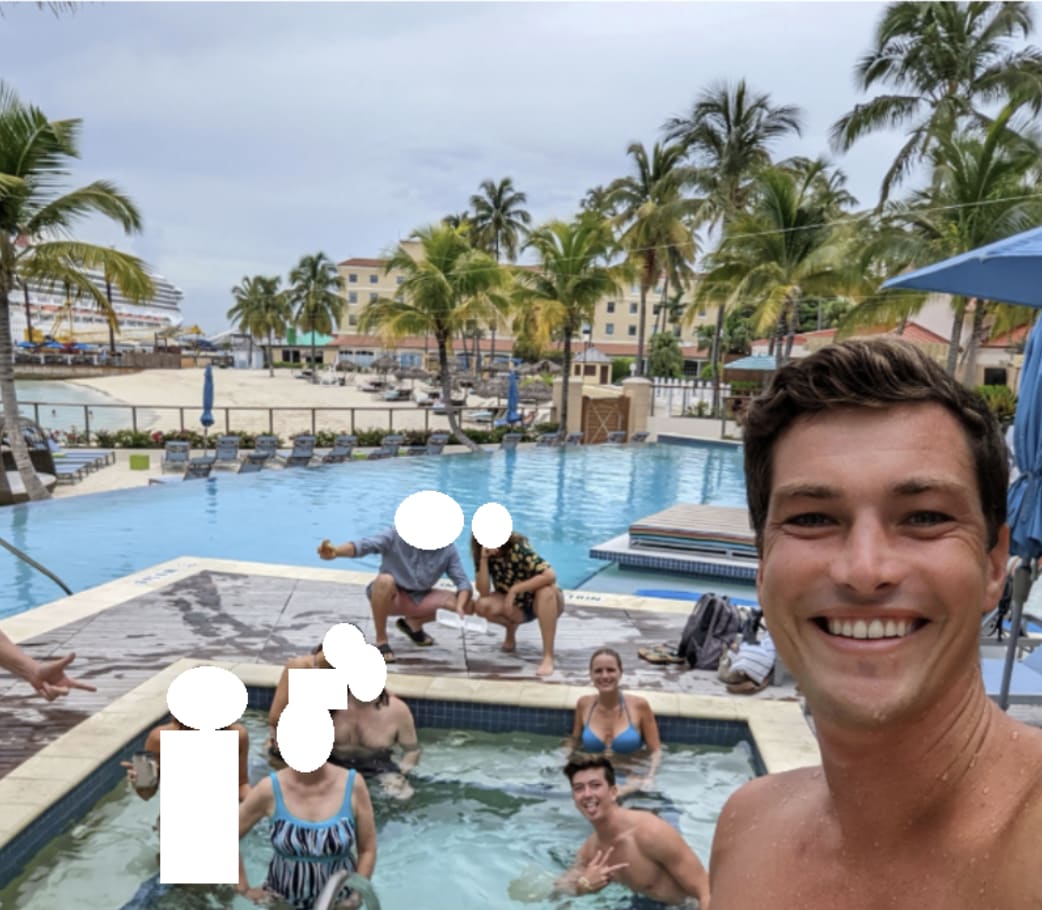
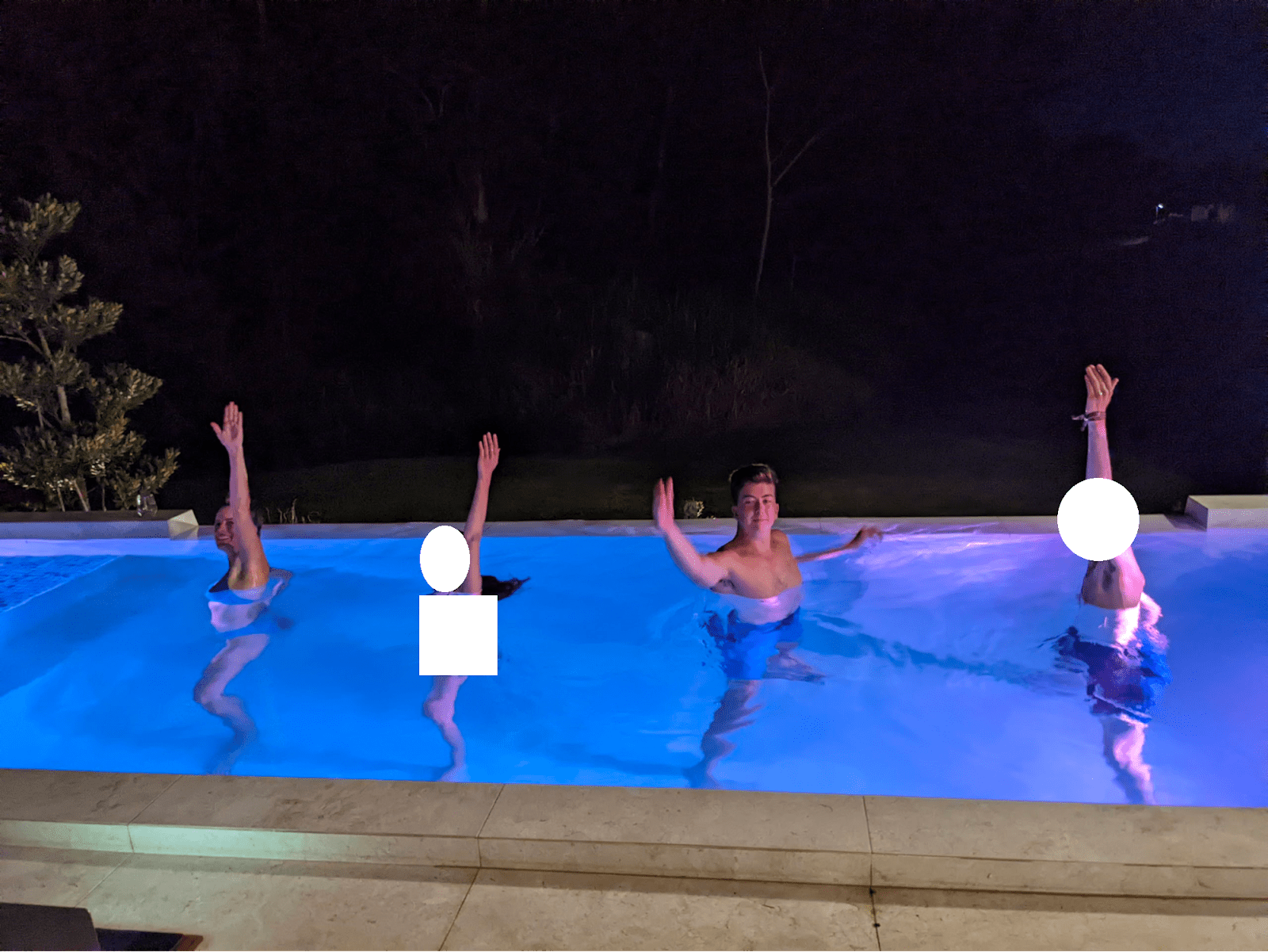
Alice/Chloe painted a picture of poverty and isolation, which simply does not match the exotic, socially-rich lifestyle they actually lived.




| Claim | What actually happened |
| Alice: You didn’t pay me! | - We paid Alice consistently on time and she herself often said “Thanks for paying me so fast!” - Once she accused us of not paying but she just hadn’t checked her bank account. - Another time she accused us of not paying her for “many months” when she’d received her stipend just 2 weeks prior. - She said she had to “strongly request” her salary, when really, she just hadn’t filled out the reimbursement system for months - We have text messages & bank receipts and she’s still telling people this. |
| Chloe claimed: I was expected to do chores around the house because I was considered low value | - This was part of her job - she was an assistant. We were very upfront, and have interview recordings showing she knew this before she accepted the job. - Imagine applying to be a dishwasher, hating washing dishes, then writing a “tell all” about how you felt demeaned/devalued because the restaurant “expected” you to wash dishes. |
| Chloe: I felt like they didn’t value me or my time (she implied she spent all her time doing assistant work) | - Chloe spent just ~10% of her time on assistant work (according to her own time tracking), the rest was high level ops & reading - We allocated 25% of her time to professional development (~$17,000 a year) - This is basically unheard of for any job, much less an assistant. - She got to read/develop any skills she wanted 2 hours a day (leadership, M&E, hiring, etc) - a dream to many EAs. - Kat showed so much gratitude that Chloe actually asked her to stop expressing gratitude. She said it made her feel Kat only valued her for her work. So Chloe accuses us of both valuing her work too much and too little. - It’s not that Kat didn’t value Chloe’s assistant work, it’s that Chloe didn’t seem to value assistant work, so constantly felt diminished for doing it (despite having agreed to do it when we hired her) - Base rate: ~50% of people feel undervalued at work. |
| Alice: Kat threatened my career for telling the truth | - False. Alice had spent months slandering Kat by spreading falsehoods that were damaging our reputation (see the numerous pages of evidence below). - Kat reached out multiple times, trying to hear her side, share her own, and make some attempts at conflict resolution. Alice refused. - However, despite being attacked, Kat had not defended herself by sharing the truth about what really occurred (which would have made Alice look very bad) - Kat communicated to Alice: Please stop attacking me. I don’t want to fight. If you don’t stop attacking me, I’ll have to defend myself. I haven’t yet told the truth about what you did, and if I do, it will end your career (paraphrased) - Alice painted herself as the victim and Kat out as the attacker, despite Alice being the attacker for months, who had been harming Kat by telling lies. - Why didn’t Kat defend herself? 1) She felt compassion for Alice. She was clearly struggling and needed professional help, not more discord. 2) She was terrified of Alice. Alice had accused 28+ people of abuse - wouldn’t you be scared knowing that? She was worried Alice would escalate further. Which she did anyway. |
| Saying “if you keep sharing your side, I’ll share mine - and that will end your career” is unethical and retaliatory | - Everybody agrees that if somebody is spreading damaging falsehoods about you that it can be good and ethical to share your side and correct the record. - If the truth would hurt the slanderer’s own career, you should still be able to share the truth - In fact, warning the slanderer first is often preferable to going public with the truth without warning them - it at least gives them a chance to stop. - The question is: did Alice spread falsehoods or “just share her negative experience”? (numerous pages of evidence below) - There’s a double standard here: if you share your experience and you’re lower status, that’s “brave”, but if you do the same thing and you’re higher status, that’s “retaliation”. This epistemic norm will predictably lead to inaccurate beliefs and unethical outcomes. |
Ben wrote: “Before she went on vacation, Kat requested that Alice bring a variety of illegal drugs across the border for her (some recreational, some for productivity). Alice argued that this would be very dangerous for her personally.”
This conjures up vivid images of Kat as a slavemaster forcing poor Alice to be a cocaine smuggler, risking life in prison. Is it true?
Parts of the story Alice didn’t share:
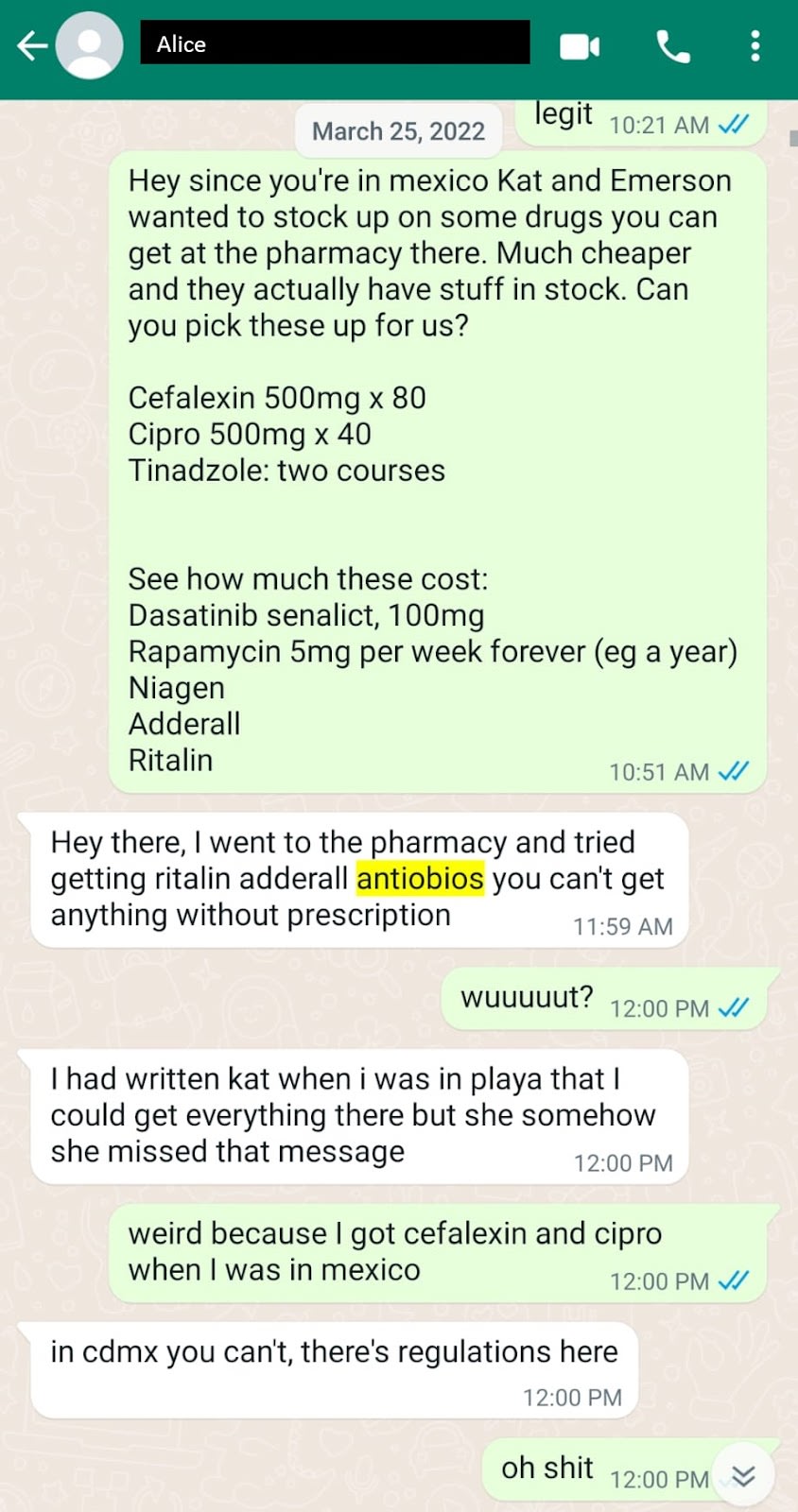
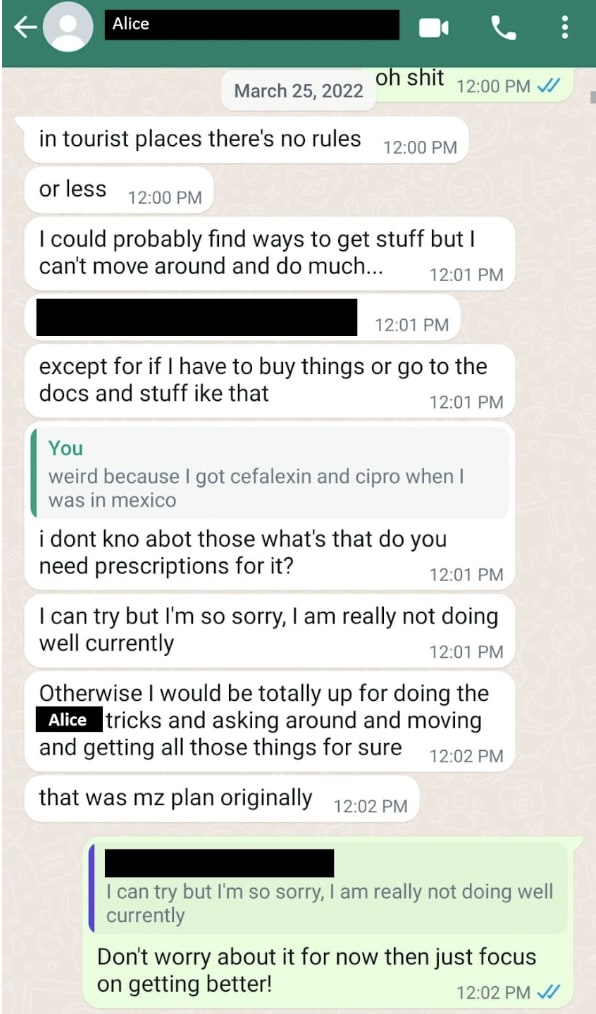
Alice never argued this would be “very dangerous for her personally”:
So, she traveled across both international borders with actually illegal drugs for herself on these flights, and accused us of asking her to travel with -- legal medicine.
Alice took a small request - could you swing by a pharmacy and grab some cheap antibiotics/ADHD medicine? - and she twisted it into a narrative of forcing her to risk prison as a drug mule, that had commenters rushing for their pitchforks.
And it’s worse than that - Ben’s post implied that we largely agreed on the facts of the story, so people condemned us viciously in the comments! But he knew we didn’t agree - when he told us this story we literally laughed out loud because it was so absurd.
We shared much of this information with Ben - he knew it was legal medicine, not illegal drugs - yet he still published this misleading version. We were horrified that Ben published this knowing full well it wasn’t true. We told him we’d share these exact screenshots with him, but he refused to look at them.
It would be bad enough if Alice told this story to one person, but she was going around telling lots of people this! We were hearing from friends Alice started telling stories like this just minutes after she met them, completely unprompted. Saying that the only reason she wasn’t succeeding was because Kat was persecuting her, that we refused to pay her, forced her to do demeaning things, etc.
Ben looked into this because Alice/Chloe spent 1.5 years attacking us - and we didn’t defend ourselves by sharing our side. People only heard stories like the one above.
No wonder people treated us like lepers, disinvited us from events, etc. Can you imagine what that would feel like? For 1.5 years, I’ve lived with fear and confusion (“Why is she still attacking me?”), sleepless nights, fear of what Alice’s next attack might be (justified, apparently), and a sludgy, dark, toxic desolation in my chest at being rejected by my community based on false rumors.
The only thing that gave me hope during this entire thing was believing that EAs/rationalists are good at updating based on evidence, and the truth is on our side.
Ben’s hypothesis - “2 EAs are Secretly Evil”: 2 (of 21) Nonlinear employees felt bad because while Kat/Emerson seem like kind, uplifting charity workers, behind closed doors they are ill-intentioned ne’er do wells. (Ben said we're "predators" who "chew up and spit out" the bright-eyed youth of the community - witch hunter language.)
If what Alice and Chloe told Ben is true, then this hypothesis has merit. Unfortunately, they told him falsehoods. For instance, Alice falsely claims that she couldn’t live/work apart and yet did so for 2 of the 4 months.
Why would she say something so false that she must know is false?
Maybe they’re deliberately lying? We mostly don’t think so, because they wouldn’t keep lying about things we can easily disprove with evidence. Like, Chloe said we tricked her with a verbal contract when she knows we sent her a work contract and we recorded her interviews. So why would she say that?
Maybe they’re just exaggerating and trying to share an emotional truth? Like, Alice felt starved and uncared for, and she’s trying to share that by bending the truth (even though she knows that Kat offered to cook her food, and ended up going out to get her food even though Kat was sick also)?
The thing is, they bend the truth far beyond what anyone would consider normal. For example, with the “they starved me” thing, Alice told Drew she was “completely out of food” just one hour after Kat (also sick) had offered to cook her any of the vegan food in the house that Alice usually loved and ate every day.
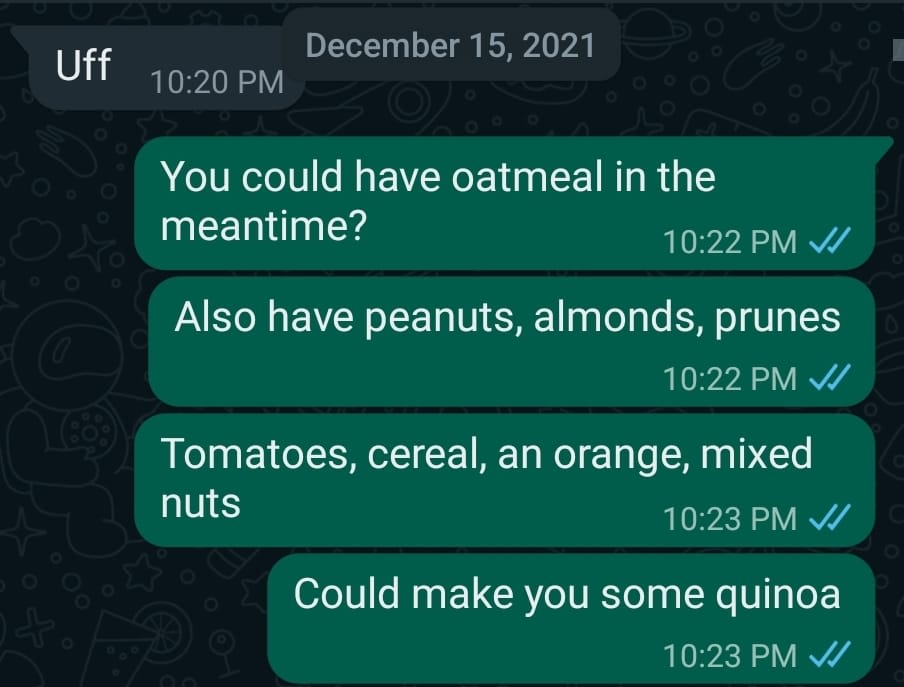

This is quite extreme. And there are dozens of similar examples.
So what is going on? Below, we present relevant information to support an alternative hypothesis:
“2 EAs are Mentally Unwell”: They felt bad because, sadly, they had long-term mental health issues, which continued for the 4-5 months they worked for us.
| Relevant mental health history | - Alice has accused the majority of her previous employers, and 28 people - that we know of - of abuse. She accused people of: not paying her, being culty, persecuting/oppressing her, controlling her romantic life, hiring stalkers, threatening to kill her, and even, literally, murder. - They both told us they struggled with severe mental health issues causing extreme negative emotions for much of their lives. Alice said she’d had it for ~90% of her life. She told us that she’d been having symptoms just 4 months before joining us. But she told us then, as she tells people now, she’s totally better and happy all the time. - If she’s been suffering extreme negative emotions for most of her life, it could be that we caused the emotions this time. But it’s more likely a continuation of a longstanding issue. - She was forced to spend a month in a mental hospital. Shortly after, while still getting her bachelor’s, Alice started advertising herself as a life coach to make money. She has offered herself to EAs as a “spiritual guru” claiming she has achieved “unshakeable joy”. - During the period she started accusing us of strange things, she was microdosing LSD every day, only sleeping a few hours a night for weeks, speaking incoherently, writing on mirrors, etc. - She, sadly, claimed to have six separate painful health issues. (When she’s in pain she seems to see ill intent everywhere.) |
| Relevant instances of acting erratically | 1) Alice attempted to steal a Nonlinear project, one that she and 6 other people at Nonlinear had worked on for months. She locked us out of the project and was going around EA claiming it was solely her invention. We told her she could use it if she at least gave Nonlinear some credit for it - it would be insulting to all her colleagues who worked hard on it not to. She kept refusing to share any credit - not even a tiny mention. 2) Alice created a secret bank account and a separate organization (without telling us), and attempted to transfer $240,000 from our control despite being repeatedly told it was not her money and telling people she wasn’t sure if it was her money. However, we do not think she had malicious intent. Our best guess as to why she did this is that she was having an episode and lost touch with reality. 3) While at Nonlinear, Alice worked on a project. Then, weeks after she quit, she continued working on it without telling us, and then demanded we pay her for those weeks she worked after she quit. 5) Alice repeatedly lied about getting job offers to try to extort more money out of us. That or else she made them up as a part of her pattern of delusions. She’s groundlessly claimed to have 4 fabricated job/funding offers that we know of. |
| Key pattern: Alice/Chloe confuse emotions for reality | Example: Alice was saying we literally made her homeless - a very serious accusation. We reminded her of the proof that this was false, and she said “It doesn’t matter, because I felt homeless.” But it really does matter. This is a key pattern of Alice/Chloe’s - they think that feeling persecuted/oppressed means they were persecuted/oppressed, even if they weren’t. |
Why share this? If we refute their claims point by point without explaining the patterns, it’s hard not to think “but they felt bad. Surely you did something bad.” There needs to be a plausible alternative hypothesis for why they felt oppressed.
This info is relevant because mental health issues, particularly having delusions of persecution, explain what happened better:
To support Hypothesis 2, we simply must share relevant mental health history.
Of course, just because somebody has frequent delusions of persecution doesn’t mean that they’re all false. We agree. That’s why this doc contains numerous pages of evidence to counter their unsupported claims.
And just because somebody has mental health issues doesn’t mean they’re less worthy of compassion. If they are mentally unwell, knowing that allows us to actually help them. If somebody is experiencing delusions, going after whatever “demon” they claim to see won’t actually help them.
If you learn that someone has made many false accusations, which follow a similar pattern to their previous delusions, and many are quite implausible (e.g. hiring stalkers is a weird accusation), then those patterns are relevant. And if somebody was mentally unwell most of their life, then that’s a relevant explanatory factor for why they felt bad.
We are horrified we have to share all this publicly, but Ben, who refused to look at our evidence, left us no choice. We do not want Alice’s accusations to destroy yet more people’s lives and more drama is the last thing EA needs right now, so we do not intend to expand the scope of accusations in this post, but we think it’s important to share a flavor for Alice’s past with the specifics redacted.
However, we want to make sure it’s clear, this is just the tip of the iceberg for the lives Alice has ruined.
Here is an illustration of how many people we know Alice has accused:
Continuing the pattern, the only public writing I can find of hers outside of social media and the forum is her publicly accusing a person of persecution.
Within weeks of joining us, she accused five separate, unrelated people of abuse. This should have been a major warning sign, but we just thought she’d been unlucky. We hadn’t known her long enough yet to spot the pattern and we were trusting.
These are just the ones we know of from a very shallow investigation. How many would we find if we spent 6 months investigating her? Then we contacted each of these people she accused of abuse and only shared their side? What do they think of Alice?
What would they think if they heard that she was once again accusing a former employer of oppressing her?
We actually completely understand why Ben and most people believed her when she accused us of things - because we believed her too. Within just weeks of first arriving, she told us how:
And we just believed her, because 1) we didn’t hear the other side and 2) who lies about things like that?
Also, Alice is one of the most charming people we’ve ever met. She stares deeply into your eyes and makes you feel like the most special person, like you’ve been friends forever. It’s so easy to believe her when she says these people have been being mean to her for no reason. She believes it herself and makes you feel protective of her.
We ourselves were trying to help her get paid by her “evil employer who was refusing to pay her” and congratulating her for “escaping from her culty ex-employer”.
And then she started accusing us of the same kinds of things.
Of course, she could be just very unlucky. But it’s very rare to be that unlucky. If one person is a jerk to you, then that person’s probably a jerk. If everybody’s “mysteriously mean” to you for “no reason” - she kept saying this - maybe it’s not the other people.
And anybody who knows her will notice that she appears to have endless stories of people “bullying/oppressing/mistreating” her, often for what seem to be strange reasons or no reason at all (e.g. she was “bullied” in university for “being too happy”. She almost got a kid expelled from school for this.)
Alice would randomly get texts saying “You ruined my life. I wish I had never met you.” Apparently Alice had destroyed that person’s marriage. She claimed to have done nothing wrong, as is her pattern.
We also wish we had never met Alice. She seems to hop from community to community leaving a trail of wreckage in her wake.
Shortly after being forced to spend a month in a mental hospital, while still in university, Alice started advertising herself as a life coach to make money. She said she stopped because she’d ruined multiple peoples’ lives. At least, this is what she told us.
It looks like she’s started up again. At a recent EAG she told people that she had figured out “unshakeable joy” years ago and offered to teach EAs. Just before she started accusing us of things that made no sense, she was again offering to be a “spiritual guru” to an EA in the Bahamas. She did not follow through because she spent the next months, according to her, “mentally all over the place”.
In other words, during the same time she’s claiming she was miserable, subjected to the worst experience of her life, she was at the same time offering to teach EAs her secret to “unshakeable joy”.
Many people reached out to us privately after Ben released his article who were afraid to come to our defense publicly because it’s dangerous to defend a witch burning on a pyre lest ye be accused of being a witch yourself. Many EA leaders are quietly keeping their heads down since FTX, because visibility in EA has become dangerous.
We had to redact quotes here because, as one person said, “I’m worried Alice will attack me like she’s attacking you.”
Scott wrote a post saying that some of Kathy's accusations were false, “because those accusations were genuinely false, could have seriously damaged the lives of innocent people.”
Of note, we tried to handle this like Scott, who minimized what was shared in public “in order to not further harm anyone else's reputation (including Kathy's)”. This is why we avoided publicly saying anything for the last 1.5 years. Also, once we learned about her history of accusations, we were terrified of Alice, because… well, wouldn’t you be?
Multiple people have actually recommended I get a restraining order on her. Unfortunately, given her previous behavior, it’s unlikely that would help.
Scott said: “I think the Kathy situation is typical of how effective altruists respond to these issues and what their failure modes are. … the typical response in this community is the one which, in fact, actually happened - immediate belief by anyone who didn't know the situation and a culture of fear preventing those who did know the situation from speaking out. I think it's useful to acknowledge and push back against that culture of fear.”
“Suppose the shoe was on the other foot, and some man (Bob), made some kind of false and horrible rumor about a woman…Maybe he says that she only got a good position in her organization by sleeping her way to the top. If this was false, the story isn't "we need to engage with the ways Bob felt harmed and make him feel valid." It's not "the Bob lied lens is harsh and unproductive". It's 'we condemn these false and damaging rumors.'"
We need to carefully separate two questions: 1) is Alice deserving of sympathy? and 2) did Alice spread damaging falsehoods?
For 1) Yes, we feel sympathy for Alice. Seeing secret ill-intent everywhere must be horrible. We hope she gets professional help.
But if she’s going around saying that we forced her to travel with illegal drugs, we starved her, we isolated her on purpose, we refused to pay her, and other horrible false things, then the story isn’t that she felt isolated or she felt scared, the story is that she told false and damaging rumors.
And we need to not mix up our laudable compassion for all with our need to set up systems to prevent false accusations from causing massive harm. In addition to a staggering misallocation of the community’s time, Alice, Ben, and Chloe hurt me (Kat) so much I couldn’t sleep, I couldn’t eat, and I cried more than any other time in my life. My hands were shaking so badly I couldn’t type responses to comments. I wouldn’t wish this experience on anyone.
In sum, Ben appears to have believed Alice/Chloe, unaware of their history, prematurely committed to the “2 EAs are Secretly Evil Hypothesis”, then looked exclusively for confirming evidence.
Crucially, by claiming that they were afraid of retaliation, despite the fact that they’d been attacking us for 1.5 years without us retaliating, Alice/Chloe convinced him that he shouldn’t give us time to provide evidence, that he should just take them at their word. As a result, he shot us in the stomach before hearing our side.
His “fact-checking” seems to have been mostly talking to Alice and Chloe, Alice/Chloe’s friends, and a few outsiders who didn’t know much about the situation.
Imagine applying Ben’s process after a messy breakup: “I heard you had a bad breakup with your ex. To find the truth, I’m going to talk to your ex and her friends and uncritically publicly share whatever they tell me, without giving you the chance first to provide counterevidence, because they told me I shouldn’t let you. Also, I paid them a total of $10,000 before looking at your evidence, so it may be difficult to convince me I wasted all that time and money.”
One example of Ben’s bias: one source told Ben lots of positive things about us. How much of that did Ben choose to include? ~Zero.
A few more examples:
| Claim | What actually happened |
| Ben implied: Kat/Emerson didn’t write things down because they’re dangerously negligent | Actually, when we heard this, we said “What? Yes we did. Just give us time to show you.” (He did not.) |
| Ben: After my call with Kat/Emerson I sent over my notes. Emerson said “Good summary!” (implying Kat/Emerson largely agreed with the facts of the article) | - We were horrified to see that Ben cut off the second part of Emerson’s statement - “Some points still require clarification” and “You don't want to post false things that if you'd waited a bit, you'd know not to include. This draft is filled with literally dozens of 100% libelous and false claims - and, critically, claims that we can prove are 100% false.” - This was especially damaging because many people thought the story was complete, instead of just being one side. People were so angry at us for things “we admitted to” (we didn’t!) |
| Ben: these are consistent patterns of behavior, so you should avoid Nonlinear because of these patterns | - Ben was so committed to his hypothesis, he didn’t speak to any of the people who worked for us in the 1.5 years since Alice/Chloe left to see if any of these patterns were actual patterns. - 100% of them left overall positive reviews. |
| Ben: Alice was the only person to go through their incubator program | - False. Ben’s “fact-checking” appears to mostly have consisted of asking Alice/Chloe’s friends, he thought Alice was the only person we incubated. Actually, there were 6 others, 100% of whom reported a positive experience. He talked to 0 of them. - Alice & Chloe knew this was false and did not correct it. |
Ben: Emerson’s previous company had a bad culture
| - Actually, people liked working for Emerson. His anonymous Glassdoor ratings were similar to the 57th best place to work. - However, not only did he not apologize, despite the facts changing massively, he kept the vibe/conclusion the same. And still, after all this, he included false information! - Side note: the EA Forum, months later, banned someone for sockpuppeting the original unsubstantiated gossip EA Forum thread (based on Alice/Chloe’s falsehoods) - the sockpuppets created even more false consensus. |
| Acknowledging the elephant in the room: a number of reviewers advised us to at least point to the common hypothesis that Ben white-knighted for Alice too hard, given both their personalities and Alice’s background. We’ll leave the pointer, but don’t think it’s hugely appropriate to discuss further. |
Below you’ll find another longer summary. It’s not comprehensive - the full appendix correcting all the falsehoods (200+ pages) is here. We cover many things in the full appendix that aren’t linked to here.
It’s messy, sorry. We were originally going to literally go sentence by sentence to point out all the inaccuracies, then that got too complicated. There were just too many because Ben didn’t wait to see our evidence. Many claims are partially rebutted in different places and it’s hard to see the big picture.
Ben Gish galloped us by just uncritically sharing every negative thing he heard without fact-checking. Gish galloping means “overwhelming your opponent by providing an excessive number of arguments with no regard for the accuracy or strength of those arguments. Each point raised by the Gish galloper takes considerably more time to refute or fact-check than it did to state in the first place, which is known as Brandolini's law.
Read on to consider which hypothesis seems more plausible:
2 EAs are Secretly Evil Hypothesis: 2 (of 21) Nonlinear employees felt bad because while Kat/Emerson seem like kind, uplifting charity workers publicly, behind closed doors they are ill-intentioned ne’er do wells. (Ben said we're "predators" who "chew up and spit out" the bright-eyed youth of the community - witch hunter language.)
2 EAs are Mentally Unwell Hypothesis: They felt bad because, sadly, they had long-term mental health issues, which continued for the 4-5 months they worked for us.
| Claim | What actually happened |
| “Chloe was only paid $1k/month, and otherwise had many basic things compensated i.e. rent, groceries, travel” Ben describes this as - “next to nothing” and “tiny pay” (they kept implying they were only paid $1,000, so many people walked away with that impression) | - We offered a compensation package: all-expenses-paid (jetsetting around the Caribbean) plus a $1,000 a month stipend on top, working for a charity, as a recent college grad. - We estimated this would be around $70,000, but there was never a plan to make it “add up”. It was simple: “We pay for everything - you live the same lifestyle as us.” - This is “next to nothing”? What happened to EA?
- She was living what for many is a dream life. She was so financially comfortable she didn’t even have to think about money - She somehow turns this into blaming Emerson for her forgetting about her own savings. We don’t think she had to spend a penny of her stipend and 100% of it went into her savings. |
| Alice: I was paid next to nothing! | - Alice was in the top 1-0.1% of income globally - working for a charity! - yet she was paid “next to nothing”. - She was allowed to choose how much she got paid and she chose $72,000, annualized. She also had a separate business making, according to her, around $36,000 a year. That adds up to $108,000 annualized income. - Even before she got the pay raise just 3 months into her job, her comp was $12k stipend, room, board, travel, and medical adding up to around $73k total per year, plus $36k per year from her business. That’s $109k total, living virtually the same lifestyle as us. - This was a huge increase in pay for her - her previous jobs were ~minimum wage. |
| Alice: They asked me to help around the house even when I was sick. This is abuse! | She neglected to mention that
|
| Chloe’s first story: I was packing and Kat/Emerson just sat there on their laptops, working on AI safety instead of helping | This was her job. She was explicitly hired to do “life ops” so that Kat and Emerson could spend more time on AI safety. She knew this before she took the job and we have interview transcripts proving it. |
| Chloe’s second story: Emerson snapped at me | Emerson shouldn’t have done that. But also, Chloe snapped at Emerson sometimes too. It was a really stressful travel day for everybody. This was not an ongoing pattern and the only time we recall this happening. Kat checked in the next day and Chloe said she actually loved the chaos of traveling and it was just that she’d had a bad sleep the night before. |
| Chloe’s third story: Kat threw out all of my hard work right in front of me, showing that my work hours are worth so little | - Chloe got the wrong product and Kat just hadn’t told her till then because she was trying to protect her feelings since she’d worked so hard on it. Chloe knew this and still published this story. - Chloe got so much appreciation from Kat that Chloe actually asked her to do it less. |
| Chloe: I had unclear work boundaries and was pressured into working on a weekend (implies this was a regular occurrence) | “My boss offered me an all-expenses-paid trip to the Caribbean island St. Barths, which required one hour of work to arrange the boat and ATV rentals (for me to enjoy too). But it was one hour on a weekend, so I complained, and it never happened again.” |
| Chloe: I was put into complex situations and told I could do it | - This is not actually bad - We said in the job ad that you would be a good fit if "It’s hard to phase you. You like the challenge of tackling complex problems instead of feeling stressed out about them" - This is some of the best public evidence of her being mentally unwell. These are not overwhelming tasks for most people. |
| Alice: they told me not to talk to locals! | Strange accusation. She asked “How can I increase my impact?” and we said, “you might try spending less time with random bartenders and more time with all the high-level EAs Kat introduced you to”. She continued to talk to locals all the time she was with us, which was totally fine by us. |
| Alice: the Productivity Fund ($240,000) was mine | - We have in writing in multiple places that Alice was the project manager of the Productivity Fund, a project under Nonlinear. - We never did anything to make her think it was hers. She was still attending Nonlinear weekly meetings. We were still reimbursing her for expenses. We never sent her the money. We never sent her a grant agreement. We told her to not make a separate bank account for the money (she did anyway in secret). We threw a party and toasted her promotion (not grant or new charity) in front of many people. We told her if she wanted to do something outside of the scope of the project, she’d have to get our permission. Chloe, our operations manager, was handling all of her ops. - The only thing she has to show it was “hers” is her word, where she remembers a conversation very differently than Emerson or Kat. - This is one of at least 4 separate times we know of where she’s said she was offered money/employment when she wasn’t. |
| Alice/Chloe complain about “unclear boundaries” as if we kept them unclear as part of a nefarious plot. | If they wanted clear boundaries, they should have applied to Bureacracy Inc, not a tiny nomadic startup with a tiny budget. Our job ad said to expect “flexibility, informality” and “startup culture”. |
| Chloe: A tiny startup with a tiny budget did very little accounting! | - Chloe was literally hired to do accounting - We did all of the accounting that we are legally and practically required to do, to the best of our knowledge |
Chloe: I gained no professional advancement from my 5 months there!
| A strange accusation given that: |
| Alice: I couldn’t work for months afterward, I was so upset. | - We have multiple text messages of her telling us that she’d been working that entire time. She told us she hadn’t even taken weekends off. - Perhaps relevant: she was trying to get more money from us by saying she’d continued working. But when talking to Ben, she’d get money saying that she hadn’t worked. - Either way, she lied to Ben or she lied to us. |
| Alice/Chloe: Emerson told us stories of him being a shark | - Emerson shared stories about how he almost died in shark attacks to help Alice/Chloe defend themselves against shark attacks. They then painted Emerson as a shark. - A different Nonlinear team member heard the same stories, but spent weeks taking notes and was grateful! |
| Alice: I got constant compliments from the founders that ended up seeming fake. | Strange accusation. Alice was in a dark place and interpreted compliments as evidence that Kat/Emerson were secretly evil. |
| Alice: Emerson said, "how much value are you able to extract from others in a short amount of time?" - he openly advocates exploiting people! | He said “to have productive conversations, ask good questions to maximize learning/value per second” |
| Chloe: I was pressured into learning to drive | - Chloe was an enthusiastic consenting adult for the independence it gave her (“I was excited to learn how to drive”) - She regularly drove on her own for fun - She was told many times that she didn’t have to drive if she didn’t want to. We’d just pay for Ubers for her. She always insisted she did. - We spent 1 hour a day for 2 months patiently teaching her in parking lots. She had tons of supervised practice. - Ben said she risked “substantial risk of jail time in a foreign country” (sounds terrifying). False, it was just a $50 fine, the same amount you’d be fined for jaywalking (we told him this. The article is filled with falsehoods he refused to correct). - She once decided to stop driving. She didn’t even tell Kat/Em because it was so not a big deal. She just told Drew, and he was like “cool”. She started driving around a week later because she missed driving. Drew didn’t talk to her about it and Em/Kat didn’t even know so there was no pressure to start again. |
| Ben: Alice/Chloe are “finally” speaking out. They couldn’t speak out for fear of retaliation. and didn’t want anyone to know until. | - False. Alice/Chloe spent the last 1.5 years telling many people in EA, which seriously damaged Nonlinear's reputation. - Chloe and Alice have been attacking us that whole time - without us retaliating against them! They report being worried about us hiring stalkers, doing spurious lawsuits, or otherwise legally dubious actions. None of those things happened. |
| Ben: 12 years ago in a dispute Emerson used “intimidation tactics” | - Someone tried to steal Emerson’s company, throwing his 25 employees on the street, with a legal loophole. Emerson said he would countersue and actually share his side (he hadn’t). Ben frames this as Emerson is the evil attacker, not the defender. Everything Emerson does is “intimidation” tactics, it doesn’t matter if he’s the one getting knifed in the chest. - This is another instance of the double-standard: somebody is allowed to sue Emerson & share their side, but if Emerson does the same, Ben frames it as unethical and "retaliatory". |
| Ben: “I think standard update rules suggest not that you ignore the information, but you think about how bad you expect the information would be if I selected for the worst, credible info I could share” | - The most common criticisms ex-employees have of their orgs is low pay, feeling not valued enough by management, and a “toxic” work culture. - Most of Ben's article is totally run-of-the-mill criticisms (but presented as very serious) - Base rate: ~50% of people feel undervalued at work. - Base rate: 71% of EAs claim to have a mental illness. - The probability that 2 (of 21) people who work for any EA org felt this way is extremely high |
| “But you threatened to sue Lightcone if they didn’t give you a week to gather your evidence” | - We did that because we had tried everything else, yet Ben kept, unbelievably, refusing to even look at our evidence. What were we supposed to do? He was about to publish reputation-destroying things he would know were false if he just waited to see the evidence. - Despite the fact that he published numerous things he knew were false (e.g. verbal agreement, accounting, vegan food, legal medicine, & many more), we decided not to sue because we think that would increase p(doom). |
| What are we doing differently in the future? | - We’ve spent ages analyzing this and trying to figure out what happened and what we can do differently. - We asked Alice and Chloe multiple times to share their side and do some conflict resolution and they refused - The accusations are almost entirely false, misleading, or catastrophizing normal things, so we cannot improve on that front. Nevertheless, some things we are doing differently are: - Not living with employees & all employees being remote. - Not using that compensation structure again. - Hiring assistants who’ve already been assistants, so they know they like it. |
| Alice/Chloe: Nonlinear, a charity startup, had an entrepreneurial and creative problem-solving culture. However, this is actually a bad thing, because sometimes that leads to people feeling pressured and overwhelmed | - Accurate. We did have a culture of “being entrepreneurial and creative in problem-solving”. The fact that they applied to work at a startup and considered this to be bad is strange. Others have said this is the best part about being around us, our “contagious mindset around problem-solving” -The things they felt “pressured” into are disproven elsewhere. Evidence/read more, evidence #2, evidence #3, evidence #4, evidence #5 |
| “But Alice seems so open and nice” | Why does Alice get away with telling falsehoods so much? - It takes months to catch her in enough falsehoods to see the pattern. In the meantime, she seems so joyful. - She bounces from jobs/communities quickly. Her longest job is 13 months, so by the time you start catching on, she’s already gone. - She (well, part of her) believes what she says and she’s genuinely kind, so she’s convincing. - She builds trust by quickly telling you things that seem very personal - “wow, she must really like and trust me to be telling me all this!” - about how other people have oppressed her, which triggers protective instincts. |
Alice/Chloe/Ben painted a picture of Alice/Chloe having terrible jobs and they barely survived those few months they were with us. Now, I do not deny that Alice and Chloe suffered, and I deeply wished they hadn’t. But a lot of people would have loved these jobs. Look at the job ad - “you get paid to see the world and live in endless summer, since we only stay in places where it’s warm and sunny.”
Clearly aspects of the job didn’t work for Alice (wanted 100% control and nothing less) and Chloe (found being an assistant to be beneath her). However, I’d like to describe the job to the people who would have liked it.
Chloe beat out 75 other “overqualified” (which she described herself as being) EAs who applied for Chloe’s job - getting an EA job is hard.
Imagine a job where you’re always in beautiful, sunny, exotic places. Part of the year is spent in various EA Hubs: London, Oxford, Berkeley, San Francisco. Part of the year you explore the world: Venice, the Caribbean, Rome, Paris, the French Riviera, Bali, Costa Rica.
You’re surrounded by a mix of uplifting, ambitious entrepreneurs and a steady influx of top people in the AI safety space. In the morning, you go for a swim with one of your heroes in the field. In the evening, a campfire on a tropical beach. Jungle hiking. Adventure. Trying new foods. Surfing. Sing-a-longs. Roadtrips. Mountain biking. Yachting. Ziplining. Hot tub karaoke parties. All with top people in your field.
Your group has a really optimistic and warm vibe. There’s this sense in the group that anything is possible if you are just creative, brave, and never give up. It feels really empowering and inspiring.
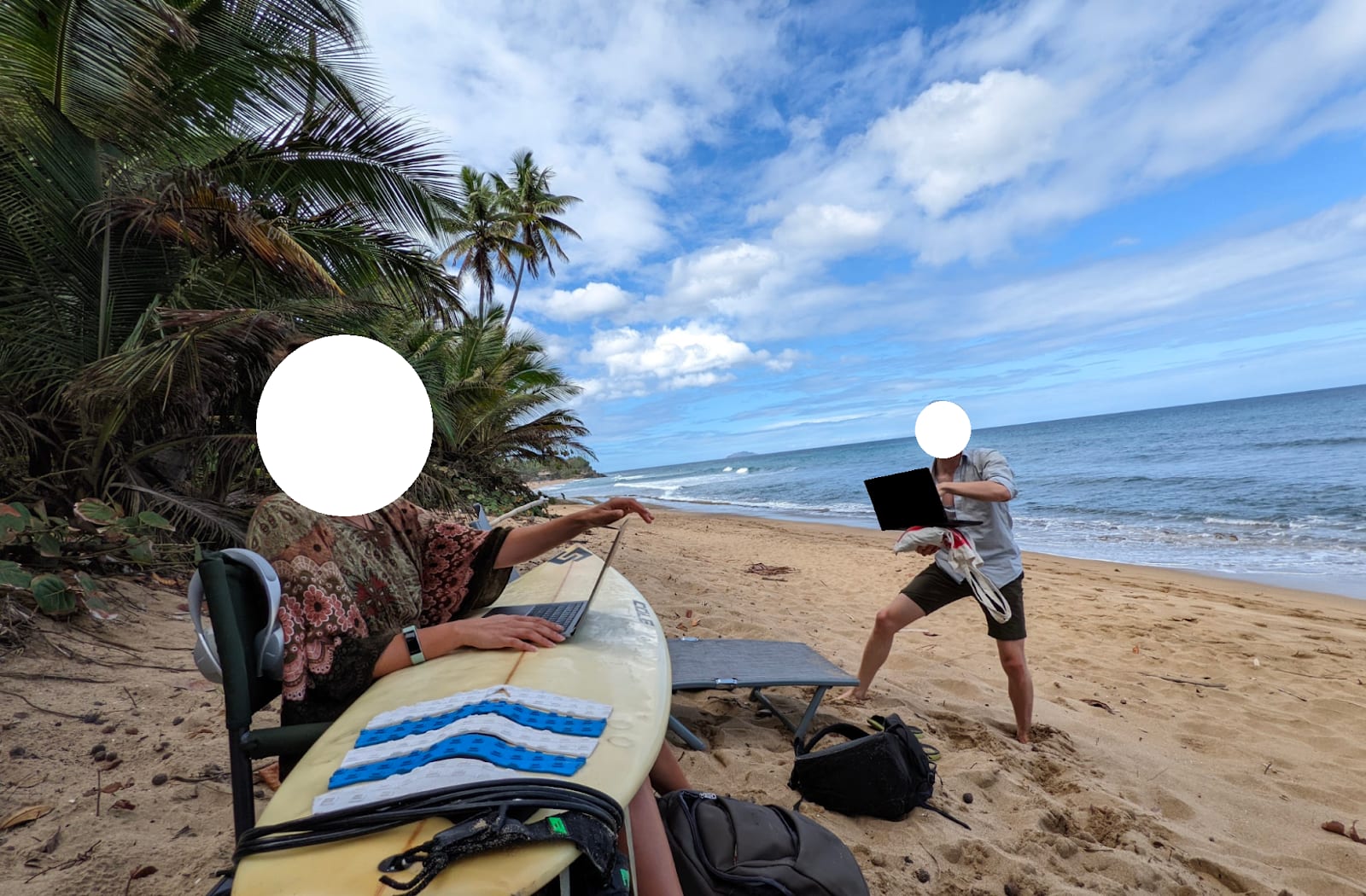








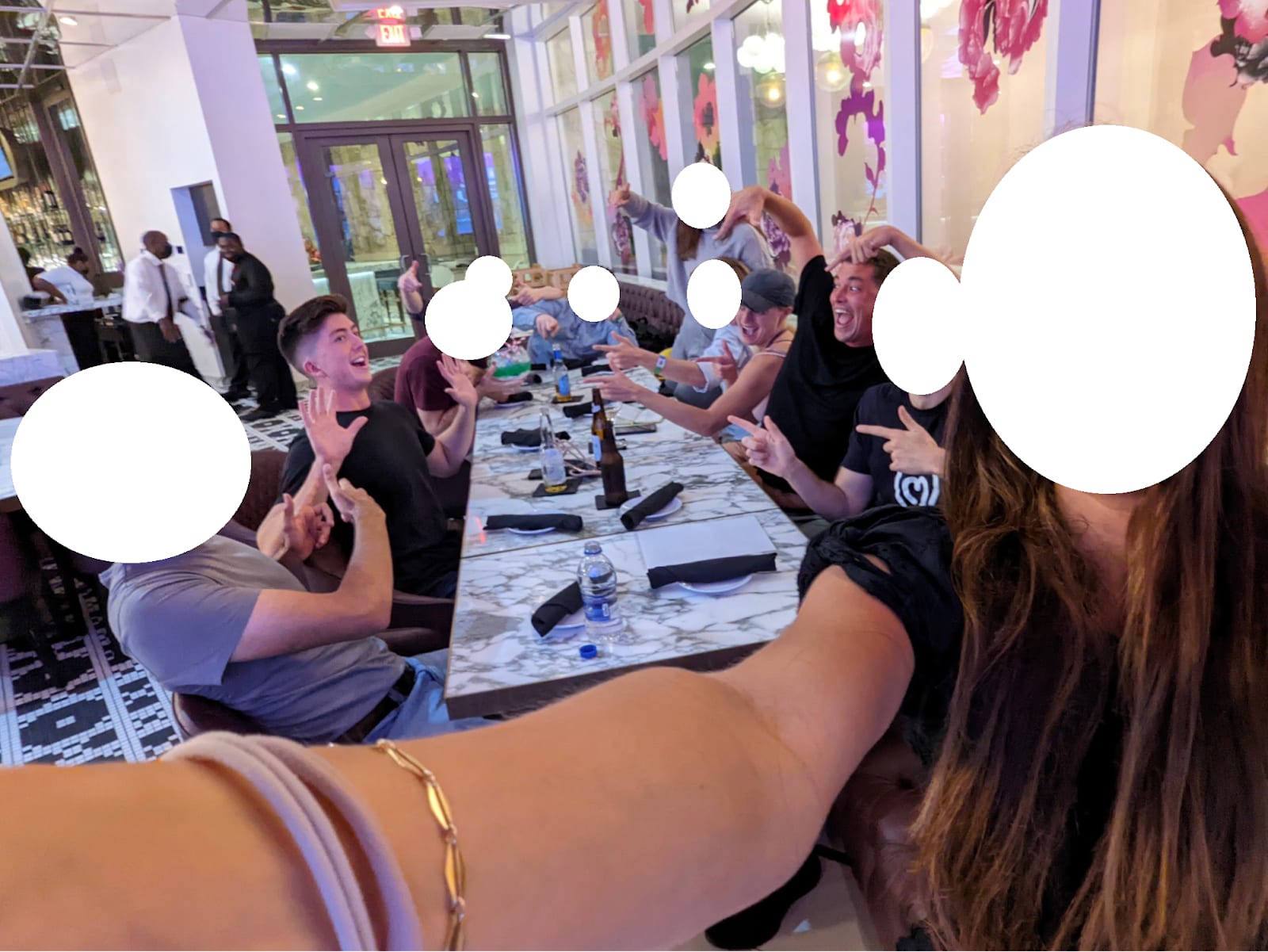


Chloe’s job was a lot of operations people’s dream job. She got to set up everything from scratch, instead of having to work with existing sub-optimal systems. She was working on big, challenging operations puzzles that were far above the usual entry-level admin stuff that you’d get as a person who just graduated from uni.
About 10% of the time was doing laundry, groceries, packing, and cooking - and she has to do many of those things for herself anyways! At least this is on paid time, feels high impact, and means she’s not sitting in front of the computer all day. Also, everybody starts somewhere, and being in charge of setting up all of the operations for an org is a pretty great place to start, even if it does also include doing some pretty simple tasks. As a job straight out of university, this is a pretty plush job. And getting a job in EA is hard.
And she gets two hours a day of professional development. Paid! She spends the time learning things like management, lean methodology, measuring impact, etc. She gets to choose basically whatever it is she wants to learn. Getting paid to read whatever you want for 2 hours a day would be a dream for many EAs.
Even more people would have loved Alice’s job, especially entrepreneurial types. When Alice arrived, just as a friend, she was encouraged to read a book a day on entrepreneurship, to quickly skill up. She started working with us building a product that seemed likely to be very high impact. Especially since it was a project that was meant to help do decentralized, automated prioritization research, so she’d be able to use the product herself to find the idea she wanted to start.
She had tons of freedom on strategy and she was very quickly given more responsibility. Within a few weeks of starting, she was managing an intern. She received hours of mentorship from experienced entrepreneurs every single day. She was quickly introduced to a huge percentage of all the major players in the field, to help her design the product better.
Then, within just a few months of starting, she was given nearly complete control of $240,000 - so much control that she could also choose how much she got paid! Imagine being quickly given so much financial and strategic freedom. As long as it falls within the scope of the department, you have control over nearly a quarter million dollars. Whatever you want to pay yourself out of that budget, you can. If you do a good job, that $240,000 could rapidly expand to $2-3 million a year.
Especially given that there’s a chance in half a year or so that you could spin out and be an entirely separate organization. Or hand it off to somebody else after gaining invaluable experience launching a really big project, all the while with the guidance and guardrails of an experienced entrepreneur.
Sure, it’s an unorthodox payment arrangement. But, man, you are certainly living a glamorous lifestyle. Always in sunny, exotic, places. Living in beautiful homes. Going on adventures in bioluminescent bays, yachting, kayaking, and snorkeling in tropical reefs. And you’re living that glam life while working for a charity. Not bad.
And, I mean, you had been considering living at the EA Hotel, where you’d be living in much less nice conditions, wouldn’t see the sun for half the year, and wouldn’t get nearly the exposure to experienced entrepreneurs and top people in the field. Maybe you’d get a stipend of max $150 a month.
Anyways, for you, it’s not about the money. You’re an aspiring charity entrepreneur, for goodness sake! That’s not a career you go into for the money. It’s about the impact and the life you’re living. And you want a job where you’re seeing the world and doing your best to save it.
Sure, maybe when you’re older, you’ll get a job that pays more and stays in one place so you can put down more roots, but right now you’re young. You want to explore. You’re living the dream and seeing the world.
You could maybe get a job with higher pay, though your previous jobs were ~minimum wage, and Nonlinear is paying you a lot more than that, so maybe not. But none would involve the travel. None would involve the adventure.
You want to go snorkeling in tropical reefs with EA leaders but also work in Oxford and have deep conversations with your favorite EA researchers at lunch. You want to pet the cats in the Grand Bazaar in Istanbul while you’re also building something really high impact. You want to be investing so much into your personal growth that you get to spend a quarter of your time just learning. You want adventure and impact.
Again - this doesn’t mean everybody would like the job. However, to paint this job as “inhumane” or as if Alice was “a fully dependent and subservient house pet” - is a dark, paranoid view of the warm, positive, uplifting environment we created.
Alice was constantly given more and more responsibility. She was given more freedom than almost any EA job and then told everybody she was kept in metaphorical shackles. She made Ben (and everybody else in the community she spent the last year telling) think that she was essentially a slave, kept under the oppressive hold of a controlling and isolating group of abusers.
[Emerson’s note: Kat paid herself $12,000 a year - half of minimum wage - for most of her charity career because she took the drowning child argument seriously. Not $1,000 a month on top of all-expenses-paid travel, adventures, villas, and restaurants - $1k/month total. In Canada’s most expensive city. Sharing a single always-damp towel with her partner. Kat doesn’t usually bring this up because she doesn’t want to make people feel bad who won’t or can’t do the same, but I think it’s important information about her character. Say what you will about her, but she deeply cares about altruism.]
But through some combination of mental illness, daily LSD use, and a society that uncritically rewards anyone claiming to be a victim, she turned financial freedom into financial servitude. She turned gratitude into manipulation.
Yes, Alice suffered. Chloe did too. Nobody is doubting that. The question is what caused the suffering. Because for most people, having to work for an hour on a weekend, then clearing it up with your boss and it never happening again isn’t a cause for months of depression.
For most people, having a separate business bringing in $3,000 a month and being able to choose your own pay is financial freedom, not servitude.
For most people who applied to these jobs, they would be considered great jobs. And if they found out they didn’t like it, they’d just quit and do something else. They wouldn’t demand a public lynching.
Sometimes people are depressed and see everything as bad and hostile. Sometimes people are sleep deprived, taking LSD every day, in chronic pain, and start seeing plots everywhere. Sometimes people have been struggling with mental health issues for their entire life.
This was not an objectively bad job that caused them psychological harm. It was a woman who kept forgetting she was an assistant and feeling outraged when asked to do her job. She felt she was overqualified and turned that resentment on her employers. It was a woman who’s struggled with severe mental illness for over 90% of her life and continued to do so while she was with us.
Since the article was published, an alarming number of people in the community have come forward to report worrying experiences with Ben Pace, and report feeling frightened about speaking out because of what Ben might do to them.
As just one example, one woman had a deeply traumatic experience with Ben but is afraid to say anything, because he runs LessWrong and is surrounded by so many powerful people in the community who would defend him. She’s worried if she comes forward that he’ll use his power to hurt her career, both directly by attacking her again, or indirectly, by making sure none of her posts get onto the front page. (We’ve heard multiple reports of people having a conflict with one of the Lightcone team and then suddenly, their posts just never seem to be on the front page anymore. We don’t know if this is true.)
She asked me to not share it with Ben because she’s frightened of him, but she said it was finally time to be strong and speak up now, as long as she was fully anonymized. She couldn’t live with herself if she allowed another person to be hurt by Ben the way Ben hurt her. I ask you to please respect her privacy and if you know her, not bring this up unless she does.
She’s been struggling with mental health issues since he attacked her, unable to sleep or eat. She still, after all this time, just randomly breaks down crying on sidewalks. She even considered leaving effective altruism. She no longer feels safe at Lightcone events and no longer goes to them, despite missing the many good people in the rationalist community. It’s shaken her trust in the community and talking about it still makes her visibly upset.
She told me to not talk to Ben about it, because he takes absolutely no responsibility for the harm he’s done, and has explicitly told her so. And he shows a friendly face to people, which is how he gets away with it, all the while professing simply an interest in truth. But he’ll be smiling at you and friendly, all the while having the intention to stab you in the back. One source reported that “Ben is a wolf in sheep’s clothing.”
People who knew what happened to this woman confirmed that what Ben had done to her was “horrifying” and “they couldn’t believe he would do that to a person”. They were shocked at his lack of concern for her suffering and confirmed that he would probably really hurt her career if she came forward with her information.
She knows of at least one other person who’s had really worrying experiences with him. Where deep and preventable harm was happening and he just didn’t seem to care. He actually blamed the person who was being hurt! She hasn’t brought it up with the person much because she doesn’t want to stir up old hurts. She can tell it still hurts them, but they’ve managed to move on and remember the things they really care about.
She had heard about what had happened to this person before, but she thought it was probably just a one-off thing and it wouldn’t happen to her. She wishes she had paid more attention so she could have avoided her own traumatic experience. She’s still suffering. She’s still lying awake each night, replaying, over and over, the nightmare of what Ben did to her.
Another person reports “I wish I had never met Ben. He hurt me more than I even thought was possible. I highly recommend not being friends with him and if you see him at a party, I would just subtly avoid him. I hope he gets better and stops doing to others what he did to me, but as far as I’ve heard, he’s still completely in denial about the harm he’s caused and has no intention of changing.”
---
This information above is true to the best of my knowledge. What other worrying things might I find if I spent months investigating like Ben did?
However, this is completely unfair to Ben. It’s written in the style of a hit piece. And I believe you should not update much on Ben’s character from this.
I’m not yet worried about these “patterns” about Ben because I don’t know if they are patterns. I haven’t heard his side. And I refuse to pass judgment on someone without hearing their side.
Further, through using emotional and one-sided language, I made it sound like it was incredibly obvious that what Ben did was awful and you’d be a monster to disagree. However, given what I know about these allegations, I think 35-75% of EAs would think that they’re not nearly as bad as the witnesses made them out to be. The other 35-75% would think it was clearly and deeply unethical. It would depend on each allegation and how it was presented.
It would be a matter of debate, not a matter of public lynching.
At least, it would be if we presented it in an even-handed manner, investigating both sides, looking for disconfirming evidence, and not presuming guilt until proven innocent.
Also, in case you’re worried about these people, they all say they’re OK. All of the situations are either being taken care of or have ended and they’re no longer suffering and do not want to pursue further actions to prevent Ben from doing it to other people.
I could do this for anybody. Just to give one example: almost everybody has had “bad breakups” and if you only speak to “disgruntled exes” you will get a warped, distorted view of reality.
I don’t think Ben should even have to respond to these. It would also be a very expensive use of time, since in his follow-up post, he said he’s now available for hire as an investigative journalist for $800,000 a year.
At that hourly rate, he spent perhaps ~$130,000 of Lightcone donors’ money on this. But it’s more than that. When you factor in our time, plus hundreds/thousands of comments across all the posts, it’s plausible Ben’s negligence cost EA millions of dollars of lost productivity. If his accusations were true, that could have potentially been a worthwhile use of time - it's just that they aren't, and so that productivity is actually destroyed. And crucially, it was very easy for him to have not wasted everybody’s time - he just had to be willing to look at our evidence.
Even if it was just $1 million, that wipes out the yearly contribution of 200 hardworking earn-to-givers who sacrificed, scrimped and saved to donate $5,000 this year.
I am reminded of this comment from the EA Forum: “digging through the threads of previous online engagements of someone to find some dirt to hopefully hurt them and their associated organizations and acquaintances is personally disgusting to me, and I really hope that we don't engage in similar sort of tactics…though I don't think it's a really worry because the general level of decency from EAs at least seems to be higher than the ever lowering bar journalists set."
As a community, if we normalize this, we will tear ourselves apart and drown in a tidal wave of fear and suspicion.
This is a universal weapon that can be used on anybody. What if somebody exclusively only talked to the people who didn’t like you? What if they framed it in the maximally emotional and culture-war way? Have you ever accidentally made people uncomfortable? Have you ever made a social gaff? Does the idea of somebody exclusively looking for and publishing negative things about you make you feel uneasy? Terrified?
I actually played this game with some of my friends to see how easy it was. I tried to say only true things but in a way that made them look like villains. It was terrifyingly easy. Even for one of my oldest friends, who is one of the more universally-liked EAs, I could make him sound like a terrifying creep.
I could do this for any EA org. I know of so many conflicts in EA that if somebody pulled a Ben Pace on, it would explode in a similar fashion.
But that’s not because EA orgs are filled with abuse. It’s because looking exclusively for negative information is clearly bad epistemics and bad ethics (and so is not something I would do). It will consistently be biased and less likely to come to the truth than when you look for good and bad information and try to look for disconfirming evidence.
And it will consistently lead to immense suffering. Knowing that somebody in the community is deliberately looking for only negative things about you, then publishing it to your entire community? It’s a suffering I wouldn’t wish on anybody.
EA’s high trust culture, part of what makes it great, is crumbling, and “sharing only negative information about X person/charity” posts will destroy it.
----
In the preceding pages and our extensive appendix we presented evidence supporting an alternative hypothesis:
2 EAs are Secretly Evil Hypothesis: 2 (of 21) Nonlinear employees felt bad because while Kat/Emerson seem like kind, uplifting charity workers, behind closed doors they are ill-intentioned ne’er do wells.
2 EAs are Mentally Unwell Hypothesis: They felt bad because, sadly, they had long-term mental health issues, which continued for the 4-5 months they worked for us.
Below we share concluding thoughts.
Imagine that you are a sophomore in college. It’s midwinter, and you’ve been feeling blue and anxious. You sit down with your new therapist and tell him how you’ve been feeling lately.
He responds, “Oh, wow. People feel very anxious when they’re in great danger. Do you feel very anxious sometimes?”
This realization that experiencing anxiety means you are in great danger is making you very anxious right now. You say yes. The therapist answers, “Oh, no! Then you must be in very great danger.”
You sit in silence for a moment, confused. In your past experience, therapists have helped you question your fears, not amplify them.
The therapist adds, “Have you experienced anything really nasty or difficult in your life? Because I should also warn you that experiencing trauma makes you kind of broken, and you may be that way for the rest of your life.”
He briefly looks up from his notepad. “Now, since we know you are in grave danger, let’s discuss how you can hide.
Jonathan Haidt, The Coddling of the American Mind
EA is becoming this therapist.
EA since FTX has trauma. We’re infected by a cancer of distrust, suspicion, and paranoia. Frequent witch burnings. Seeing ill-intent everywhere. Forbidden questions (in EA!) Forbidden thoughts (in EA!)
We’re attacking each other instead of attacking the world’s problems.
Anonymous accounts everywhere because it’s not safe anymore, too easy to get cancelled.
People afraid to come to the defense of the accused witch lest they be accused (as Scott Alexander said).
High impact people and donors quietly leaving, turned off by the insularity and drama.
Well, did a bunch of predators join overnight or is it more that we have trauma?
If you were new to EA and you looked at the top posts of all time and saw it was anonymous gossip from 2 (of 21) people who worked for a tiny charity for a few months, what would you think this community values? What is its revealed preference?
Would that community seem healthy to you? If you weren’t already part of this community, would that make you want to join?
People spent hours debating whether a person in a villa in a tropical paradise got a vegan burger delivered fast enough - would you think this community cared about scope sensitivity and saving the world (like we normally do)?
“First they came for one EA leader, and I did not speak out --
because I just wanted to focus on making AI go well.
Then they came for another, and I did not speak out --
because surely these are just the aftershocks of FTX, it will blow over.
Then they came for another, and I still did not speak out --
because I was afraid for my reputation if they came after me.
Then they came for me - and I have no reputation to protect anymore.”
So, what do we do? We have a choice to make:
Are we fragile - continuing to descend into a spiral of PTSD madness with regular lynchings?
Are we resilient - continuing to do good despite the trauma?
Or are we antifragile - can we experience post-traumatic growth and become stronger?
Can this be the last EA leader lynching, and the beginning of the EA community becoming stronger from what we’ve learned post-FTX? If we want to do the most good, we must be antifragile.
Alice, Chloe, or Ben mean well and are trying to do good, so we will not demand apologies from them. We are all on the same team. We wish them the best, we hope they’re happy, and we hope they learn from this.
As Tim Urban of Wait But Why said: “In a liberal democracy, the hard cudgel of physical violence isn't allowed. You can't burn villains at the stake. But you can burn their reputation and livelihood at the stake. This is the soft cudgel of social consequences. It only works if everyone decides to let it work. If enough people stand up for the target and push back against the smear campaign, the soft cudgel loses its impact.”
I wish I could think that Alice, Ben, and Chloe were villains.
They hurt me so much, I couldn’t sleep. I cried more than any other time in my life.
My hands were shaking so badly I couldn’t type responses to comments, and people attacked me for this, saying my not responding immediately was evidence I was a witch.
Alice, Ben, and Chloe show absolutely no remorse and I don’t predict they’re going to stop. They’re in too deep now. They can’t change their minds.
Although I certainly hope they do. If they updated I think the community would applaud them, because that takes epistemic courage similar to Geoffrey Hinton updating on AI.
And yet, despite all the harm they’ve done to me and the community, I can see their good intentions clear as day. So why are they hurting us if they have such good intentions?
Most harm done by good people is either accidental or because they think they’re fighting the bad guys. And they’ve full-on demonized us.
Demonizing somebody is the best way for good people to hurt other good people. Hence them calling us “predators”, going after the “bright-eyed” youth of the community, “chewing them up and spitting them out”. This is the language of a witch hunter, not a truthseeking rationalist.
Chloe explicitly says she can’t empathize with us at all. Reflect on this.
I don’t think they’re villains. But they think we are. And you’re allowed to do all sorts of things to people if they’re bad.
And that’s just what happened. Alice/Chloe had been telling everyone, Ben heard about it, and… monsters don’t deserve fair trials! They’ll just use their time to manipulate the system. And the two young women were afraid of retaliation!
Sure, they’d been telling lots of people in the community their false narratives for over a year and none of their strange fears of us “hiring stalkers” or “calling their families” had happened. But that doesn’t matter. You don’t stop while saving a community to check and see if there’s actually a witch. He’s the hero saving the collective from the nefarious internal traitors who must be purged.
Chloe isn’t a villain. She’s a woman who didn’t like her entry level job and wanted more money. She was a fresh graduate who felt entitled to something better. She struggled with mental health issues and blamed her feelings of worthlessness and overwhelm on Emerson and I. She took totally normal things and catastrophized them. Her story probably wouldn’t have been a scandal if it weren’t for our community’s PTSD around FTX.
Alice isn’t a villain. She’s an incredible human being who has struggled with mental health issues her entire life, and one of the symptoms is delusions of persecution - people trying to control her. This is why we’re #27 and #28 on her list of 28 people she’s accused of abuse (that we know of).
Imagine being able to choose how much you got paid and having a whole separate income stream (unrelated to your job) and yet feeling financially controlled? Imagine seeing ill-intentions everywhere?
That sounds horrible. I genuinely hope she gets the help she needs.
And finally, we’re not villains either. We paid our team what we said we’d pay them. We set it up so that they socialized with more people than the average person. We valued their time so much that we paid for Chloe to spend two hours a day doing professional development. I valued Chloe’s time so much that she asked me to stop sharing my gratitude as much. When Alice asked for a raise 3 months into her job, we let her choose her pay. We continue to have good experiences with the vast majority of people we work with.
We were not faultless. Emerson should not have snapped on that travel day and he should have apologized immediately. I should have scheduled a weekly meeting right after the conference instead of not properly talking to Alice about work stuff for three weeks, letting the misunderstanding last for so long.
But overall, it wasn’t that the job was bad or they were mistreated. They felt oppressed for some other reason. Maybe it was that Chloe hated being an assistant and found normal assistant work demeaning. Maybe it was because Alice was microdosing LSD nearly every day, sleeping just a few hours a night, and has a lifelong pattern of seeing persecution everywhere. Maybe it’s just because they’ve both struggled to be happy most of their lives and continued to do so for the 4-5 months they were with us. We’ll leave it to them and their loved ones to figure it out.
This combined poorly with our community being traumatized by FTX, being hyper-vigilant for another potential SBF. It also combined with poor epistemics because of the (unfounded) concern about retaliation. And it certainly didn’t help that Ben had already committed to paying them $10,000 before seeing our evidence.
This was a tragedy of errors. It was a bunch of well-intentioned and fallible humans trying to do good in the world. A recipe for trouble, really.
And there will be other conflicts in EA. I know of countless EA conflicts that if somebody pulled a Ben Pace, only looking for negative information attacking one side, would explode in a similarly spectacular fashion.
This doesn’t mean EA is rife with abuse, it just means that EA is rife with humans
Humans with strong moral emotions and poor social skills on average. We should expect a lot of conflict.
We need to find a better way to deal with this. Our community has been turning on itself with increasing ferocity, and we need to find a better way to recover from FTX.
Let’s do what EA does best: optimize dispassionately, embody scout mindset, and interpret people charitably.
Remember:
Almost nobody is evil.
Almost everything is broken.
Almost everything is fixable.
Let’s fix this.
How do we prevent the methodology of exclusively seeking and publishing negative information, without fact checking, from becoming an acceptable norm? This methodology will predictably lead to incorrect conclusions because wild accusations will always be more viral than boring bank receipts and work contracts. Because looking for disconfirming evidence is vital for truth-seeking and scout mindset.
Currently, the original post is one of the most upvoted posts of all time on EA Forum and LessWrong, so now one of the first things people see about EA is a gossip column whose claims have been debunked. This reflects poorly on our ethics, epistemics, and priorities.
A big thank you to Spencer Greenberg, Neel Nanda, Nuño Sempere, Geoffrey Miller, Vlad Firoiu, Manuel Allgaier, Luca De Leo, Matt Berkowitz, River Bellamy, and others for providing insightful feedback (though they do not necessarily agree with/endorse anything in this post).

Brief update: I am still in the process of reading this. At this point I have given the post itself a once-over, and begun to read it more slowly (and looking through the appendices as they're linked).
I think any and all primary sources that Kat provides are good (such as the page of records of transactions). I am also grateful that they have not deanonymized Alice and Chloe.
I plan to compare the things that this post says directly against specific claims in mine, and acknowledge anything where I was factually inaccurate. I also plan to do a pass where I figure out which claims of mine this post responds to and which it doesn’t, and I want to reflect on the new info that’s been entered into evidence and how it relates to the overall picture.
It probably goes without saying that I (and everyone reading) want to believe true things and not false things about this situation. If I made inaccurate statements I would like to know that and correct them.
As I wrote in my follow-up post, I am not intending to continue spear-heading an investigation into Nonlinear. However this post makes some accusations of wrongdoing on my part, which I intend to respond to, and of course for that it is relevant whether the things I said are actually true.
I hope to write a response sometime this week, but I am not committing to any deadlines.
Not sure if it’s worth mentioning, but I hope that people reading this are aware of what Kat writes at the bottom of the appendices:
A quick note on how we use quotation marks: we sometimes use them for direct quotes and sometimes use them to paraphrase. If you want to find out if they’re a direct quote, just ctrl-f in the original post and see if it is or not.
Many of the things that are quotes next to my name are not things I said and not things that I would endorse, and I believe the same is true of many sentences in quotation marks attributed to Alice/Chloe.
NL: A quick note on how we use quotation marks: we sometimes use them for direct quotes and sometimes use them to paraphrase.
I had missed that; thank you for pointing it out!
While using quotation marks for paraphrase or when recounting something as best as you recall is occasionally done in English writing, primarily in casual contexts, I think it's a very poor choice for this post. Lots of people are reading this trying to decide who to trust, and direct quotes and paraphrase have very different weight. Conflating them, especially in a way where many readers will think the paraphrases are direct quotes, makes it much harder for people to come away from this document with a more accurate understanding of what happened.
Perhaps using different markers (ex: "«" and "»") for paraphrase would make sense here?
Fair point! I've moved the note about quotation marks to the top of the appendix to help avoid misunderstandings. Sorry about that! This is just a massive post and a million details and I just missed this. Hopefully now it'll be better.
The "«" and "»" suggestion is one that could be done mostly with a search-and-replace – having the more at the top of the appendix is not enough if it also applies to the post itself. This significantly affects how trustworthy I would consider the post to be (and I say that as someone sympathetic to your situation).
My attention continues to be on the question of whether my post was accurate and whether this post debunks the claims and narratives shared in mine. To minimize public attention costs and also to preserve my own sanity, I am aiming to engage with Nonlinear’s response in a way that focuses only on the clearest and most direct critiques of my post. I’m currently focusing on 2-3 of the claims in their response that most contradict my post, investigating them further, and intend to publish the results of that.
Once I’ve finished that process and shared my thinking (including making edits to my original post to correct any mistakes), I’ll engage more with the rest of the comments and what the appropriate norms are and whether I should’ve done things substantially differently, but in the meantime I think my efforts are better spent figuring out what is actually true about the relationship Nonlinear had with its employees.
I am trying to avoid writing my bottom line, and reduce any (further) friction to me changing my mind on this subject, which is a decent chunk of why I’m not spending time arguing in the comments right now (I expect that to give me a pretty strong “digging in my heels” incentive).
(...that said, I think Dialogues are pretty great for respectful discussions about high-stakes topics, and I am definitely more open to having dialogues with people who think I clearly messed up or want to discuss some particular issue. Though it’s still probably worth waiting on those until after I’ve sorted out the object level.)
I am currently quite skeptical about the narratives presented in this post for a number of reasons, not least because the post repeatedly fails to engage with or even accurately describe what I wrote. There are many strawman accusations that it successfully knocks down, which you will notice if you compare the claims that Kat rebukes with what I actually wrote in the original. I also question a number of the factual claims and I am investigating those.
Regarding timing, it’d be great to get something out this week, but also it’s literally 5 days away from Christmas. I don’t strongly expect to post before Christmas Eve, and I don’t want to disrupt my and others’ vacation days by posting in between then and the New Year, so if I’ve not written a post by EOD on the 23rd by then I will not post until the New Year (no earlier than Jan 2nd).
I’m currently focusing on 2-3 of the claims in their response that most contradict my post, investigating them further, and intend to publish the results of that.
I hope that while you’re investigating this, you talk to us and ask us for any evidence we have. We’re more than happy to share relevant evidence and are willing to set reasonable deadlines for how long it’ll take for us to send it to you.
We also don’t want to waste more people’s time on going back and forth publicly about the evidence when you can easily check with us first before publishing.
I also recommend you talk to us and see our evidence before you write the post. If you’ve already written the post, it’s hard to update afterward when you get more information. And it’s hard to write an accurate post before you’ve seen all the relevant information.
We did not share all of the relevant evidence because it was already hundreds of pages long and we tried to prioritize. We have more evidence that might be relevant to your post.
I am trying to avoid writing my bottom line, and reduce any (further) friction to me changing my mind on this subject, which is a decent chunk of why I’m not spending time arguing in the comments right now (I expect that to give me a pretty strong “digging in my heels” incentive).
I think this is smart and appreciate it.
I read this post and about half of the appendix.
(1) I updated significantly in the direction of "Nonlinear leadership has a better case for themselves than I initially thought" and "it seems likely to me that the initial post indeed was somewhat careless with fact-checking."
(I'm still confused about some of the fact-checking claims, especially the specific degree to which Emerson flagged early on that there were dozens of extreme falsehoods, or whether this only happened when Ben said that he was about to publish the post. Is it maybe possible that Emerson's initial reply had little else besides "Some points still require clarification," and Emerson only later conveyed how strongly he disagreed with the overall summary once he realized that Ben was basically set on publishing on a 2h notice? If so, that's very different from Ben being told in the very first email reply that Nonlinear's stance on this is basically "good summary, but also dozens of claims are completely false and we can document that." That's such a stark difference, so it feels to me like there was miscommunication going on.)
At the same time:
(2) I still find Chloe's broad perspective credible and concerning (in a "this is difficult work environment with definite potential for toxicity" rather than "this is outright abusive on all reasonable definitions of the word"). The replies by Nonlinear leadership didn't change my initial opinion here by too much because there are features of how Kat and Emerson are presenting their side of things that make me think "ah, I see it: not surprised Chloe felt negative emotions about her perceived standing in relation to them." (Admittedly, I think if I applied more charitable priors here, I could see alternative explanations like "the negative features I believe I see here are best explained by Kat and Emerson feeling hurt and upset by things Chloe said, so they come across as defensive and one-sided in return, but they'd be better able to see and re-state Chloe's perspective if they were more distanced from the events, and may have been better at seeing Chloe's perspective earlier, before they all had a falling out.")
To elaborate on (1):
To elaborate on (2)
Even though many the things in my elaboration of "(2)" are negative about Nonlinear, I want to emphasize again that this post made me update positively about them and that I think it's unfortunate how the initial presentation and resulting discussion was too one-sided. I appreciate the length of this post; it must have been very stressful and anxiety-inducing to feel compelled to write it. (I'm overall inclined to think that it was positive for them/their reputation to write it.)
I still find Chloe's broad perspective credible and concerning [...] it's begging the question to self-describe your group with "Your group has a really optimistic and warm vibe. [...]" some of the short-summary replies to Chloe seemed uncharitable to the point of being mean. [...] I thought it's simply implausible that the most Nonlinear leadership could come up with in terms of "things we could've done differently" is stuff like "Emerson shouldn't have snapped at Chloe during that one stressful day" [...] Even though many the things in my elaboration of "(2)" are negative about Nonlinear, I want to emphasize again that this post made me update positively about them [...]
I just noticed that Kat posted the following on Facebook Dec 13 @11:34 PST (after older thoughtful messages such as this one, and the ones from Yarrow, David Mathers, OllieBase, etc). It seems like Kat disregarded the community's concerns and doubled down on her original PR strategy (including painting Alice and Chloe with the same brush):
𝗔𝗿𝗼𝘂𝗻𝗱 𝟳𝟓% 𝗼𝗳 𝗽𝗲𝗼𝗽𝗹𝗲 𝘂𝗽𝘃𝗼𝘁𝗲𝗱 𝘁𝗵𝗲 𝗽𝗼𝘀𝘁, 𝘄𝗵𝗶𝗰𝗵 𝗶𝘀 𝗮 𝗿𝗲𝗮𝗹𝗹𝘆 𝗴𝗼𝗼𝗱 𝘀𝗶𝗴𝗻*
Two mentally unwell ex-employees told dozens of falsehoods about us, but even in the darkest times, I told myself to trust that EAs/rationalists would update when they saw the evidence, and now I feel justified in that trust.
Turns out that 200+ pages of evidence showing that their accusations were false or misleading is enough for most people
It was very painful being #27 and #28 people that Alice has accused of persecuting/oppressing her, but today’s been a relief. 75% was our best case scenario, because we believed that ~30% of EAs would never update, since they follow “believe all people-claiming-to-be-victims” epistemics.
Our remaining critics have been largely silent on the evidence and mostly just criticize our ‘tone’ or stylistic choices, which is usually how you know you’ve won an argument.
I neither upvoted nor downvoted, so I'm a bit miffed at "75%" as a metric of support. Edit: I see some aren't shy about downvoting though. Looks like Kat unfriended me on Facebook around the same time as this downvote. I think this is unfortunate, because I still think Kat is an EA at heart and that she could improve as a person by handling this situation differently.
Yeah, at least several comments have much more severe issues than tone or stylistic choices, like rewording ~every claim by Ben, Chloe and Alice, and then assuming that the transformed claims had the same truth value as the original claim.
I'm in a position very similar to Yarrow here: While I think Kat Woods has mostly convinced me that the most incendiary claims are likely false, and I'm sympathetic to the case for suing Ben and Habryka, there was dangerous red flags in the responses, so much so that I'd stop funding Nonlinear entirely, and I think it's quite bad that Kat Woods responded the way they did.
Overall, there just feels like too little engagement with the possibility that Chloe's experience was maybe predictable and not out of the ordinary, i.e., that Chloe wasn't entitled or disgruntled to react the way she did.
To give some more context on this:
Let's take the claim that it was discouraged to talk to friends or family (this was one of the things were I thought Nonlinear's reply seemed more convincing than I would have expected, but still leaves me with uncertainty rather than settling everything for sure).
Nonlinear links to a screenshot with a policy named "Internal: policy for inviting guests." The policy mentions "friends and family." Nonlinear frame this as follows. Chloe was lying to claim that she was discouraged from talking to them, because the policy says otherwise. Because she was lying about it, we should discount what she says on other issues.
I'm thinking "maybe, but there are other possibilities."
Firstly, I'm curious what the following phrase is about "the above roughly reflects the priority list as well." Is "the priority list" a separate thing? Or is this talking about a ranking of priorities from top to bottom? Even if there's no intended ranking from top to bottom, I feel like it's not outlandish to come away with the impression that "friends and family" was maybe added somewhat grudgingly rather than enthusiastically, since another section in the screenshot justifies having visitors with "it can have an extremely high impact to have different people join us" and compares it to a "constant EAG." (These things apply a lot less to family or EA-disinterested friends.)
Also, sometimes written policies don't capture implicit sentiments. It's possible for a policy to say "it's okay/encouraged to do x" while simultaneously there's some social pressure in the group to do very little x.
The discussion about the screenshot made it seem like the screenshot settles everything.
Instead, I'd have thought it's more balanced to say something like "this screenshot at the very least shows that it wasn't our official policy to discourage these things, so Chloe/Alice should have mentioned this for fairness reasons."
This on its own, maybe. But Chloe's boyfriend was invited to travel with us for 2 of the 5 months she was with us, and we were about to invite him to travel with us indefinitely, free of charge. That's a hard to fake signal that she was more than welcome to invite friends and family.
We also show text messages of us encouraging them to invite people over. We even have text messages showing me encouraging Chloe to see her boyfriend sooner and her saying no. Alice invited multiple friends to travel with us. When Chloe quit one of her friends was visiting us for 2-4 weeks (can't quite remember). To be fair, that friend we invited. But if she'd invited him, we would have been thrilled.
Their portrayal of us saying that only me and Emerson could invite people to travel with us is clearly established to be false.
On this point, your reply seems very compelling to me. ((Though it's at least imaginable that Chloe would point out ways in which this is misleading – e.g., maybe her bf had "EA potential" or got along well with Emerson or you and some other friends of hers didn't, and maybe someone made comments about her other friends. Idk.))
I think it's important to not hold people to unreasonable standards when they try to present a lot of evidence. If this (the invites allowed list) is one of only few instances where it's overstated how important a particular piece of evidence is, then that's still totally compatible with a high degree of objectivity!
I overall felt like there were some other places where I was uncertain how much to update, while your wording "wanted" me to make a very big update. But I also think these things can be hard to judge.
I'm a professional nanny and I've also held household management positions. I just want to respond to one specific thing here that I have knowledge about.
It is upsetting to see a "lesson learned" as only hiring people with experience as an assistant, because a professional assistant would absolutely not work with that compensation structure.
It is absolutely the standard in professional assistant type jobs that when traveling with the family, that your travel expenses are NOT part of your compensation.
When traveling for work (including for families that travel for extensive periods of time) the standard for professionals is:
-Your work hours start when you arrive at the airport.(Yes, you charge for travel time)
You charge your full, standard hourly rate for all hours worked.
You ALSO charge a per diem because you are leaving the comfort of being in your own home / being away from friends and pets and your life.
You are ONLY expected to work for the hours that are pre-arranged that you are on the clock. (You may be OFFERED but not demanded to work more hours.)
If you are expected to be available outside of pre scheduled hours then you charge an "on call" rate for any hours they want you generally available for them.
If these hours add up to more than 45 hours/week, you charge your overtime rate.
For a professional to take three job as described they would have to pay six figures (NOT INCLUDING travel, room, board, related travel expenses). "Getting to travel to exotic locales" might be a perk, but it is NOT compensation.
The people who will NOT require this are: young people too inexperienced to know better, exploited immigrants, and poor non-professionals taking the job out of desperation.
(ETA There is some wiggle room here. Like maybe you charge your per diem rate for travel time instead of your hourly (are the kids with you when you are traveling?), or if your job is ALWAYS traveling you probably don't have a per diem, etc.
Also, I want to note that it is VERY COMMON for non-evil well-meaning people to not realize this. )
This got a lot of upvotes so I want to clarify that this kind of arrangements isn't UNUSUALLY EVIL. Nanny forums are filled with younger nannies or more desperate nannies who get into these jobs only to immediately regret it.
When people ask my opinion about hiring nannies I constantly have to show how things they think are perks (live in, free tickets to go places with the kids) don't actually hold much value as perks. Because it is common for people to hold that misconception.
It is really common for parents and families to offer jobs that DON'T FOLLOW professional standards. In fact the majority of childcare jobs don't. The educated professionals don't take those jobs. The families are often confused why they can't find good help that stays.
So I look at this situation and it immediately pattern matches to what EDUCATED PROFESSIONALS recognize as a bad situation.
I don't think that means that NL folks are inherently evil. What they wanted was a common thing for people to want. The failure modes are the predictable failure modes.
I think they hold culpability. I think they "should have" known better. I don't think (based on this) that they are evil. I think some of their responses aren't the most ideal, but also shoot it's a LOT of pressure to have the whole community turning on you and they are responding way better than I would be able to.
From the way they talk, I don't think they learned the lessons I would hope they had, and that's sad. But it's hard to really grow when you're in a defensive position.
> When people ask my opinion about hiring nannies I constantly have to show how things they think are perks (live in, free tickets to go places with the kids) don't actually hold much value as perks.
Off topic: I understand thinking housing would be valued by employees, but do people honestly think that tickets to children’s activities are valuable to caretakers? Like even if someone would value the activity in their off hours, which seems like a big if, surely the parents understand that it’s not a leisure activity when you’re watching small children?
Switch "watching children" with "working as an assistant" and you'll see why I don't think travel /activity expenses is at all a valuable payment method, even to people who would otherwise enjoy those activities.
In my reading of the post and the appendix, the point Kat seemed to be making was not that professional assistants would be cheaper, but that professional assistants would have a better upfront idea of what they were getting into, and therefore be less likely to retroactively feel that this was a bad decision. This is consistent with the idea that having that upfront idea could also come with demanding higher compensation upfront before entering into the arrangement; what Kat was trying to guard against was regretting it after agreeing to it.
In a section of the appendix Kat says that she currently has a (remote) assistant charging $50/hour and it seems to be working well:
Although now we don’t actually recommend people hire EAs as assistants, since feeling overqualified is too common to be worth it. We currently have a remote assistant on Upwork for $50/hr who’s been an assistant for years and knows she likes it.
Just wanted to ask a quick question: It sounds like you’re describing the conditions when someone who normally works with a family is asked to come on a trip with them, rather standards terms for nanny’s travelling with digital nomad families? (Which may not be common enough to be a thing).
I guess the reason I’m asking is because those are two quite distinct asks: one is asking you to uproot your normal life, with the nanny still presumably having to pay rent on their usual place.
In contrast, the other ask is looking for people who are keen on a particular lifestyle and who can avoid paying rent altogether.
Anyway, please let me know if I’m wrong here.
I do not think it is necessarily morally wrong to try to find a win win situation where you employ someone who really just has a passion for travel. But I think it is a generally bad idea. That situation tends towards exploitation, and it is hard to see it when you are in your own point of view.
This job also required that a young person just out of college choose to spend over 80% of their "income" on a luxurious travel budget.
Yes, but also there is a similar issue for live in nannies, where a professional live in nannies will not charge that much less hourly even when room and board are provided by the family. (They will charge slightly less) This is because it is not actually fun or nice to live with your bosses, and having a live-in is considered more a perk for the FAMILY than the nanny.
Meanwhile many well-meaning but uninformed bosses think their room is worth a lot of money to the nanny because it is expensive to the family.
For example, I live in the Bay and I would RATHER pay $1000/mo to rent a room in grouphouse than stay in my bosses' extremely expensive fancy house for free, even though my bosses' mortgage for that room is very expensive to them.
Similarly, a boss spending $5000 to take you to Costa Rica is not giving you $5000 of value. You aren't choosing where you are going or what the money is spent on. Maybe they really value beachfront property, but if you were in charge of expenses you'd rather choose a less expensive Airbnb but put more towards experiences or whatnot. Your bosses want to go to the theater but you don't really like the theater. They pay $100 on a ticket for you, but you wouldn't have paid anything to go.
So even if you have an employee who really loves that they get to travel for work, the vast majority of money you spend getting them to come along doesn't... Transfer very well.
This is on top of issues like all your roommate disputes being with people who have absolute authority to win. You don't like the house temperature? Too bad. You don't like their loud death metal workout music? Too bad.
You also better not have a partner, or want to sleep around, or ever stay out late partying, or use substances, etc. It seems like the NL folks were laid back on this, but often families think your professional demeanor is your actual whole personality. (Think how many parents get upset when teachers post pictures on the beach in a nonsexy swimming suit)
The exception to this is generally immigrants who have come to the country specifically to work and send money home. They are generally happy to have a free place to stay.
Also children and sometimes bosses do not understand that sometimes you are off the clock and not working. So children will want your attention and engagement if you are around even when you're "off", and bosses might not respect your time off and ask you to do little tasks or last minute jobs when you aren't working.
If you were away at your own house, then your time off is completely yours, but if you're a live in then they might pull stuff like "Hey could you watch the kids for half an hour so I can run pick up some milk?" and next thing you know they consider your "time off" to be just a suggestion.
Agreed. If you're calculating equivalent compensation, you need to apply a steep discount to work-provided perks to adjust for the restrictions. That said, it also makes sense to take into account the benefits of networking/career capital in order to figure out whether the whole deal offered is fair. I'll leave that for others to debate, was just trying to get clarification on your specific point.
Disclaimer: Previously interned remotely at Non-Linear
I closely read the whole post and considered it carefully. I'm struggling to sum up my reaction to this 15,000-word piece in way that's concise and clear.
At a high level:
Even if most of what Kat says is factually true, this post still gives me really bad vibes and makes me think poorly of Nonlinear.
Let me quickly try to list some of the reasons why (if anyone wants me to elaborate or substantiate any of these, please reply and ask):
Random fun fact: I am quoted in The Coddling of the American Mind and Jonathan Haidt sent me a signed copy, which was very nice of him to do. Still, I [have some serious skepticism about the book's thesis]. It's not that he doesn't have a point... But, anyway, that's a topic for another post. (Note: on July 26, 2025 at 01:16 UTC, I edited the part of this footnote in [square brackets] because I regretted how harsh my original wording was. I strive to be kind to people even when I disagree, and I think in this case I fell short of that goal. I apologize for my original wording and I also apologize for taking so long to finally change it.)
In my experience, observing someone getting dogpiled and getting dogpiled yourself feel very different. Most internet users have seen others get dogpiled hundreds of times, but may never have been dogpiled themselves.
Even if you have been dogpiled yourself, there's a separate skill in remembering what it felt like when you were dogpiled, while observing someone else getting dogpiled. For example, every time I got dogpiled myself, I think I would've greatly appreciated if someone reached out to me via PM and said "yo, are you doing OK?" But it has never occurred to me to do this when observing someone else getting dogpiled -- I just think to myself "hm, seems like a pretty clear case of unfair dogpiling" and close the tab.
In any case, I've found getting dogpiled myself to be surprisingly stressful, relative to the experience of observing it -- and I usually think of myself as fairly willing to be unpopular. (For example, I once attended a large protest as the only counter-protester, on my own initiative.)
It's very easy say in the abstract: "If I was getting dogpiled, I would just focus on the facts. I would be very self-aware and sensitive, I wouldn't dismiss anyone, I wouldn't say anything bad about my accusers (even if I had serious negative information about them), I wouldn't remind people about scout mindset or anything like that." I think it takes an unusual person to maintain that sort of equanimity when it feels like all of their friends are abandoning them and their career is falling apart. It's not something most of us have practice with. And I hesitate to draw strong inferences about someone's character from their behavior in this situation.
[Note: I'm using the term "dogpiled" because unlike terms like "cancelled", "called out", "scapegoated", "brought to justice", "mobbed", "harassed", etc. it doesn't have any valence WRT whether the person/group is guilty or innocent, and my point is orthogonal to that.]
I agree with the points made in this comment. It's important to remember that people getting dogpiled on can feel pretty awful about it. It reminded me of this Sam Harris podcast interview with a documentary fillmmaker who described her experience of being "cancelled" as being worse than her experience of being kidnapped.
That said, I don't know how well they address the original comment they're replying to. The post we're looking at was posted three months after the impetus for it, so while I do see that the whole experience is very stressful and can make it difficult to be charitable on the spot, the extended period to craft a reply means it's possible to overcome one's initial impulses and figure out how to respond. Ultimately, if this post chooses to adopt certain rhetorical tactics (for good or bad), I think Kat and the Nonlinear term do need to take responsibility for these tactics. And to my understanding, they have -- for instance, in this comment Kat says that some of the controversial decisions around inclusion of stuff in the post were things that the team discussed and decided on.
Apart from the 3 month period, this also had multiple reviewers. It would quite surprising if none or only a few of these pushbacks by Yarrow or others in the comment section were raised. So (along with Kat's comment that there was a lot of internal debate) I think it is better to model these decisions as intentional and considered, rather than due to "loss of equanimity".
To add on to this vibe of "getting dogpiled is an unusually stressful experience that is probably hard to imagine accurately", I feel a bit strange to be reading so many "reasoned" comments about how specific improvements in replies/wordings could have been decisively accurate/evident, as though anything less seems like a negative sign.
I relate to that logically as an observer, but at the same time I don't particularly think the whole sea of suggestions are meaningfully actionable. I think a lot of time and thought went into these posts, virtually any variant would still be vulnerable to critique because we have limited time/energy, let alone the fact that we're human beings and it's more than okay to produce incomplete/flawed work. Like what expectations are we judging others by in this complex situation, and would we really be able to uphold our own expectations, let alone the combined expectations of hundreds of people in the community? It's insanely hard to communicate all the right information in one go, and that's why we have conversations. Though this broader discussion of "what's the real story" isn't one that I consider myself entitled to, nor do I think we should all be entitled to it just because we're EAs.
This is a really good comment. It gets at a tough issue. Someone wise once told me: when we feel unsafe, we want to be right. A consequence of this is that if we want someone to admit wrongdoing, or even just to admit the validity of a different perspective, we have to make it safe for them to do so. We can't just dogpile them. It's clear that Kat feels unsafe and wants to be right. And, in a way, we are dogpiling her.
However, it also must be said that someone admitting wrongdoing, or admitting the validity of a different perspective, isn't the only goal for a community faced with an instance of alleged harm. Preventing future harm is an even more important goal. If someone credibly accused of doing harm to another person can't overcome their need to be right, the community must explore different options for preventing other people from coming to harm in the future. These options include (but aren't limited to) exclusion from the community.
I agree with this. I think overall I get a sense that Kat responded in just the sort of manner that Alice and Chloe feared*, and that the flavor of treatment that Alice and Chloe (as told by Ben) said they experienced from Kat/Emerson seems to be on display here. (* Edit: I mean, Kat could've done worse, but it wouldn't help her/Nonlinear.)
I also feel like Kat is misrepresenting Ben's article? For example, Kat says
Chloe claimed: they tricked me by refusing to write down my compensation agreement
I just read that article and don't remember any statement to that affect, and searching for individual words in this sentence didn't lead me to a similar sentence in Ben's article on in Chloe's followup. I think the closest thing is this part:
Chloe’s salary was verbally agreed to come out to around $75k/year. However, she was only paid $1k/month, and otherwise had many basic things compensated i.e. rent, groceries, travel. This was supposed to make traveling together easier, and supposed to come out to the same salary level. While Emerson did compensate Alice and Chloe with food and board and travel, Chloe does not believe that she was compensated to an amount equivalent to the salary discussed, and I believe no accounting was done for either Alice or Chloe to ensure that any salary matched up. (I’ve done some spot-checks of the costs of their AirBnbs and travel, and Alice/Chloe’s epistemic state seems pretty reasonable to me.)
I, too, was mentally tallying up benefits. Plane tickets, hotel fees and other perks might be that costly, but the business required her to travel so it seems like we shouldn't treat it dollar-for-dollar like normal compensation.
More importantly I feel like there's misdirection. Chloe's claim was that a verbal agreement existed and wasn't fully upheld; Kat rewrites this into a different claim, then labels it "False."
No, you don't get to do this. When your reputation is on the line and you're being scrutinized, I expect you to be on your best behavior.
Kat, if you're reading this―I think you mean well, and my charitable reading is that (1) you are a proper EA at heart, (2) you have social skills but also some bad social habits, and (3) you wrote this from an emotional place that compromised your objectivity, which caused you to choose a highly defensive PR strategy in which you exaggerated the positions of Ben/Alice/Chloe in order to make them sound less reasonable. (Edit: or rather, to make their positions easier to refute. And let's keep in mind that Ben did a "search for negative information" and did not build a "balanced case".)
I might let that slide if it was just one employee who had a bad experience at every previous job, but there were two, plus Ben's judgement and "many" anonymous sources. Plus, I agree with Ben that the policy "I don’t say bad things about you, you don’t say bad things about me" is not a good policy; "I speak charitably of you, you speak charitably of me" is the most I think one could reasonably ask for. So what you needed to do was reflect upon what mistakes you and Emerson made, and what you can do to begin to repair your reputations (e.g. recognize faults and apologize), and then do that. I wonder if you're so convinced of your own innocence that you can't see that the red flags that were discussed were actually red....
Kat reworded every claim made by Alice/Chloe/Ben, so I checked a few more:
My read on this is that a lot of the things in Ben's post are very between-the-lines rather than outright stated. For example, the financial issues all basically only matter if we take for granted that the employees were tricked or manipulated into accepting lower compensation than they wanted, or were put in financial hardship.
Which is very different from the situation Kat's post seems to show. Like... I don't really think any of the financial points made in the first one hold up, and without those, what's left? A She-Said-She-Said about what they were asked to do and whether they were starved and so on, which NL has receipts for.
[Edit after response below: By "hold up" I meant in the emotional takeaway of "NL was abusive," to be clear, not on the factual "these bank account numbers changed in these ways." To me hiring someone who turns out to be financially dependent into a position like this is unwise, not abusive. If someone ends up in the financial red in a situation where they are having their living costs covered and being paid a $1k monthly stipend... I am not rushing to pass judgement on them, I am just noting that this seems like a bad fit for this sort of position, which I think NL has more than acknowledged, and if they misled NL about their financial security, that further alleviates NL of some responsibility]
Ok, so maybe it's just a shitty job offer despite the apparent perks? Maybe it is for many people. That doesn't mean adults shouldn't be trusted to understand what they're getting into and use their agency to pull the plug. Regrets after the fact are not the same as manipulation or deception on NL's part.
And this would still be fine if Ben's post just said "There are EA orgs making job offers that I think put their employees in vulnerable positions, so people should be more careful about accepting them." I would even agree to that kind of post, especially if it came after talking to NL about its job offers (which they already apparently said at the time that they've reconsidered after the experiences they had).
But what it said was "These people are predators who chew up and spit out bright eyed altruists." And that feels like a very strong judgement to make, and makes me glad that Kat posted the details about the financial stuff even if it wasn't claimed directly in Ben's post to be the result of deception. Because if it's not... why was it brought up at all? Dislike of the job offers feel like a clash of vibes and difference of opinion on best practice, not predatory action.
But what people are left with from Ben's post is an impression that there was a pattern of abuse and predatory action, and the financial aspect is really important for that. That impression is not solely on Ben's shoulders; even if Ben's article is written largely from the perspective of what he believed from what he saw. I think if NL is even half-correct in these rebuttals, Ben was clearly influenced to some degree to reach that conclusion by Chloe and Alice... not even necessarily intentionally, which is why I hesitate to use the word "manipulated," but just by the nature of how people who feel victimized will naturally selectively tell their side of the story.
This generally applies to the rest of your bullet points, so yeah, I think Ben's hypothesis that "2 EAs are Secretly Evil" is a pretty good summation of his post's takeaways, given the assertions he made at the end.
I feel like this response ignores my central points ― my sense that Kat misrepresented/strawmanned the positions of Chloe/Alice/Ben and overall didn't respond appropriately. These points would still be relevant even in a hypothetical disagreement where there was no financial relationship between the parties.
I agree that Ben leaves an impression that abuse took place. I am unsure on that point; it could have been mainly a "clash of personalities" rather than "abuse". Regardless, I am persuaded (partly based on this post) that Kat & Emerson have personalities that are less honest, kind and self-reflective than typical EAs, so that probably few EAs would be happy working for Nonlinear as "part of the family". But to judge properly, I think I'd have to hear what other remote/former employees think about NL.
what it said was "These people are predators who chew up and spit out bright eyed altruists."
I think there should be a norm against treating paraphrases as quotes. What it said was "I expect that if Nonlinear does more hiring in the EA ecosystem it is more-likely-than-not to chew up and spit out other bright-eyed young EAs who want to do good in the world. I relatedly think that the EA ecosystem doesn’t have reliable defenses against such predators."
I feel like this response ignores my central points ― my sense that Kat misrepresented/strawmanned the positions of Chloe/Alice/Ben and overall didn't respond appropriately.
And I disagree, and used one example to point out why the response is not (to me) a misrepresentation or strawman of their positions, but rather treating them as mostly a collection of vague insinuations peppered with specific accusations that NL can only really respond to by presenting all the ways they possibly can how the relationship they're asserting is not supported by whatever evidence they can actually present.
For goodness sake, one of your points is in the distinction between "told" and "advised." What, exactly, do you expect NL to say to clarify that distinction that's more important than the rebuttal of pointing out they invited the boyfriend to travel with them for 2 months? "No, we didn't say that, nor did we advise it?" There's no evidence they did say it or "advise" it in the first place! How does a simple denial better rebut either the claim itself or the underlying implications?
These points would still be relevant even in a hypothetical disagreement where there was no financial relationship between the parties.
I think it would be absurdly unfair to take for granted that the non-financial aspects are represented in a non-misleading way if the financial aspects are misrepresented, which is part of why I highlighted that particular point.
What Ben was told by Alice and Chloe seems to me at this point basically entirely a set of "technically true but ultimately misleading" things, along with some strictly false accusations by Alice/Chloe. I'm confused by the insistence that these rebuttals are strawmanning their positions when their positions are themselves dependent on an overarching relationship and vibe and emotional experience, and not a specific set of claims backed by evidence of wrongdoing.
It would be a different story if they had provided their own proof and then NL ignored that proof to instead disprove a different set of things.
I think there should be a norm against treating paraphrases as quotes.
I generally agree, but boy am I confused by your issue with my summarizing that paragraph with that quote. He directly calls them predators. He directly asserts they chewed up and spat out young altruists. If you disagree with either of those, or think there's some meaningful nuance my quote missed, I'd ask you to explain why.
What, exactly, do you expect NL to say to clarify that distinction
I expect them to say "advised". This isn't Twitter, and even on Twitter I myself use direct quotes as much as possible despite the increased length, for accuracy's sake. Much of this situation was "(s)he said / she said" where a lot of the claims were about events that were never recorded. So how do we make judgements, then? Partly we rely on the reputations of everyone involved―but in the beginning Kat and Ben had good reputations while (after Ben's post) Alice & Chloe were anonymous, with only Chloe appearing to have a good reputation. So what then? Well, the community verifies what it can. The miswordings were verifiable.
It reminds me of a weird final exam I once took, which was worth something like 2/3 of my total grade and had 10 questions. 9 were about material that wasn't taught in the class at all! So I answered about 1.3 of the 10, and... got a B+ in the course! How?? Presumably the instructors realized they made a mistake afterward and couldn't just fail everyone, so they graded people based on that one question and a few quizzes.
That's kind of like this. When much of the story is invisible to us, we judge based on what's visible. How can we do otherwise? So Kat could've taken advantage of that by posting an impeccable defense that functionally countered the original narrative. They suggested K&E lacked honesty? Well, Kat could demonstrate perfect honesty in all verifiable respects. They suggested K&E were retributive? Kat could've conveyed a strong sense of kindness. The fact that she didn't do these things reads as her "real" personality showing. "A leopard can't change its spots."
but boy am I confused by your issue with my summarizing that paragraph with that quote
Sorry, it's just that in the past I've talked to lots of climate dismissives and I've become sensitive to their many tactics even in unrelated situations. One of them is misquoting.
It sounds like what you would be more convinced by is a short, precise refutation of the exact things said by the original post.
But I feel the opposite. That to me would have felt corporate, and also is likely impossible given the way the original allegations are such a blend of verified factual assertions, combined with some things that are technically true but misleading, may be true but are hearsay, and some things that do seem directly false.
Rather than "retaliatory and unkind," my main takeaway from the post was something like "passive-aggressive benefit of the doubt" at worst, while still overall giving me the impression that Kat believed Ben was well intentioned but reckless. There are some parts that border on or are bad faith, like presuming that Ben's reactions to evidence against his conclusions must be X or Y thing to justify posting anyway...
But even given that, I think the readers insisting this post should have just stuck to sterile fact-disputing can be both correct on some level, while still lacking in empathy of what it's like to be in the position NL has been put in. I'm not saying it's a perfect post, but the degree of tone policing in the face of claims like "they starved me" is kind of bizarre to me.
Sorry, it's just that in the past I've talked to lots of climate dismissives and I've become sensitive to their many tactics even in unrelated situations. One of them is misquoting.
No worries, very understandable!
I care about the strict facts and I want to know how to contextualize the things that there's no way for them to refute by simple "no we didn't."
While I agree that these are both helpful, I would have been most excited to see a clear separation between careful direct refutations ("here are several clear examples where Ben's post contained demonstrably false claims") and fuzzier context ("here is an explanation why this specific claim from Ben's post, while arguably literally true, is pretty misleading").
(But this is hard!)
Agreed that would have been better!
Which is very different from the situation Kat's post seems to show. Like... I don't really think any of the financial points made in the first one hold up, and without those, what's left? A She-Said-She-Said about what they were asked to do and whether they were starved and so on, which NL has receipts for.
Which financial claims seem to you like they have been debunked? When I read through the summary of the financial situation in Ben's original post, the content seems to hold up quite well:
The financial situation is complicated and messy. This is in large-part due to them doing very little accounting. In summary Alice spent a lot of her last 2 months with less than €1000 in her bank account, sometimes having to phone Emerson for immediate transfers to be able to cover medical costs when she was visiting doctors. At the time of her quitting she had €700 in her account, which was not enough to cover her bills at the end of the month, and left her quite scared. Though to be clear she was paid back ~€2900 of her outstanding salary by Nonlinear within a week, in part due to her strongly requesting it. (The relevant thing here is the extremely high level of financial dependence and wealth disparity, but Alice does not claim that Nonlinear failed to pay them.)
One of the central reasons Alice says that she stayed on this long was because she was expecting financial independence with the launch of her incubated project that had $100k allocated to it (fundraised from FTX). In her final month there Kat informed her that while she would work quite independently, they would keep the money in the Nonlinear bank account and she would ask for it, meaning she wouldn’t have the financial independence from them that she had been expecting, and learning this was what caused Alice to quit.
If you think these claims have been debunked, can you say where and in which way they are wrong?
There is one small thing in here that Nonlinear dispute, but do not provide hard evidence for, which is that her outstanding salary/reimbursements were paid back this quickly in part due to her strongly requesting it. I currently still believe this is true, though of course Nonlinear disputing it is some evidence.
However, I don't see any evidence against any of the other claims in these two paragraphs. This still seems like a quite good summary of the situation.
Edit: I think Jeff below makes a valid point that it matters a good amount whether the late payment was for "salary" or "reimbursement" and I would consider the claim that it was reimbursement instead of salary a relatively direct contradiction with the relevant sentence.
Which financial claims seem to you like they have been debunked?
The original post uses the low amount of money in Alice's bank account as a proxy for financial dependence and wealth disparity, which could often be an appropriate proxy but here elides that Alice also owned a business that additionally produced passive income, though there's disagreement about whether this was in the range of $600/month (your estimate) or $3k/month (what NL claims Alice told them and shows a screenshot of Emerson referencing).
Being owed salary is very different from being owed reimbursements. We have a very strong norm (backed up legally) of paying wages on time. Companies that withhold wages or don't pay them promptly are generally about to go out of business or doing something super shady. On the other hand, reimbursements normally take some time, and being slow about reimbursements would be only a small negative update on NL.
NL claims the reimbursements were late because Alice stopped filing for reimbursement, and once she did these were immediately paid. If NL is correct here (and this seems pretty likely to me) then this falls entirely on Alice and shouldn't be included in claims against NL.
Another debunked financial claim: Ben's original post has:
Chloe's salary was verbally agreed to come out to around $75k/year. However, she was only paid $1k/month, and otherwise had many basic things compensated i.e. rent, groceries, travel.
Nonlinear provided screenshots of:
Thank you!
I think in as much as the reimbursement claim is true, I agree with you that presenting it as "salary" was not to the level of accuracy that I think should be aimed for in posts like this, and I agree changes the interpretation of the facts a good amount.
I do think we currently just have Kat's word to go for it, and I am curious whether I can get some confirmation or clarification from Alice on this, but I am currently also reasonably confident that the payment should be described as reimbursement and not salary.
I also am quite sad that Ben didn't include mention of Alice's side business in the post. I think it was definitely worth including. My current model is that NL is heavily exaggerating the size of that side-business, but it still would have been good to include (and we have notes from a call that mention the side business, so we did know about it). I also think nothing in the post directly contradicts that or heavily implied the absence of such a business (especially given that my current belief is that it basically didn't make any money).
Consider the hypothesis that Alice lied to us about how much money the business was making. (I actually remember her telling me it brought in $5,000 a month. We chose the $3,000 because that seemed more charitable and was what Emerson remembers her telling him). Or that she lied to you about how much it made. Or both.
Everybody already agrees that she gives unreliable testimony. There's also a clear motive. When she's talking to you, she's trying to seem maximally like a helpless victim, because otherwise she wouldn't get the $5,000 or the support. When she was talking to us, she was trying to seem maximally successful as an entrepreneur so we would incubate her.
There's also a clear motive. When she's talking to you, she's trying to seem maximally like a helpless victim, because otherwise she wouldn't get the $5,000 or the support
Again, we did not promise any payment for anything until quite late in the process, and I think this came up before any kind of reward for any of this was discussed. I think this is misrepresenting the situation pretty badly.
Everybody already agrees that she gives unreliable testimony.
I do not think such generalizations should currently assumed to be common-knowledge. I think a huge fraction of the testimony she has given is accurate. There are a few places in which things Alice says do seem contradicted by things you are showing and saying.
The same is also true in reverse, where many claims in your post and appendix about (for example) stuff that Ben knew at different points in time, or claims you are making about what Ben or Alice or Chloe said are also demonstrably false.
In-aggregate I would still very substantially update if Alice claimed that something was true. I also do not think she lives up to my standards of precision and accuracy, but I would definitely not describe that in a kind of blanket statement as you do here.
Consider the hypothesis that Alice lied to us about how much money the business was making. (I actually remember her telling me it brought in $5,000 a month. We chose the $3,000 because that seemed more charitable and was what Emerson remembers her telling him). Or that she lied to you about how much it made. Or both.
Yes, I am considering that. I think it's quite plausible she exaggerated how much money her business was making. I think that's bad, but also isn't something particularly terrible (I've seen many people do it over the years, and I think it's pretty bad, but sadly also not uncommon). I also think it's plausible you are misremembering or distorting the numbers she told you.
My current best guess is that she said some vague things to you about how much money it was making, which were probably exaggerated. Given the broader context and evidence, I would be quite surprised if the $3000 or $5000 is correct, and that she lied to Ben about by substantially downplaying how much money came from the business, though it is not impossible (I would give it like 10%-15%).
FWIW I think I don't care how much money she actually made. I care how much money she said she made to NL, and how much she told Ben that she told NL she was making.
If she insinuated high to NL to get the job and then did not own up to that when talking to Ben, that is very hard for me to forgive. Even setting aside the idea that NL might not have hired her in the first place if she accurately represented both her skills and her financial dependence, thus avoiding this whole mess in the first place... it basically treated Ben as an arrow to be fired at people who she felt wronged by, and once again led in an additional way to this whole more recent mess.
And unless I'm misremembering, there's at least a bit of evidence that Emerson believed she was making ~36k a year and said as much to her, which presumably was not corrected by her after, but even if it was... yeah, it doesn't look great for Alice here, by my lights.
Edited above comment to clarify:
By "hold up" I meant in the emotional takeaway of "NL was abusive," to be clear, not on the factual "these bank account numbers changed in these ways." To me hiring someone who turns out to be financially dependent into a position like this is unwise, not abusive. If someone ends up in the financial red in a situation where they are having their living costs covered and being paid a $1k monthly stipend... I am not rushing to pass judgement on them, I am just noting that this seems like a bad fit for this sort of position, which I think NL has more than acknowledged, and if they misled NL about their financial security, that further alleviates NL of some responsibility.
Sorry for not making that more clear. To be extra clear, my takeaway here is "Ben seems like he was led to believe a particular narrative by selective information and the usual emotional spin of only hearing one side." Not "Ben got specific facts wrong."
Perhaps something missed from your list. The lack of moral seriousness regarding the value of the money being spent. I can imagine my global development and animal welfare colleagues, would be pretty displeased to learn that nonlinear has received over 500,000 USD in funding.
From reading into this discussion, including the linked appendix document. There's no reason for me to think that they were ready to receive this amount of money, or likely to use it effectively.
I agree with this though it is unfortunately much the same in lots of longtermism/AI safety. Also, if I am not mistaken, Emerson funds a lot of Nonlinear himself.
I don't understand why people downvote you, if not out of bad faith. Cause they give no evidence that money is used well. And so far you are the only one pointing this out. So unless these people work in these communities and feel personally attacked, there's no point downvoting the truth.
If anyone can provide evidence that this hot tub money was used for good purposes I'd love to see it. Otherwise don't be dishonest and don't downvote.
I down voted because it isn't directly relevant to the dispute. High-spending in longtermist EA communities is a question that has been frequently discussed on this forum without consensus views. I don't think restarting that argument here is productive.
Thanks for providing context here, similar to Vaipan, I wasn't sure why people were disagree/downvoting me.
I drew a random number for spot checking the short summary table. (I don't think spot checking will do justice here, but I'd like to start with something concrete.)
Chloe claimed: they told me not to spend time with my romantic partner
- Also a strange, false accusation: we invited her boyfriend to live with us for 2 of the 5 months. We even covered his rent and groceries.
- We were just about to invite him to travel with us indefinitely because it would make Chloe happy, but then Chloe quit.
This seems to be about this paragraph from the original post:
Alice and Chloe report that they were advised not to spend time with ‘low value people’, including their families, romantic partners, and anyone local to where they were staying, with the exception of guests/visitors that Nonlinear invited. Alice and Chloe report this made them very socially dependent on Kat/Emerson/Drew and otherwise very isolated.
There aren't any other details in the original post specifically from Chloe or specifically about her partner, including in the comment in Chloe's words below the post. The only specific detail about romantic partners I see in the original post is about Alice, and it plausibly fits the "romantic partners" piece of this summary. ("Alice was polyamorous, and she and Drew entered into a casual romantic relationship. Kat previously had a polyamorous marriage that ended in divorce, and is now monogamously partnered with Emerson. Kat reportedly told Alice that she didn't mind polyamory "on the other side of the world”, but couldn't stand it right next to her, and probably either Alice would need to become monogamous or Alice should leave the organization.")
Both links in the summary table go to the same place, which says:
Chloe says: “They told me not to spend time with my boyfriend so I was kept socially dependent”, yet we invited her boyfriend to live with us (rent-free) for 2 of the 5 months, discrediting her as a reliable source of truth
False, Questionable, or Misleading Claim: Alice and Chloe report that they were advised not to spend time with ‘low value people’, including their families, romantic partners…
The Other Side: Simply a sad, unbelievable lie given how easily refutable it is.
In direct contradiction to this, Chloe’s boyfriend traveled with us 40% of the time! (~2 of the 5 months she was with us) We thought he was wonderful, had high potential, and we even considered inviting him to join us indefinitely! Emerson also helped her boyfriend financially for part of the time by not charging him for rent/groceries
[cropped phone screenshots of text conversations from February and May 2022, respectively, with the description "LEFT: Kat and Emerson discuss whether they should let Chloe’s boyfriend stay with them longer. They’re leaning towards yes. Bear in mind, this is while Chloe’s boyfriend is already staying with us. She’s distracted and not getting much work done but we were happy to see her happy! RIGHT: Kat encourages Chloe to see her boyfriend in person, which she’s held off on because she got Covid."]
Kat regularly helped Chloe figure out ways to feel more connected to her boyfriend while they were long distance, such as encouraging her to have more frequent and longer calls.
Also note that dozens of EAs traveled with us and Emerson generously never charged anyone. He just wanted the highest quality people exchanging ideas to maximize impact in beautiful places.
As far as I can tell, "They told me not to spend time with my boyfriend so I was kept socially dependent" is not a direct quote or paraphrase. (Maybe I'd use ~tildes~ for a device like this.) Rather, it picks out one possible contributor to Ben's summary paragraph.
Taking the screenshots at face value, they establish that as of February, Kat and Emerson thought Chloe's boyfriend might have high enough potential for an extended invite (Emerson: "i'm open to it" "he seems eager to help build shit"), and as of May, Kat was not telling Chloe not to spend time with him. (Chloe was with Nonlinear from January to July.)
From my perspective, this is between "not responsive to the complaint" and "evidence for the spirit of the complaint". It seems an overreach to call "They told me not to spend time with my boyfriend..." a "sad, unbelievable lie" "discrediting [Chloe] as a reliable source of truth" when it is not something anyone has cited Chloe as saying. It seems incorrect to describe "advised not to spend time with 'low value people'" as in "direct contradiction" with any of this, which instead seems to affirm that traveling with Nonlinear was conditioned on "high potential" or being among the "highest quality people". Finally, having initially considered inviting Chloe's boyfriend to travel with them would still be entirely consistent with later deciding not to; encouraging a visit in May would still be consistent with an overall expectation that Chloe not spend too much time with her boyfriend in general for reasons related to his perceived "quality".
Edit: the summary table also says “We were just about to invite him to travel with us indefinitely because it would make Chloe happy, but then Chloe quit [in July].” This would fit with not inviting him in February and later being reluctant for “quality” reasons.
I feel like I'm confused by what you would find more convincing here given that there was no evidence in the first place that they did say something like that?
Like would them saying "No we didn't" actually be more persuasive than showing an example of how they did the opposite?
Or like... if we take for granted that words that someone might interpret that way left their mouth, at what point do we stop default trusting the person who clearly feels aggrieved by them and seems willing to exaggerate or lie when they then share those words to others?
There are plenty of context in which the thing alleged is not at all abusive, and plenty of contexts where it is. Without reason to believe they were actually keeping them isolated, I'm not sure how much weight to put on it.
I feel like I'm confused by what you would find more convincing here given that there was no evidence in the first place that they did say something like that?
Like would them saying "No we didn't" actually be more persuasive than showing an example of how they did the opposite?
Or like... if we take for granted that words that someone might interpret that way left their mouth, at what point do we stop default trusting the person who clearly feels aggrieved by them and seems willing to exaggerate or lie when they then share those words to others?
I'm not sure if you meant to reply to a different comment, but yes, exactly.
I think what you're asking is, supposing Nonlinear has after all done nothing remarkable with respect to anyone's romantic partners, how do I come to believe that? How does Nonlinear present counterevidence or discredit Chloe in exactly the right way such that I'm swayed towards the true conclusion? If they deny it, it's just their word. If they show me a text conversation, well, no one actually said that they didn't have that text conversation, so it's not responsive to the complaint. There's basically no winning. It's genuinely, upsettingly unfair.
I mean, in some sense, there has to be such a way, or else I'm hopelessly irrational. Which is, yes, exactly, I think a professional, considerate Nonlinear would not have made this post. They would have done something else.
There are plenty of context in which the thing alleged is not at all abusive, and plenty of contexts where it is. Without reason to believe they were actually keeping them isolated, I'm not sure how much weight to put on it.
This is another thought feeding into my wondering how much this kind of "spot checking" really matters. While I'm glad people seem to have appreciated working forward from a particular claim, it would feel way more valuable to work backward from a decision. For me, at least, I don't think the question "did they keep people isolated in an abusive way" is on any back-chained path, which is good, because I don't expect to be able to answer that question.
But others are going to want to be convinced or not on different questions. This is why I tried to separate out the parent from my more high-feeling and reactive takes in these other comments. Maybe they can figure out how it fits in to the judgments they need to make.
Very valuable contribution. Crowd sourcing this type of effort seems good.
Maybe! I'm hoping it at least saves people some energy. It's too late for me, but I confess I'm ambivalent myself about the point of all this. Spot-checking some high level claims is at least tractable, but are there decisions that depend on the outcome? What I care about isn't whether Nonlinear accurately represented what happened or what Ben said. I was unlikely to ever cross paths with Nonlinear or even Ben beforehand. I want people to get healthy professional experience, and I want the EA community to have healthy responses to internal controversy and bad actors.
Something went wrong long before I started looking at any particular claim. Did they discourage Chloe from spending time with her boyfriend? Was it maybe a unreasonable amount of time, though? Are they being sincere in saying they were happy to see her happy? Is it toxic passive-aggressive behavior to emphasize that they felt that way even though she was distracted and unproductive with him around? Did they fail to invite him on all-expenses-paid world travel? Is Ben Pace a good person?
Like, huh? How did we even get here? Don't ask your employees to live with you. Don't engage in social experiments with your employees. Don't make their romantic partnerships your business. Don't put people in situations where these are the questions they're asking. My own suspicion is that everyone, even Nonlinear, would have been better off if Nonlinear had just let this lie and instead gone about earning trust by doing good work with normal working relationships.
"My own suspicion is that everyone, even Nonlinear, would have been better off if Nonlinear had just let this lie and instead gone about earning trust by doing good work with normal working relationships."
I think I'm not sure this is actually possible without having addressed the original claims. The overriding take I felt from the community after Ben's post was that they were in exile limbo until their side of the story was shared.
Isn't Emerson independently wealthy and Nonlinear mostly self-funded? It's not totally clear to me how that limbo keeps them from getting things done. I guess I don't fully understand what Nonlinear does—I suppose they "incubate" projects, mostly remotely helping with mentoring and networking? I find the idea a little bewildering together with how they describe their activities, but being on the outs with the EA/AI safety community would be a pretty central obstacle.
So that's fair and I was probably venting a bit intemperately. I think something like what Stephen Clare outlines is probably better.
I don't think Nonlinear can get much done if no one wants to work with them. "Incubating AI x-risk nonprofits by connecting founders with ideas, funding, and mentorship" (site) is not really compatible with 'exile'.
Yeah. Still, I think there's something I'm groping towards here, which is, like, maybe they should do something else? Sure, you don't get to be a power broker if you're in exile. But I don't see how they were ever going to be able to argue their way back. Even with the perfectly worded response it won't suddenly make sense to trust them as mentors again; it's always going to take time and concrete actions to regain confidence. If that means they have to do something other than connecting people with ideas, funding, and mentorship, maybe they should just get started on that other thing.
It at least allows people who now trust them again to choose to work with them and have things to point to as to why.
That may be, but they valued their community connections and the pay-related disputes suggest that their funding was limited.
To recap, I thought Ben’s original post was unfair even if he happened to be right about Nonlinear because of how chilling it is for everyone else to know they could be on blast if they try to do anything. It sounded like NL made mistakes, but they sounded like very typical mistakes of EA/rationalists when they try out new or unusual social arrangements. Since the attitude around me if you don’t like contracts you entered is generally “tough shit, get more agency”, I was surprised at the responses saying Alice and Chloe should have been protected from an arrangement they willing entered (that almost anyone but EAs/rationalists would have told them was a bad idea). It made me think Ben/Lightcone had a double standard toward an org they already didn’t like because of Emerson talking about Machiavellian strategies and marketing.
Idk if Emerson talking about libel was premature. Many have taken it as an obvious escalation, but it seems like he called it exactly right because NL’s reputation is all but destroyed. Maybe if he hadn’t said that Ben would have waited for their response before publishing, and it would have been better. I think it’s naive and irresponsible for Ben/Lightcone to act like a post like Ben’s was all-in-the-family or something and Emerson was the one getting too real. These forums are NL’s constituency. Damaging their reputation in EA is damaging the main reputation that matters.
I did think the original post was witch-hunty. Even if it was all true and balanced (just not able to share smoking guns) re:NL, the effect on readers is to communicate that smallish infractions will out you as not good enough or reveal your unacceptable character. I’m starting a new org and it terrified me that my inevitable mistakes would be unacceptable.“No mistakes allowed” seems like the worst norm imaginable for a community like ours. It actually is okay to make mistakes with org structure and employer-employee relationships and try again.
Since the attitude around me if you don’t like contracts you entered is generally “tough shit, get more agency”, I was surprised at the responses saying Alice and Chloe should have been protected from an arrangement they willing entered
Where is "around you" where this is the norm? FWIW I think it's a terrible one.
Rationality/the Bay. I heard it the most regarding polyamory. The good version of it is "people have the freedom to agree to things that could be bad for them or that might turn out bad for the average person".
Reflecting a bit, I'll admit that I liked it as a norm in my department in uni ("You want to take a class but don't have the prerequisites? No problem, it's your responsibility to understand, not ours"), but still think it has no place in broader society - and in personal and romantic relationships in particular.
because of how chilling it is for everyone else to know they could be on blast if they try to do anything.
In part based on Ben's followup (which indicated a high level of care) and based on concerning aspects of this post discussed in other comments here, I'm persuaded that Ben's original post was sufficiently fair (if one keeps in mind the disclaimer that the post was "not from a search to give a balanced picture"), and that most EA orgs don't need to be afraid of unusual social arrangements as long as they're written down and expectations are made clear.
(Edit: the discussion between spencerg and Habryka makes me think Ben's writeup not only could have, but should have, been worded more carefully. Still, I agree with the above paragraph.)
FWIW, my model is also that the original post was received in a too witch-hunty manner, but also I don't have any great ideas how to share the evidence to all the relevant parties without causing too much of a witch-hunt. I think all the specific statements that Ben made in his post were pretty well-calibrated (and still seem mostly right to me after reading through the evidence), so it's not like the post called for a witch-hunt.
I've been thinking about whether there is some kind of informal court or arbitration system that would allow the social pressure here to be less driven by people trying to individually enact social enforcement, but by something that has more deliberation and moderation built-in, but I don't yet have a blueprint for something that could work and also wouldn't take thousands of hours.
If you have any concrete suggestions or edits for Ben's post on what he could have done to make the effects be less witch-hunty, then I would be curious about that (though, to be clear, my overall assessment continues to be that working with Nonlinear is a bad idea, they should not have tables at EAG, should not receive central EA Funding, and young EAs should be reliable warned before engaging with them more, but like, not more than that. I don't want people to try to actively harm Kat or Emerson, and I think it's fine for them to work among themselves, build up an independent reputation and work on stuff they care about, and in as much as that happened, I am sad)
I’m surprised to hear you say this Habryka: “I think all the specific statements that Ben made in his post were pretty well-calibrated (and still seem mostly right to me after reading through the evidence)”
Do you think Ben was well calibrated/right when he made, for instance, these claims which Nonlinear has provided counter evidence for?
“She [Alice] was sick with covid in a foreign country, with only the three Nonlinear cofounders around, but nobody in the house was willing to go out and get her vegan food, so she barely ate for 2 days. Alice eventually gave in and ate non-vegan food in the house” (from my reading of the evidence this is not close to accurate, and I believe Ben had access to the counter evidence at the time when he published)
“Before she went on vacation, Kat requested that Alice bring a variety of illegal drugs across the border for her (some recreational, some for productivity). Alice argued that this would be dangerous for her personally, but Emerson and Kat reportedly argued that it is not dangerous at all and was “absolutely risk-free” (from my reading of the evidence Nonlinear provided, it seems Alice was asked to buy ADHD medicine that they believed was legal to buy where she was, and then they told her never mind when she said it required a prescription)
“After being hired and flying out, Chloe was informed that on a daily basis their job would involve driving e.g. to get groceries when they were in different countries.” (my understanding from what I read was that she was told she could take taxis paid for by nonlinear, and it was more like twice per week not daily)
“In summary Alice spent a lot of her last 2 months with less than €1000 in her bank account, sometimes having to phone Emerson for immediate transfers to be able to cover medical costs when she was visiting doctors. At the time of her quitting she had €700 in her account, which was not enough to cover her bills at the end of the month, and left her quite scared. ” (my understanding is that, according to nonlinear, this was not accurate)
“Afterwards, I wrote up a paraphrase of their responses. I shared it with Emerson and he replied that it was a “Good summary!”” [implying that Emerson was saying his characterization was accurate] (my understanding was that part of Emerson’s message was not mentioned, and that Emerson believed Ben’s summary had serious inaccuracies)
Do you think Ben was well calibrated/right when he made, for instance, these claims which Nonlinear has provided counter evidence for?
Yes, indeed I think in all of these quotes Ben basically said pretty reasonable things that still seem reasonably accurate to me even after reading the whole appendix that Nonlinear provided.
She [Alice] was sick with covid in a foreign country, with only the three Nonlinear cofounders around, but nobody in the house was willing to go out and get her vegan food, so she barely ate for 2 days. Alice eventually gave in and ate non-vegan food in the house”
You start with the one that I do think I made the biggest update on, though I also think most of the relevant evidence here was shared back during the original discussion. I am still kind of confused what happened here, and am hoping to dig into it, but I agree that there are some updates for me (and I assume others) here, and I currently think Alice's summary is overall pretty misleading.
To be clear, in the quoted section Ben is summarizing what Alice told him, and Ben's original post also directly includes this summary from Kat:
Second; the semi-employee said that she wasn't supported in getting vegan food when she was sick with Covid, and this is why she stopped being vegan. This seems also straightforwardly inaccurate, we brought her potatoes, vegan burgers, and had vegan food in the house. We had been advising her to 80/20 being a vegan and this probably also weighed on her decision.
I think with both of these being listed, I am reasonably happy with the presentation and am glad that we included both sides on this.
You also say:
(from my reading of the evidence this is not close to accurate, and I believe Ben had access to the counter evidence at the time when he published)
This is inaccurate. I don't think there is any evidence that Ben had access to that doesn't seem well-summarized by the two sections above. We had a direct report from Alice, which is accurately summarized in the first quote above, and an attempted rebuttal from Kat, which is accurately summarized in the second quote above. We did not have any screenshots or additional evidence that didn't make it into the post.
“Before she went on vacation, Kat requested that Alice bring a variety of illegal drugs across the border for her (some recreational, some for productivity). Alice argued that this would be dangerous for her personally, but Emerson and Kat reportedly argued that it is not dangerous at all and was “absolutely risk-free”
Yep, this still seems accurate to me. As Kat has documented herself she asked Alice to bring Schedule 2 drugs across borders without prescription (whether you need a prescription in the country you buy it is irrelevant, what matters is whether you have one in the country you arrive in), something that can have quite substantial legal consequences (I almost certainly would feel pretty uncomfortable asking my employee to bring prescription medications across borders without appropriate prescription).
I also currently still think that requests for other more recreational drugs were made, and I don't consider the evidence to have debunked that, and wouldn't have phrased the original very differently based on the evidence provided (I am hoping to find more concrete evidence for requests for recreational drugs, though it's hard since as I understand these requests were verbal, if made at all).
Again, the original post also contains this summary of Kat's position:
Third; the semi-employee was also asked to bring some productivity-related and recreational drugs over the border for us. In general we didn't push hard on this. For one, this is an activity she already did (with other drugs). For two, we thought it didn't need prescription in the country she was visiting, and when we found out otherwise, we dropped it. And for three, she used a bunch of our drugs herself, so it's not fair to say that this request was made entirely selfishly. I think this just seems like an extension of the sorts of actions she's generally open to.
This seems like a pretty good summary of what Nonlinear's current position is, and so I feel pretty good about the details given here.
After being hired and flying out, Chloe was informed that on a daily basis their job would involve driving e.g. to get groceries when they were in different countries.
I don't see any direct evidence for the daily vs. weekly claim, but I did update a bit on this dimension based on Kat directly claiming otherwise. My current best guess is that it was still multiple times a week, but not daily.
I do currently continue to believe that Chloe was pressured into driving without a license, and felt pressured to learn how to drive in the first place as part of her job. This kind of stuff is hard to arbitrate, and I don't consider the evidence provided in the Nonlinear appendix here very compelling (it's mostly just Kat asserting that she didn't pressure her).
I currently feel a bit sad about the "daily" here, but would write roughly the same thing replacing it with "multiple times a week".
In her comment, Chloe also explicitly says that getting taxis was hard, and often asking other people to drive her was the only option she saw, making me skeptical that the errands that she was expected to perform as part of her job were actually easily achievable via taxis:
And boy did we have to negotiate. I needed to run a medical errand for myself in Puerto Rico and the amount of negotiating I needed to do to get them to drive me to a different city that was a 30 min drive away was wild. I needed to go there three times, and I knew the answer of anyone driving me would be that it’s not worth their time, at the same time getting taxis was difficult while we were living in isolated mountain towns, and obviously it would have been easiest to have Drew or Emerson drive me
“In summary Alice spent a lot of her last 2 months with less than €1000 in her bank account, sometimes having to phone Emerson for immediate transfers to be able to cover medical costs when she was visiting doctors. At the time of her quitting she had €700 in her account, which was not enough to cover her bills at the end of the month, and left her quite scared. ”
I don't currently see anything inaccurate in this paragraph.
I do think it's currently sad that Ben's post didn't also mention Alice's company, though my understanding is that she had made hard commitments to herself and her family to never withdraw any funds from that until it was properly self-sustaining, and had communicated those commitments to Kat and Emerson. It is still true that she did not have that money in her bank account in a direct way, and that she really didn't want to withdraw that money for pretty reasonable reasons. I also think Nonlinear's summary of Alice making $3000/mo from this company is inaccurate and off by a factor of 4x or 5x. My understanding is that Alice made less than $10k from this company throughout its whole existence (which is not very surprising, making money with that kind of company is very hard, especially if you are only spending a single day a week on it).
Nonlinear talks about the outstanding reimbursements, which Ben also directly included:
Though to be clear she was paid back ~€2900 of her outstanding salary by Nonlinear within a week, in part due to her strongly requesting it.
The "in part due to her strongly requesting it" part currently feels unclear to me, and I would probably say something slightly different given my current epistemic state. I genuinely believe that Alice was afraid and concerned that Nonlinear would withhold the €2900 from her, and it is clearly the case that she racked up $3000 worth of reimbursements on a $1000 dollar salary, which is pretty scary. The central point for this inclusion was to demonstrate the financial dependence. Saying instead "After she left she was paid back ~$3000 of outstanding reimbursements, which she was concerned Nonlinear might withhold from her or dispute being legitimate, which did help her financial situation" seems like it gets the same point across and captures my current epistemic state better.
I think it would have been better to say that she was paid back $3000 in outstanding reimbursements instead of salary, but I don't think it makes a huge difference.
Afterwards, I wrote up a paraphrase of their responses. I shared it with Emerson and he replied that it was a “Good summary!”
Yeah, I think it was a bad move to not include the follow-up of "some points still require clarification", but to be clear, I did totally interpret Emerson's email as saying it was basically a good summary. I think it's still bad to not have included the next sentence, and I was glad that it was corrected in the comments at the time (and I also somewhat think Ben should have updated the post to clarify that point so the correction is more easily visible).
For context, here is Emerson's message:
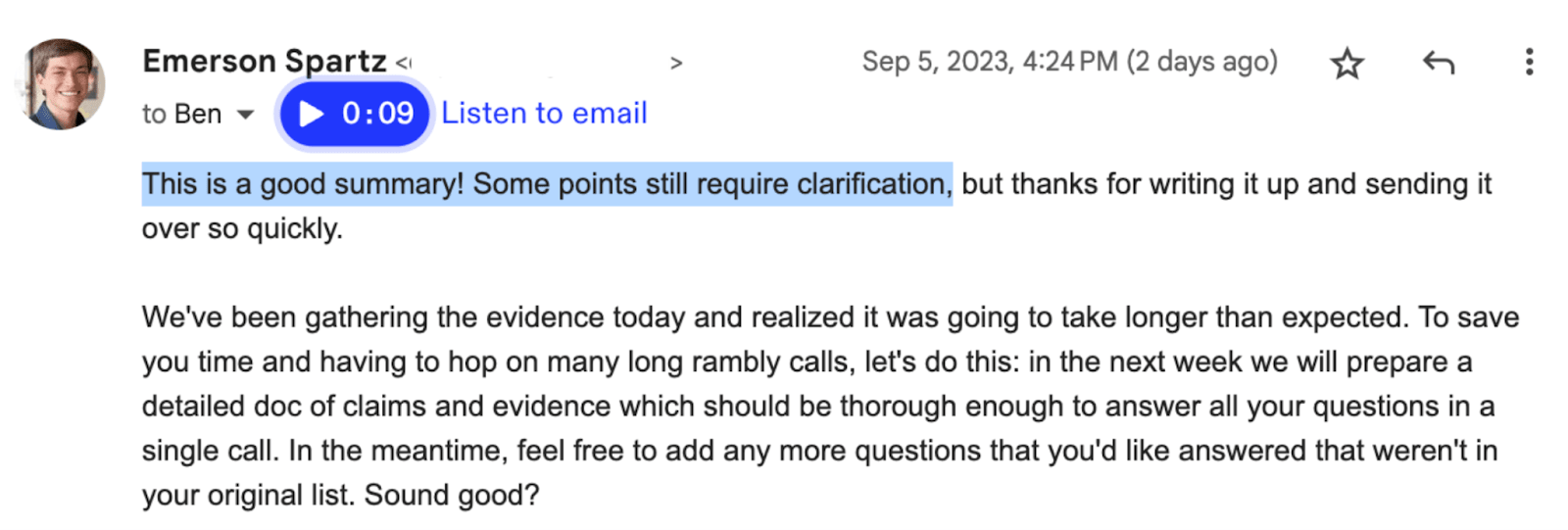
Given the agreement-votes on this comment at the time, other people seemed to agree with me that summarizing the above as just a "Good Summary" was a kind of understandable mistake to make, and that this email did not successfully convey that Emerson disagreed with the points in the summary as provided,

Overall, yeah, given the messiness of a situation like this, I still feel quite good about basically all the quotes that you highlighted. I have now read the whole appendix to this post, spending over 10 hours going through it, and I can't find any clear rebuttal to almost any of what I consider the core claims in Ben's post.
Again, I do think someone might point out some inferences together with evidence in the appendix that might make me think some of the information that we quoted from sources is inaccurate. Both memory is fallible, and I also totally think that both Chloe and Alice had strong feelings here that might have clouded their judgement and memory. But as it stands, having spent a lot of time, I overall genuinely expected Nonlinear to be able to present more counter-evidence than Nonlinear was actually capable of providing, and currently think that any aggregate statements Ben made about probabilities he assigns to various behaviors, and the epistemic statuses he attached to statements made by Alice and Chloe, to still be quite well-calibrated and to capture the situation quite well.
It has still been less than a week, and the appendix is really massive, so if someone has clear rebuttals of things Ben said in the post, especially things that are not quotes or paraphrasings of Alice, but things that Ben directly claimed were true or where he expressed his epistemic state, I would be very interested in that. I have found a bit, but overall not very much.
You say: "This is inaccurate. I don't think there is any evidence that Ben had access to that doesn't seem well-summarized by the two sections above. We had a direct report from Alice, which is accurately summarized in the first quote above, and an attempted rebuttal from Kat, which is accurately summarized in the second quote above. We did not have any screenshots or additional evidence that didn't make it into the post."
Actually, you are mistaken, Ben did have screenshots. I think you just didn't know that he had them. I can send you proof that he had them via DM if you like.
Regarding this: "As Kat has documented herself, she asked Alice to bring Schedule 2 drugs across borders without prescription (whether you need a prescription in the country you buy it is irrelevant, what matters is whether you have one in the country you arrive in), something that can have quite substantial legal consequences (I almost certainly would feel pretty uncomfortable asking my employee to bring prescription medications across borders without appropriate prescription)."
It sounds like you're saying this paragraph by Ben:
"Before she went on vacation, Kat requested that Alice bring a variety of illegal drugs across the border for her (some recreational, some for productivity). Alice argued that this would be dangerous for her personally, but Emerson and Kat reportedly argued that it is not dangerous at all and was “absolutely risk-free”
is an accurate characterization of this sentiment: she was asked to pick up ADHD medicine in a place where it was believed not to require a prescription, and bring it back to a place where it does require a prescription, but then was told not to worry about it when it was found that it does require a prescription where she was going to pick it up.
To me, the former does a really bad job of capturing the latter, sounding WAY worse ethically. But I'd be curious to know if others agree with me or if they think that Ben's paragraph captured this in a fair way.
On most of the other points I mentioned, it seems you feel that Ben made mistakes or ommisions, which I agree with:
"I currently feel a bit sad about the "daily" here, but would write roughly the same thing replacing it with "multiple times a week"."
"I do think it's currently sad that Ben's post didn't also mention Alice's company"
"Yeah, I think it was a bad move to not include the follow-up of "some points still require clarification""
On the taxi situation, I can't speak to what it is like to get taxis in all the areas they lived, though this is one of those things Ben could have checked rather easily by asking where they were that she couldn't get cabs and trying to book a cab (I don't believe he bothered to check, but correct me if I'm wrong). When I stayed with all of the involved parties for a few days: Alice, Chloe, Kat, Emerson, and Drew (which was not in Peurto Rico), I got taxis twice, and it was slightly annoying - I spent about 5-10 minutes explaining where exactly to meet me, but was able to successfully get taxis on both of those occasions. Of course, that was just in one place that they lived (I think they were in that location for a couple of weeks if I recall correctly), and it might have been harder in other places, but at least in that location, getting taxis was no more than a minor nuisance.
Update: since it's so easy to verify the claim about taxis, I just went ahead and checked it myself. My understanding is that Chloe was talking about Cabo Rojo, Puerto Rico. I used google maps to find and then call three taxi companies in that region. The first two didn't pick up. The third said to text them, which I did, and they gave me a quote for getting a taxi today to drive 40 minutes (which was $45). It took about 10 minutes of my time (and 20 minutes on the clock, since they took ~10 minutes to give me a quote).
I didn't realize this earlier, but in their evidence doc, Nonlinear talks about a similar check they did: "Lastly, it was not complicated to get a taxi there. I quickly checked, because sometimes we are in places that are truly remote. But there were three taxi services in the area that could have picked her up or driven her there. I called one of them and they said it would cost $30 and they could come pick me up whenever. And one of the other places where we were living at the time, she literally had to book a taxi for me out there, so I know she knew how and that it was possible.
There just wasn’t Uber there, so she’d have to make a phone call to a taxi."
I can't tell if you think Alice gave Ben basically accurate information and didn't leave out critically important details, or if you think she did leave out critically important details (or directly lied to Ben), but it didn't matter because Ben's post was justified regardless.
Actually, you are mistaken, Ben did have screenshots. I think you just didn't know that he had them. I can send you proof that he had them via DM if you like.
Sure! DMd you. I might also ping Ben, though want to mostly give him space and time to write a reply and not have to worry about stuff in the comments for now.
It sounds like you're saying this paragraph by Ben:
"Before she went on vacation, Kat requested that Alice bring a variety of illegal drugs across the border for her (some recreational, some for productivity). Alice argued that this would be dangerous for her personally, but Emerson and Kat reportedly argued that it is not dangerous at all and was “absolutely risk-free”
is an accurate characterization of this sentiment: she was asked to pick up ADHD medicine in a place where it was believed not to require a prescription, and bring it back to a place where it does require a prescription, but then was told not to worry about it when it was found that it does require a prescription where she was going to pick it up.
To me, the former does a really bad job of capturing the latter, sounding WAY worse ethically. But I'd be curious to know if others agree with me or if they think that Ben's paragraph captured this in a fair way.
On most of the other points I mentioned, it seems you feel that Ben made mistakes or ommisions, which I agree with:
No, that's not what I am saying. I am saying that that paragraph, combined with Kat's paragraph is a pretty reasonable summary of the evidence, and I think overall I think was pretty good at capturing the gist of the story (like, the two conflicting stories capture my present epistemic state still pretty well, which hasn't changed very much).
My current model is that Kat is understating the degree to which she was asking Alice to carry drugs across borders, and so your summary (which is basically just a summary of things Kat has said) is also not an accurate summary of my epistemic state.
My current epistemic state is something like "Kat did ask Alice to bring over substantial number of prescription drugs, and probably also some recreational drugs that were illegal to bring across the border. My guess is most of the requests of this type were made in voice. I think the pressure here was substantial enough that I would feel very uncomfortable doing this to an employee of mine, and where if I saw the whole interaction I would think it's a quite substantial flag, but also that no one did anything so egregious that this thing alone should cause any major repercussions for anyone involved".
Agree that my epistemic state on this point is also something close to this.
Summarized would be "something like asking her to bring the drugs probably happened, and if so was a mistake that I'd hope was learned from, but the major issue would be if she was pressured to do it, and I'm unsure if I trust the person reporting enough to decide either way without evidence."
[Edit: I know this is probably a frustrating thing for others to read, but seems worth saying anyway... since making the above comment I've had private information shared with me that makes me more confident NL didn't act in an abusive way regarding this particular issue.]
Sure! DMd you. I might also ping Ben, though want to mostly give him space and time to write a reply and not have to worry about stuff in the comments for now.
Ok, I pinged Spencer. He sent me screenshots of text messages he sent Ben that he sent ~2 hours before publication of the post (in the middle of the barrage of comms that Nonlinear was firing off at the time, which included the libel threats), and which Kat posted to the comment thread less than 48 hours after the messages were sent to Ben.
I stand by my summary that everything Ben knew at the time of writing the post, made it into the post. Of course if you send something 2 hours before the post is published, late at night, it's not going to make it into the post (but it might very well make it into a comment, which it did).
Ben made a bunch of other changes the day of publication. I know that because I pointed out errors in his post that day, and he was correcting them based on me pointing them out (e.g., all of his original quotes from glassdoor that he claimed were about Emerson were not actually about Emerson, which he didn't realize until I pointed it out, and then he rushed to find new quotes to correct it). I'm sure he had a lot on his mind at that time, so I don't think it's egregious that he didn't add mention of the fact that he had screen shot counter evidence about the "no food while sick stuff", but it clearly seems to me to be a mistake on his part to not adjust the post or at least acknowledge it in the post. And I know he received the screenshots because he acknowledged getting them. You're saying it made it into a comment as though Ben gets credit for that - but wasn't it Kat who posted that comment? He also chose to rush the post out that night despite knowing there was counter evidence. I was honestly shocked he was trying to rush the post out that night because of all the errors I was finding in his post, which I expressed to Ben that day.
Update: I only just saw this point you made, including here for context and because it helps answer what I said: "since publishing this post required coordinating with many (5-10) external sources and witnesses, with many of them having a strong preference for a concrete time for the post to be published and they can plan around, so they can get ready for any potential retaliation and fallout. "
Update 2: "Spencer and Nonlinear knew the claims we were planning to put into the post on this matter roughly a week in-advance." I'm not sure what you're basing this on, but this is not accurate. I saw the post on Sept 6 for the first time and Ben published it early morning of Sept 7. During that short gap I sought to help him correct some errors in the post, which he did.
Update 3: the post was indeed being edited in meaningful ways on Sept 6, I know because I was helping Ben identify mistakes he had made and he was making changes based on that (such as the glass door misattribution)
Update 2: "Spencer and Nonlinear knew the claims we were planning to put into the post on this matter roughly a week in-advance." I'm not sure what you're basing this on, but this is not accurate. I saw the post on Sept 6 for the first time and Ben published it early morning of Sept 7. During that short gap I sought to help him correct some errors in the post, which he did.
Sorry, I had assumed that Nonlinear had shared with you the document we shared with them before publication of the post. My Slack records indicate Ben had two calls with you in the week before publication, and my guess based on the feedback I see from you paraphrased and copied in the Slack, is that you were aware of the claims in the post.
I might be wrong here and the Slack records could just align in a kind of confusing way (I can't find the date of your first call with Ben, but am confident there was one more than 24 hours before publication), in which case I apologize.
Yes, Ben was making changes the day of the publication, I don't think I said otherwise?
I also think sending something 2 hours before publication is again different from that (like clearly we can at least agree that if you had sent it 15 minutes before the publication time that it would not have been reasonable to say that Ben had access to information during the writing of the post that didn't make it into the post?).
I really would not describe the post as being "rushed out". The post had been worked on for over 1000 hours. I also think you are overstating "all the errors you were pointing out". You pointed out two things which to me still seem relatively minor.
I think if Kat hadn't posted the screenshots in a comment, Ben would have left a comment or edited the post. We really tried pretty hard to include anything that was sent to us, and I think Ben managed to include a lot of information and epistemic nuance in the post, while still maintaining the basics of readability and clarity.
When we did a postmortem on it, somewhat over 1000 hours is how high the total staff cost seemed to us, and that was a few months ago.
I think it's totally plausible that in a few places I or someone else on the team used a lower number that they felt more confident in. In-general the structure of "over X" is something I usually use when I am not sure about X, but want to give a quick lower bound that allows me to move ahead with the argument, so it seems totally possible that in another context I would have said "multiple hundreds of hours" or "300+" hours or something like that, because that was enough to prove the point at hand.
Edit: Oh, I see the links now, didn't see them when I first wrote the comment.
I kept wanting to just share what I'd learned. I ended up spending about ~320 hours (two months of work), over the span of six calendar months, to get to a place where I was personally confident of the basic dynamics (even though I expect I have some of the details wrong), and that Alice and Chloe felt comfortable with my publishing.
I think the key difference with that quote and my number is that it just includes Ben's time, as opposed to total staff time. For example, it omits work done by anyone else on the team (which roughly doubles the total amount of time spent, spread across me, Robert and Ruby), as well as others who we've brought on board to help with the post (we worked with 2-3 external collaborators who ended up pairing with Ben for multiple weeks).
My guess is also Ben's number is a bit low for his own time spent on it, though I think we are now getting into definitions of what counts as "working on it". We don't have detailed time tracking, so this is a bit hard to operationalize, but my guess is if you added up all the staff time of Lightcone staff and external collaborators, and removed the project of writing the Nonlinear post, you would indeed end up with somewhat more than a thousand hours of additional free time across those people.
Thanks. I didn't mean my comment to come across as a "gotcha" question fwiw (not saying that you said it was a gotcha question, but I realized after I commented that it'd be a reasonable interpretation of my comment).
For what it's worth, I find it extremely plausible that a post like this both took an inordinately large amount of time, and that people will systematically underestimate how much it took before they started doing more accurate time-tracking.
It does seem very sad that the voting on this post seems a bit broken (it also seemed broken on the original Nonlinear post). Like, do people think I am lying about the amount of hours it took? I would be happy to provide the data that I have, or have someone else who is more independent to the Lightcone team provide an estimate. It seems very weird to downvote an answer to a straightforward question like that.
Hmm, well Ben said "(for me) a 100-200 hour investigation" in the first post, then said he spent "~320 hours" in the second. Maybe people thought you should've addressed that discrepancy?️ Edit: the alternative―some don't like your broader stance and are clicking disagree on everything. Speaking of which, I wonder if you updated based on Spencer's points?
Edit: Oh, I see the links now, didn't see them when I first wrote the comment.
Apologies, that was my fault. I wrote the comment and then I realized that I was demonstrating poor reasoning transparency, so then I hunted down the relevant links. My guess of chronology was that I had the hyperlinks added in after you started commenting, but before your reply was visible.
Sorry if that burned extra time on your end. :)
Ah, cool, I was really surprised when I saw the links on refresh, but they fit so naturally into the comment that I thought they clearly must have been there in the first place.
No worries, it cost me like 3 minutes.
if you send something 2 hours before the post is published, late at night, it's not going to make it into the post.
This would make sense to me if Ben had been working to an external deadline, but instead this is directly downstream from Ben's choice to allocate very little time to draft review and ensuring he had his facts right. It sounds like Spencer sent these text messages <24hr after being sent the draft; how quickly would he have needed to turn around his review to count?
To be clear, we were working to a substantial degree to an external deadline, since publishing this post required coordinating with many (5-10) external sources and witnesses, with many of them having a strong preference for a concrete time for the post to be published and they can plan around, so they can get ready for any potential retaliation and fallout.
There was wiggle room in that date and time, but by the time Spencer sent this, the post and publish-date was really quite locked in.
I think 24 hours before publication would have been enough to include them. Maybe even 12 hours. As I mentioned in other places, we did send Nonlinear (and Spencer) a list of the relevant claims in the final post, including this one, so I think the fact that the literal draft was only shared 24 hours in advance is irrelevant. Spencer and Nonlinear knew the claims we were planning to put into the post on this matter roughly a week in-advance.
For example, in the call that Nonlinear cancelled with us a day before publication, that would have been a pretty good time to share such evidence with us, and if they had given additional evidence then, it would have made it into the post.
But separately from that, I am not sure what you mean by "count". Spencer claimed that "we had screenshots that didn't make it into the post". I think a reasonable reader would infer from that when the post was being written, we had access to those screenshots. By the time Spencer sent these screenshots, the post was no longer being written in any meaningful way.
To be clear, we were working to a substantial degree to an external deadline, since publishing this post required coordinating with many (5-10) external sources and witnesses, with many of them having a strong preference for a concrete time for the post to be published and they can plan around, so they can get ready for any potential retaliation and fallout.
I don't really see how this is a defense. The fact that you have promised some third parties to do X does not justify you in doing X if X would otherwise not be morally acceptable. And publishing harmful statements about someone that you have good reason to think are false does not seem morally acceptable.
Yes, this does seem like deciding in advance what side you're on and who deserves consideration like determining when the post goes up.
It is a defense that in as much as I think anyone working on a post similar to this, mostly independently of skill level, would end up having to make promises to sources of this type, in order to be able to share concerning information publicly.
Of course, if you think posts of this whole reference class are bad, and it was bad for us to even attempt to make a post that tries to publicize the extensive rumors and concerns that we heard about Nonlinear, then I think it's not a defense.
But if you think people should attempt to spread that kind of information and share it with more parties, then I think this will somewhat inevitable come with constraints like having to keep publication deadlines and coordinating the many stakeholders involved in such a thing.
Like, what is the alternative that you propose we should have done instead? Not made any promises to our sources at all about doing things that protect them from retaliation and limiting the costs on them? I think in that case you don't get to talk to sources, or you only get to do it for a bit as people get burned and hurt and stop talking to you.
And publishing harmful statements about someone that you have good reason to think are false does not seem morally acceptable.
I am pretty sure Ben has published no harmful statements about someone that he thought were false. Indeed, as I have said many times, he seems to have been exceptionally careful with the epistemic states he attached to his statements in his post.
I'm well aware of the difficulties of balancing competing stakeholders giving you feedback late on posts and trying to hit publication timing targets. I think you had several valid options:
- Edit the section and publish on the original schedule.
I mean, to be clear, we did this the first time Nonlinear disputed the relevant section.
Alice quit being vegan while working there. She was sick with covid in a foreign country, with only the three Nonlinear cofounders around, but nobody in the house was willing to go out and get her vegan food, so she barely ate for 2 days. Alice eventually gave in and ate non-vegan food in the house. She also said that the Nonlinear cofounders marked her quitting veganism as a ‘win’, as they thad been arguing that she should not be vegan.
(Nonlinear disputes this, and says that they did go out and buy her some vegan burgers food and had some vegan food in the house. They agree that she quit being vegan at this time, and say it was because being vegan was unusually hard due to being in Puerto Rico. Alice disputes that she received any vegan burgers.)
I think this section is really quite clear. We have one report from Alice saying that she quit being vegan. We directly include, in the next paragraph, the fact that Nonlinear disputes this. I really don't think we misled anyone. The screenshots sent did not actually materially change anything in the paragraphs above, indeed both of the paragraphs are still fully accurate (and in as much as Alice claimed that she did not get food while indeed getting food, that is IMO an important part of the story that seems important for other people to be able to cross-check).
I think the choice of "you have some sources, you cite the sources while being really quite clear that you don't fully trust your sources, and when a thing gets directly disputed by another source you say that directly" is a reasonable thing to do. Again, as I've said an enormous number of times, we never had an intention of fully litigating all of these claims before publication, which would have been completely infeasible time-wise.
The alternative to Ben's post would have probably been a series of fully anonymous posts with extremely vague high-level accusations that would have been extremely hard to respond to. We tried to make the claims concrete and provide an interface to aggregate information at all.
Like, what kind of edit would you have preferred us to do instead of the above?
I think this section is really quite clear. We have one report from Alice saying that she quit being vegan. We directly include, in the next paragraph, the fact that Nonlinear disputes this. I really don't think we misled anyone.
I strongly disagree. Alice's and Nonlinear's perspectives are portrayed with very different implicit levels of confidence in those paragraphs. Alice's perspective is stated as a fact -- "nobody in the house was willing to go out and get her vegan food," not "Alice says nobody in the house was willing to go out and get her vegan food." In contrast, Nonlinear's perspective is shared as "[Nonlinear] says [x]."
I think most readers who trust Ben to be truthful would assume, from the way those paragraphs were worded, that Alice had much better evidence to support her claims, and that Nonlinear was doing some slightly deceitful reputational management by countering them. But that isn't what turned out to be the case:
So the original claim that was stated as fact ("nobody in the house was willing to go out and get her vegan food") seems very wrong. Which is sad, because it's a very serious accusation that most people would assume was not made lightly.
Yeah, sorry, I think I was too strong in my language above, though my sense is you are also interpreting my answer to be about a somewhat different question than the one I perceived Larks as asking. To clarify where I think we are on the same page: I am pretty unhappy about that section, and wouldn't ask Ben to write something different given what I believe today.
The thing I was responding to was whether we misrepresented the evidence that we did have at the time.
On that topic, I do think it was a mistake to omit as many of the "Alice/Chloe claims that X" in the post as we did, and fall back into a neutral third-party way of summarizing the claims, and given that we did, I think it makes sense to hold Ben and Lightcone more responsible for the veracity of statements that did not include an explicit "Alice/Chloe alleges X".
I also think that there is a pretty reasonable case to be made that we should have waited longer on getting more evidence from Nonlinear. I felt conflicted on this topic then, and feel conflicted now. I really hate that the situation we were in made it quite hard for us to wait longer for Nonlinear to respond to us. I am still not fully sure whether I would wait if I was in this situation again, since the considerations against waiting were also quite strong, though overall I am leaning slightly that waiting would have been the better option (I do not think this forgives or excuses Nonlinear's attempts at intimidation and threats of retaliation).
However, overall on the question of "did we accurately summarize the evidence available to us", I think Ben's post and this section is doing pretty well.
I agree that we frame Alice and Chloe's evidence as more trustworthy, and in-aggregate, across the whole post, I stand behind that framing, in that I think Alice and Chloe are substantially more reliable sources of evidence than Kat and Emerson. I agree that in this situation I think this went the wrong way around and it looks to me like the vegan food situation seems like it was represented to us in a substantially misleading way, and I am still hoping for me or Ben to follow up with Alice on this topic and figure out whether I am missing something. However, I think on-average the framing of the post was not misleading about the balance of evidence that we had received to that point (including accounting for expected future evidence Nonlinear that we expected Nonlinear might provide).
Some smaller nitpicks on your comment:
In contrast, Nonlinear's perspective is shared as "[Nonlinear] says [x]."
It's true that we don't share Nonlinear's perspective with the same authority as Alice and Chloe's. We did also include a summary directly written from their perspective, which I do think helps:
This seems also straightforwardly inaccurate, we brought her potatoes, vegan burgers, and had vegan food in the house. We had been advising her to 80/20 being a vegan and this probably also weighed on her decision.
Another quick comment:
It seems that Alice/Ben have no evidence to counter any of the points above.
I would give people some time before concluding that. While Ben (and I) are trying really hard to not be dragged into a full-on follow-up investigation of this, I do expect there will be some kind of response to this which includes procuring more evidence. I personally do feel pretty convinced on this point, but I am not updating on Alice or Ben not providing more evidence in coming to that conclusion, since they haven't responded to anything so far, and I do know that many of the claims in the OP and associated appendix are inaccurate, and those also haven't been responded to yet (it includes many claims about what Ben believes or what the process of writing Ben's original post was like, which I am very confident are inaccurate).
I stand behind that framing, in that I think Alice and Chloe are substantially more reliable sources of evidence than Kat and Emerson.
Given Chloe is not involved in this claim, do you also stand behind the framing that Alice is more reliable than Kat/Emerson?
I am substantially less confident in that claim, though yeah, I would still overall say I believe it (it's not super well-operationalized so not super clear what a probability would mean, but like, I guess I am at ~80% that if I knew all the facts and had arbitrary insight into Alice's, Kat's and Emersons' life that I would overall expect Alice to be reporting more accurately than Kat and Emerson)
I'm not sure if Spencer sent you all the screenshots or just some of them, but something along the lines of:
Alice quit being vegan while working there. She was sick with covid in a foreign country, with only the three Nonlinear cofounders around, who she alleges refused to go out and get her vegan food, so she barely ate for 2 days. Alice eventually gave in and ate non-vegan food in the house. She also said that the Nonlinear cofounders marked her quitting veganism as a ‘win’, as they
thad been arguing that she should not be vegan.(Nonlinear disputes this, and sent dated screenshots suggesting
and saysthat they did go out and buy her some vegan burgers food and had some vegan food in the house that they cooked for her. They agree that she quit being vegan at this time, and say it was because being vegan was unusually hard due to being in Puerto Rico. Alice disputes that she received any vegan burgers; we did not ask her to comment on the screenshots.)
The screenshot Ben received at the time is one of the ones that Kat linked in this comment:
Importantly the screenshot only covered events on December 15th.
Here is the relevant screenshot:

Kelsey Piper in the thread summarizes these screenshots (together with some other screenshots that Kat shared) as follows:
On December 15, Alice states that she'd had very little to eat all day, that she'd repeatedly tried and failed to find a way to order takeout to their location, and tries to ask that people go to Burger King and get her an Impossible Burger which in the linked screenshots they decline to do because they don't want to get fast food. She asks again about Burger King and is told it's inconvenient to get there. Instead, they go to a different restaurant and offer to get her something from the restaurant they went to. Alice looks at the menu online and sees that there are no vegan options. Drew confirms that 'they have some salads' but nothing else for her. She assures him that it's fine to not get her anything.
It seems completely reasonable that Alice remembers this as 'she was barely eating, and no one in the house was willing to go out and get her nonvegan foods' - after all, the end result of all of those message exchanges was no food being obtained for Alice and her requests for Burger King being repeatedly deflected with 'we are down to get anything that isn't fast food' and 'we are down to go anywhere within a 12 min drive' and 'our only criteria is decent vibe + not fast food', after which she fails to find a restaurant meeting those (I note, kind of restrictive if not in a highly dense area) criteria and they go somewhere without vegan options and don't get her anything to eat.
It also seems totally reasonable that no one at Nonlinear understood there was a problem. Alice's language throughout emphasizes how she'll be fine, it's no big deal, she's so grateful that they tried (even though they failed and she didn't get any food out of the 12/15 trip, if I understand correctly). I do not think that these exchanges depict the people at Nonlinear as being cruel, insane, or unusual as people. But it doesn't seem to me that Alice is lying to have experienced this as 'she had covid, was barely eating, told people she was barely eating, and they declined to pick up Burger King for her because they didn't want to go to a fast food restaurant, and instead gave her very limiting criteria and went somewhere that didn't have any options she could eat'.
My guess is this aligned with Ben's interpretation at the time. The screenshots were relevant evidence, but they did not directly disprove anything in the original article.
Kat then shared further screenshots in the comments, which importantly were not shared with Ben beforehand (unless Spencer failed to forward them to me in my DM with him yesterday), that demonstrated that on the next day Kat did successfully bring her food.
However, the story, in the above screenshot, on December 15th, is that indeed Alice did not get food, despite her requesting it. The screenshots that Spencer sent us appear to fail to include the most relevant part of the conversation, which is that they did indeed fail to get her vegan food that day during that trip.
(Edit: Kat disputes this below, sharing some additional screenshots that seem to show that Kat did get food for Alice later that day, which seems important to get right. Though I don't think Spencer's screenshot demonstrated this).
Here are the edits I currently agree would have been better, though I think they are minor enough that I don't currently see it as a major error to not have included them:
Nonlinear disputes this, and sent dated screenshots that document part of the relevant conversation. In those screenshots we can see that on December 15th Alice did indeed request vegan food from multiple restaurants, but her and Drew ran into difficulties finding vegan food that was available in the area, and it seems like Nonlinear ultimate did indeed decline to stop by a different restaurant for Alice to get her vegan food, though the details are not fully clear. They agree that she quit being vegan at this time, and say it was because being vegan was unusually hard due to being in Puerto Rico. Alice disputes that she received any vegan burgers; we did not ask her to comment on the screenshots.)
I really encourage you to look at the screenshots, Kelsey's summary, and Kat's original comment on the Nonlinear post and explain to me how these screenshots falsify part of the post. As we later received more screenshots, it seems like we actually received confirmation that the conversation on that date did indeed not result in Alice getting food.
(Edit: Kat shares some additional screenshots below that do seem to show Alice got food on the 15th, though not from the restaurant trip that was talked about in the screenshot Spencer sent us)
I'm a little bit confused about Kelsey's summary - it contains a line about rejecting burgers because they were 'fast food' that doesn't seem to be in the original. So I don't think it can reflect Ben's state of mind in that way.
If you only had the one screenshot (9:53 to 10:28 timestamps), I agree that you can't infer that Kat cooked for 'Alice', nor is there proof that the discussed burger trip actually took place, though I think they strongly imply it will - certainly Alice seems to think it has been agreed and will occur. However, I find your comment about 15th vs 16th unconvincing because 'Alice' explicitly claims a 2 day duration, so food the next day would also contradict this (assuming the 15th is the first day).
Here is another possible version that reflects just the one screenshot:
Alice quit being vegan while working there. She was sick with covid in a foreign country, with only the three Nonlinear cofounders around, who she alleges refused to go out and get her vegan food, so she barely ate for 2 days. Alice eventually gave in and ate non-vegan food in the house. She also said that the Nonlinear cofounders marked her quitting veganism as a ‘win’, as they
thad been arguing that she should not be vegan.(Nonlinear disputes this, and sent dated screenshots showing a conversation Kat had with 'Alice' about two different restaurants they could go to, as well as the vegan food they had in the house, which seems to end with an agreement to go to get (vegan) burgers. They further claim (though the screenshots do not prove this)
and saysthat they did go out and buy her some vegan burgers food and had some vegan food in the house. They agree that she quit being vegan at this time, and say it was because being vegan was unusually hard due to being in Puerto Rico. Alice disputes that she received any vegan burgers; we did not ask her to comment on the screenshots.)
I think my key objections to the original version is asserts as fact that Nonlinear refused to get her food, vs this being an unverified claim, and that it does not reflect that NonLinear didn't merely dispute it, they offered evidence.
If you only had the one screenshot (9:53 to 10:28 timestamps), I agree that you can't infer that Kat cooked for 'Alice', nor is there proof that the discussed burger trip actually took place, though I think they strongly imply it will
Just to be clear, that burger trip did indeed not happen that day, if I understand it correctly. What instead happened is that Kat went out a few hours later and got Alice mashed potatoes at a store (which is not really hinted at at all in the screenshots).
Yeah, I think this version is reasonable and I would have preferred to post this version (and somewhat think that we should have updated it ASAP, even after publication).
on December 15th, is that indeed Alice did not get food,
This is false. Alice got food on December 15th. She got food 2.5 hours after she asked. Actually, she never asked me, I just offered when it seemed like she was struggling.
It says December 16 at 12:14am because I was in Europe at the time, so it's showing the European time zone. It was Dec 15 at 7:13pm in the local time when this occurred.
She brought up being hungry at 4:53pm. I immediately offered to cook her the food in the house. When she didn't want any of the food in the house or food from any non-fast food restaurant within a 12 minute drive of home, I went out, while sick myself, and got and cooked her food. The only vegan food that fit her criteria in the store.
The only complaint she can legitimately say is that we did not get her Panda Express as fast as she would have liked (we got it for her the next day). She waited 2.5 hours for food. And she could have had it sooner if she'd wanted any of the food in the house, which she usually ate nearly daily and enjoyed. She just didn't want that food. She wanted fast food and didn't get it as fast as she preferred.
I'm currently back on the same time zone, so here's the same screenshot, but showing the right time zone dates and times
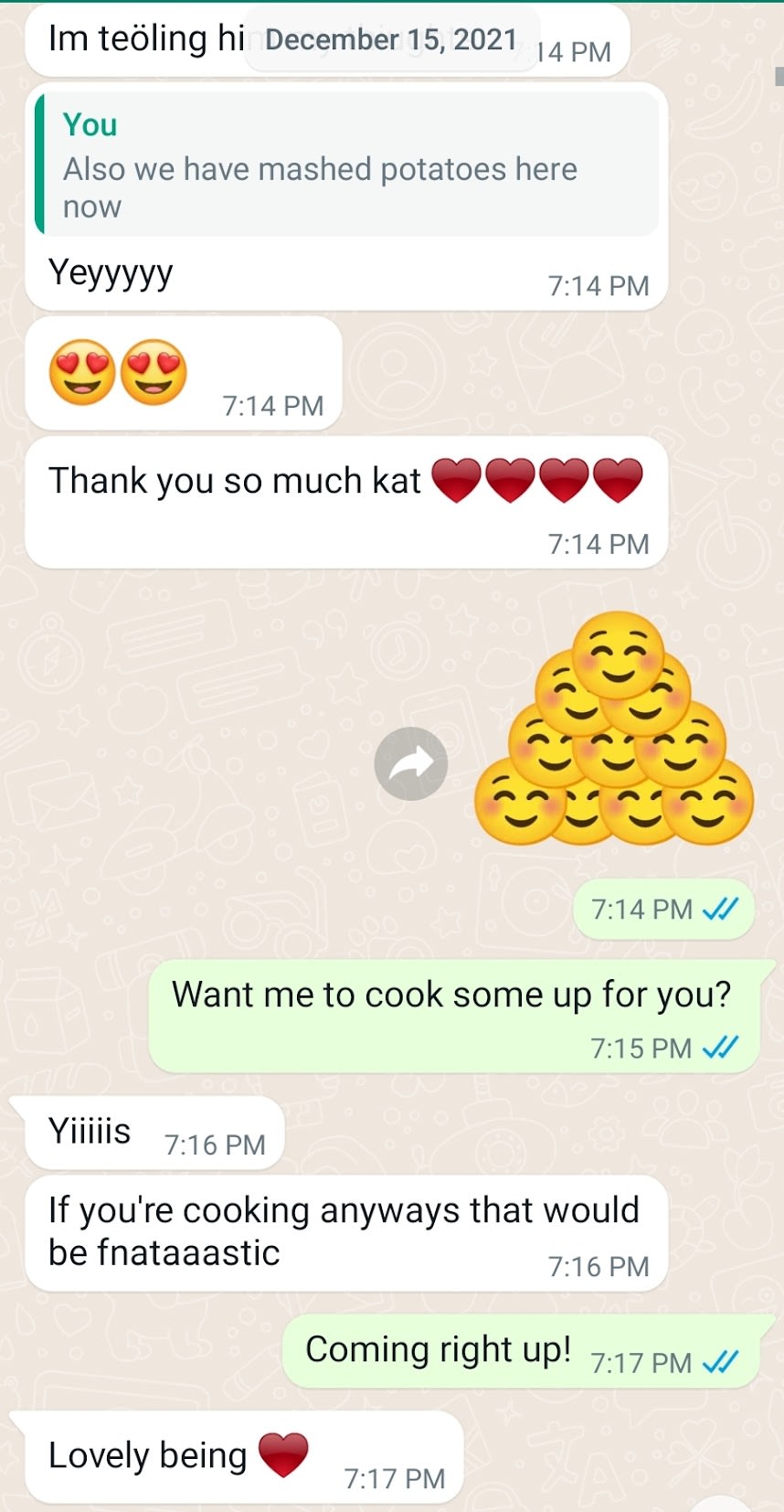
Thank you! This definitely seems like highly relevant evidence.
Can you clarify whether Kelsey's summary of the December 15th conversation is accurate or inaccurate? It's totally possible that I am misreading the screenshots, though my best interpretation was indeed the interpretation that Kelsey made in the screenshots.
I would be happy to correct the statement above if I am wrong here.
I do think this issue seems somewhat separate from the question of "did the screenshots that were shared with us materially affect the things Ben wrote?".
To be clear, this is relevant in as much as the original screenshot was evidence of there being more things you could share here, though I currently maintain that I don't think the screenshots that were shared with us showed any material error (given that Kelsey also walked away with the same impression of them being consistent).
I also totally care about just setting the record straight and getting the object-level issue right here, and in as much as there isn't anything very weird going on with the screenshots you sent, I think you provided pretty decent proof here and am changing my mind on the December 15th issue (and think if you had shared those screenshots with us instead, I think it's pretty likely Ben would have somehow made sure that they made it into the post).
Kelsey's summary was wrong in a number of important ways.
As for what Ben knew before publishing, if you look at that screenshot, you can see that:
Ben said in his post that "nobody in the house was willing to go out and get her vegan food". This is absolutely false. Ben had seen this screenshot clearly showing that we were willing to go out and get her food.
Note that she didn't even ask for food. I just offered because I could see she was in need ("want me to order food?")
It also said "so she barely ate for 2 days". It shows in the messages that there was vegan food in the house. So that was clearly not the reason she didn't eat for days.
She had plenty of options but she wanted fast food in particular.
We got her her first choice of fast food the very next day (remember, she only started asking for food in the evening the previous day. It was also hard to get stuff for her. This was our first experience with covid and we were trying to figure out how to manage it, try to have it not spread, etc etc. It was quite a stressful and overwhelming time.).
Because she didn't get a very particular fast food as fast as she wanted, she interpreted this as us being heartless people who wouldn't take care of a sick person in need. She told Ben a false and misleading story about us not being willing to go out and get food for her.
As we later received more screenshots, it seems like we actually received definitive confirmation that the conversation on that date did indeed not result in Alice getting food.
I'm waiting for Ben, or someone else, to make a table of claims, counter claims, and what the evidence shows. Because nonlinear providing evidence that doesn't support their claims seems to be a common occurance. Just to give a new example, Kat screenshots herself replying "mediating! Appreciate people not talking to loud on the way back [...] " here, to provide evidence supporting that there was not a substantial discussion that occurred. However, I can only interpret the use of "mediating!" to indicate that there was in-fact a substantial amount of discussion at play.
Edit: Retracted as correctly pointed out by @Sean_o_h , I read meditation as mediation.
Uh, the word in that screenshot is "meditating". She was asking people to not talk too loudly while she was meditating.
That is correct.
Oh thanks for flagging, I will retract it now
Ben's choice to allocate very little time to draft review and ensuring he had his facts right
Can you clarify what you mean by “very little time”? Haybrka reports spending 1000+ staff hours, and even Ben’s much more conservative estimate of 100-200 hours doesn’t feel fair to me to describe as “very little”
Sorry, I'm trying to talk about the amount of time for 'adversarial' fact checking: when Nonlinear knew the accusations and could provide specific counter evidence. I agree he put a ton of time into the project overall.
Just a note that standard practice on these kinds of jobs is that you get a credit card to make purchases with, and are never using your own money that is later reimbursed.
A big reason for this is the massive mismatch in what money is worth. Employers might think covering a $100 grocery trip until you get reimbursed is not a big deal, but to an employee that might have been their own food money or rent.
The standard answer is you either let your employee borrow your credit card, or you give them their own credit card. You can put a lower limit on it to protect yourself, and can also see the credit card statement (which can be paired with receipts if you don't trust them not to add on extras. I was always careful that my families get all the receipts but they generally just threw them away because they trusted me)
I've been thinking about whether there is some kind of informal court or arbitration system that would allow the social pressure here to be less driven by people trying to individually enact social enforcement
My model has been there should be social enforcement for both poor epistemic practices and rude/unkind communication.
I have been an active commenter in both posts, with a goal of social pressure in mind (i.e. providing accountability and a social pressure to not behave inappropriately towards/with your employees).
I'd be interested to hear meta level criticisms of my approach (e.g. "social pressure is inherently bad"). Because, whilst I don't want witch hunting that employs poor epistemic practices, I do think social pressure plays an important role in stabilising communities. Perhaps someone can change my mind on this? If you do change my mind, I'll certainly comment a lot less.
To me it seems like everyone individually applying social pressure is hard to calibrate. Oli seems to be saying that he and Ben did not intend the level of social consequences NL has felt based on what they shared, but rather an update that NL shoudn’t be a trusted EA org. I think that it’s hard to control the impression that people will get when you provide a lot of evidence even if it’s all relatively minor, and almost impossible to control snowballing dynamics in comment sections and on social media when people fear being judged for the wrong reaction, so it just might not be possible for a post like Ben’s to received in a calibrated way.
This sounds right, but the counterfactual (no social accountability) seems worse to me, so I am operating on the assumption it's a necessary evil.
I live high trust country, which has very little of this social accountability, i.e. if someone does something potentially rude or unacceptable in public, they are given the benefit of the doubt. However, I expect this works because others are employed, full time, to hold people accountable. I.e. police officers, ticket inspectors, traffic wardens. I don't think we have this in the wider Effective Altruism community right now.
I think this comment will be frustrating for you and is not high quality. Feel free to disagree, I'm including it because I think it's possible many people (or at least some?) will feel wary of this post early on and it might not be clear why. In my opinion, including a photo section was surprising and came across as near completely misunderstanding the nature of Ben's post. It is going to make it a bit hard to read any further with even consideration (edit: for me personally, but I'll just take a break and come back or something). Basically, without any claim on what happened, I don't think anyone suspects "isolated or poor environment" to mean, "absence of group photos in which [claimed] isolated person is at a really pretty pool or beach doing pool yoga." And if someone is psychologically distressed, whether you believe this to be a misunderstanding or maliciously exaggerated, it feels like a really icky move to start posting pictures that add no substance, even with faces blurred, with the caption "s'mores", etc.
In my opinion, including a photo section was surprising and came across as near completely misunderstanding the nature of Ben's post. It is going to make it a bit hard to read any further with even consideration
In addition to the overall tone of this post being generally unprofessional.
Yeah, I don't necessarily mind an informal tone. But the reality is, I read [edit: a bit of] the appendix doc and I'm thinking, "I would really not want to be managed by this team and would be very stressed if my friends were being managed by them. For an organisation, this is really dysfunctional." And not in an, "understandably risky experiment gone wrong" kind of way, which some people are thinking about this as, but in a, "systematically questionable judgement as a manager" way. Although there may be good spin-off convos around, "how risky orgs should be" and stuff. And maybe the point of this post isn't to say, "nonlinear did a reasonably sufficient job managing employees and can expect to do so in the future" but rather, "I feel slandered and lied about and I want to share my perspective."
I can see where you're coming from. The photos on their own certainly don't prove they weren't isolated. However, it does provide evidence on top of the extensive other evidence (e.g. living/working apart from us 50% of the time, Chloe's exit interview saying how much she loved meeting so many people, us being in EA hubs a large fraction of the time, screenshots of them hanging out with others in different countries, etc etc).
As for showcasing how they were not poor, the main part of their compensation was room and board and travel, and I think the photos provide some evidence that they were not poor. Of course, we also share a lot of other information proving this.
But you see how they provide approximately no additional evidence, right? Because photos provide no account for how long someone was away or not away, etc. Basically, in both Alice/Chloe's world and your world, these photos can exist. One of them is just Alice sitting on a beach chair? And to the second point, I don't believe the claim was that the environment was materially poor (please tell me if I'm wrong).
The first set of photos is to provide some (but certainly not conclusive) evidence that they were not poor or isolated.
The second set of photos is in the section as some evidence that this job would have been a dream job for many people. And I think working on a tropical beach with a dog would be the dream for many.
Since Frances is not commenting more:
This rhetorical strategy is analogous to a prosecutor showing smiling photos of a couple on vacation to argue that he couldn’t have possibly murdered her, or showing flirty texts between a man and woman to argue that he couldn’t have raped her, etc. This is a bad rhetorical strategy when prosecutors use it—and it’s a bad rhetorical strategy here—because it perpetuates misinformation about what abusive relationships look like; namely, that they are uniformly bad, with no happy moments or mitigating qualities.
As anyone who has been in an abusive relationship will tell you, this is rarely what abuse looks like. And you insinuating that Chloe and Alice are lying because there were happy-appearing moments is exactly the kind of thing that makes many victims afraid to come forward.
To be clear: I do not think these photos provide any evidence against the allegations in Ben’s post because no one is contesting that the group hung out in tropical locations. Additionally, having hung out in tropical locations is entirely compatible with the allegations made in the initial post. Ironically, this rhetorical strategy—the photos, the assertion that this was a “dream job”—strikes me as eerily similar to the job ad linked in Ben’s original post (https://web.archive.org/web/20211022160447/https://www.nonlinear.org/operations.html). Probably this did seem like a dream job, which is presumably why Chloe and Alice accepted it. And what’s at issue now is their claim that it wasn’t, a point that these photos do nothing to refute.
a prosecutor showing smiling photos of a couple on vacation to argue that he couldn’t have possibly murdered her
I think you meant a defense attorney, not a prosecutor.
We are not using the photos to disprove all allegations made against us. We shared them to provide some (but not all) evidence that they were a) not poor and b) not isolated.
They provide some evidence that they were not poor. The bulk of their compensation was room and board, and we show photos of them living in luxurious conditions. It's less strong evidence that they weren't isolated, but it is some evidence.
We also proceed to provide hundreds of pages of evidence showing that this was not a one-off thing, but the default.
I'd like to reiterate that I am disappointed that we've provided hundreds of pages of evidence that they lied to you and misled you and have shown no remorse or attempts to improve their behavior, but people are focusing on how they don't like our tone or our pictures.
I think you cannot and should not expect people to read hundreds of pages about this, as you acknowledge. And I am not going to. The reason I reacted to the photos is just that this is not the kind of evidence an actor acting in good faith typically invokes because: 1) their arguments should speak for themselves, such that this kind of vibes-based attack is rendered unnecessary and 2) this kind of evidence is typically used to wrongly and unfairly undermine an accuser’s credibility. In short, this isn’t an issue of “disliking your tone or pictures,” because the pictures (irrelevant, wrongly biasing) and tone (retaliatory, unapologetic) provide important information about the kind of organization nonlinear is, and what it was like to work there, which is a central part of what is at issue.
I think I'm confused by the claim that the written evidence without the picture evidence would be better than the written + pictures.
To me the photos are only manipulative if they are on their own.
If someone chooses not to read the evidence and only focus on the pictures, then feels manipulated by that...
I don't really know what to say to that. I am confused by how this is in any way NL's fault, and why it should imply that less evidence overall would be better.
I think that if we were all completely rational, you’d be right. But we’re not, and I think the photos were included in an attempt to exploit that fact.
If the post just argued “there were s’mores and iguanas; Chloe and Alice must be lying about how bad their experience was!” my brain would go “that argument sucks; obviously people can be unhappy in a land of iguanas.” But the photos hijack my reasoning by conjuring a vivid image of a tropical paradise (brain: “hm, this looks pretty nice! It’s cold here and I wish I was there right now! Maybe this was an awesome job.”)
The reason this is bad is because the photos don’t tell us anything relevant that we didn’t already know; we knew they were hanging out in tropical places and the presence of s’mores has zero bearing on the veracity of Chloe and Alice’s claims. No one ever disputed whether there were s’mores and there having been s’mores is entirely compatible with this job having been a nightmare. The pictures just undermine my ability to immediately recognize that fact.
While I disagree that the photos are hijacking "our" irrationality, I could be persuaded that the photos are harmful toward some people's, maybe even most people's, general epistemics around issues like this. But the solution to that seems to me to be people working on improving how their epistemics work, not asking for less evidence to avoid becoming confused?
To me the photos are evidence of a particular, specific set of things. Whether anyone "disputed" those things is irrelevant to me; I have more information than I did without them, and also the photos prevent people from disputing those specific things going forward, or just insinuating or implying otherwise.
(Which, for the record, I think are somewhat entangled in the overall accusations being made and the emotional vibe I picked up from people's reactions to Ben's post)
Those specific things are absolutely not exclusive with "this was a nightmare job with abusive people." I agree that's a separate thing that can totally co-exist with the job being in other ways a "dream job that many people would enjoy for the experiences it provides."
If the photos undermines some people's ability to recognize that it might have also been a nightmare in addition to that reality... again, I'm open to that being an outcome most people will experience, but I don't think the answer is for NL to provide less evidence overall.
It's certainly not how I want to be treated when I'm trying to get a clearer picture of a complex situation.
This is just a weird way to think about evidence, imo. I think the original post would’ve been more useful and persuasive (and generated better discourse) if it had been 1/5th as long. Throwing evidence—even high-quality evidence—at people does not always make them reason better, and often makes them reason worse. (I also don’t think it works here to say “just have better epistemics!” because (a) one important sense in which we’re all boundedly rational is that our ability to process information well decreases as the volume of information increases and (b) a writer acting in good faith—who wants you to reach the right conclusions—should account for this in how they present information.)
Critically, as previously stated, I think the photos constitute particularly poor evidence—they have a very low “provides useful information:how likely are they to sway people in ways that are irrational” ratio. This is why my comment wasn’t just “shorten your post so people can understand it better,” but rather “I think these photos will lead to vibes-based reasoning.” (This is also why prosecutors etc etc use this kind of evidence; it’s meant to make the jury think “aw they look so happy together! He couldn’t have possibly done that,” when in reality, the photo of the smiling couple on vacation has ~0 bearing on whether he murdered her.)
I agree in principle with the things you're saying here. I disagree with these particulars because I disagree that the photos are poor evidence of anything relevant. The only issue at play here is NOT whether NL was abusive, or else I would agree with you.
To be more specific, the photos provide evidence of a unique kind for things like "was this job the kind of job that it's reasonable to sell as ~$75k in compensation."
Again, this can be true in addition to it ending up being an abusive environment. But when the discourse around this topic also includes things like "Jobs like this are just fundamentally bad and wrong and predatory etc, and we shouldn't trust adults to be agentic enough to agree to them and not quit if they dislike them, etc"...
Or when people have takeaways from Alice and Chloe's assertions that they were were treated basically like Cinderella while the NL leadership got to enjoy the tropical paradise themselves...
I think more evidence is better, yeah. NL is not just trying to counter some claims in some platonic ideal realm of simple facts, they're fighting a number of narrative battles here, many of them vibes based.
I get that you're saying this particular move backfired on that level for you, and I'm open to the idea that it was a "strategic" mistake.
But my take is that we are all imperfect reasoners whose epistemics have flaws in them and also that we can improve them, and I have yet to be in a situation where I feel like less information would have been better for me than more so long as that information is relevant, which may in fact be our main crux of disagreement here.
I'm disappointed that much of this document involves attacking the people who've accused you of harmful actions, in place of a focus on disputing the evidence they provided (I appreciate that you also do the latter). I also really bounce off the distraction tactics at play here, where you encourage the reader to turn their attention back to the world's problems. It doesn't seem like you've reflected carefully and calmly about this situation; I don't see many places where you admit to making mistakes and it doesn't seem like you're willing to take ownership of this situation at all.
I don't have time to engage with all the evidence here, but even if I came away convinced that all of the original claims provided by Ben weren't backed up, I still feel really uneasy about Nonlinear; uneasy about your work culture, uneasy about how you communicate and argue, and alarmed at how forcefully you attack people who criticise you.
I'm disappointed that much of this document involves attacking the people who've accused you of harmful actions, in place of a focus on disputing the evidence they provided
The vast majority of what they gave is disputing the evidence. There is a whole 135 pages of basically nothing but that. You then even refer to it saying:
I don't have time to engage with all the evidence here
How can both these be true at once? Either it's a lot so you don't have time to go through it all or they haven't done much in which case you should be able to spend some time looking at it?
I think it's not actually accurate to say that
The vast majority of what they gave is disputing the evidence
as it's constantly interspersed with stuff like how great it is to work in a hot tub.
I don't think I, as a reader, am obliged to review all the evidence here and adjudicate with full information. You certainly shouldn't read my comment as me implying I've done that.
This post struck me as unpleasant and off the mark in the ways I describe it, and I think it's okay for me to just say that.
I want to push back on this framing, and I think it shows a lack of empathy with the position Nonlinear have been put in. (Though I do agree with your dislike of many of the stylistic choices made in this post)
This post is 15K words, and does a mix of attacking the credibility of Ben, Alice and Chloe and disputing the claims with evidence. The linked doc is 58K words, and seems predominantly about collecting an exhaustive array of evidence. Nonlinear have clearly put in a *lot* of work to the linked doc, and try hard to dispute the evidence. So it seems to me that your complaint is really about what aspects Nonlinear chose to make prominent in this post, which in my opinion is a strategic question about how to write a good post, plus some emotional baggage from Nonlinear feeling aggrieved about this whole thing.
From Nonlinear's perspective (not necessarily mine, to be clear), they have two disgruntled ex-employees who had a bad time, told a bunch of lies about them, and got an incredibly popular and widely read EA Forum post about it. This has destroyed their reputation in EA, and been catastrophic to the org, in a way that they consider ill-deserved. They want to write a post to clear their name. They were very emotionally hurt by this, and extremely reasonably! "Alice, Ben, and Chloe hurt me (Kat) so much I couldn’t sleep, I couldn’t eat, and I cried more than any other time in my life. My hands were shaking so badly I couldn’t type responses to comments."
Zooming out a bit, it seems like we could live in three worlds:
A) Nonlinear did terrible things and were abusive towards Alice and Chloe. Ben's post was basically true
B) Nonlinear fucked up a fair bit, Ben's post was sketchy in various ways, no parties look great
C) Nonlinear acted pretty reasonably/understandably throughout, Ben's post was full of false accusations
Nonlinear seem to be arguing we're in a mix of B and C, and mostly C (their reflections section seems to be buried [here](https://docs.google.com/document/d/1P4iLZPrQt-dxl9njvz1EvnB8qOBt11DVmtn8PHwFyPw/edit#heading=h.orqsey1n2itd)). I think that if we live in world C (and to a lesser degree B) then attacking the credibility of your critics is pretty reasonable?
If we live in world C then Ben's post was a gish gallop of many terrible sounding and hard to refute allegations, which gives super bad vibes, and even if they can address 90% of them, people will still care about the final 10%, *and* likely still have the bad vibes of first reading Ben's post and initially making up their mind's against Nonlinear. Plus, idk, most people won't read exhaustive evidence (I expect few readers of this post are reading the long attached doc!) Attacking the credibility of your attackers seems one of the few ways of getting out of that. I further think that, if the list of false allegations Nonlinear gives are truly false, Alice and Chloe really aren't that credible, made some extremely serious and false allegations, and their overall credibility is a really important part of evaluating this story! And justifies a pretty forceful attack on them.
If we live in world C then "I don't see many places where you admit to making mistakes and it doesn't seem like you're willing to take ownership of this situation at all." doesn't really make sense.
Of course, if we live in world A, then Nonlinear are getting rightfully criticised and are fighting dirty against whistleblowers. And their 58K word doc is a gish gallop of their own. It's a complex situation! But I can totally see where they're coming from.
(CoI: Kat is a friend of mine, and I received money in the past from Nonlinear's productivity fund, but no one asked me to write this. I made an alt for this because, given the level of NonLinear hate going around, I feel vaguely uncomfortable about being seen publicly defending them)
We tried to keep it to explaining how their claims were false or misleading, plus including an alternative hypothesis to explain what's going on. We have a section where we explain the things we're doing differently in the future.
We only tried to remind people about the bigger problems after we'd established that they'd told dozens of falsehoods and misleading claims about us.
I am disappointed that we've provided hundreds of pages of evidence that they lied to you and misled you and have shown no remorse or attempts to improve their behavior, but people are focusing on how we need to apologize for things we didn't do and improve on things we didn't do wrong.
I can see where Ollie's coming from, frankly. You keep referring to these hundreds of pages of evidence, but it seems very likely you would have been better off just posting a few screenshots of the text messages that contradict some of the most egregious claims months ago. The hypothesising about "what went wrong", the photos, the retaliation section, the guilt-tripping about focusing on this, etc. - these all undermine the discussion about the actual facts by (1) diluting the relevant evidence and (2) making this entire post bizarre and unsettling.
I think you forgot to mention that you also accused the person criticising you of being personally abusive in the post
I have a section called "a story with no villains" and I explain again and again that I don't think Alice or Chloe are bad people. I think it's most likely that they are mentally unwell and deserving of compassion. Ben literally calls me a predator out to get the youth.
Yeah and you called him a predator/abuser in response no? And this was, depending on which part of the post/comments you read, confirmed by multiple people/unfair/definitely true/very bad/not bad
Whatever people think about this particular reply by Nonlinear, I hope it's clear to most EAs that Ben Pace could have done a much better job fact-checking his allegations against Nonlinear, and in getting their side of the story.
In my comment on Ben Pace's original post 3 months ago, I argued that EAs & Rationalists are not typically trained as investigative journalists, and we should be very careful when we try to do investigative journalism -- an epistemically and ethically very complex and challenging profession, which typically requires years of training and experience -- including many experiences of getting taken in by individuals and allegations that seemed credible at first, but that proved, on further investigation, to have been false, exaggerated, incoherent, and/or vengeful.
EAs pride ourselves on our skepticism and our epistemic standards when we're identifying large-scope, neglected, tractable causes areas to support, and when we're evaluating different policies and interventions to promote sentient well-being. But those EA skills overlap very little with the kinds of investigative journalism skills required to figure out who's really telling the truth, in contexts involving disgruntled ex-employees versus their former managers and colleagues.
EA epistemics are well suited to the domains of science and policy. We're often not as savvy when it comes to interpersonal relationships and human psychology -- which is the relevant domain here.
In my opinion, Mr. Pace did a rather poor job of playing the investigative journalism role, insofar as most of the facts and claims and perspectives posted by Kat Woods here were not even included or addressed by Ben Pace.
I think in the future, EAs making serious allegations about particular individuals or organizations should be held to a pretty high standard of doing their due diligence, fact-checking their claims with all relevant parties, showing patience and maturity before publishing their investigations, and expecting that they will be held accountable for any serious errors and omissions that they make.
One area where Ben didn't follow investigative journalism "best practices" (that I had missed early on, but saw mentioned in Kat's post, and went back and checked) was that he financially compensated his sources ($5,000 each, or $10,000 total). This is frowned upon pretty heavily in investigative journalism (see e.g., https://en.wikipedia.org/wiki/Chequebook_journalism). I don't have any reason to believe this meaningfully distorted the outcomes here (for instance, if the sources had no indication right until the end that Ben would compensate them financially, it is unlikely to have influenced their behavior) but it is a clear departure from an existing norm in the investigative journalism field. I appreciate that Ben disclosed this information; disclosure does address some but not all of the concerns around compensating sources.
I don't rule out the possibility that the investigative journalism norm against paying sources is flawed, or it doesn't apply in this case, or that a different set of norms should be applied.
Hmm, this seems like a pretty weak norm. In-particular the Wikipedia article you link says:
In Britain and throughout Europe, journalists paying for news is fairly common.
And I don't have a sense that European investigative journalism is worse than U.S. investigative journalism.
Separately, whistleblower prices are quite common in the U.S. as well, for example: https://www.sec.gov/whistleblower
The Commission is authorized by Congress to provide monetary awards to eligible individuals who come forward with high-quality original information that leads to a Commission enforcement action in which over $1,000,000 in sanctions is ordered. The range for awards is between 10% and 30% of the money collected.
The linked Wikipedia article also has many quotes saying that really the central problem here is disclosure:
The key issue is disclosure. If you pay for it, say so, so the viewer can draw whatever inferences are appropriate about the veracity of what the paid source is saying.
– Jerry Nachman,former vice president of MSNBC news[27]
Habryka - Note that when the Securities & Exchange Commission (SEC) offers substantial whistleblower bounties, they do not simply take the whistleblowers' word for it and start arresting people. They apply huge teams of auditors, lawyers, investigators, and federal agents to see if the whistleblower allegations are good enough to warrant legal action. If in doubt, they might convene a grand jury to see if the evidence is strong enough to take to trial. And they know from bitter experience that if they simply offered bounties to anybody who makes allegations, they would be deluged with false accusations.
Likewise with journalists. Yes, they offer payments in some cases for whistleblowers. But good journalists fact-check, with the expectation that many 'whistleblowers' will turn out to be bad actors with dubious agendas.
If we incentivize accusations, we'll get a lot of false accusations. There has to be some good-faith effort to check if they are actually true.
Yep, I agree that it's ideal for the prizes to be paid out conditional on them passing fact-checking or leading to a conviction. I think that was hard for various reasons in this case, but it seems clearly better for incentives.
I do think there was quite substantial good-faith effort of fact-checking involved. It might still be the case that it failed, I am still reading the giant 135-page document, but as many have pointed out, this investigation involved hundreds of hours of effort and interviews with over a dozen people, dozens of drafts, and many many fact-checks. So I do object to you implying there wasn't any such process.
I think implying that the process that was present wasn't enough and there should have been more, or that there were substantial issues with it, seems like a reasonable critique that I am still thinking about, but I think implying the absence of one seem bad.
My key point about investigative journalist expertise is that amateurs can invest a huge amount of time, money, and effort into investigations that are not actually very effective, fair, constructive, or epistemically sound.
As EAs know, charities vary hugely in their cost effectiveness. Investigative activities can also vary hugely in their time-effectiveness.
Yeah, I can totally imagine there are skills here that make someone substantially more effective at this (I think I have gotten vastly better at this skillset over the last 10 years, for example). As I said, I think criticizing the process seems pretty reasonable, I highly doubt that we went about this in the most optimal way.
Yep, I think we're in accord on this.
I'm glad you're taking time to read through the evidence and think on things.
For fact-checking, a basic thing would have been to speak to us and see our evidence. Like, we had interview transcripts and text messages and lot of relevant things. We reached out to Ben multiple times to talk to him and share this.
Ben updated a lot when he spoke to us. There was a lot of things they had told him that turned out to be false. He had reason to think we had more evidence like this, like what we'd already told him about and shared.
He also had all of the information needed to know that we weren't the retaliatory villains Alice and Chloe painted us out to be, who would attack them for sharing their side. They had been telling bad thing about us for 1.5 years and none of their fears came true.
The only thing we ever did was share our side, which they tried to portray as unethical.
It's not that Ben didn't have a process. It's that his process would predictably lead to incorrect conclusions. Spending less than 1% of the time talking to and trying to understand the other side and spending 99% of the time on one side is soldier mindset, not scout.
I continue to think that our concerns about retaliation were well-placed. Ben did talk to you multiple times, which I think clears the basic bar for due-diligence.
Sadly due to the track record of retaliation that you do seem to have displayed, I continue to endorse not engaging with you further during the investigation, though maybe I will change my mind on that after reading more of the evidence document.
I really wish things were different and we could have collaboratively investigated the accusations, but man, yeah, the libel threat was really bad, as were a bunch of other things that we heard about you and you said to us directly, and also of course we were concerned about retaliation to our sources and didn't see a way to avoid exposing them to more risk from you without having things public.
There isn't a track record of retaliation. We didn't retaliate against your sources. We know who almost all of them are and what they said and nothing happened to them.
Alice's messages simply show me saying that if she continued sharing her side, I would share mine. Sharing your side is not unethical.
And the examples that people gave of retaliation for Emerson were of him being sued and people sharing their side online, and him replying saying he's countersue and he'd share his side (which he hadn't done yet). This isn't unethical, but a very reasonable thing to do.
For the libel, Ben knowingly said multiple things that were false and damaging, and he said dozens of things that he could have easily known were false if he'd just waited a week out of 6 months.
But we never wanted to sue Ben. We just wanted Ben to give us time to look at the evidence we were more than willing to share with him. I really recommend reading this section, because I think it gets across very well what was happening.
Here's a quick excerpt:
However, saying it’s wrong to threaten a lawsuit with Lightcone would be like if somebody drew a gun on you and you tried to knock the gun out of their hands. If the gun-wielder then goes around saying that “you hit them” they’re missing a critical detail in the story.
Ben knowingly published numerous falsehoods that were extremely damaging to us. He published dozens more libelous falsehoods from Alice and Chloe which he could have easily avoided if he’d just looked at the evidence. He knew he was about to wreck our ability to do good and cause immense personal suffering to us.
He heard somebody - who has a reputation for dishonesty - yell “thief!” and shot us in the stomach before he could check and see if we were actually thieves. He was unwise and reckless. You shouldn’t shoot people that easily. Especially when you know that the person yelling it has told you lies before. But he was well-intentioned nonetheless.
And even as Ben proudly says he’d shoot us again, we’re saying that the real villain is unaligned AI and let’s focus on that. We should not be fighting each other. We don’t want to fight.
Ben, we’re on the same side. We all want to make AI go well.
You were misled. By women who need help and compassion, no doubt. But the way to help them isn’t to shoot us. It’s to actually try to understand the situation, then go from there.
Remember: the way that good people do bad things is to demonize the other. So even if some of you might be very mad at Ben for doing this, I call on everybody to try to be their best selves. To set off an upward spiral. To remember that Ben had good intentions. His methods were bad and the outcomes disastrous, but the way to solve that is not to shoot him. The way to solve it is to creatively problem-solve, assume good intent, and remember the bigger picture.
To always remember:
Almost nobody is evilAlmost everything is broken
Almost everything is fixable
And the accusation of threatening to hire stalkers is just a really weird accusation. That should be an indicator that somebody is not mentally alright.
I'm really sad too that we couldn't just talk too. I hope we still might be able to, once you've read the document and see that the retaliation reputation was unwarranted. I would really love to talk. I think trying to do conflict resolution in a high stakes, hostile, and public venue is less likely to work than if we can talk face-to-face and have a higher bandwidth conversation.
Honestly, I wish we'd already invented mind reading technology, because I'd just let you read my mind, unfiltered. I know that if you could, you'd see that I really have no negative intentions and I'm really just trying to figure out how to make everybody happy and reduce suffering. This situation is complicated and I certainly can sometimes unintentially cause harm, and I hate that, and I'm always working on trying to prevent that. But I really do just want everybody to be happy, including you. Anyways, for now we don't have mind-reading technology that's accurate or cheap enough, so we'll have to make do with me trying to convey through text that I really am not retaliatory. If you hurt me, I will try to understand you, try to help you understand me, then try to collaboratively problem-solve.
My original comment left a pretty wide window of possibilities open, and your reply falls within that window, so I don't quite think we disagree a lot. However, in the spirit of nitpicking, I'll make a couple of points:
Prominence of disclosure matters. The fact that Ben included the information in his post shows that he didn't intend to hide it; nonetheless, my sense is that he didn't highlight it as a disclosure / disclaimer / caveat for readers to keep in mind when interpreting the post. He did include other disclaimers around his process and motivation at the start of the post, that I found helpful, and his non-inclusion of payment along with those disclosures gives me the sense that he didn't consider the distortionary effect of payment as a biasing factor worth highlighting to readers. My guess is that it would be pretty likely for readers to miss it (as I did). I'm genuinely uncertain whether the lack of discussion around this was driven by people not noticing it, or noticing it and not thinking it mattered.
I'm familiar with the broad outlines of the whistleblower law (from this podcast episode). I think there's a distinction, though, between awarding money after a determination / judgment of harm, versus awarding money as a journalist or investigator who's trying to report on the situation. I don't know exactly how Ben perceived his role, and perhaps the point is that he didn't perceive his role as being strictly one or the other, but a mix.
Yeah, this makes sense. FWIW, my current memory of the situation was that Ben hadn't made any promises about paying for information until quite late in the process, and the primary purpose of the payment was to enable the publishing of information that was already circling around privately (i.e. in private docs that Alice and Chloe had shared with some others).
Of course, it's hard to get rid of the incentive, but I think given that it was paying for publishing something that was already largely written up, I do think the immediate incentives here are weaker (though of course in the long run, and also via various more TDT-ish considerations, there is still an effect here).
I also am not super confident in the exact historical details here. Slack records suggest the rewards hadn't been finalized the week before the post.
Thanks. Do you remember when Ben started discussing the possibility of pay?
Alas, I do not know. I have some internal Slack records suggesting it as a thing to consider in April, but I don't know when Ben brought it up to Alice or Chloe. I am confident nothing was confirmed until quite close to the post being published, but I don't know when the idea was first floated (with the only bound I have is that it probably wasn't before April).
"High-quality information" is key. Ben did not fact check basic things and we've provided evidence that a huge amount of the "witnesses testimony" was false or misleading.
If Ben had waited one week out of the 6 months he spent working on this, he would have known this and not trusted the sources. They said dozens of provably false things and we just wanted some time to share it all with him, since they'd accused us of so many things.
We didn't want ages - we just wanted a week. And Ben had been working on it for 6 months, so it didn't seem like that much to ask.
Paying people $10,000 to say untrue or misleading information seems bad. People should not be paid until their facts are checked, and if it's shown that their facts were false, they should not be paid.
Agree that in as much as people were paid directly for propagating inaccurate information, then that seems sad and clearly sets the wrong incentives. I am not currently convinced of that after the initial reading of your evidence document, but I am still reading, and there really is a lot of stuff to process.
In this thread I am trying to have a locally valid discussion on the actual presence of norms against paying for information among investigative journalists. I would prefer if we can keep the discussion here more local since it seems like an interesting and somewhat important question, and I think it would be an important update for me if there were was a consensus among investigative journalists and similar professions that whistleblower prizes and paying for information is a bad idea.
vipulnaik -- good point.
This is also why I would be very wary of the EA Community Safety team offering 'whistleblower support' (which could boil down to 'bounties for false accusations').
Ben says that he was discussing offering it to them months before publishing. [EDIT: he didn't say he did discuss this with them. He just said he planned to.]
I think it does incentivize them to distort what they say. They were incentivized to make everything sound maximally sad-sounding. Ben said if they did the emotional labor of sharing their sad stories, he'd give them $10,000.
They knew that if their stories hadn't been very sad (e.g. Alice said she did get food but it just wasn't her first choice of food) they wouldn't have received that money. Ben wouldn't pay for emotional labor if there was no emotional labor to be found, and he wouldn't pay them money to write an article about how Alice wanted Panda Express faster or how she felt that making over $100,000 a year was "tiny pay".
Thanks. I don't see any confirmation from him of actually offering to pay upfront, so barring that further evidence I would not read anything too definite from this.
If he says that he might pay them if he considers it to be sufficiently emotionally difficult for them, it still has the same incentive effects. If anything, an uncertain reward is more motivating and distorting than a certain one.
Especially since it seems likely that Alice tends to tell falsehoods when it will get her money. See here and here. Also, on priors, one of the most common reasons to lie is to get money.
Sorry I wasn't clear. I mean that I haven't seen him confirm publicly that he told them that he will or might pay them. The place you linked just talks about his draft plan of what he was thinking of doing (offering money). If he didn't offer money to them, and they had no other indirect indication (until the process was over) that he was going to give them money, then there would be very little distortionary effect.
Oh, you're right! I misread. I'll update my comment to be more accurate.
Although I do think it's decent odds that if he said that his plan was to discuss whistleblowing fees with them then, that he probably did. But it is much weaker evidence than I originally thought and conveyed.
Yes, when I saw that, I had to wonder whether the payment was offered afterward (as a gift) or in advance (possibly in exchange for information).
(It was offered afterwards)
I’ll concede that your comment which I criticised at the time is coming off better now. I still feel like it was over-claiming, but as I said, I’m now more sympathetic to it.
I agree with @Habryka that this comment is underspecified and likely written without proper review of the appendix linked. I suspect many readers are likely to conflate disputed with debunked, and this comment plays into that. This works so well, and it's use is so widespread, that it has a name, FUD.
In the comments below, I have asked Spencer Greenberg to specify the most important claims he feels have been repudiated, and why he thinks so. I expect the answer will be genuinely elucidating to me.
ElliotJDavies - I had read earlier versions of the post and the appendix, which is why I felt somewhat confident in commenting on the quality of Ben Pace's fact-checking (or lack thereof).
I think it is too early to make a call on whether Ben could have done a better job fact-checking things. The linked doc is 135 pages long, and I don't think you or anyone else really has had time to read it and see how well it actually responds to the specific accusations.
I do think this is a pretty high-stakes situation, and people should be held accountable if they caused harm, but I think you are jumping to conclusions here at a speed that I don't think can be well-justified.
I am myself still reading the 135 page document and trying to piece together which exact parts of the original post now seem inaccurate to me, and also whether Ben successfully communicated his epistemic state and seemed well-calibrated about the trustworthiness of different claims, which is an operation that I expect will take even very motivated people working on this-full time many hours. Over the coming days, I expect many people to read the linked documents, and piece together which claims have been responded to, which of the evidence provided is easily verifiable vs. hearsay, etc., and I think then we'll have a much better guess whether there was some problem with fact-checking or accuracy of the original investigation.
Habryka - I read several earlier versions of the documentation. I'm familiar with the contents. I understand that others will want to take their time before reaching judgments. Fair enough.
Ah, that makes more sense. I agree that if you've read earlier versions of the documentation, then you are of course in a better position to judge things.
I do think this sentence could use some rephrasing in that case:
I hope it's clear to most EAs that Ben Pace could have done a much better job fact-checking his allegations against Nonlinear, and in getting their side of the story.
Since you are talking about the epistemic state of "most EAs" here, who of course haven't had advance access to the documentation here, and so aren't really in a position to have made up their mind on this. I do think it's fine for you to express a more overall judgement here, and am looking forward to comparing notes and takes when I am in a more similar epistemic state.
Yes, I should have said 'I hope it will be clear to most EAs that Ben Pace could have done a much better job....'
'- Alice has accused the majority of her previous employers, and 28 people - that we know of - of abuse. She accused people of: not paying her, being culty, persecuting/oppressing her, controlling her romantic life, hiring stalkers, threatening to kill her, and even, literally, murder.'
The section of doc linked to here does not in fact provide any evidence whatsoever of Alice making wild accusations against anyone else, beyond plain assertions (i.e. there are no links to other people saying this).
[I have not read the whole post and might be missing something]
Yeah, I also felt confused/uneasy about this section and it did not feel like a strong piece of evidence to have a numbered list that only contains stuff like:
- Alice accused [Person] of [abusing/persecuting/oppressing her]
- Alice accused [Person] of [abusing/persecuting/oppressing her]
- Alice accused [Person] of [abusing/persecuting/oppressing her]
- Alice accused [Person] of [abusing/persecuting/oppressing her]
- Alice accused [Person] of [abusing/persecuting/oppressing her]
- Alice accused [Person] of [abusing/persecuting/oppressing her]
- Alice accused [Person] of [abusing/persecuting/oppressing her]
- Alice accused [Person] of [abusing/persecuting/oppressing her]
- Alice accused [Person] of [abusing/persecuting/oppressing her]
- Alice accused [Person] of [abusing/persecuting/oppressing her]
- Alice accused [Person] of [abusing/persecuting/oppressing her]
- Alice accused [Person] of [abusing/persecuting/oppressing her]
- Alice accused [Person] of [abusing/persecuting/oppressing her]
This feels especially true since our basic assumption should probably be that cases like this are rarely straightforward, and each bullet point probably should have a lot of nuanced discussion of the situation.
That being said, I am not sure how they would be able to provide evidence for these claims without deanonymizing Alice, which leaves us in an unhappy place, especially given that if these claims were true, that would be relevant information to have.
I'd be keen to hear ideas of how we could see more evidence for these claims.
One obvious one would be having a trustworthy third party could review those claims e.g. the community health team. But there are a lot of difficulties in practice with this solution.
I want to share the following, while expecting that it will probably be unpopular.
I feel many people are not being charitable enough to Nonlinear here.
I have only heard good things about Nonlinear, outside these accusations. I know several people who have interacted with them - mainly with Kat - and had good experiences. I know several people who deeply admire her. I have interacted with Kat occasionally, and she was helpful. I have only read good things about Emerson.
As far as I can tell from this and everything I know/have read, it seems reasonable to assume that the people at Nonlinear are altruistic people. They have demonstrably made exceptional commitments to doing good; started organisations, invested a lot of time and money in EA causes, and helped a lot of people.
Right now, on the basis of what could turn out to have been a lot of lies, their reputations, friendship futures and careers are at risk of being badly damaged (if not already so).
This may have been (more) justified if the claims in the original post were all found and believed to be clearly true. However, that was, and is not, clearly the case at this point in time.
At present, Nonlinear have demonstrably set aside significant time to write a huge response to the claims made against them. From my initial reading they seem to have largely shown that most claims were not accurate, that the sources of the claims were unreliable (and bad actors), that the method of investigation was unfair (as per their example of its use toward Ben).
Despite this, NL have not been shown much support or sympathy. Relatively few (popular) comments appear to say something like "thank you for writing this up... it must have been hard to deal with the accusations... I changed my mind on x based on your evidence....I still don't think you were correct about y - can you say more there."
Instead, as I see it, the main, or at least most upvoted, response here has been to critique stylistic mistakes made in their almost impossible task of refuting very damaging claims from anonymous sources in unknown contexts. Or to critique remote work and travel while trying to do good, or various ways they are running their organisation unconventionally etc.
[I admit that I am conflicted on the part about Ben - I agree it could be seen as unfair but it shows how his method was flawed in a very effective way. I can understand critiques of this - but surely a comment that is solely a critique isn't the best/fairest way to respond to a post like this in this context]
If you face a lot of false accusations, I can't even imagine how hard it is to find the time and mental strength to produce what has been produced, let alone to respond to all the comments in a measured way.
If, and it is still to be determined, the claims made were largely false, then I think it is incredibly impressive and admirable that NL still made such a great effort to refute them despite the amount of ingratitude, criticism and unkindness that they faced in the comments on the original post.
I can't help but feel that too many people essentially made their minds up after reading the first post from Ben and are now consciously or unconsciously seeking to maintain their prior negative associations.
I'd like people to imagine what they would do in a similar situation if they were faced with similar accusations. How would you successfully persuade people that you didn't do the things you were accused of, and that the context was not as portrayed? How would you feel when most of the EA forum community appeared to form a firm impression that you and your organisation were bad, and didn't thank you for your effort of writing a huge response or really engage the counterclaims.
Nonlinear and their members may have made some mistakes or acted unethically, but the evidence for this is currently in dispute. In light of what they have done previously, here, and more generally, they surely deserve more empathy and positive (or at least neutral) engagement than what they are getting. I imagine that all of us would want the same if put in their circumstances.
As I finish this, I sort of regret starting to write it, and I may regret posting it. I just don't feel comfortable watching this happen without saying something.
As per my earlier comment, I still need to read Ben's original post and the full appendix from the response posts in more detail, to feel more confident about my judgement. I could change my mind and decide that Nonlinear etc made more serious mistakes than I thought and that I don't feel so positive about them anymore. However, I would still like a more charitable response to their efforts and evidence.
I will also admit that I do like to see the best in people, and this has led me astray in the past (e.g., with Gleb). I hope I am not wrong here.
22/12/23 Edit:
I said elsewhere that I would read the arguments from both sides and then make a final decision. I haven't done that because I didn't have time, and it didn't feel like high value. Especially in light of later posts and comments by people who are better qualified. I feel that it is still better (or at least closer to keeping my prior commitment) to state my current position for future readers than to not say anything further. With that in mind, this (copied from elsewhere) is where I ended up:
Before BP post: NL are a sort of atypical, low structure EA group, doing entrepreneurial and coordination focused work that I think is probably positive impact.
After BP post: NL are actually pretty exploitative and probably net negative overall. I'll wait to hear their response, but I doubt it will change my mind very much.
After NL post: NL are probably not exploitative. They made some big mistakes (and had bad luck) with some risks they took in hiring and working unconventionally. I think they are probably still likely to have a positive impact on expectation. I think that they have been treated harshly.
After this post: I update to be feeling more confident that this wasn't a fair way to judge NL and that these sorts of posts/investigations shouldn't be a community norm.
I am still pretty uncertain overall. I definitely think that NL should be more careful and conventional in their hiring and work practices in the future.
I added this as an edit because I didn't think it warranted a new comment, and a new comment would provoke more engagement and distract more people, etc.
I think it is entirely possible that people are being unkind because they updated too quickly on claims from Ben's post that are now being disputed, and I'm grateful that you've written this (ditto chinscratch's comment) as a reminder to be empathetic. That being said, there are also some reasons people might be less charitable than you are for reasons that are unrelated to them being unkind, or the facts that are in contention:
I have only heard good things about Nonlinear, outside these accusations
Right now, on the basis of what could turn out to have been a lot of lies, their reputations, friendship futures and careers are at risk of being badly damaged
Without commenting on whether Ben's original post should have been approached better or worded differently or was misleading etc, this comment from the Community Health/Special Projects team might add some useful additional context. There are also previous allegations that have been raised.[1]
Perhaps you are including both of these as part of the same set of allegations, but some may suggest that not being permitted to run sessions / recruit at EAGs and considering blocking attendance (especially given the reference class of actions that have prompted various responses that you can see here) is qualitatively important and may affect whether commentors are being charitable or not (as opposed to if they just considered the contents of Ben's post VS Nonlinear (NL)'s response). Of course, this depends on how much you think the Community Health/Special Projects team are trustworthy with their judgement / investigation, or how likely this is all just an information cascade etc.
It seems reasonable to assume that the people at Nonlinear are altruistic people.
It is possible for altruistic people to be poor managers, poor leaders, make bad decisions about professional boundaries, have a poor understanding of power dynamics, or indeed, be abusive. The extent to which people at NL are altruistic is (afaict) not a major point of contention, and it is possible to not update about how altruistic someone is while also wanting to hold them accountable to some reasonable standard like "not being abusive or manipulative towards people you manage".
Instead, as I see it, the main, or at least most upvoted, response here has been to critique stylistic mistakes made in their almost impossible task of refuting very damaging claims from anonymous sources in unknown contexts.
The claims in question from Alice/Chloe/Ben are not anonymous, the identities of Alice and Chloe are known to the Nonlinear team.
Independent of my personal views on these issues, I do think the pushback around 'stylistic mistakes' are reasonable insofar as people interpret this to be indicative of something concerning about NL's approach towards managing staff / criticism / conflict (1, 2, 3), rather than e.g. just being nitpicky about tone, though I appreciate both interpretations are plausible.
I'd like people to imagine what they would do in a similar situation if they were faced with similar accusations. How would you successfully persuade people that you didn't do the things you were accused of, and that the context was not as portrayed?
I think (much) less is more in this case.[2] I think there are parts of this current post that feel more subjective and not supported by facts, and may be reasonably interpreted by a cynical outsider to look like a distraction or a defensive smear campaign. I think these choices are counterproductive (both for a truth-seeking outsider, and for NL's own interests), especially given the allegations of frame control and being retaliatory.
There are other parts that might similarly be reasonably interpreted to range from irrelevant (Alice's personal drug use habits), unproductive (links to Kathy Forth), or misleading (inclusion of photos, inconsistent usage of quotation marks, unnecessary paraphrasing, usage of quotes that miss the full context). I disagreed with the approaches here, though I acknowledge there were competing opinions and I wasn't privy to the internal discussions that lead to the decisions.
I think a cleaner version of this would have probably been something 5 to 10x shorter (not including the appendix), and looked something like:[3]
Disclaimer: I offered to (and did) help review an early draft, in large part because I expected the NL team to (understandably!) be in panic mode after Ben's post/getting dogpiled, and I wanted further community updates to be based on as much relevant information as was possible.
This footnote added in response to Jeff's comment: I agree that it's likely not double counting, because the story there appears to be one where Kat left the working relationship, which is inconsistent with the accounts of Alice / Chloe's situations, but also makes it unlikely that the "current employee of NL / Kat" hypothesis is correct.
Perhaps hypocritical given the length of this comment
Acknowledging that I have no PR expertise
There are also been previous allegations that have been raised.
I was initially concerned that I might be double counting information if that comment turned out to be from Alice or Chloe, but it is dated 2022-11-14 and and I interpret it as being from a current employee. Ben's post has:
Alice travelled with Nonlinear from November 2021 to June 2022 and started working for the org from around February, and Chloe worked there from January 2022 to July 2022.
Before Ben's post, I had heard some good things and many bad things about Nonlinear, to the point that I was trying to figure out who their board members were in case I needed to raise concerns about one or both of the co-founders (I failed to figure it out because they weren't a registered charity and didn't have their board members listed on their website either).
I haven't looked into the evidence here at all, but fwiw the section on 'sharing information on ben pace' is deranged. I know you are using this as an example of how unfounded allegations can damage someone's reputation. But in repeating them, you are also repeating unfounded allegations and damaging someone's reputation. You are also obviously doing this in retaliation for him criticising you. You could have used an infinite number of examples of how unfair allegations can damage someone's reputation, including eg known false allegations against celebrities or other people reported in the news, or hypotheticals.
Just share your counter-evidence, don't in the process try to smear the person criticising you.
I haven't looked into the evidence here at all
For someone who seems to have made at least 20 comments on this post, why haven't you bothered to at least look into the evidence they provided?
Edited to add: My objection to John’s comment in what I write below lies with the “deranged” part. If John had instead said something like “unnecessary” or “overly escalatory/ad hominem,” then I would not have responded. But “deranged” — dictionary definition: “completely unable to think clearly or behave in a controlled way, especially because of mental illness” (source) — which I take as John implying that the direction Kat has gone in is so completely nonsensical that there can’t possibly be a reasonable explanation, struck me as sufficiently inaccurate for the opening assertion in such a highly upvoted comment that I felt the need to weigh in.
I think Kat could reasonably claim that, from her perspective, Ben has opted out of the social convention around not damaging someone’s reputation through less-than-solid allegations, so she is now fighting fire with fire.
I’m not saying I agree with Kat’s move here [edited to add: and I would personally prefer it if Kat had focused solely on engaging, in a factual manner, with the evidence Ben put forward], but I think there’s a frame in which it makes sense, and therefore it seems unfair to label this move “deranged.”
Retaliation is bad. If you think doing X is bad, then you shouldn't do X, even if you're 'only doing it to make the point that doing X is bad'.
Retaliation is bad.
People seem to be using “retaliation” in two different senses: (1) punishing someone merely in response to their having previously acted against the retaliator’s interests, and (2) defecting against someone who has previously defected in a social interaction analogous to a prisoner’s dilemma, or in a social context in which there is a reasonable expectation of reciprocity. I agree that retaliation is bad in the first sense, but Will appears to be using ‘retaliation’ in the second sense, and I do not agree that retaliation is bad in this sense.
(I haven’t followed this thread closely and I do not have object-level views about the Nonlinear dispute. Sharing just in case it helps clear unnecessary misunderstandings.)
So you endorse "always cooperate" over "tit-for-tat" in the Prisoner's Dilemma?
Seems to me there are 2 consistent positions here:
The thing is bad, in which case the person who did it first is worse. (They were the first to defect.)
The thing is OK, in which case the person who did it second did nothing wrong.
I don't think it's particularly blameworthy to both (a) participate in a defect/defect equilibrium, and (b) try to coordinate a move away from it.
EDIT: A couple other points
I know the payoff structure here might not be an actual Prisoner's Dilemma, but I think my point still stands.
David's consistent use of "doing X" seems important here. If someone does X (e.g. blows the whistle on unethical practices), and someone else does Y in response (e.g. fires the person who blew the whistle), that's a different situation.
I just mean one shouldn't end up in a situation where you're claiming nobody should do X, having just done X. That would be deeply weird of one.
IIRC, Truman said something at the United Nations like "we need to keep the world free from war", right after having fought one of the largest wars in history (WW2). Doesn't seem that weird to me.
The preposterous naivety on show in discussions like this make me think EA is not going to work as a thing
I don't follow. Can you explain how Will Aldred's comment was preposterously naive?
Exaggeration is fun, but not what this situation calls for. So for me, the only reason I didn't upvote you was the word "deranged". Naivety? Everybody's got some, but I think EAs tend to be below average in that respect.
I'm not sure I would have used Ben as the example had I been writing it, but I think I understand why they did, and I certainly don't blame them for it. There is no drama where everyone is on the same side, so any real life example would antagonize some readers. Hypothetical examples are always weaker because the reader might think they are unrealistic. And Ben is in no position to complain about people sharing negative one-sided stories on the EA forum.
It's obvious retaliation for Ben criticising nonlinear in his post.
This word "retaliation" seems to be doing a lot of work in your thinking, so I'd like to disect it a little bit. What exactly do you mean by "retaliation"? One could use retaliation to mean "any time Alice hurts Bob, and later Bob does something that hurts Alice, which he would not have done but for Alice's initial hurtful action." If that is your definition, then yes, sure, this is obvious retaliation. So what? Lots of things that are retaliation under this definition are fine, some are even optimal. Every time that a US military unit attacked a Japanese one during ww2 was retaliation for Pearl Harbor under this definition, yet clearly waging war on Japan was correct. I think when you use the word though, you mean it to carry some additional meaning. You seem to think that it is necessarily bad. And that requires a more constricted definition and an argument that nonlinear's actions satisfy it.
I think the choice to use Ben in particular predictably sheds more heat than light. The fact that any example might have provoked disagreement doesn't mean they would all have produced the same amount thereof, and I think the choice they made does not reflect an interest in minimizing drama.
I further think that it's especially important to avoid controversy wherever one possibly can in posts like this, precisely because they'll predictably antagonize people even when one does; intensity of feeling often motivates people to give the facts less consideration than would be appropriate, and I think the unavoidable level of antagonism is already higher than optimal for getting people to reason with their heads rather than their guts, so to speak.
Disagree.
I think this section illustrated something important, that I would not have properly understood without a real demonstration with real facts about a real person. It hits different emotionally when it's real, and given how important this point is, and how emotionally charged everything else is, I think I needed this demonstration for the lesson to hit home for me.
I also don't think this is retaliation. If that was the goal Kat could have just ended the section after making Ben look maximally bad, and not adding the clarifying context.
I also don't think this is retaliation. If that was the goal Kat could have just ended the section after making Ben look maximally bad, and not adding the clarifying context.
This is not true. If Kat had just left in the section making Ben look bad, everyone would have been "what? Where is the evidence for this? This seems really bad?".
The way it is written it still leaves many people with an impression, but alleviates any burden of proof that Kat would have had.
You might still think it's a fine rhetorical tool to use, but I think it's clear that Kat of course couldn't have just put the accusations into the post without experiencing substantial backlash and scrutiny of her claims.
I strongly disagree. You logically have to either believe that the entire post of Ben was equally deranged, or that the section in this post is obviously worse than what Ben wrote, or both.
And yes, you could have used other examples to make the point. But it matters that you can do this with Ben in particular because people may have trusted the initial allegations because Ben wrote them. It seem to me to be a valid part of the argument, and one that Kat is morally justified in making.
'You logically have to either believe that the entire post of Ben was equally deranged, or that the section in this post is obviously worse than what Ben wrote, or both.'
I don't get the argument here. Surely there is obviously more reason to trust a report coming from someone who had no known prior beef with the people being accused of misconduct, then one from someone who has massive independent reason to (fairly or unfairly, doesn't matter) detest the person the accusation is about.
Yeah, I mean that would be an argument for why the section is worse than what Ben did. If you do conclude that, then I think your original comment becomes reasonable. It doesn't strike me as obvious though, which might be the crux.
Since the anecdotes in the section are real rather than made-up, it seems nontrivial to me that you can write a section like that even if you have prior reason to dislike the person. I agree with your other comment that it's non-crazy to do some amount of updating based on the section despite Kat saying you shouldn't update. But I don't agree that Kat is therefore not "morally allowed" to write it.
So as I understand it, the principle in your comment is that if person X criticises an organisation it is sane/appropriate for someone representing that org to then write 'we have been told that person X is a sexual predator. Don't take this literally though, it's unfair to say this in public, though i just did say it in public. But btw I think it is definitely true'
I think the principle is something like, "if X socially harms Y, then Y is morally justified to pull analogous moves on X to make a point as long as this clearly causes only a fraction of the harm, maybe at most 10% something". Which I recognize isn't obvious; you could argue that X harming Y doesn't give Y any permission to be less than maximally ethical. But that is not how most people assess things most of the time. People are generally not expected to be maximally nice to people who mistreated them. And given how humans work, I think that's a norm that makes sense.
Kat framing the section as a negative example and explicitly telling people not to update reduces the reputational damage to a small fraction of what it would otherwise be (even though, as I said, I agree that it doesn't remove it entirely). This looks to me like a high enough ethical standard given the context.
'Kat framing the section as a negative example and explicitly telling people not to update reduces the reputational damage to a small fraction of what it would otherwise be '
I think this is maybe part of the disagreement. I don't think that the framing gets rid of most of the harm. People already know sometimes rumors are false or unfair, so just reminding people of this is not really adding much extra new information to the bare accusation itself.
I agree it can be okay/excusable to give in to the urge of taking digs at people who you think have unfairly harmed you. At the same time, I think it can make a big difference whether someone is doing this because of (1) or (2) of the following:
(1) they perceive situations like this as a social game about who manages to get the audience on their side, within which tactics like making insinuations about others' character or repeating hearsay is fair game as long as it works / if the audience will think it's okay/excusable/justified, etc.
or whether it's
(2) while they're pissed off and tempted to retaliate, they also feel strongly bound to a code of fairness where it's only really okay to make bad insinuations if you're very likely to be right, so they're worried about saying the wrong thing, being biased, etc. I.e., they genuinely consider the possibility that they're too emotionally invested and in the wrong themselves in the sense of feeling too much negativity about the other party and giving a distorted impression of them.
I interpret John G. Halstead's point along the lines of "if they were doing (2) instead of (1), why does it look like they're trying to have their cake and eat it? Why does it look like they're simultaneously saying that accusations like that (which they chose to repeat/air publicly) are often about things that aren't actually too bad or shouldn't be trusted, but also saying that they mostly trust them and think they're actually bad?"
Right ok. So if Ben tried to murder kat, she would be permitted to cut off his arm?
No, but I think she would be morally permitted to verbally insult him after that, especially if it's the first time she gets to respond.
My point was you should make norms that ask realistic things of people. It's not realistic to expect people to be completely emotionally detached toward someone who harmed them. But it is realistic to expect them to keep retaliation to a minimum, which again, I think is the norm that most people actually apply to situations most of the time. And yes, if you construct an example where the initial harm is extreme, then the 10% figure I postulated doesn't work anymore.
1 toe for ten toes?
I think some of your recent comments raised valuable points but, unfortunately, too many do not follow Forum norms. Specifically, norms around assuming good faith, staying on topic, not being unnecessarily rude or offensive, and avoiding deliberate flamebait.
Some examples:
Also noting that this is your 14th comment on this thread, in a very short span of time, and your comments appear to be becoming increasingly rude.
This is a warning. I’ll note that this is your third warning — please be more mindful in the future. In order to avoid breaking norms going forward, please phrase your contributions in a more collaborative manner. Further norm violations could lead to rate-limiting or a ban.
(This was written in reply to the comment above, before your most recent comments)
It seems good to me if the forum team took more action here against this post, for example removing the section on Ben Pace that can clearly be interpreted as retaliatory. I don't see why we would assume good faith for that part of the post.
The reaction here of the moderation seems a bit unbalanced.
I want to express ambivalence (actual ambivalence, not code for dislike) about this kind of moderation. I take it that if the same points had been expressed using different language, the mods would not have objected. But in my view, the inflammatory tone has discursive value—it signals a level of frustration and anger that is arguably appropriate, given the circumstances, and is difficult to communicate using more staid language.
I also wonder about the value-add of moderators intervening on these kinds of comments, given they tend to get downvoted anyways. And if they don’t, should the mods really be sanctioning them? (Do mods on other websites do this? My impression was that, e.g., the NYT just censors profanity and spam, and allows voting to do the rest.)
To give a little context for this comment, I read the Forum before I was involved in EA, and when I saw comments that were not phrased in a, uh, collaborative manner, my reaction was usually “wow, I’m glad someone is expressing their true feelings about this situation.” It made EA seem a bit more real, honest, and normal. I still basically feel this way. We all have emotional responses—especially to community events—and these emotions usually linger just below the surface of our neatly worded essays. (This is part of what feels off to me about the original post—it’s couched in niceties and formal language, but reads as biting and furious. I think the kind of moderation on display here encourages this kind of tone.)
I am sympathetic to the worry that a lot of online spaces are too rude, mean, unproductive, and so on, but I don’t think the Forum is going to descend into madness if the mods just allow democracy to do its thing here (though I’m not sure!). Conversely, I do think that tone-policing is hard to do even-handedly, and can contribute to weird and disingenuous discussions that I’m not sure are always a good thing, particularly when strong emotions may well be warranted.
Sorry, I don’t think I got this quite right in my initial comment; let me try again:
I think something really messed up is going on here, in that both Ben and Kat’s posts include some serious allegations that are supported by very limited evidence (like “anonymous person said X”). (Other allegations in these posts are supported by good evidence, like screenshots.) These accusations have the potential to seriously harm people’s professional lives, relationships, and mental health. And in both cases, the general message of both posts could be relayed without relying on the anecdotes that aren’t supported by good evidence.
The forum moderators have allowed this mudslinging to occur more or less unchecked. To the extent mods have been involved, their involvement has been limited to telling bystanders not to lose our heads. I think this is very bad! The evidentiary standards these posts are being held to wouldn’t come close to passing muster on Wikipedia (let alone in a newspaper or court). And there’s a reason for that: baselessly smearing people is bad. It is especially bad when the most plausible explanation for the behavior is vengeance. For the mods to then issue a warning for a take saying as much (packaged in combative language) while allowing the libel (packaged in Forum-y language) to go unchecked strikes me as exactly backwards, especially when Forum users can readily police the former (through voting), but cannot police the latter. Given the stakes of these kinds of posts for people’s lives, I really hope this situation prompts some kind of post-mortem about the evidentiary standards posts should be held to.
I don't view the toe and murder comments as violating forum norms. They are a reductio of what I take to be an absurd argument. I think the comment about preposterous naivety is correct. The post itself obviously violates forum norms and the moderators are defending the post
For the record, my other warnings were for
-sharing true information about how Emile Torres has harassed me without sharing the supporting evidence for privacy reasons. The comment confirming the warning was heavily downvoted.
Thanks for the feedback! I replied here since it's unrelated to this post.
It's not clear the anecdotes in that section are real and not made-up. Kat is dodging questions about it, so for all we know, it could be the case that everyone referenced in that section was a Nonlinear employee who feels bad due to Ben's post. Some people elsewhere in this thread theorized that it's Kat describing herself, and strangely but conspicuously, she hasn't denied it.
Edit: I misread what you were saying. I thought you were saying 'Kat has dodged questions about whether it was true', and 'It's not clear the anecdotes are being presented as real'.Actually, Kat said it was true.
If it is, in fact, based someone from Nonlinear, then I'd agree that the section is bad. At that point, it would no longer be a valid example of "look, you can do this to anyone".
I do agree that Ben had less reason to say these things than we did.
However, Alice and Chloe also had a lot of reasons to say terrible things about us. Alice started her smear campaign against us right after she asked for $240,000 and we said no.
They were also incentivized to make everything sound maximally sad-sounding. Ben said if they did the emotional labor of sharing their sad stories, he'd give them $10,000. They knew that if their stories hadn't been very sad (e.g. Alice said she did get food but it just wasn't her first choice of food) they wouldn't have received that money. Ben wouldn't pay for emotional labor if there was no emotional labor to be found, and he wouldn't write an article about how Alice wanted Burger King faster.
So you thought it appropriate to in response do a hitpiece on the author of the critique? Is that correct?
Imagine that you've heard some bad things about somebody (let's call him Bob). But you didn't update much because you didn't hear both sides and you haven't done any fact checking. Imagine Bob hears bad things about you and writes a hit piece about you, doing virtually no fact-checking, and destroying your mental health and ability to do good, potentially permanently.
Many people would say it's completely within your rights to respond by sharing the things you've heard about Bob. However, we didn't. We anonymized it and tried to use it as a way to illustrate how this methodology consistently leads to misleading and unethical outcomes.
He shared anonymous accusations and hearsay and said "update on Nonlinear. They are bad"
We shared anonymous accusations and hearsay and said "don't update on Ben. You can make anything sound terrible and this methodology will consistently lead to inaccurate and unethical outcomes."
We could indeed have used somebody else as an example, and if we had a time machine, maybe we'd do that. But I think it's totally within our rights to use it as an example of how this methodology is deeply flawed and should not be used.
This is bordering on comical. I am going to use your framework to redescribe what you actually did.
"We have been told that Bob is a real predator, bad guy. however, it would be wrong to say that Bob is a real predator, bad guy. I know we just did that but we didn't mean it. Btw we think it is true that Bob is a real predator."
We are clearly trying to tell people that they shouldn't update based on these allegations based on the things we explained in the post (e.g. it's one-sided, emotionally loaded, etc).
I very much recommend not updating against him, for the reasons I explain in the post. If you do update, then I recommend you also update against Ben for doing this to us.


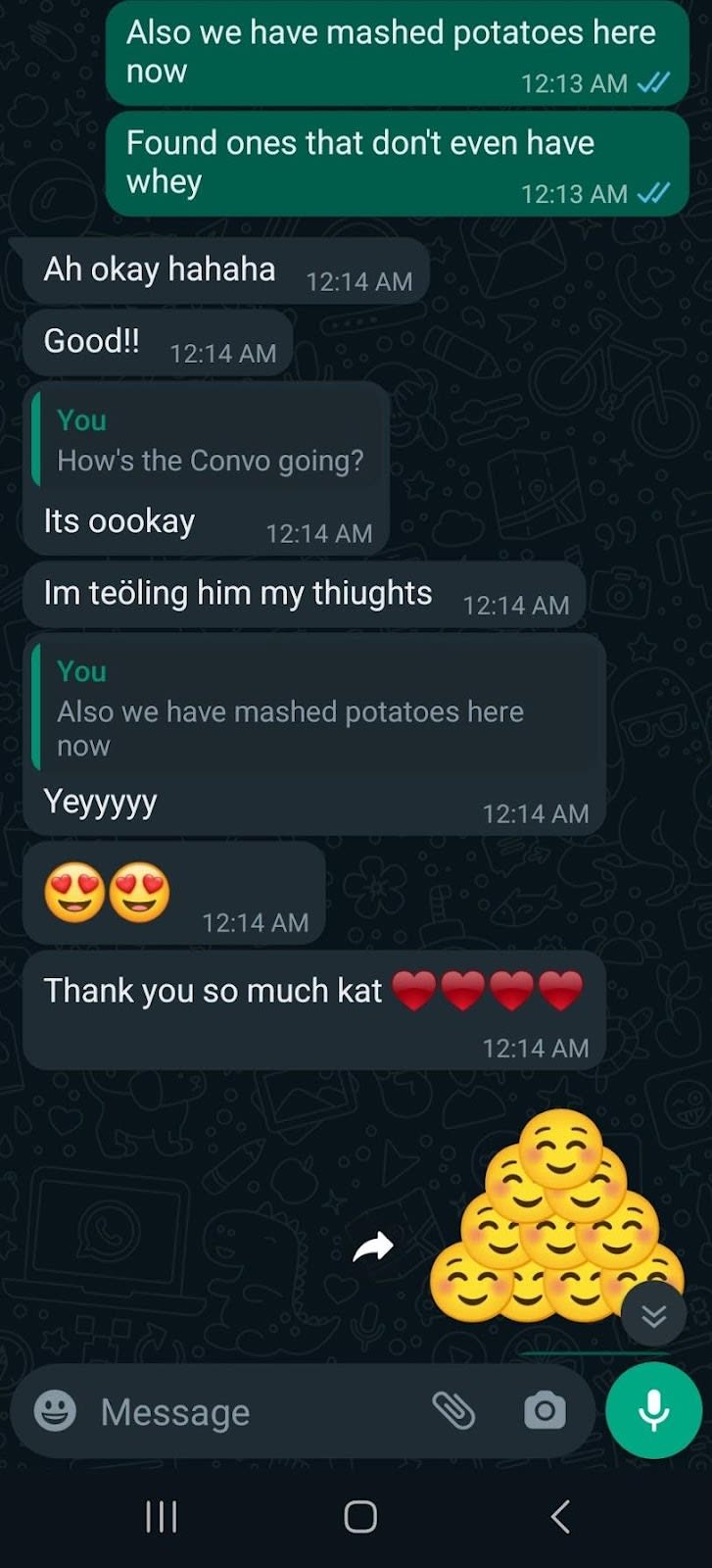
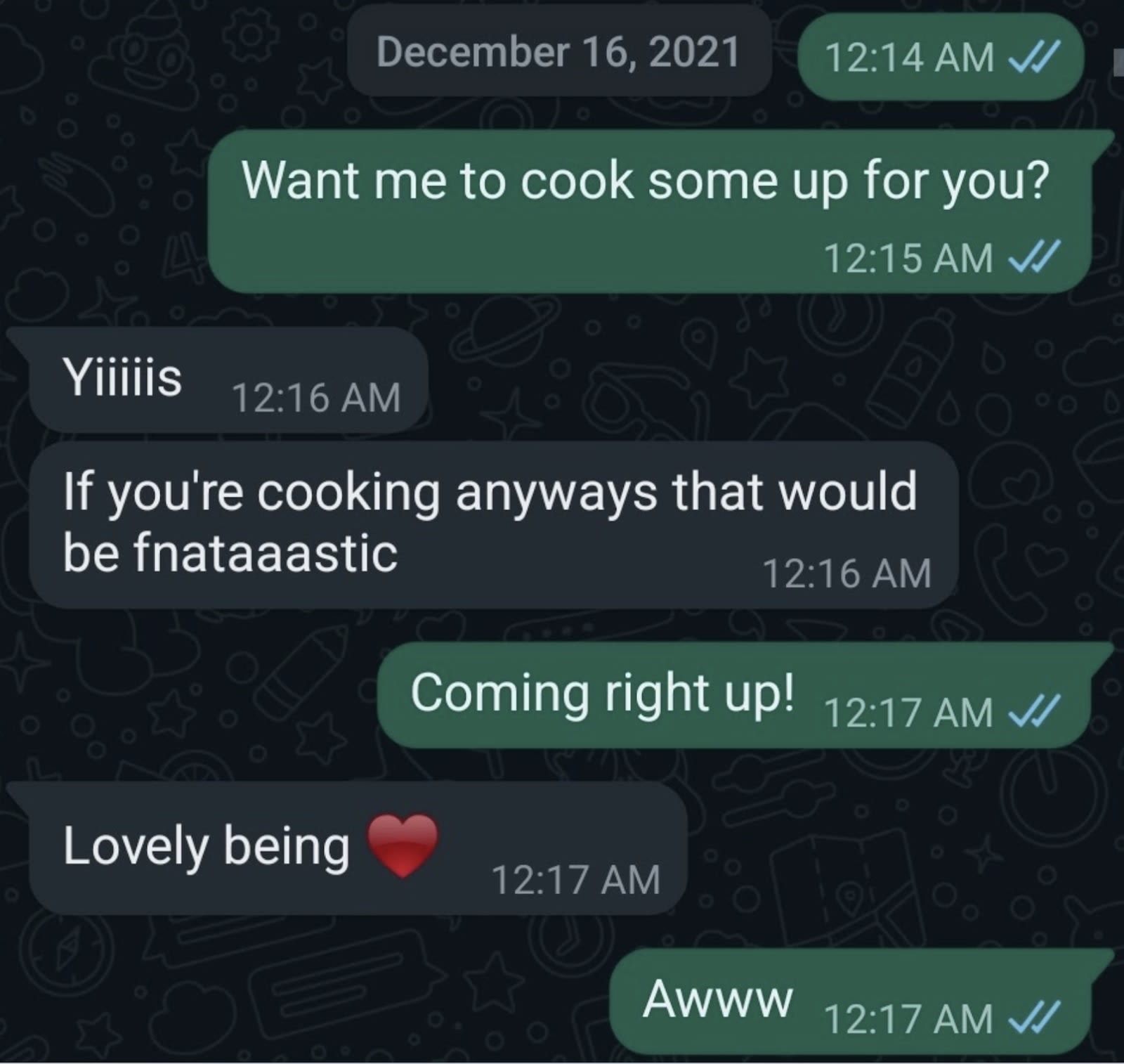
Hey folks, a reminder to please be thoughtful as you comment.
The previous Nonlinear thread received almost 500 comments; many of these were productive, but there were also some more heated exchanges. Following Forum norms—in a nutshell: be kind, stay on topic, be honest—is probably even more important than usual in charged situations like these.
Discussion here could end up warped towards aggression and confusion for a few reasons, even if commenters are generally well intentioned:
Regarding this paragraph from the post:
For the time being, please do not post personal information that would deanonymize Alice or Chloe. The moderation team is currently discussing how we might deal with this.
Also, don’t vote using multiple accounts, and don’t engage in vote brigading. We will be monitoring voting activity. We had to ban users for voting violations on the “Sharing Information About Nonlinear” post, and we would like to avoid issuing bans again.
Out of curiosity, if, after reviewing the available evidence, it appears that Alice and Chloe indeed fabricated a number of accusations against Nonlinear and exhibited a pattern of behavior of doing similar things elsewhere, would you reverse the request to keep them anonymous?
If what Nonlinear is saying is true, then Alice and Chloe have the potential to be very destructive to others in the community.
I would strongly caution against doing so. Even if it turns out to be seemingly justified in this instance (and I offer no view either way whether it is or not), I cannot think of a more effective way of discouraging victims/whistleblowers from coming forward (in other cases in this community) in future situations.
I think norms should strongly push against taking seriously any public accusation made anonymously in most circumstances. I feel like we have taken a norm that was appropriate to a very limited set of circumstances and tried to make a grand moral principle out of it, and it doesn't work. Giving some anonymity to victims of sexual assault/harassment, in some circumstances, makes sense because it's a uniquely embarrassing thing to be a victim of due to our cultural taboos around sex. Anonymity might be appropriate for people revealing problems at their current employer. Or it might be appropriate in industries that are generally more amoral, for conduct I would expect most employers to want to commit--e.g. I would want people to be able to anonymously disclose that a doctor is biased in favor of prescribing drugs pushed by the pharma sales rep who buys him the fanciest lunches, because I think most doctors want to supplement their incomes by taking pharma bribes. But if people have legitimate fears about retaliation by unrelated employers within the EA ecosystem then we have lost the plot so thoroughly that we should probably burn the whole thing down.
If someone is going to make false accusations, the rest of us have a right to know that about their character and avoid dealing with them. A person making false accusations is in fact a predator; describing themself as a victim doesn't change that. Mental illness doesn't change that. I have a family member with mental health issues similar to what Kat has described of Alice. In my experience this person is a genuinely bad person, despite many professions of good intent. This person leaves a trail of wreckage in their wake wherever they go. I don't introduce friends or significant others to them without a warning. It would be unfair to my friends/SOs to do otherwise. If I were in a position to warn their prospective employers, I would consider myself duty-bound to warn them as well.
If the accusations are true I don't see how it possibly hurts their reputation to have their identities attached to them, except that it makes similarly abusive employers less likely to hire them. Which I wouldn't exactly consider a negative if I were in their shoes.
I don't know who Chloe is in real life (nor Alice for that matter), but based on what I've read, it seems really really off to me to say that she has the potential to be destructive to others in the community. [Edit: I guess you're not outright saying that, but I'm reading your comment as "if all that Nonlinear are saying about Chloe is true, then...," and my take on that is that apart from their statements of the sort of "Chloe is so mentally unhealthy that she makes things up" (paraphrased), none of the concrete claims are obviously red flags to me. It's certainly not great to say things in misleading ways, but it can happen in the heat of battle. Also, I want to flag that we haven't heard Chloe's reply to Nonlinear's presentation, so I don't consider it established that she's less reliable than, e.g., the typical person, or Nonlinear themselves. On the compensation dispute for instance, I can see interpretations where it made sense for Chloe to feel misled – see also the fact check exercise someone has done.]
I think something has gone wrong for someone to even bring up this point. (I can see where you're coming from regarding Alice, if claims about her are correct.) I feel like we wouldn't be entertaining that possibility if Nonlinear hadn't lumped Chloe and Alice together and written their post in a unfairly-narrativizing style.
Update: 1h after posting this comment (and long after the edit I made above), this post currently sits at -5 karma and 9 voters. Will be interesting to see where it ends up. I continue to think that something has gone wrong.
It's a fair point that we should treat Alice and Chloe separately and that deanonymizing one need not imply that we should deanonymize the other.
Yeah.
Let's assume Nonlinear are completely right about how they describe Chloe and Alice. I'd summarize their perspective as follows:
Alice-as-described-by-Nonlinear is likely to be destructive in other contexts as well because that is a strong pattern with her generally. :(
By contrast,
Chloe-as-described-by-Nonlinear is significantly less likely to be destructive in other contexts. While Nonlinear claim that Chloe is entitled, it's still the case that her beef with them is largely around the tensions of living together (primes her to expect equal-ness and friendship) combined with her having to do tasks for them that make her feel like her time isn't being valued. (Plus things around the vagueness of her role and her being repeatedly negatively surprised by things they expect of her or ways they treat her.)
Even if you take Nonlinear's account at face value, it seems like you'd have a lot of uncertainty about the claim "Chloe is likely to be destructive in other contexts."
Lastly, I again want to flag that I don't consider it established that Chloe is entitled or unreliable. ((To some degree, the same caveats may also apply to claims about Alice, but I haven't focused on that much because it seems like Nonlinear have a lot of anonymized evidence?, and it's hard to argue with that..., plus even Ben acknowledged that Alice feels like less reliable a source than Chloe.)) I don't think someone has to be entitled to feel devalued doing assistant-type tasks for others. It really depends on how you're treated. It's a bit suspicious that an assistant feeling unvalued is framed as "the assistant didn't like being an assistant." Sure, this could be true. But it could also be true that the assistant simply didn't like aspects of how they were treated, and these things can be subtle and not easy to explain, but we all know that there are "horrible bosses" and "entitled bosses," so it's not like this is a complaint with a very low base rate. For these reasons, I'm still quite skeptical of many of the claims against Chloe, even though I'd say the Nonlinear document has updated me in their direction somewhat.
Edit to add: In case some people lack some of the relevant context, this is Chloe in her own words. I think she comes across well and in a purely vibes-based way, I trust her narration more than I trust the Nonlinear texts. (Not to mention that Nonlinear in their document simply cut out or selectively quoted/re-stated/paraphrased passages in her stories/accounts to make it seem less compelling. Like, a lot of her specific complaints there feel like they aren't addressed well or at all by Nonlinear. Update: see my comment here for examples.)
I think if we deanonymise now, there's a strong chance that the next whistleblower will remember what happened as "they got deanonymised" and will be reluctant to believe it won't happen to them. It kind of doesn't matter if there's reasons why it's OK in this case, as long as they require digging through this post and all the comments to understand them. People won't do that, so they won't feel safe from getting the same treatment.
Forgive me, but you are issuing a moderation notice about the comment section, when the main post involves the most egregious possible retaliation against a critic of an organisation, which you have personally backed up in the comments. I would have thought your position should be to criticise the egregious retaliation in harsh terms
The intention is not to endorse the quoted paragraph, but to ask people not to deanonymize Alice/Chloe. In line with our policies on revealing personal information on the Forum
Yeah I think we are talking past each other. Will posted in response to my comment that Kat's post is not deranged. He has subsequently said we should avoid aggression or confusion. The context here is that kat retaliated to Ben's critique by calling him abusive/predatory. This is clearly unacceptable conduct for the forum, but has not been noted been criticised. Why?