Comments

Wikipedia pageviews for effective altruism in six languages, 2015–2026
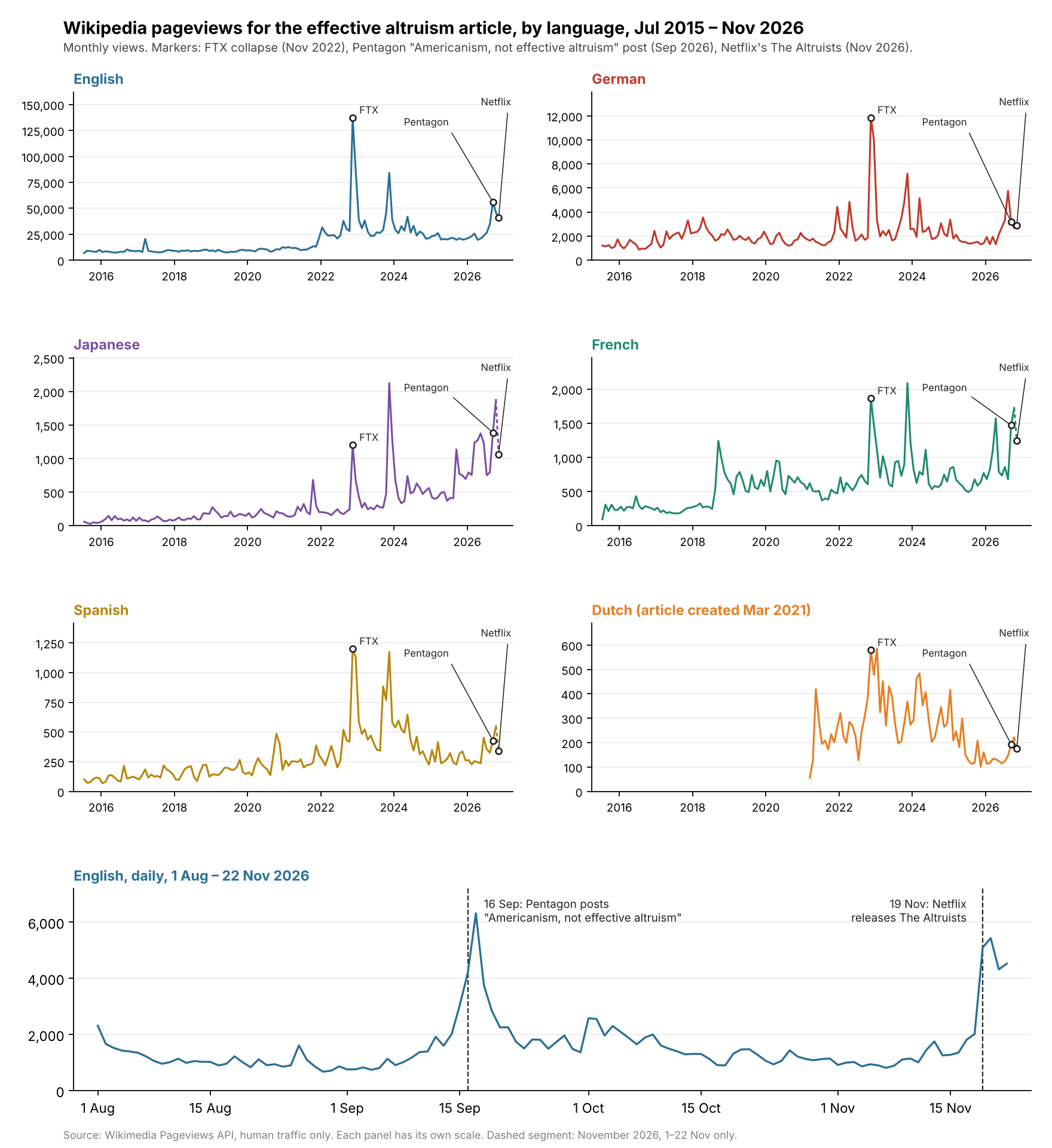
This image shows monthly pageviews for the effective altruism article on English, German, Japanese, French, Spanish and Dutch Wikipedia from July 2015 to November 2026, with a daily view of English for August to November 2026.
The data comes from the Wikimedia Pageviews API, counting human traffic only (bots and crawlers excluded). November 2026 covers 1–22 November only. Each panel has its own scale. You can check the numbers at pageviews.wmcloud.org by switching the project to each language.
The overall trend. Most languages follow the same pattern. Views peaked in 2022–23 around FTX and Sam Bankman-Fried's trial, then fell every year to a low in 2025. The first half of 2026 was roughly flat compared with 2025 in English, German and Spanish. Then views rose in every language in the autumn. September–October 2026 was higher than September–October 2025 in all six: about 2.5x in English and French, 2x in German, 1.7–1.8x in Spanish and Japanese, and 1.3x in Dutch.
By language:
- English: flat at about 9,000 a month until 2020. It peaked at 137,000 when FTX collapsed and never went back to the old level. 2025 averaged about 21,000 a month. September 2026 (56,000) was the highest month on record that wasn't driven by FTX. Daily views peaked the day after the Pentagon posted "Americanism, not effective altruism". Netflix's The Altruists (19 November) took daily views from about 1,000 to about 5,000.
- German: roughly flat since 2018 apart from short spikes. It averaged about 1,700 a month in 2025, close to its 2019 level. FTX left no lasting rise.
- Japanese: the only language with steady growth. From about 170 a month in 2019 it reached about 570 in 2025 and about 1,150 so far in 2026. October 2026 (1,876) was close to German.
- French: around 650 a month in 2025, up sharply in September and October 2026 (1,471 and 1,725).
- Spanish: about 580 a month in 2023, falling to about 290 in 2025. Up somewhat in autumn 2026 (548 in October).
- Dutch: about 340 a month in 2023, falling to about 190 in 2025 and about 140 so far in 2026, its lowest year. A small rise in September and October (193 and 221).
Total Wikipedia traffic has also been falling, so flat views may hide a small rise in interest.
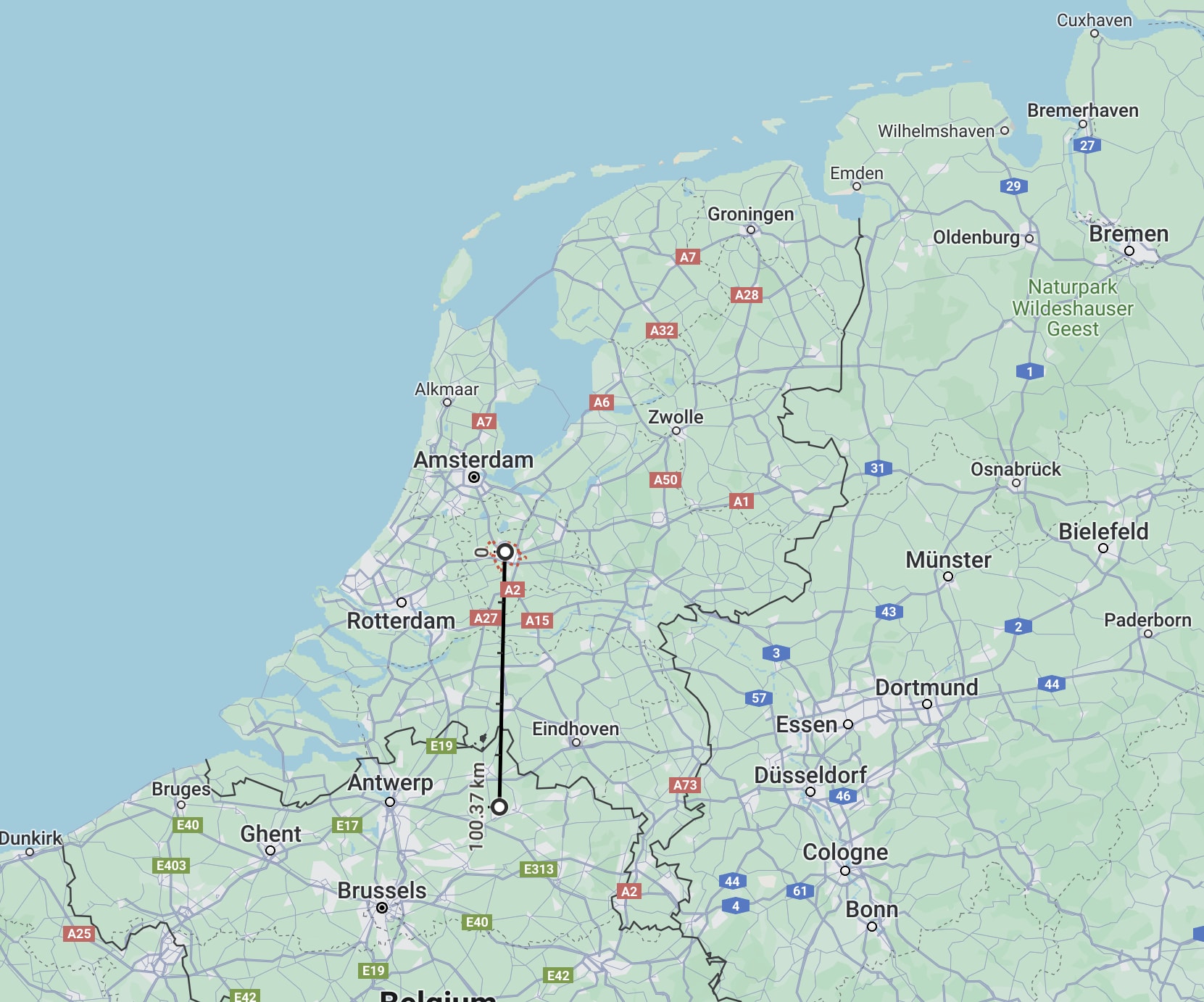
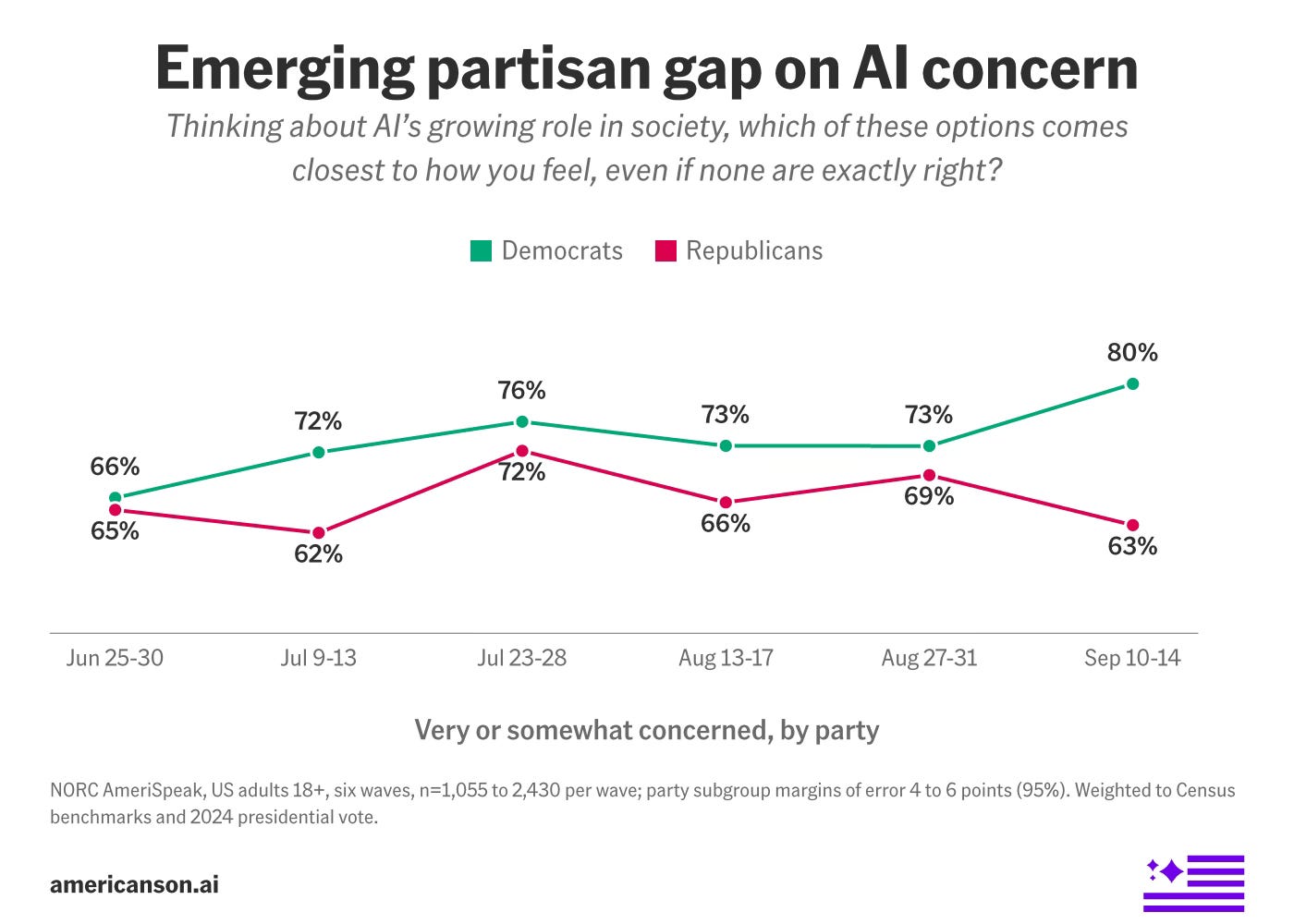
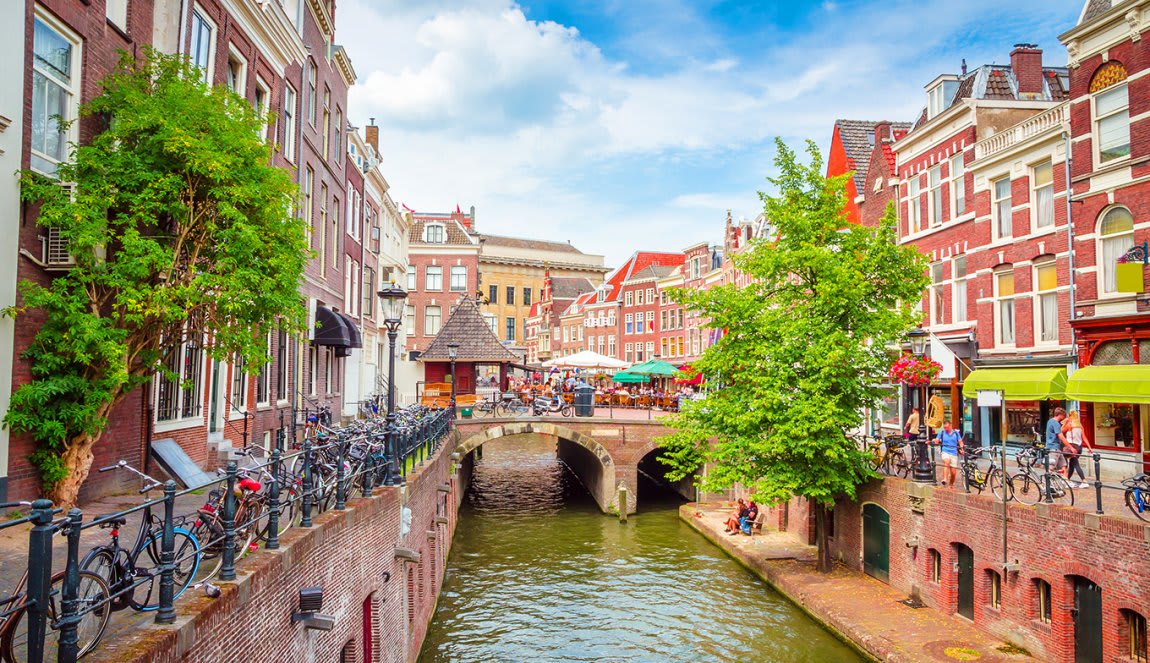


Two Dutch party leaders signed a call for an AI treaty after a briefing EA Netherlands co-organised for MPs
Two Dutch parliamentary party leaders have signed PauseAI NL's statement calling for an international treaty banning uncontrollable AI. Laurens Dassen (Volt) signed on 16 November, at a briefing for MPs and their staff that we at Effectief Altruïsme Nederland co-organised in The Hague. Christine Teunissen (Partij voor de Dieren) signed two days later.
The statement, translated from Dutch:
It is modelled on ControlAI's international campaign.
We ran the briefing with PauseAI NL, with CeSIA and the Existential Risk Observatory as partners. Most of the credit goes to Maya Özbayoğlu, a student volunteer at PauseAI NL, who started it and spent the autumn emailing, calling and messaging MPs.
Sören Mindermann, Joep Meindertsma and Stuart Russell spoke. In between, MPs and staffers from across the political spectrum, plus an official from the Ministry of Foreign Affairs, sat in mixed groups with Dutch AI safety experts for a backcasting exercise. The prompt was: "It's 2035 and the Netherlands is internationally recognised as having played a leading role in the development of safe AI. What does parliament need to have done to make this happen?" The groups then turned to the immediate future: what needs to start by 2027?
Two signatures are not a policy change, but more meetings with MPs are in the diary and we're planning more events.
What I took from it is that Dutch politicians and their staff are easier to reach than most people assume. Emails get read and forwarded. I doubt the Netherlands is unusual in this. Middle powers don't have frontier AI labs, but they do have leverage, and their parliaments are within reach of ordinary citizens. A student volunteer and a few small organisations got this far in one autumn.
If you're Dutch, write to the digital affairs spokesperson of the party you vote for. If you're in another middle power and want to run something similar, talk to Ettore and the team at Plures, or to ControlAI. Maya and I are also happy to share what we learned.
A longer version of this report, with thanks to people who took part, is on LinkedIn.