Comments

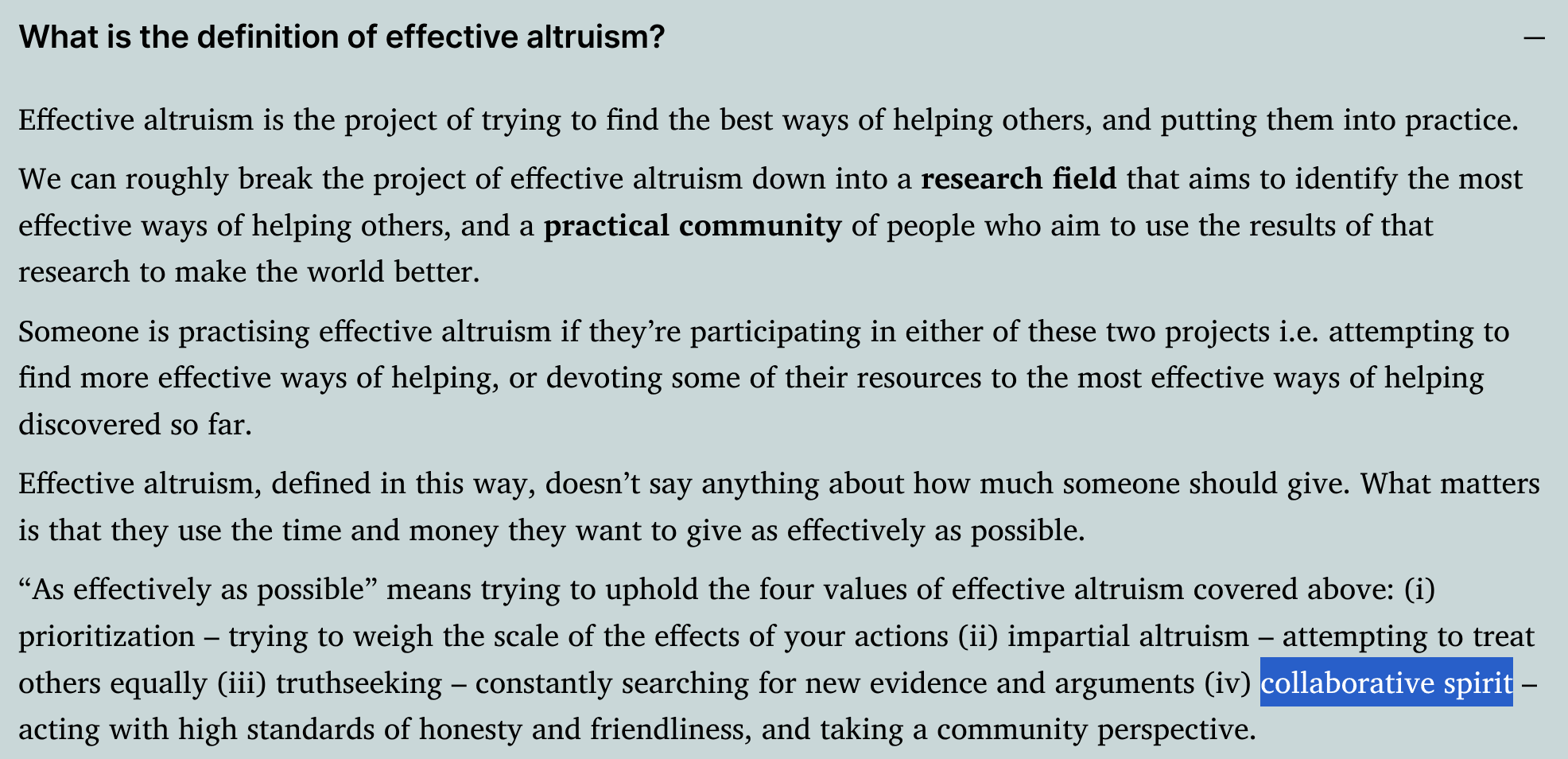
I notice the 'guiding principles' in the introductory essay on effectivealtruism.org have been changed. It used to list: prioritisation, impartial altruism, open truthseeking, and a collaborative spirit. It now lists: scope sensitivity, impartiality, scout mindset, and recognition of trade-offs.
As far as I'm aware, this change wasn't signalled. I understand lots of work has been recently done to improve the messaging on effectivealtruism.org -- which is great! -- but it feels a bit weird for 'guiding principles' to have been changed without any discussion or notice.
As far as I understand, back in 2017 a set of principles were chosen through a somewhat deliberative process, and then organisations were invited to endorse them. This feels like a more appropriate process for such a change.



If we want EA to be a decentralised movement, it’s worth looking at how other movements/structures move money from the centre to national, regional, and local orgs. Here are a few comparisons.
In the big federations, money flows up. Amnesty’s national sections sent just over a third of what they raised to the international budget in 2013. Greenpeace works in a similar way. Because the sections fund the centre, they also have a formal say in how it’s run.
EA works the other way round. Most of the movement building money comes from one funder, Coefficient Giving, and passes through CEA. Three examples have a similar shape (it's hard to find something perfectly analogous to EA):
At CEA, operational spending in 2025 was $21.8m, Claude tells me that Community Building Grant costs fell 22% that year. I don’t know what share of CEA’s budget goes to local and national orgs, and I couldn’t find a published figure. In 2026 the CBG portfolio covers 11 orgs and is closed to new applicants.